Home
Department Of Physics text logo
  • Research
    • Our research
    • Our research groups
    • Our research in action
    • Research funding support
    • Summer internships for undergraduates
  • Study
    • Undergraduates
    • Postgraduates
  • Engage
    • For alumni
    • For business
    • For schools
    • For the public
  • Support
Menu
Atomic and Laser Physics
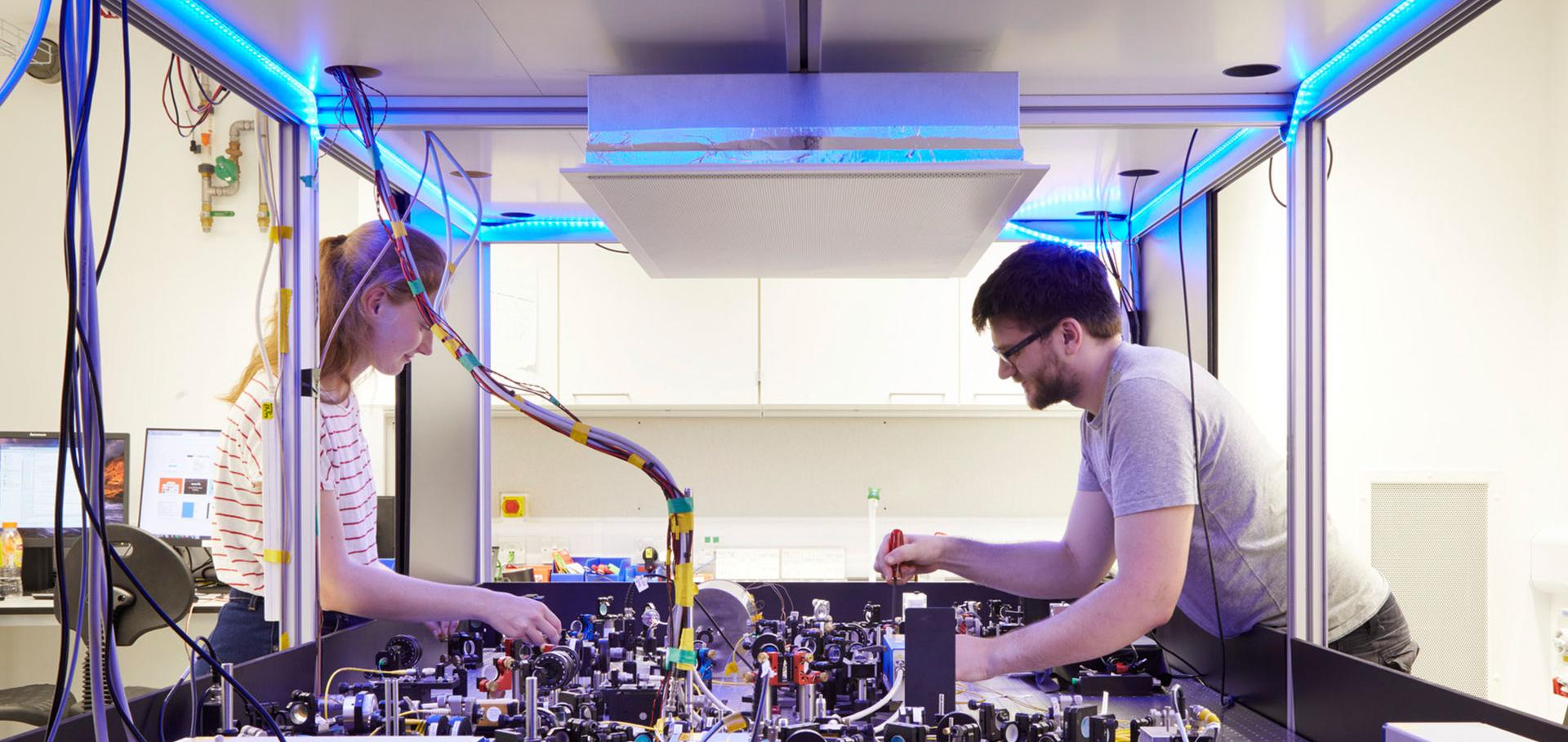
Credit: Jack Hobhouse

Professor Steven Rose

Visiting Professor

Research theme

  • Lasers and high energy density science

Sub department

  • Atomic and Laser Physics

Research groups

  • Oxford Centre for High Energy Density Science (OxCHEDS)
Steven.Rose@physics.ox.ac.uk
Imperial College London webpage
  • About
  • Publications

A comparison of time-dependent Cloudy astrophysical code simulations with experimental X-ray spectra from keV laser-generated argon plasmas

Journal of Quantitative Spectroscopy and Radiative Transfer Elsevier BV 348 (2026) 109720

Authors:

N Rathee, Fp Keenan, Rjr Williams, Gj Ferland, Sj Rose, S White, D Riley
More details from the publisher
More details

The X-ray flare spectrum of HR 1099: the search for photopumped Ne IX line emission

Publications of the Astronomical Society of the Pacific IOP Publishing 137:12 (2025) 124201

Authors:

Damian J Christian, Francis P Keenan, Steven Rose, Katja Poppenhaeger

Abstract:

We present high resolution X-ray spectroscopy of the active late-type star HR 1099 obtained with the Chandra Low Energy Transmission Grating Spectrometer. A spectrum extracted from the early stages of a flare was created to search for enhanced emission due to line coincidence photopumping at X-ray wavelengths, rather than the usual optical and ultraviolet cases. Specifically, we have identified a scheme where a He-like Ne ix line at 11 Å is photopumped by He-like Na x, which predicts intensity enhancement in the Ne ix 82.76 Å transition under the high electron density and large coronal pathlength conditions found in stellar and solar flares. We previously tentatively identified a Ne ix enhancement in a solar flare spectrum, but the result was extremely uncertain. However, Ne ix 82.76 Å was detected at the 3-sigma level in the Chandra spectrum, leading to a measured Ne ix 82.76/13.45 intensity ratio of 0.21 ± 0.08. By contrast, the theoretical ratio from the CHIANTI database is at most 0.031, indicating an enhancement factor of at least 7 ± 3 for the 82.76 Å line, in agreement with the expected value of ∼7–15 from a photopumping plasma model. This confirms detection, for the first time to our knowledge, of X-ray photopumping in an astrophysical object. We note that the identification of such X-ray photopumping in other spatially unresolved sources provides in principle a new diagnostic for independently determining the sizes of their coronal regions.

More details from the publisher
Details from ORA
More details

Bounding elastic photon-photon scattering at √s ≈ 1 MeV using a laser-plasma platform

Physics Letters B Elsevier 861 (2025) 139247

Authors:

R Watt, B Kettle, E Gerstmayr, B King, A Alejo, S Astbury, C Baird, S Bohlen, M Campbell, C Colgan, D Dannheim, C Gregory, H Harsh, Peter Hatfield, J Hinojosa, D Hollatz, Y Katzir, J Morton, Cd Murphy, A Nurnberg, J Osterhoff, G Pérez-Callejo, K Põder, Pp Rajeev, C Roedel, F Roeder, Fc Salgado, Gm Samarin, G Sarri, A Seidel, C Spindloe, S Steinke, Mjv Streeter, Agr Thomas, C Underwood, W Wu, M Zepf, Steven Rose, Spd Mangles

Abstract:

We report on a direct search for elastic photon-photon scattering using x-ray and 𝛾 photons from a laser-plasma based experiment. A 𝛾 photon beam produced by a laser wak­field accelerator provided a broadband 𝛾 spectrum extending to above 𝐸𝛾 = 200 MeV. These were collided with a dense x-ray field produced by the emission from a laser heated germanium foil at 𝐸𝑥 ≈ 1.4 keV, corresponding to an invariant mass of √𝑠 = 1.22 ± 0.22 MeV. In these asymmetric collisions elastic scattering removes one x-ray and one high-energy 𝛾 photon and outputs two lower energy 𝛾 photons. No changes in the 𝛾 photon spectrum were observed as a result of the collisions allowing us to place a 95% upper bound on the cross section of 1.5 × 10¹⁵ μb. Although far from the QED prediction, this represents the lowest upper limit obtained so far for √𝑠 ≲ 1 MeV.
More details from the publisher
Details from ORA
More details

Extended X-ray absorption spectroscopy using an ultrashort pulse laboratory-scale laser-plasma accelerator

Communications Physics Springer Nature 7:1 (2024) 247

Authors:

Brendan Kettle, Cary Colgan, Eva E Los, Elias Gerstmayr, Matthew JV Streeter, Felicie Albert, Sam Astbury, Rory A Baggott, Niall Cavanagh, Kateřina Falk, Timothy I Hyde, Olle Lundh, P Pattathil Rajeev, Dave Riley, Steven J Rose, Gianluca Sarri, Chris Spindloe, Kristoffer Svendsen, Dan R Symes, Michal Šmíd, Alec GR Thomas, Chris Thornton, Robbie Watt, Stuart PD Mangles

Abstract:

Laser-driven compact particle accelerators can provide ultrashort pulses of broadband X-rays, well suited for undertaking X-ray absorption spectroscopy measurements on a femtosecond timescale. Here the Extended X-ray Absorption Fine Structure (EXAFS) features of the K-edge of a copper sample have been observed over a 250 eV window in a single shot using a laser wakefield accelerator, providing information on both the electronic and ionic structure simultaneously. This capability will allow the investigation of ultrafast processes, and in particular, probing high-energy-density matter and physics far-from-equilibrium where the sample refresh rate is slow and shot number is limited. For example, states that replicate the tremendous pressures and temperatures of planetary bodies or the conditions inside nuclear fusion reactions. Using high-power lasers to pump these samples also has the advantage of being inherently synchronised to the laser-driven X-ray probe. A perspective on the additional strengths of a laboratory-based ultrafast X-ray absorption source is presented.
More details from the publisher
Details from ORA
More details

Dielectronic satellite emission from a solid-density Mg plasma: relationship to models of ionisation potential depression

Physical Review E American Physical Society 109:4 (2024) 045204

Authors:

Gabriel Pérez-Callejo, Thomas Gawne, TR Preston, Patrick Hollebon, Sam Vinko, Steven Rose, Justin Wark

Abstract:

We report on experiments where solid-density Mg plasmas are created by heating with the focused output of the Linac Coherent Light Source x-ray free-electron laser. We study the K-shell emission from the helium- and lithium-like ions using Bragg crystal spectroscopy. Observation of the dielectronic satellites in lithium-like ions confirms that the M-shell electrons appear bound for these high charge states. An analysis of the intensity of these satellites indicates that when modeled with an atomic-kinetics code, the ionization potential depression model employed needs to produce depressions for these ions which lie between those predicted by the well known Stewart-Pyatt and Ecker-Kroll models. These results are largely consistent with recent density functional theory calculations.
More details from the publisher
Details from ORA
More details
More details

Pagination

  • Current page 1
  • Page 2
  • Page 3
  • Page 4
  • Page 5
  • Page 6
  • Page 7
  • Page 8
  • Page 9
  • …
  • Next page Next
  • Last page Last

Footer Menu

  • Contact us
  • Giving to the Dept of Physics
  • Work with us
  • Media

User account menu

  • Log in

Follow us

FIND US

Clarendon Laboratory,

Parks Road,

Oxford,

OX1 3PU

CONTACT US

Tel: +44(0)1865272200

University of Oxfrod logo Department Of Physics text logo
IOP Juno Champion logo Athena Swan Silver Award logo

© University of Oxford - Department of Physics

Cookies | Privacy policy | Accessibility statement

Built by: Versantus

  • Home
  • Research
  • Study
  • Engage
  • Our people
  • News & Comment
  • Events
  • Our facilities & services
  • About us
  • Giving to Physics
  • Current students
  • Staff intranet