Home
Department Of Physics text logo
  • Research
    • Our research
    • Our research groups
    • Our research in action
    • Research funding support
    • Summer internships for undergraduates
  • Study
    • Undergraduates
    • Postgraduates
  • Engage
    • For alumni
    • For business
    • For schools
    • For the public
  • Support
Menu
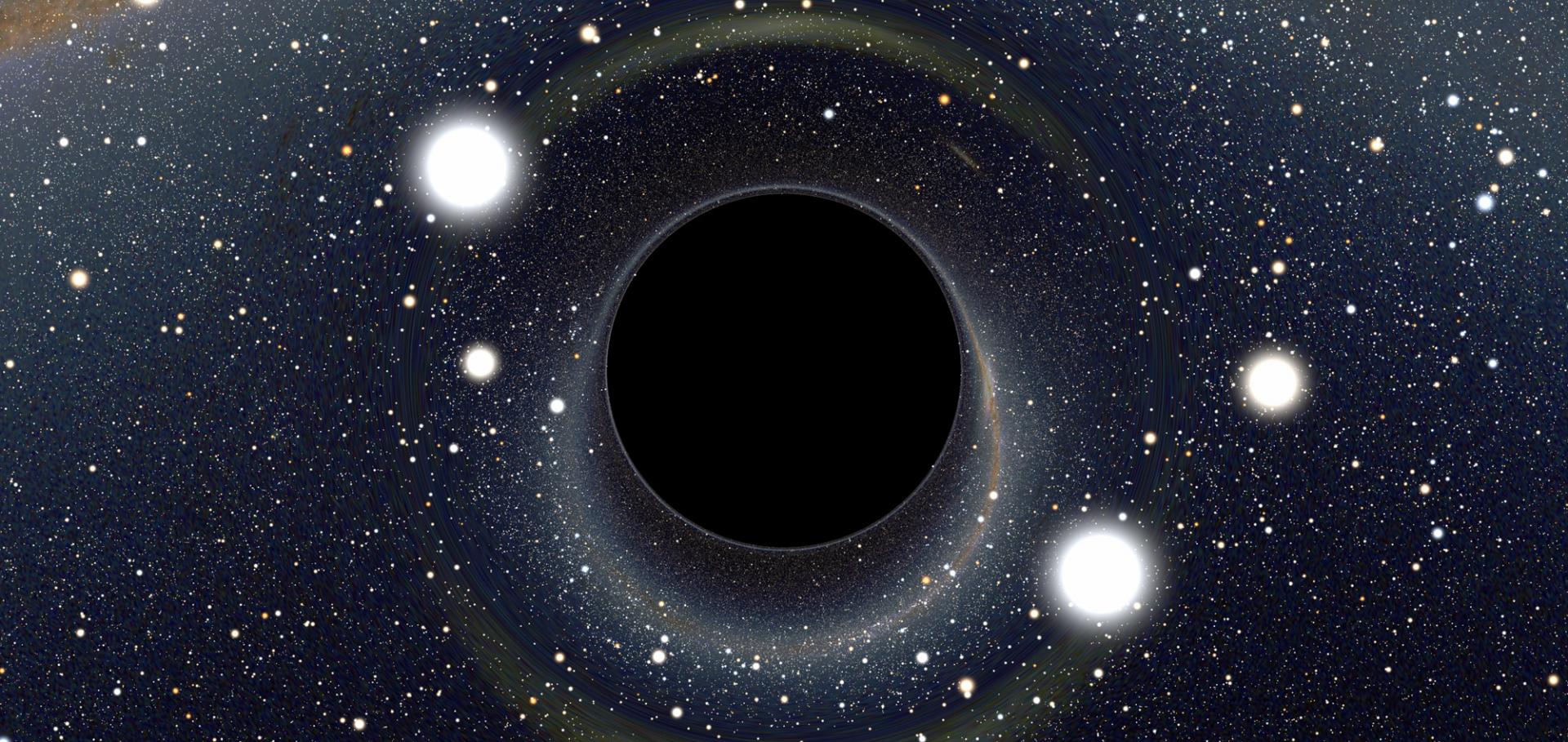
Black Hole

Lensing of space time around a black hole. At Oxford we study black holes observationally and theoretically on all size and time scales - it is some of our core work.

Credit: ALAIN RIAZUELO, IAP/UPMC/CNRS. CLICK HERE TO VIEW MORE IMAGES.

Dr Becky Smethurst

Royal Astronomical Society Research Fellow

Research theme

  • Astronomy and astrophysics

Sub department

  • Astrophysics

Research groups

  • Galaxy formation and evolution
  • Hintze Centre for Astrophysical Surveys
rebecca.smethurst@physics.ox.ac.uk
Personal website (with contact email address for non-academic queries)
  • About
  • Research
  • Prizes, awards and recognition
  • Science Communication
  • Publications

Galaxy Zoo: Major galaxy mergers are not a significant quenching pathway

Astrophysical Journal Institute of Physics 845:2 (2017) 145

Authors:

AK Weigel, K Schawinski, N Caplar, A Carpineti, RE Hart, S Kaviraj, WC Keel, Sandor J Kruk, Christopher Lintott, RC Nichol, BD Simmons, Rebecca J Smethurst

Abstract:

We use stellar mass functions to study the properties and the significance of quenching through major galaxy mergers. In addition to SDSS DR7 and Galaxy Zoo 1 data, we use samples of visually selected major galaxy mergers and post-merger galaxies. We determine the stellar mass functions of the stages that we would expect major-merger-quenched galaxies to pass through on their way from the blue cloud to the red sequence: (1) major merger, (2) post-merger, (3) blue early type, (4) green early type, and (5) red early type. Based on their similar mass function shapes, we conclude that major mergers are likely to form an evolutionary sequence from star formation to quiescence via quenching. Relative to all blue galaxies, the major-merger fraction increases as a function of stellar mass. Major-merger quenching is inconsistent with the mass and environment quenching model. At z ∼ 0, major-merger-quenched galaxies are unlikely to constitute the majority of galaxies that transition through the green valley. Furthermore, between z ∼ 0 - 0.5, major-merger-quenched galaxies account for 1%-5% of all quenched galaxies at a given stellar mass. Major galaxy mergers are therefore not a significant quenching pathway, neither at z ∼ 0 nor within the last 5 Gyr. The majority of red galaxies must have been quenched through an alternative quenching mechanism that causes a slow blue to red evolution.
More details from the publisher
Details from ORA
More details
More details
Details from ArXiV

Supermassive black holes in disk-dominated galaxies outgrow their bulges and co-evolve with their host galaxies

Monthly Notices of the Royal Astronomical Society Oxford University Press 470:2 (2017) 1559-1569

Authors:

BD Simmons, RJ Smethurst, Christopher Lintott

Abstract:

The deep connection between galaxies and their supermassive black holes is central to modern astrophysics and cosmology. The observed correlation between galaxy and black hole mass is usually attributed to the contribution of major mergers to both. We make use of a sample of galaxies whose disk-dominated morphologies indicate a major-merger-free history and show that such systems are capable of growing supermassive black holes at rates similar to quasars. Comparing black hole masses to conservative upper limits on bulge masses, we show that the black holes in the sample are typically larger than expected if processes creating bulges are also the primary driver of black hole growth. The same relation between black hole and total stellar mass of the galaxy is found for the merger-free sample as for a sample which has experienced substantial mergers, indicating that major mergers do not play a significant role in controlling the coevolution of galaxies and black holes. We suggest that more fundamental processes which contribute to galaxy assembly are also responsible for black hole growth.
More details from the publisher
Details from ORA
More details
Details from ArXiV
More details

Galaxy Zoo: Finding offset discs and bars in SDSS galaxies

Monthly Notices of the Royal Astronomical Society Oxford University Press 469:3 (2017) 3363-3373

Authors:

Sandor I Kruk, Christopher J Lintott, Brooke D Simmons, SP Bamford, CN Cardamone, L Fortson, RE Hart, B Häußler, KL Masters, RC Nichol, K Schawinski, Rebecca J Smethurst

Abstract:

We use multi-wavelength SDSS images and Galaxy Zoo morphologies to identify a sample of $\sim$$270$ late-type galaxies with an off-centre bar. We measure offsets in the range 0.2-2.5 kpc between the photometric centres of the stellar disc and stellar bar. The measured offsets correlate with global asymmetries of the galaxies, with those with largest offsets showing higher lopsidedness. These findings are in good agreement with predictions from simulations of dwarf-dwarf tidal interactions producing off-centre bars. We find that the majority of galaxies with off-centre bars are of Magellanic type, with a median mass of $10^{9.6} M_{\odot}$, and 91% of them having $M_{\star}<3\times10^{10} M_{\odot}$, the characteristic mass at which galaxies start having higher central concentrations attributed to the presence of bulges. We conduct a search for companions to test the hypothesis of tidal interactions, but find that a similar fraction of galaxies with offset bars have companions within 100 kpc as galaxies with centred bars. Although this may be due to the incompleteness of the SDSS spectroscopic survey at the faint end, alternative scenarios that give rise to offset bars such as interactions with dark companions or the effect of lopsided halo potentials should be considered. Future observations are needed to confirm possible low mass companion candidates and to determine the shape of the dark matter halo, in order to find the explanation for the off-centre bars in these galaxies.
More details from the publisher
Details from ORA
More details
Details from ArXiV
More details

Galaxy Zoo: the interplay of quenching mechanisms in the group environment

Monthly Notices of the Royal Astronomical Society Oxford University Press 469:3 (2017) 3670-3687

Authors:

Rebecca J Smethurst, Christopher Lintott, SP Bamford, RE Hart, Sandor J Kruk, KL Masters, RC Nichol, BD Simmons

Abstract:

Does the environment of a galaxy directly influence the quenching history of a galaxy? Here we investigate the detailed morphological structures and star formation histories of a sample of SDSS group galaxies with both classifications from Galaxy Zoo 2 and NUV detections in GALEX. We use the optical and NUV colours to infer the quenching time and rate describing a simple exponentially declining SFH for each galaxy, along with a control sample of field galaxies. We find that the time since quenching and the rate of quenching do not correlate with the relative velocity of a satellite but are correlated with the group potential. This quenching occurs within an average quenching timescale of ∼2.5 Gyr from star forming to complete quiescence, during an average infall time (from ∼10R200 to 0.01R200) of ∼2.6 Gyr. Our results suggest that the environment does play a direct role in galaxy quenching through quenching mechanisms which are correlated with the group potential, such as harassment, interactions or starvation. Environmental quenching mechanisms which are correlated with satellite velocity, such as ram pressure stripping, are not the main cause of quenching in the group environment. We find that no single mechanism dominates over another, except in the most extreme environments or masses. Instead an interplay of mergers, mass & morphological quenching and environment driven quenching mechanisms dependent on the group potential drive galaxy evolution in groups.
More details from the publisher
Details from ORA
More details
Details from ArXiV
More details

Galaxy Zoo: Quantitative Visual Morphological Classifications for 48,000 galaxies from CANDELS

Monthly Notices of the Royal Astronomical Society Oxford University Press 464:4 (2016) 4420-4447

Authors:

Brooke D Simmons, Christopher Lintott, KW Willett, KL Masters, JS Kartaltepe, Boris Häußler, S Kaviraj, C Krawczyk, SJ Kruk, DH McIntosh, RJ Smethurst, RC Nichol, C Scarlata, K Schawinski, CJ Conselice, O Almaini, HC Ferguson, L Fortson, W Hartley, D Kocevski, AM Koekemoer, A Mortlock, JA Newman, SP Bamford, NA Grogin, RA Lucas, NP Hathi, E McGrath, M Peth, J Pforr, Z Rizer, S Wuyts, G Barro, EF Bell, M Castellano, T Dahlen, ADJ Ownsworth, SM Faber, SL Finkelstein, A Fontana, A Galametz, R Grützbauch, D Koo, J Lotz, B Mobasher, M Mozena, M Salvato, T Wiklind

Abstract:

We present quantified visual morphologies of approximately 48 000 galaxies observed in three Hubble Space Telescope legacy fields by the Cosmic Assembly Near-infrared Deep Extragalactic Legacy Survey (CANDELS) and classified by participants in the Galaxy Zoo project. 90 per cent of galaxies have z ≤ 3 and are observed in rest-frame optical wavelengths by CANDELS. Each galaxy received an average of 40 independent classifications, which we combine into detailed morphological information on galaxy features such as clumpiness, bar instabilities, spiral structure, and merger and tidal signatures. We apply a consensus-based classifier weighting method that preserves classifier independence while effectively down-weighting significantly outlying classifications. After analysing the effect of varying image depth on reported classifications, we also provide depth-corrected classifications which both preserve the information in the deepest observations and also enable the use of classifications at comparable depths across the full survey. Comparing the Galaxy Zoo classifications to previous classifications of the same galaxies shows very good agreement; for some applications, the high number of independent classifications provided by Galaxy Zoo provides an advantage in selecting galaxies with a particular morphological profile, while in others the combination of Galaxy Zoo with other classifications is a more promising approach than using any one method alone. We combine the Galaxy Zoo classifications of ‘smooth’ galaxies with parametric morphologies to select a sample of featureless discs at 1 ≤ z ≤ 3, which may represent a dynamically warmer progenitor population to the settled disc galaxies seen at later epochs.
More details from the publisher
Details from ORA
More details
Details from ArXiV
More details

Pagination

  • First page First
  • Previous page Prev
  • …
  • Page 5
  • Page 6
  • Page 7
  • Page 8
  • Page 9
  • Page 10
  • Current page 11
  • Page 12
  • Page 13
  • Next page Next
  • Last page Last

Footer Menu

  • Contact us
  • Giving to the Dept of Physics
  • Work with us
  • Media

User account menu

  • Log in

Follow us

FIND US

Clarendon Laboratory,

Parks Road,

Oxford,

OX1 3PU

CONTACT US

Tel: +44(0)1865272200

University of Oxfrod logo Department Of Physics text logo
IOP Juno Champion logo Athena Swan Silver Award logo

© University of Oxford - Department of Physics

Cookies | Privacy policy | Accessibility statement

Built by: Versantus

  • Home
  • Research
  • Study
  • Engage
  • Our people
  • News & Comment
  • Events
  • Our facilities & services
  • About us
  • Giving to Physics
  • Current students
  • Staff intranet