Home
Department Of Physics text logo
  • Research
    • Our research
    • Our research groups
    • Our research in action
    • Research funding support
    • Summer internships for undergraduates
  • Study
    • Undergraduates
    • Postgraduates
  • Engage
    • For alumni
    • For business
    • For schools
    • For the public
  • Support
Menu
CMP
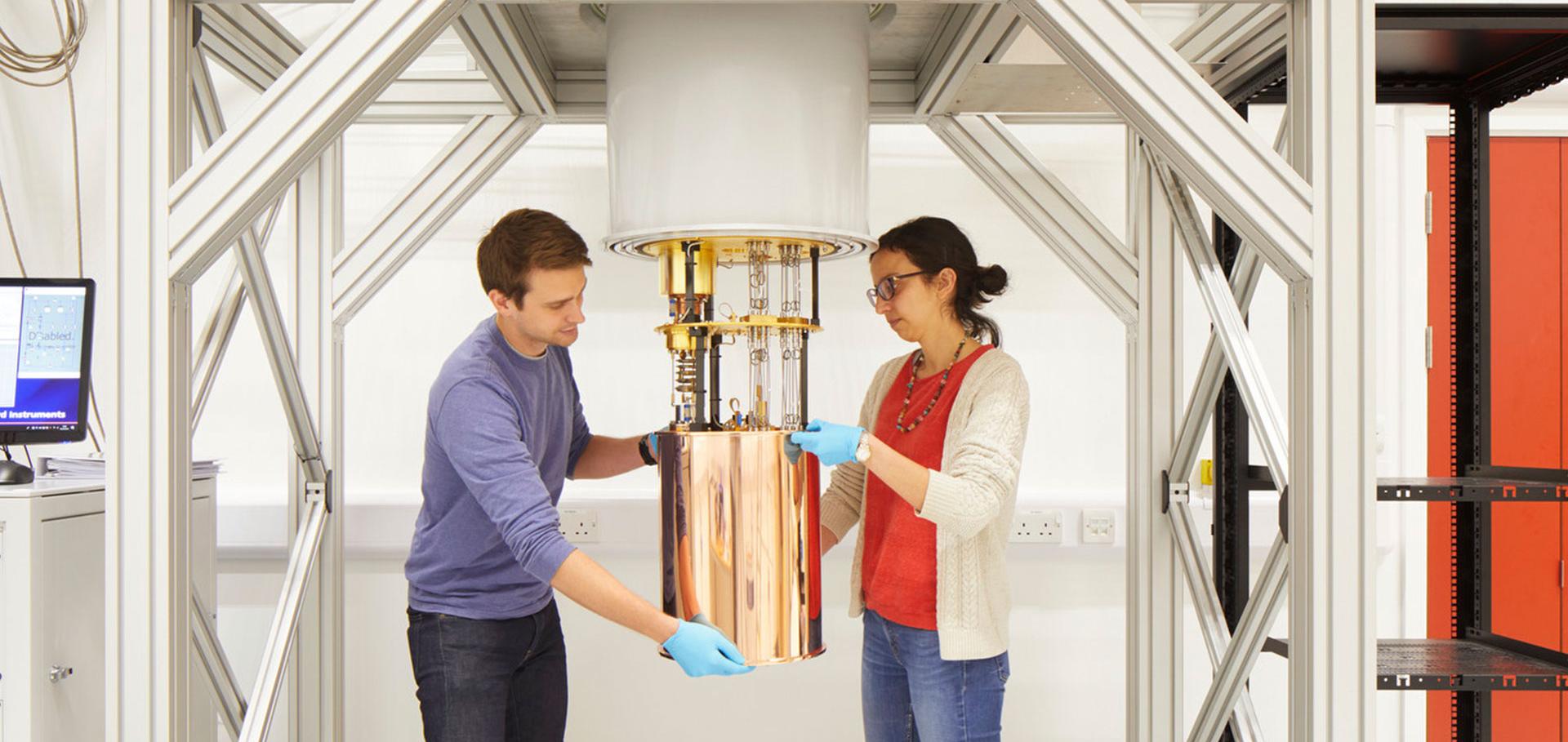
Credit: Jack Hobhouse

Prof Henry Snaith FRS

Professor of Physics

Sub department

  • Condensed Matter Physics

Research groups

  • Snaith group
  • Advanced Device Concepts for Next-Generation Photovoltaics
Henry.Snaith@physics.ox.ac.uk
Robert Hooke Building, room G21
  • About
  • Publications

Self‐Assembled Perovskite Nanoislands on CH3NH3PbI3 Cuboid Single Crystals by Energetic Surface Engineering

Advanced Functional Materials Wiley 31:50 (2021)

Authors:

Yurou Zhang, Dohyung Kim, Jung‐Ho Yun, Jongchul Lim, Min‐Cherl Jung, Xiaoming Wen, Jan Seidel, Eunyoung Choi, Mu Xiao, Tengfei Qiu, Miaoqiang Lyu, EQ Han, Mehri Ghasemi, Sean Lim, Henry J Snaith, Jae Sung Yun, Lianzhou Wang
More details from the publisher
More details

Self‐Assembled Perovskite Nanoislands on CH3NH3PbI3 Cuboid Single Crystals by Energetic Surface Engineering (Adv. Funct. Mater. 50/2021)

Advanced Functional Materials Wiley 31:50 (2021)

Authors:

Yurou Zhang, Dohyung Kim, Jung‐Ho Yun, Jongchul Lim, Min‐Cherl Jung, Xiaoming Wen, Jan Seidel, Eunyoung Choi, Mu Xiao, Tengfei Qiu, Miaoqiang Lyu, EQ Han, Mehri Ghasemi, Sean Lim, Henry J Snaith, Jae Sung Yun, Lianzhou Wang
More details from the publisher

Phase segregation in mixed-halide perovskites affects charge-carrier dynamics while preserving mobility

Nature Communications Springer Nature 12 (2021) 6955

Authors:

Silvia G Motti, Jay B Patel, Robert DJ Oliver, Henry J Snaith, Michael B Johnston, Laura M Herz

Abstract:

Mixed halide perovskites can provide optimal bandgaps for tandem solar cells which are key to improved cost-efficiencies, but can still suffer from detrimental illumination-induced phase segregation. Here we employ optical-pump terahertz-probe spectroscopy to investigate the impact of halide segregation on the charge-carrier dynamics and transport properties of mixed halide perovskite films. We reveal that, surprisingly, halide segregation results in negligible impact to the THz charge-carrier mobilities, and that charge carriers within the I-rich phase are not strongly localised. We further demonstrate enhanced lattice anharmonicity in the segregated I-rich domains, which is likely to support ionic migration. These phonon anharmonicity effects also serve as evidence of a remarkably fast, picosecond charge funnelling into the narrow-bandgap I-rich domains. Our analysis demonstrates how minimal structural transformations during phase segregation have a dramatic effect on the charge-carrier dynamics as a result of charge funnelling. We suggest that because such enhanced recombination is radiative, performance losses may be mitigated by deployment of careful light management strategies in solar cells.
More details from the publisher
Details from ORA
More details
More details

2D Position-Sensitive Hybrid-Perovskite Detectors

ACS Applied Materials & Interfaces American Chemical Society (ACS) 13:45 (2021) 54527-54535

Authors:

N Ganesh, Kelly Schutt, Pabitra K Nayak, Henry J Snaith, KS Narayan
More details from the publisher
More details
More details

Chemical control of the dimensionality of the octahedral network of solar absorbers from the CuI-AgI-BiI3 phase space by synthesis of 3D CuAgBiI5

Inorganic Chemistry American Chemical Society 60:23 (2021) 18154-18167

Authors:

Harry C Sansom, Leonardo RV Buizza, Marco Zanella, James T Gibbon, Michael J Pitcher, Matthew S Dyer, Troy D Manning, Vinod R Dhanak, Laura M Herz, Henry J Snaith, John B Claridge, Matthew J Rosseinsky

Abstract:

A newly reported compound, CuAgBiI5, is synthesized as powder, crystals, and thin films. The structure consists of a 3D octahedral Ag+/Bi3+ network as in spinel, but occupancy of the tetrahedral interstitials by Cu+ differs from those in spinel. The 3D octahedral network of CuAgBiI5 allows us to identify a relationship between octahedral site occupancy (composition) and octahedral motif (structure) across the whole CuI–AgI–BiI3 phase field, giving the ability to chemically control structural dimensionality. To investigate composition–structure–property relationships, we compare the basic optoelectronic properties of CuAgBiI5 with those of Cu2AgBiI6 (which has a 2D octahedral network) and reveal a surprisingly low sensitivity to the dimensionality of the octahedral network. The absorption onset of CuAgBiI5 (2.02 eV) barely changes compared with that of Cu2AgBiI6 (2.06 eV) indicating no obvious signs of an increase in charge confinement. Such behavior contrasts with that for lead halide perovskites which show clear confinement effects upon lowering dimensionality of the octahedral network from 3D to 2D. Changes in photoluminescence spectra and lifetimes between the two compounds mostly derive from the difference in extrinsic defect densities rather than intrinsic effects. While both materials show good stability, bulk CuAgBiI5 powder samples are found to be more sensitive to degradation under solar irradiation compared to Cu2AgBiI6.
More details from the publisher
Details from ORA
More details
More details

Pagination

  • First page First
  • Previous page Prev
  • …
  • Page 30
  • Page 31
  • Page 32
  • Page 33
  • Current page 34
  • Page 35
  • Page 36
  • Page 37
  • Page 38
  • …
  • Next page Next
  • Last page Last

Footer Menu

  • Contact us
  • Giving to the Dept of Physics
  • Work with us
  • Media

User account menu

  • Log in

Follow us

FIND US

Clarendon Laboratory,

Parks Road,

Oxford,

OX1 3PU

CONTACT US

Tel: +44(0)1865272200

University of Oxfrod logo Department Of Physics text logo
IOP Juno Champion logo Athena Swan Silver Award logo

© University of Oxford - Department of Physics

Cookies | Privacy policy | Accessibility statement

Built by: Versantus

  • Home
  • Research
  • Study
  • Engage
  • Our people
  • News & Comment
  • Events
  • Our facilities & services
  • About us
  • Giving to Physics
  • Current students
  • Staff intranet