Home
Department Of Physics text logo
  • Research
    • Our research
    • Our research groups
    • Our research in action
    • Research funding support
    • Summer internships for undergraduates
  • Study
    • Undergraduates
    • Postgraduates
  • Engage
    • For alumni
    • For business
    • For schools
    • For the public
  • Support
Menu
CMP
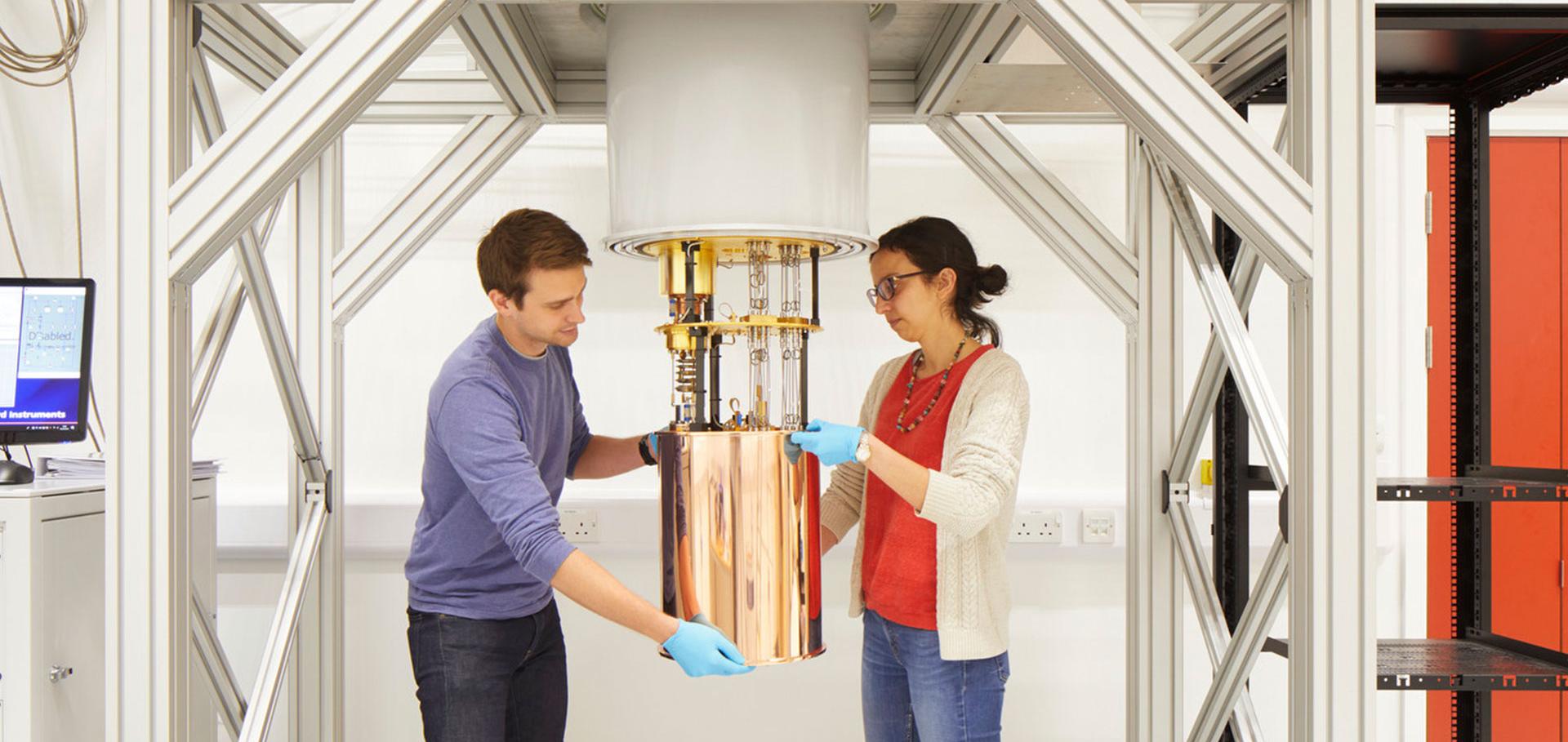
Credit: Jack Hobhouse

Prof Henry Snaith FRS

Professor of Physics

Sub department

  • Condensed Matter Physics

Research groups

  • Snaith group
  • Advanced Device Concepts for Next-Generation Photovoltaics
Henry.Snaith@physics.ox.ac.uk
Robert Hooke Building, room G21
  • About
  • Publications

High irradiance performance of metal halide perovskites for concentrator photovoltaics

Nature Energy Nature Publishing Group 3 (2018) 855-861

Authors:

Zhiping Wang, Qianqian Lin, Bernard Wenger, Mark Greyson Christoforo, Yen-Hung Lin, Matthew T Klug, Michael B Johnston, Laura M Herz, Henry J Snaith

Abstract:

Traditionally, III–V multi-junction cells have been used in concentrator photovoltaic (CPV) applications, which deliver extremely high efficiencies but have failed to compete with ‘flat-plate’ silicon technologies owing to cost. Here, we assess the feasibility of using metal halide perovskites for CPVs, and we evaluate their device performance and stability under concentrated light. Under simulated sunlight, we achieve a peak efficiency of 23.6% under 14 Suns (that is, 14 times the standard solar irradiance), as compared to 21.1% under 1 Sun, and measure 1.26 V open-circuit voltage under 53 Suns, for a material with a bandgap of 1.63 eV. Importantly, our encapsulated devices maintain over 90% of their original efficiency after 150 h aging under 10 Suns at maximum power point. Our work reveals the potential of perovskite CPVs, and may lead to new PV deployment strategies combining perovskites with low-concentration factor and lower-accuracy solar tracking systems.
More details from the publisher
Details from ORA
More details

Atomic layer deposited electron transport Layers in efficient organometallic halide perovskite devices

MRS Advances Cambridge University Press 3:51 (2018) 3075-3084

Authors:

MM McCarthy, A Walter, S-J Moon, Nakita Noel, S O’Brien, ME Pemble, S Nicolay, Bernard Wenger, Henry Snaith, IM Povey

Abstract:

Amorphous TiO2 and SnO2 electron transport layers (ETLs) were deposited by low-temperature atomic layer deposition (ALD). Surface morphology and x-ray photoelectron spectroscopy (XPS) indicate uniform and pinhole free coverage of these ALD hole blocking layers. Both mesoporous and planar perovskite solar cells were fabricated based on these thin films with aperture areas of 1.04 cm2 for TiO2 and 0.09 cm2 and 0.70 cm2 for SnO2. The resulting cell performance of 18.3 % power conversion efficiency (PCE) using planar SnO2 on 0.09 cm2 and 15.3 % PCE using mesoporous TiO2 on 1.04 cm2 active areas are discussed in conjunction with the significance of growth parameters and ETL composition.
More details from the publisher
Details from ORA
More details

Aligned and Graded Type‐II Ruddlesden–Popper Perovskite Films for Efficient Solar Cells

Advanced Energy Materials Wiley 8:21 (2018)

Authors:

Jian Qing, Xiao‐Ke Liu, Mingjie Li, Feng Liu, Zhongcheng Yuan, Elizaveta Tiukalova, Zhibo Yan, Martial Duchamp, Shi Chen, Yuming Wang, Sai Bai, Jun‐Ming Liu, Henry J Snaith, Chun‐Sing Lee, Tze Chien Sum, Feng Gao
More details from the publisher
More details

Surface modified fullerene electron transport layers for stable and reproducible flexible perovskite solar cells

Nano Energy Elsevier 49 (2018) 324-332

Authors:

Seulki Song, Rebecca Hill, Kyoungwon Choi, Konrad Wojciechowski, Stephen Barlow, Johannes Leisen, Henry J Snaith, Seth R Marder, Taiho Park
More details from the publisher

Enhanced photovoltage for inverted planar heterojunction perovskite solar cells

Science American Association for the Advancement of Science 360:6396 (2018) 1442-1446

Authors:

D Luo, W Yang, Zhiping Wang, A Sadhanala, Q Hu, R Su, R Shivanna, GF Trindade, JF Watts, Z Xu, T Liu, K Chen, F Ye, P Wu, L Zhao, J Wu, Y Tu, Y Zhang, X Yang, W Zhang, RH Friend, Q Gong, HJ Snaith, R Zhu

Abstract:

The highest power conversion efficiencies (PCEs) reported for perovskite solar cells (PSCs) with inverted planar structures are still inferior to those of PSCs with regular structures, mainly because of lower open-circuit voltages (Voc). Here we report a strategy to reduce nonradiative recombination for the inverted devices, based on a simple solution-processed secondary growth technique. This approach produces a wider bandgap top layer and a more n-type perovskite film, which mitigates nonradiative recombination, leading to an increase in Voc by up to 100 millivolts. We achieved a high Voc of 1.21 volts without sacrificing photocurrent, corresponding to a voltage deficit of 0.41 volts at a bandgap of 1.62 electron volts. This improvement led to a stabilized power output approaching 21% at the maximum power point.
More details from the publisher
Details from ORA
More details
More details

Pagination

  • First page First
  • Previous page Prev
  • …
  • Page 57
  • Page 58
  • Page 59
  • Page 60
  • Current page 61
  • Page 62
  • Page 63
  • Page 64
  • Page 65
  • …
  • Next page Next
  • Last page Last

Footer Menu

  • Contact us
  • Giving to the Dept of Physics
  • Work with us
  • Media

User account menu

  • Log in

Follow us

FIND US

Clarendon Laboratory,

Parks Road,

Oxford,

OX1 3PU

CONTACT US

Tel: +44(0)1865272200

University of Oxfrod logo Department Of Physics text logo
IOP Juno Champion logo Athena Swan Silver Award logo

© University of Oxford - Department of Physics

Cookies | Privacy policy | Accessibility statement

Built by: Versantus

  • Home
  • Research
  • Study
  • Engage
  • Our people
  • News & Comment
  • Events
  • Our facilities & services
  • About us
  • Giving to Physics
  • Current students
  • Staff intranet