Home
Department Of Physics text logo
  • Research
    • Our research
    • Our research groups
    • Our research in action
    • Research funding support
    • Summer internships for undergraduates
  • Study
    • Undergraduates
    • Postgraduates
  • Engage
    • For alumni
    • For business
    • For schools
    • For the public
  • Support
Menu
CMP
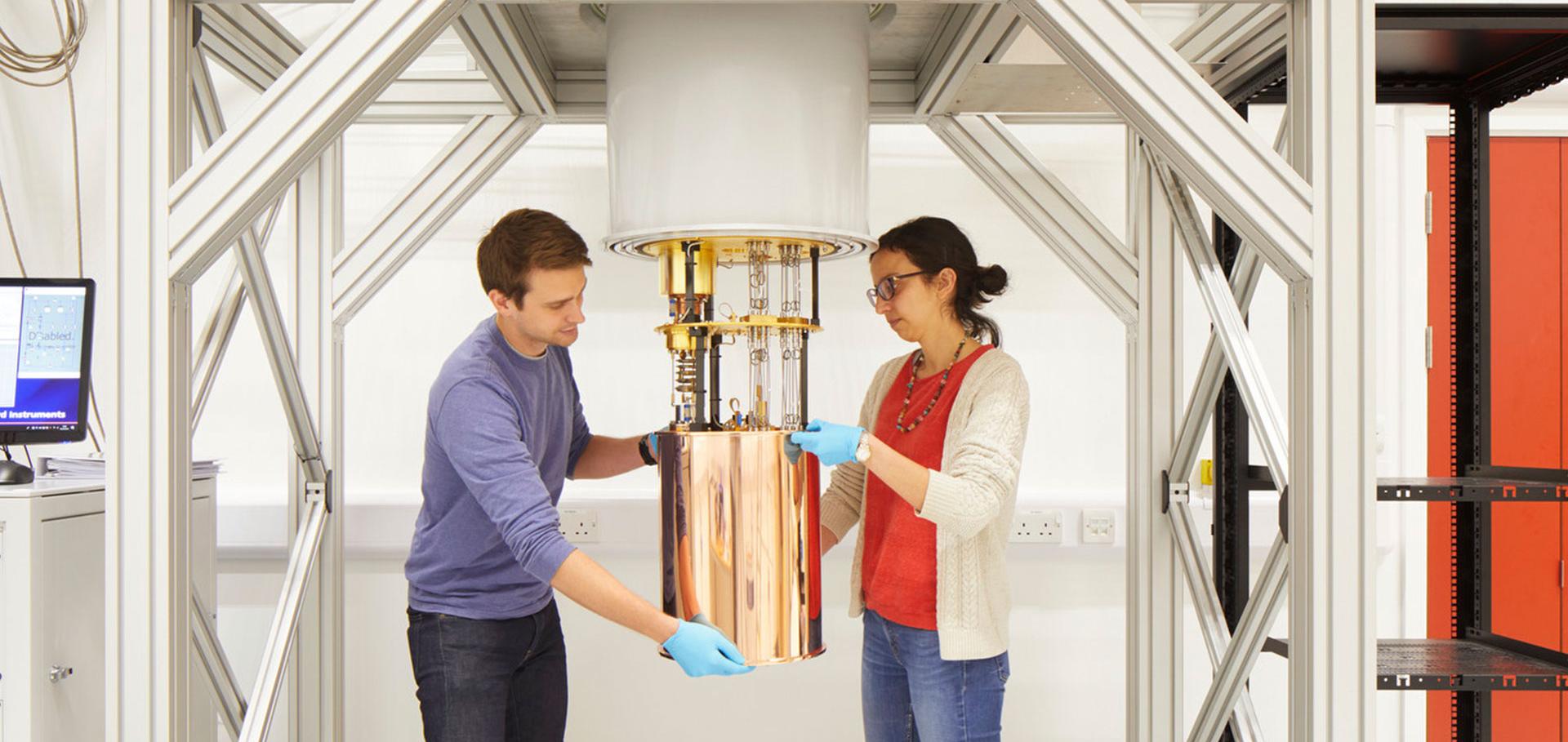
Credit: Jack Hobhouse

Prof Henry Snaith FRS

Professor of Physics

Sub department

  • Condensed Matter Physics

Research groups

  • Snaith group
  • Advanced Device Concepts for Next-Generation Photovoltaics
Henry.Snaith@physics.ox.ac.uk
Robert Hooke Building, room G21
  • About
  • Publications

Nonspiro, Fluorene‐Based, Amorphous Hole Transporting Materials for Efficient and Stable Perovskite Solar Cells

Advanced Science Wiley 5:4 (2018) 1700811

Authors:

Šarūnė Daškevičiū tė, Nobuya Sakai, Marius Franckevičius, Marytė Daškevičienė, Artiom Magomedov, Vygintas Jankauskas, Henry J Snaith, Vytautas Getautis
More details from the publisher
More details
More details

The effect of ionic composition on acoustic phonon speeds in hybrid perovskites from Brillouin spectroscopy and density functional theory

Journal of Materials Chemistry C Royal Society of Chemistry 6:15 (2018) 3861-3868

Authors:

IV Kabakova, I Azuri, Z Chen, Pabitra Nayak, Henry Snaith, L Kronik, C Paterson, AA Bakulin, DA Egger

Abstract:

Hybrid organic–inorganic perovskites (HOIPs) have recently emerged as highly promising solution-processable materials for photovoltaic (PV) and other optoelectronic devices. HOIPs represent a broad family of materials with properties highly tuneable by the ions that make up the perovskite structure as well as their multiple combinations. Interestingly, recent high-efficiency PV devices using HOIPs with substantially improved long-term stability have used combinations of different ionic compositions. The structural dynamics of these systems are unique for semiconducting materials and are currently argued to be central to HOIPs stability and charge-transport properties. Here, we studied the impact of ionic composition on phonon speeds of HOIPs from Brillouin spectroscopy experiments and density functional theory calculations for FAPbBr3, MAPbBr3, MAPbCl3, and the mixed halide MAPbBr1.25Cl1.75. Our results show that the acoustic phonon speeds can be strongly modified by ionic composition, which we explain by analysing the lead-halide sublattice in detail. The vibrational properties of HOIPs are therefore tuneable by using targeted ionic compositions in the perovskite structure. This tuning can be rationalized by non-trivial effects, for example, considering the influence of the shape and dipole moment of organic cations. This has an important implications for further improvements in the stability and charge-transport properties of these systems.
More details from the publisher
Details from ORA
More details
More details

Evidence of Nitrogen Contribution to the Electronic Structure of the CH3NH3PbI3 Perovskite

Chemistry - A European Journal Wiley 24:14 (2018) 3539-3544

Authors:

Małgorzata Kot, Konrad Wojciechowski, Henry Snaith, Dieter Schmeißer
More details from the publisher
More details
More details

Spatially Resolved Insight into the Chemical and Electronic Structure of Solution‐Processed Perovskites—Why to (Not) Worry about Pinholes

Advanced Materials Interfaces Wiley 5:5 (2018)

Authors:

Claudia Hartmann, Golnaz Sadoughi, Roberto Félix, Evelyn Handick, Hagen W Klemm, Gina Peschel, Ewa Madej, Alexander B Fuhrich, Xiaxia Liao, Simone Raoux, Daniel Abou‐Ras, Dan Wargulski, Thomas Schmidt, Regan G Wilks, Henry Snaith, Marcus Bär
More details from the publisher
More details

Hybrid perovskites: prospects for concentrator solar cells

Advanced Science Wiley 5:4 (2018) 1700792

Authors:

Qianqian Lin, Zhiping Wang, Henry J Snaith, Michael Johnston, Laura Herz

Abstract:

Perovskite solar cells have shown a meteoric rise of power conversion efficiency and a steady pace of improvements in their stability of operation. Such rapid progress has triggered research into approaches that can boost efficiencies beyond the Shockley-Queisser limit stipulated for a single-junction cell under normal solar illumination conditions. The tandem solar cell architecture is one concept here that has recently been successfully implemented. However, the approach of solar concentration has not been sufficiently explored so far for perovskite photovoltaics, despite its frequent use in the area of inorganic semiconductor solar cells. Here, the prospects of hybrid perovskites are assessed for use in concentrator solar cells. Solar cell performance parameters are theoretically predicted as a function of solar concentration levels, based on representative assumptions of charge-carrier recombination and extraction rates in the device. It is demonstrated that perovskite solar cells can fundamentally exhibit appreciably higher energy-conversion efficiencies under solar concentration, where they are able to exceed the Shockley-Queisser limit and exhibit strongly elevated open-circuit voltages. It is therefore concluded that sufficient material and device stability under increased illumination levels will be the only significant challenge to perovskite concentrator solar cell applications.
More details from the publisher
Details from ORA
More details
More details

Pagination

  • First page First
  • Previous page Prev
  • …
  • Page 61
  • Page 62
  • Page 63
  • Page 64
  • Current page 65
  • Page 66
  • Page 67
  • Page 68
  • Page 69
  • …
  • Next page Next
  • Last page Last

Footer Menu

  • Contact us
  • Giving to the Dept of Physics
  • Work with us
  • Media

User account menu

  • Log in

Follow us

FIND US

Clarendon Laboratory,

Parks Road,

Oxford,

OX1 3PU

CONTACT US

Tel: +44(0)1865272200

University of Oxfrod logo Department Of Physics text logo
IOP Juno Champion logo Athena Swan Silver Award logo

© University of Oxford - Department of Physics

Cookies | Privacy policy | Accessibility statement

Built by: Versantus

  • Home
  • Research
  • Study
  • Engage
  • Our people
  • News & Comment
  • Events
  • Our facilities & services
  • About us
  • Giving to Physics
  • Current students
  • Staff intranet