Home
Department Of Physics text logo
  • Research
    • Our research
    • Our research groups
    • Our research in action
    • Research funding support
    • Summer internships for undergraduates
  • Study
    • Undergraduates
    • Postgraduates
  • Engage
    • For alumni
    • For business
    • For schools
    • For the public
  • Support
Menu
CMP
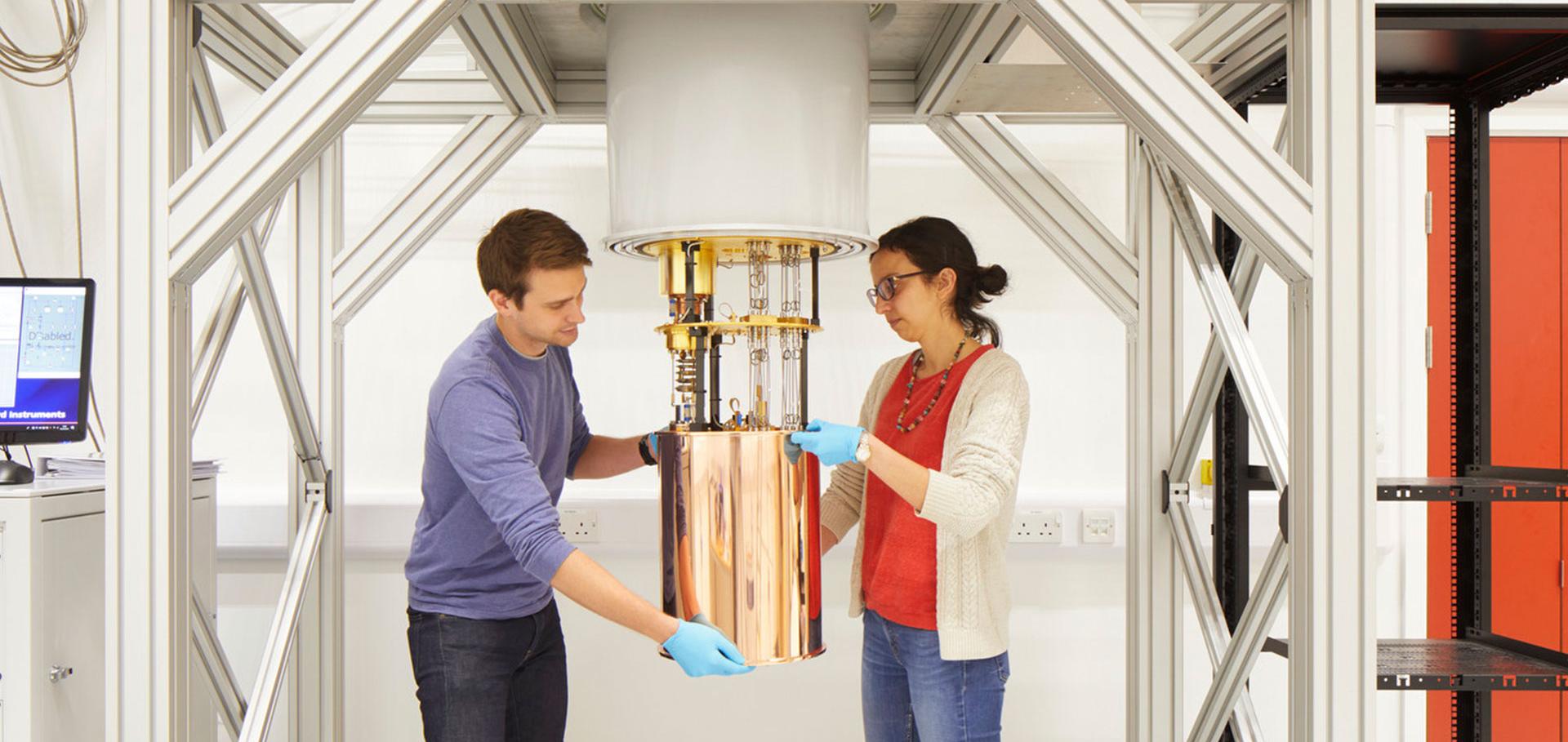
Credit: Jack Hobhouse

Prof Henry Snaith FRS

Professor of Physics

Sub department

  • Condensed Matter Physics

Research groups

  • Snaith group
  • Advanced Device Concepts for Next-Generation Photovoltaics
Henry.Snaith@physics.ox.ac.uk
Robert Hooke Building, room G21
  • About
  • Publications

Band Tail States in FAPbI3: Characterization and Simulation

Fundacio Scito (2017)

Authors:

Adam Wright, Rebecca Milot, Giles Eperon, Henry Snaith, Michael Johnston, Laura Herz
More details from the publisher

A generic interface to reduce the efficiency-stability-cost gap of perovskite solar cells

Science American Association for the Advancement of Science 358:6367 (2017) 1192-1197

Authors:

Y Hou, X Du, S Scheiner, David P McMeekin, Zhiping Wang, N Li, H Chen, M Richter, I Levchuk, N Schrenker, E Spiecker, T Stubhan, NA Luechinger, A Hirsch, P Schmuki, H-P Steinrück, RH Fink, M Halik, Henry J Snaith, CJ Brabec

Abstract:

A major bottleneck delaying the further commercialization of thin-film solar cells based on hybrid organohalide lead perovskites is interface loss in state-of-the-art devices. We present a generic interface architecture that combines solution-processed, reliable, and cost-efficient hole-transporting materials without compromising efficiency, stability, or scalability of perovskite solar cells. Tantalum-doped tungsten oxide (Ta-WO x )/conjugated polymer multilayers offer a surprisingly small interface barrier and form quasi-ohmic contacts universally with various scalable conjugated polymers. In a simple device with regular planar architecture and a self-assembled monolayer, Ta-WO x -doped interface-based perovskite solar cells achieve maximum efficiencies of 21.2% and offer more than 1000 hours of light stability. By eliminating additional ionic dopants, these findings open up the entire class of organics as scalable hole-transporting materials for perovskite solar cells.
More details from the publisher
Details from ORA
More details
More details

Metal halide perovskite tandem and multiple-junction photovoltaics

Nature Reviews Chemistry Springer Nature 1:12 (2017) 0095

Authors:

Giles E Eperon, Maximilian T Hörantner, Henry J Snaith
More details from the publisher

Tracking Photoexcited Carriers in Hybrid Perovskite Semiconductors: Trap-Dominated Spatial Heterogeneity and Diffusion

ACS Nano American Chemical Society (ACS) 11:11 (2017) 11488-11496

Authors:

Dane W deQuilettes, Sarthak Jariwala, Sven Burke, Mark E Ziffer, Jacob T-W Wang, Henry J Snaith, David S Ginger
More details from the publisher
More details
More details

A Conversation with Henry Snaith

ACS Energy Letters American Chemical Society (ACS) 2:11 (2017) 2552-2554

Authors:

Filippo De Angelis, Prashant V Kamat
More details from the publisher

Pagination

  • First page First
  • Previous page Prev
  • …
  • Page 63
  • Page 64
  • Page 65
  • Page 66
  • Current page 67
  • Page 68
  • Page 69
  • Page 70
  • Page 71
  • …
  • Next page Next
  • Last page Last

Footer Menu

  • Contact us
  • Giving to the Dept of Physics
  • Work with us
  • Media

User account menu

  • Log in

Follow us

FIND US

Clarendon Laboratory,

Parks Road,

Oxford,

OX1 3PU

CONTACT US

Tel: +44(0)1865272200

University of Oxfrod logo Department Of Physics text logo
IOP Juno Champion logo Athena Swan Silver Award logo

© University of Oxford - Department of Physics

Cookies | Privacy policy | Accessibility statement

Built by: Versantus

  • Home
  • Research
  • Study
  • Engage
  • Our people
  • News & Comment
  • Events
  • Our facilities & services
  • About us
  • Giving to Physics
  • Current students
  • Staff intranet