Home
Department Of Physics text logo
  • Research
    • Our research
    • Our research groups
    • Our research in action
    • Research funding support
    • Summer internships for undergraduates
  • Study
    • Undergraduates
    • Postgraduates
  • Engage
    • For alumni
    • For business
    • For schools
    • For the public
  • Support
Menu
CMP
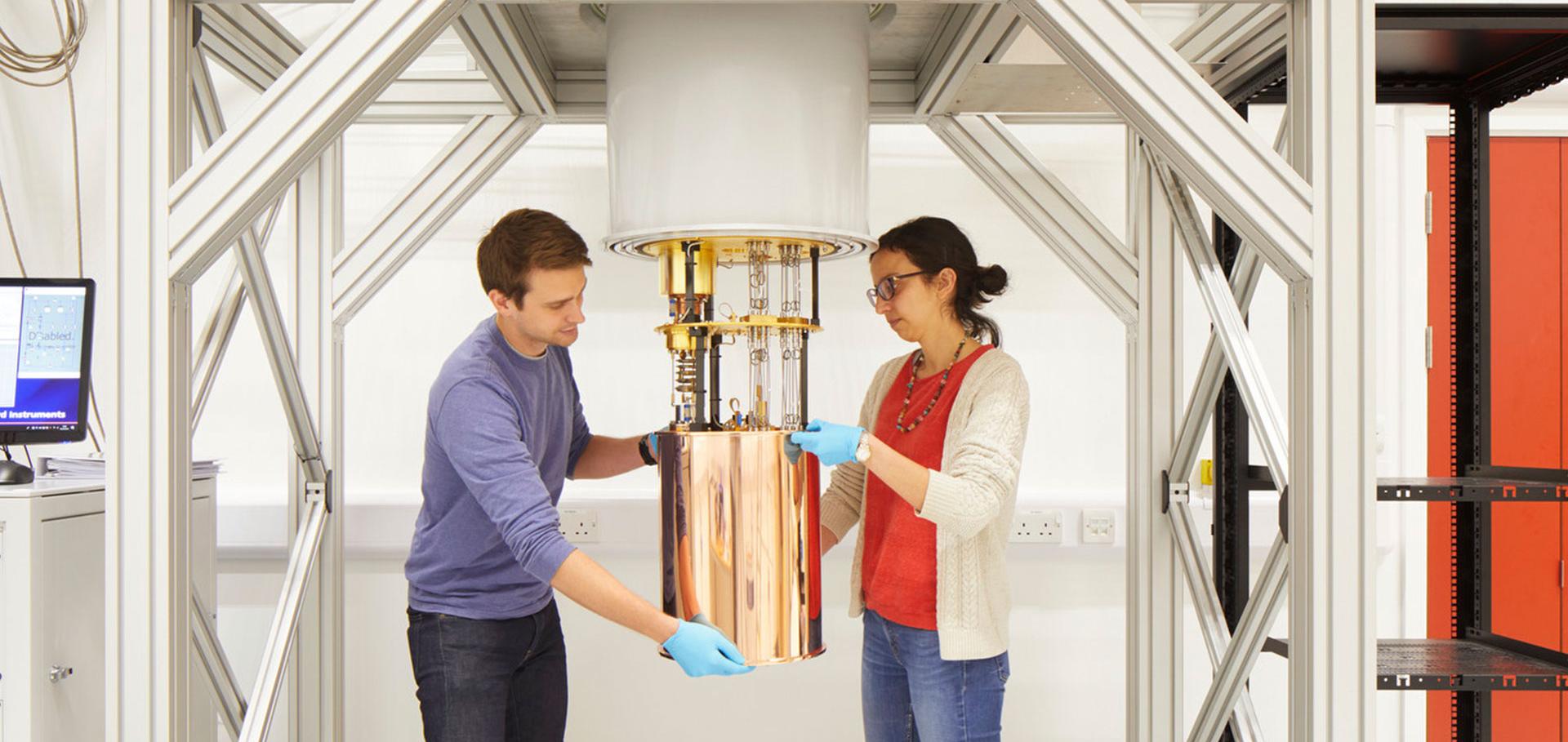
Credit: Jack Hobhouse

Prof Henry Snaith FRS

Professor of Physics

Sub department

  • Condensed Matter Physics

Research groups

  • Snaith group
  • Advanced Device Concepts for Next-Generation Photovoltaics
Henry.Snaith@physics.ox.ac.uk
Robert Hooke Building, room G21
  • About
  • Publications

Route to stable lead-free double perovskites with the electronic structure of CH3NH3PbI3: a case for mixed-cation [Cs/CH3NH3/CH(NH2)2]2InBiBr6

Journal of Physical Chemistry Letters American Chemical Society 8 (2017) 3917-3924

Authors:

George Volonakis, Amir Abbas Haghighirad, Henry J Snaith, Feliciano Giustino

Abstract:

During the past year, halide double perovskites attracted attention as potential lead-free alternatives to Pb-based halide perovskites. However, none of the compounds discovered so far can match the optoelectronic properties of MAPbI3 (MA = CH3NH3). Here we argue that, from the electronic structure viewpoint, the only option to make Pb-free double perovskites retaining the remarkable properties of MAPbI3 is to combine In and Bi as B(+) and B(3+) cations, respectively. While inorganic double perovskites such as Cs2InBiX6 were found to be unstable due to In(+) oxidizing into In(3+), we show that the +1 oxidation state of In becomes progressively more stable as the A-site cation changes from K to Cs. Hence, we propose the use of MA and FA [FA = CH(NH2)2] to stabilize A2InBiBr6 double perovskites. We show that the optoelectronic properties of A2InBiBr6 are remarkably similar to those of MAPbI3, and explore the mixed-cation (Cs/MA/FA)2InBiBr6 halide double perovskites.
More details from the publisher
Details from ORA
More details
More details
More details

Mechanisms of lithium intercalation and conversion processes in organic-inorganic halide perovskites

ACS Energy Letters American Chemical Society 2:8 (2017) 1818-1824

Authors:

JA Dawson, Andrew J Naylor, C Eames, Matthew R Roberts, W Zhang, Henry J Snaith, Peter Bruce

Abstract:

Organic-inorganic halide perovskites are attracting extraordinary attention in the field of energy materials. The reaction of hybrid lead halide perovskites with Li metal has been recently proposed for a number of potential applications. However, the mechanisms for Li uptake in such materials, such as intercalation and conversion, are still unknown. Using a combination of density functional theory, electrochemical and diffraction techniques, we consider Li intercalation and conversion reactions in CH3NH3PbI3, CH3NH3PbBr3 and CH3NH3PbCl3. Our simulations suggest that conversion reactions with Li are far more energetically preferable in these materials than Li intercalation. Calculations confirm the formation of Pb metal as a result of Li conversion in all three materials, and this is supported by an X-ray diffraction analysis of CH3NH3PbBr3. The results of this study provide fresh insights into lithium and halide perovskite reactions that will hopefully drive further exploration of these materials for a wider variety of energy applications.
More details from the publisher
Details from ORA
More details

How to avoid artifacts in surface photovoltage measurements: a case study with halide perovskites

Journal of Physical Chemistry Letters American Chemical Society 8:13 (2017) 2941-2943

Authors:

G Hodes, I Levine, Henry J Snaith, Pabitra Nayak
More details from the publisher
Details from ORA
More details
More details

The impact of the halide cage on the electronic properties of fully inorganic caesium lead halide perovskites

(2017)

Authors:

Z Yang, A Surrente, K Galkowski, A Miyata, O Portugall, RJ Sutton, AA Haghighirad, HJ Snaith, DK Maude, P Plochocka, RJ Nicholas
More details from the publisher

Impact of the halide cage on the electronic properties of fully inorganic cesium lead halide perovskites

ACS Energy Letters American Chemical Society 2:7 (2017) 1621-1627

Authors:

Z Yang, A Surrente, K Galkowski, A Miyata, O Portugall, Rebecca Sutton, AA Haghighirad, HJ Snaith, DK Maude, P Plochocka, RJ Nicholas

Abstract:

Perovskite solar cells with record power conversion efficiency are fabricated by alloying both hybrid and fully inorganic compounds. While the basic electronic properties of the hybrid perovskites are now well understood, key electronic parameters for solar cell performance, such as the exciton binding energy of fully inorganic perovskites, are still unknown. By performing magneto-transmission measurements, we determine with high accuracy the exciton binding energy and reduced mass of fully inorganic CsPbX3 perovskites (X = I, Br, and an alloy of these). The well-behaved (continuous) evolution of the band gap with temperature in the range of 4–270 K suggests that fully inorganic perovskites do not undergo structural phase transitions like their hybrid counterparts. The experimentally determined dielectric constants indicate that at low temperature, when the motion of the organic cation is frozen, the dielectric screening mechanism is essentially the same for both hybrid and inorganic perovskites and is dominated by the relative motion of atoms within the lead halide cage.
More details from the publisher
Details from ORA
More details
More details

Pagination

  • First page First
  • Previous page Prev
  • …
  • Page 68
  • Page 69
  • Page 70
  • Page 71
  • Current page 72
  • Page 73
  • Page 74
  • Page 75
  • Page 76
  • …
  • Next page Next
  • Last page Last

Footer Menu

  • Contact us
  • Giving to the Dept of Physics
  • Work with us
  • Media

User account menu

  • Log in

Follow us

FIND US

Clarendon Laboratory,

Parks Road,

Oxford,

OX1 3PU

CONTACT US

Tel: +44(0)1865272200

University of Oxfrod logo Department Of Physics text logo
IOP Juno Champion logo Athena Swan Silver Award logo

© University of Oxford - Department of Physics

Cookies | Privacy policy | Accessibility statement

Built by: Versantus

  • Home
  • Research
  • Study
  • Engage
  • Our people
  • News & Comment
  • Events
  • Our facilities & services
  • About us
  • Giving to Physics
  • Current students
  • Staff intranet