Home
Department Of Physics text logo
  • Research
    • Our research
    • Our research groups
    • Our research in action
    • Research funding support
    • Summer internships for undergraduates
  • Study
    • Undergraduates
    • Postgraduates
  • Engage
    • For alumni
    • For business
    • For schools
    • For the public
  • Support
Menu
CMP
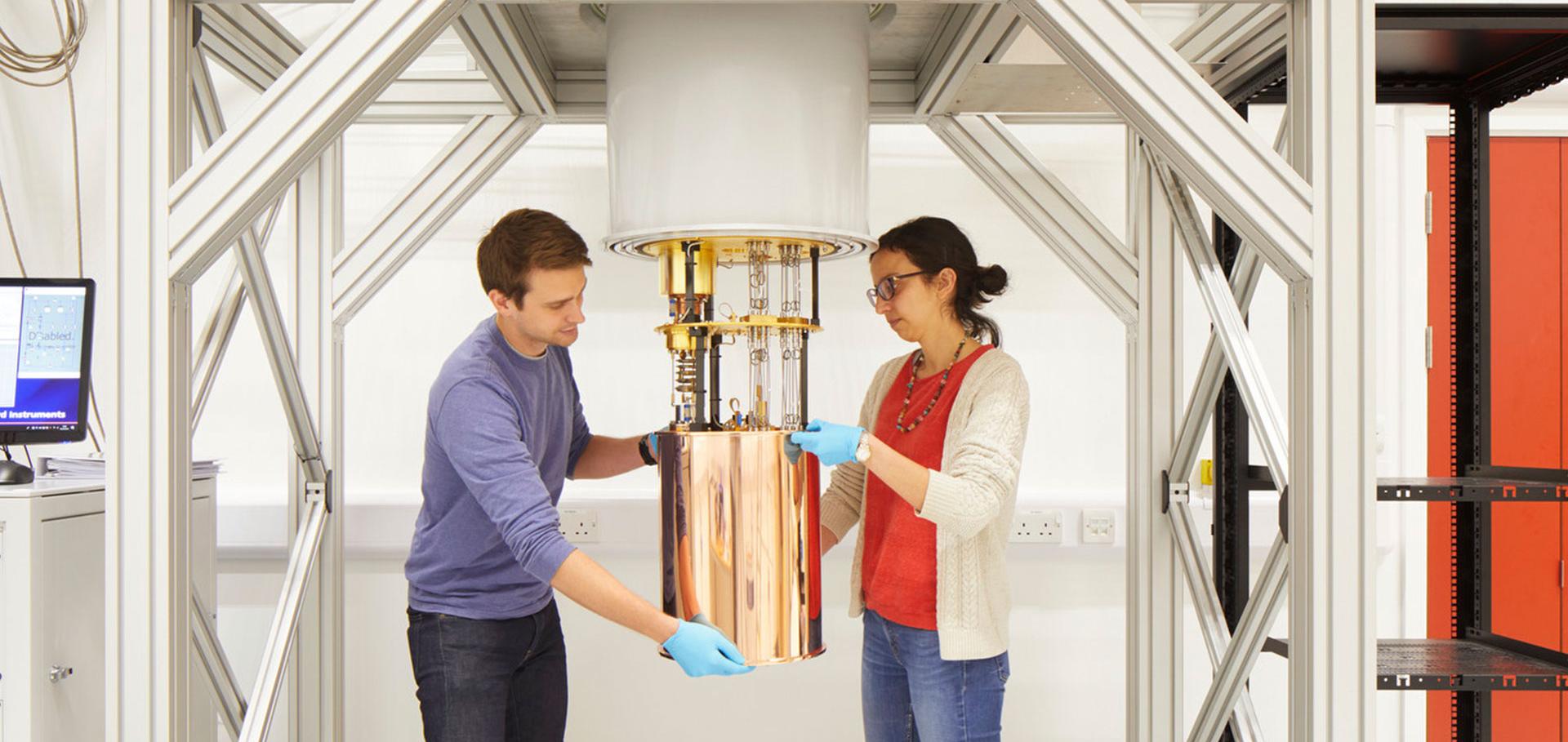
Credit: Jack Hobhouse

Prof Henry Snaith FRS

Professor of Physics

Sub department

  • Condensed Matter Physics

Research groups

  • Snaith group
  • Advanced Device Concepts for Next-Generation Photovoltaics
Henry.Snaith@physics.ox.ac.uk
Robert Hooke Building, room G21
  • About
  • Publications

Well-Defined Nanostructured, Single-Crystalline TiO2 Electron Transport Layer for Efficient Planar Perovskite Solar Cells

ACS Nano American Chemical Society (ACS) 10:6 (2016) 6029-6036

Authors:

Jongmin Choi, Seulki Song, Maximilian T Hörantner, Henry J Snaith, Taiho Park
More details from the publisher
More details
More details

Band gaps of the lead-free halide double perovskites Cs2BiAgCl6 and Cs2BiAgBr6 from theory and experiment

Journal of Physical Chemistry Letters American Chemical Society 7:13 (2016) 2579-2585

Authors:

Marina R Filip, Samuel Hillman, Amir Abbas Haghighirad, Henry J Snaith, Feliciano Giustino

Abstract:

The recent discovery of lead-free halide double perovskites with band gaps in the visible represents an important step forward in the design of environmentally friendly perovskite solar cells. Within this new family of semiconductors, Cs2BiAgCl6 and Cs2BiAgBr6 are stable compounds crystallizing in the elpasolite structure. Following the recent computational discovery and experimental synthesis of these compounds, a detailed investigation of their electronic properties is warranted in order to establish their potential as optoelectronic materials. In this work, we perform many-body perturbation theory calculations and obtain high accuracy band gaps for both compounds. In addition, we report on the synthesis of Cs2BiAgBr6 single crystals, which are stable in ambient conditions. From our complementary theoretical and experimental analysis, we are able to assign the indirect character of the band gaps and obtain both experimental and theoretical band gaps of these novel semiconductors that are in close agreement.
More details from the publisher
Details from ORA
More details
More details

Spatially resolved studies of the phases and morphology of methylammonium and formamidinium lead tri-halide perovskites

(2016)

Authors:

K Galkowski, A Mitioglu, A Surrente, Z Yang, DK Maude, P Kossacki, GE Eperon, JT-W Wang, HJ Snaith, P Plochocka, RJ Nicholas
More details from the publisher

Electrochemical replication of self-assembled block copolymer nanostructures

Chapter in Electrochemical Nanofabrication: Principles and Applications: Second Edition, (2016) 59-111

Authors:

E Crossland, H Snaith, U Steiner
More details from the publisher

Photo-induced halide redistribution in organic–inorganic perovskite films

Nature Communications Springer Nature 7 (2016) 11683

Authors:

DW deQuilettes, Wei Zhang, Victor Burlakov, DJ Graham, Tomas Leijtens, A Osherov, V Bulović, Henry Snaith, DS Ginger, SD Stranks

Abstract:

Organic-inorganic perovskites such as CH3NH3PbI3 are promising materials for a variety of optoelectronic applications, with certified power conversion efficiencies in solar cells already exceeding 21%. Nevertheless, state-of-the-art films still contain performance-limiting non-radiative recombination sites and exhibit a range of complex dynamic phenomena under illumination that remain poorly understood. Here we use a unique combination of confocal photoluminescence (PL) microscopy and chemical imaging to correlate the local changes in photophysics with composition in CH3NH3PbI3 films under illumination. We demonstrate that the photo-induced 'brightening' of the perovskite PL can be attributed to an order-of-magnitude reduction in trap state density. By imaging the same regions with time-of-flight secondary-ion-mass spectrometry, we correlate this photobrightening with a net migration of iodine. Our work provides visual evidence for photo-induced halide migration in triiodide perovskites and reveals the complex interplay between charge carrier populations, electronic traps and mobile halides that collectively impact optoelectronic performance.
More details from the publisher
Details from ORA
More details
More details

Pagination

  • First page First
  • Previous page Prev
  • …
  • Page 81
  • Page 82
  • Page 83
  • Page 84
  • Current page 85
  • Page 86
  • Page 87
  • Page 88
  • Page 89
  • …
  • Next page Next
  • Last page Last

Footer Menu

  • Contact us
  • Giving to the Dept of Physics
  • Work with us
  • Media

User account menu

  • Log in

Follow us

FIND US

Clarendon Laboratory,

Parks Road,

Oxford,

OX1 3PU

CONTACT US

Tel: +44(0)1865272200

University of Oxfrod logo Department Of Physics text logo
IOP Juno Champion logo Athena Swan Silver Award logo

© University of Oxford - Department of Physics

Cookies | Privacy policy | Accessibility statement

Built by: Versantus

  • Home
  • Research
  • Study
  • Engage
  • Our people
  • News & Comment
  • Events
  • Our facilities & services
  • About us
  • Giving to Physics
  • Current students
  • Staff intranet