
Home
Department Of Physics text logo
  • Research
    • Our research
    • Our research groups
    • Our research in action
    • Research funding support
    • Summer internships for undergraduates
  • Study
    • Undergraduates
    • Postgraduates
  • Engage
    • For alumni
    • For business
    • For schools
    • For the public
Menu
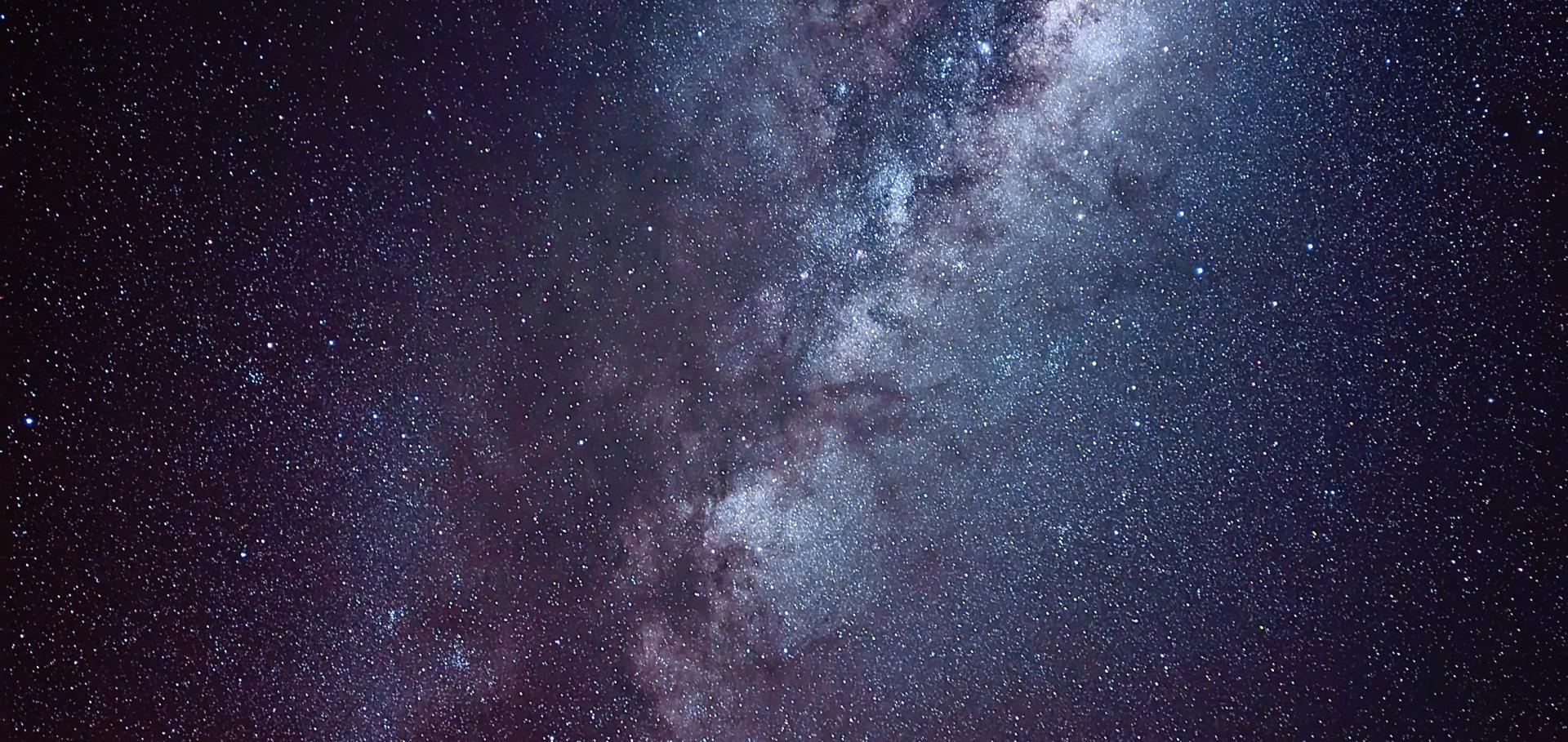
Milky Way Galaxy
Credit: H F Stevance

Dr Heloise Stevance

Schmidt AI in Science Fellow

Research theme

  • Astronomy and astrophysics

Sub department

  • Astrophysics
heloise.stevance@physics.ox.ac.uk
hfstevance.com
  • About
  • Research
  • Selected invited lectures
  • Prizes, awards and recognition
  • Publications

Characterization of (357439) 2004 BL86 on its close approach to Earth in 2015

Astronomy & Astrophysics EDP Sciences 581 (2015) a3

Authors:

M Birlan, M Popescu, DA Nedelcu, V Turcu, A Pop, B Dumitru, F Stevance, O Vaduvescu, D Moldovan, P Rocher, A Sonka, L Mircea

Abstract:

Context. The potentially hazardous asteroid (PHA) (357439) 2004 BL86 grazed Earth on January 26, 2015 at a distance of about 1.2 million km. This favorable geometry allowed observing it to derive its physical and dynamical parameters. (357439) 2004 BL86 was previously estimated to be a 500-m body. We study it also considering possible mechanisms that might mitigate the effect of asteroids that might become dangerous for Earth. Aims. Physical and dynamical investigations of this peculiar object were performed to be able to characterize this object. Methods. We used spectral observations obtained in the visible (V) using the Isaac Newton Telescope and in the near-infrared (NIR) using the InfraRed Telescope Facility. A complementary photometric survey during two nights was also provided by the Astronomical Observatory Cluj-Feleacu station in Romania. We anlyzed the data using reliable mathematical tools that were previously published under the acronym M4AST. Results. VNIR spectral observations classify (357439) 2004 BL86 as V-type asteroid. The mineralogical analysis reveals its similarities to howardite-eucrite-diogenite meteorites. The band analysis reveals that the object is more similar to a eucritic and howarditic composition, and that it originated from the crust of a large parent body. The analysis yields a mineralogical solution of Wo17Fs39 with an error bar of 4%. Based on the average value of the thermal albedo for V-type objects, its diameter was re-estimated to a value of 290 ± 30 m. The dynamical analysis shows a chaotical behavior of (357439) 2004 BL86. The statistics on meteorite falls show that (357439) 2004 BL86 does not appear to significantly contribute to the current howardite-eucrite-diogenite meteorite flux. For the two photometrical observing runs the following values of the rotational period and peak-to-peak amplitude were estimated for the light curves: 2.637 ± 0.024 h, 0.105 ± 0.007 mag, and 2.616 ± 0.061 h, 0.109 ± 0.018 mag, respectively.
More details from the publisher
More details

JWST detection of heavy neutron capture elements in a compact object merger

Authors:

Andrew Levan, Benjamin Gompertz, Om Sharan Salafia, Mattia Bulla, Eric Burns, Kenta Hotokezaka, Luca Izzo, Gavin Lamb, Daniele Malesani, Samantha Oates, Maria Ravasio, Alicia Rouco Escorial, Benjamin Schneider, Nikhil Sarin, Steve Schulze, Nial Tanvir, Kendall Ackley, Gemma Anderson, Gabriel Brammer, Lise Christensen, Vikram Dhillon, Phil Evans, Michael Fausnaugh, Wen-fai Fong, Andrew Fruchter, Chris Fryer, Johan Fynbo, Nicola Gaspari, Kasper Heintz, Jens Hjorth, Jamie Kennea, Mark Kennedy, Tanmoy Laskar, Giorgos Leloudas, Ilya Mandel, Antonio Martín-Carrillo, Brian Metzger, Matt Nicholl, Anya Nugent, Jesse Palmerio, Giovanna Pugilese, Jillian Rastinejad, Lauren Rhodes, Andrea Rossi, Stephen Smartt, Heloise Stevance, Aaron Tohuvavohu, Alexander van der Horst, Susanna Vergani, Darach Watson, Thomas Barclay, Kornpob Bhirombhakdi, Elme Breedt, Alice Breeveld, Alex Brown, Sergio Campana, Paolo D'Avanzo, Valerio D'Elia, Massimiliano De Pasquale, Martin Dyer, Duncan Galloway, James Garbutt, Matthew Green, Dieter Hartmann, Pall Jakobsson, Paul Kerry, Danial Langeroodi, James Leung, Stuart Littlefair, James Munday, Paul O'Brien, Steven Parsons, Ingrid Pelisoli, Dave Sahman, Ruben Salvaterra, Gianpiero Tagliaferri, Christina Thöne, Antonio de Ugarte Postigo, Boris Sbarufatti, Ashley Chrimes, Danny Steeghs, David Kann
More details from the publisher

MetaBeeAI: an AI pipeline for full-text systematic reviews in biology

Authors:

Rachel H Parkinson, Henry Cerbone, Mikael Mieskolainen, Shuxiang Cao, Alasdair D Wilson, Sergio Albacete, Emily B Armstrong, Chris Bass, Cristina Botías, Andrew Brown, Angela J Hayward, Lina Herbertsson, Andrew K Jones, Nicolas Nagloo, Elizabeth Nicholls, Elisa Rigosi, Fabio Sgolastra, Harry Siviter, Dara A Stanley, Lars Straub, Edward A Straw, Rafaela Tadei, Kieran Walter, Heloise F Stevance, Ryan K Daniels, Ben Lambert, Stephen Roberts
More details from the publisher

Uncovering the genealogy of GW170817 with self-consistent and detailed binary models

Authors:

Heloise Stevance, JJ Eldridge, Elizabeth Stanway, Joe Lyman, Anna McLeod, Andrew Levan
More details from the publisher

Pagination

  • First page First
  • Previous page Prev
  • …
  • Page 13
  • Page 14
  • Page 15
  • Page 16
  • Page 17
  • Page 18
  • Page 19
  • Page 20
  • Current page 21

Footer Menu

  • Contact us
  • Giving to the Dept of Physics
  • Work with us
  • Media

User account menu

  • Log in

Follow us

FIND US

Clarendon Laboratory,

Parks Road,

Oxford,

OX1 3PU

CONTACT US

Tel: +44(0)1865272200

University of Oxfrod logo Department Of Physics text logo
IOP Juno Champion logo Athena Swan Silver Award logo

© University of Oxford - Department of Physics

Cookies | Privacy policy | Accessibility statement

Built by: Versantus

  • Home
  • Research
  • Study
  • Engage
  • Our people
  • News & Comment
  • Events
  • Our facilities & services
  • About us
  • Giving to Physics
  • Current students
  • Staff intranet