Home
Department Of Physics text logo
  • Research
    • Our research
    • Our research groups
    • Our research in action
    • Research funding support
    • Summer internships for undergraduates
  • Study
    • Undergraduates
    • Postgraduates
  • Engage
    • For alumni
    • For business
    • For schools
    • For the public
  • Support
Menu
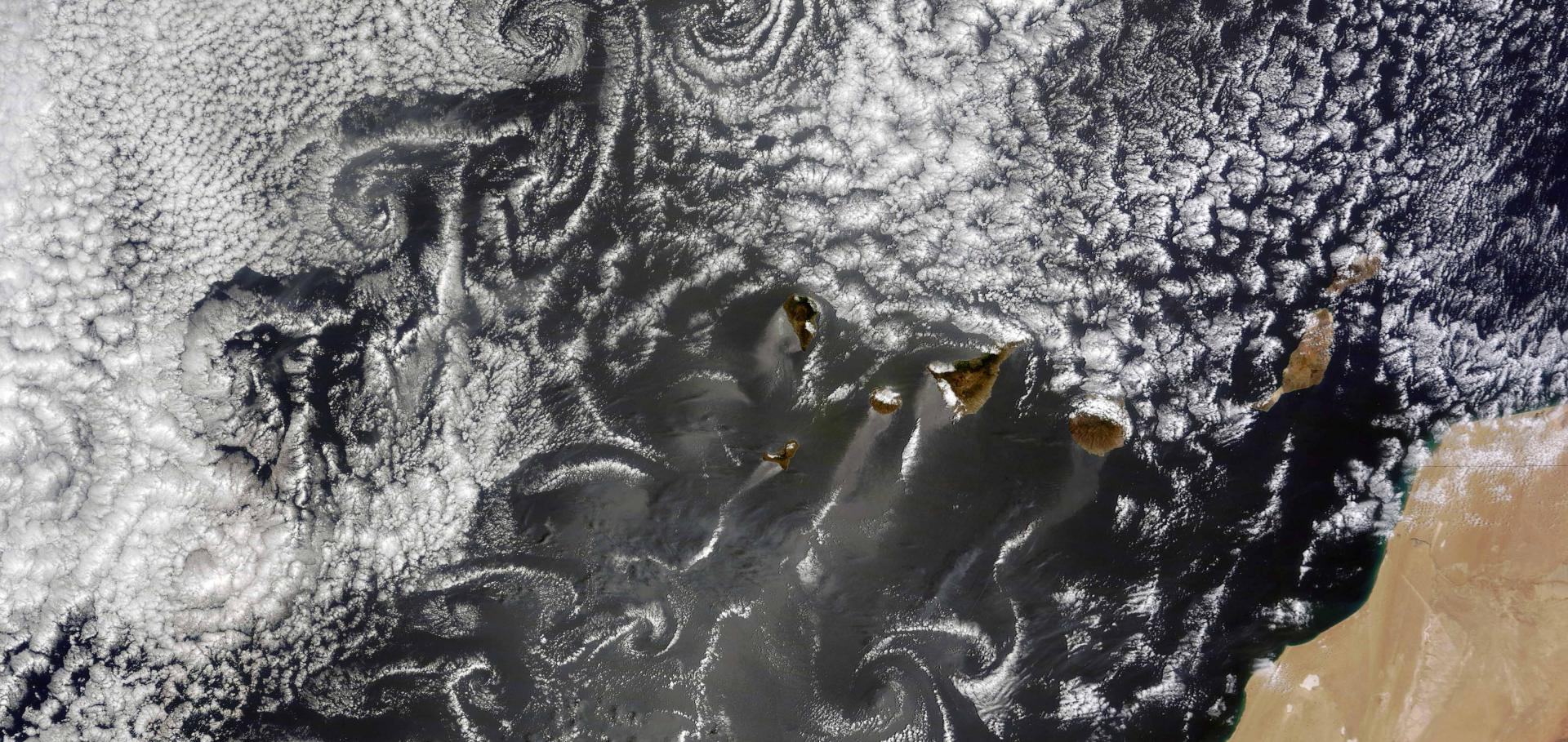
von Kármán vortex street over Canary Islands
Credit: NASA

Philip Stier

Professor of Atmospheric Physics

Research theme

  • Climate physics

Sub department

  • Atmospheric, Oceanic and Planetary Physics

Research groups

  • Climate processes
philip.stier@physics.ox.ac.uk
Telephone: 01865 (2)72887
Atmospheric Physics Clarendon Laboratory, room 103
  • About
  • Research
  • Teaching
  • CV
  • Publications

On the characteristics of aerosol indirect effect based on dynamic regimes in global climate models

Atmospheric Chemistry and Physics Discussions (2015)

Authors:

S Zhang, M Wang, SJ Ghan, A Ding, H Wang, K Zhang, D Neubauer, U Lohmann, S Ferrachat, T Takeamura, A Gettelman, H Morrison, YH Lee, DT Shindell, DG Partridge, Philip Stier, Z Kipling, C Fu

Abstract:

© Author(s) 2015. Aerosol-cloud interactions continue to constitute a major source of uncertainty for the estimate of climate radiative forcing. The variation of aerosol indirect effects (AIE) in climate models is investigated across different dynamical regimes, determined by monthly mean 500 hPa vertical pressure velocity (ω 500 ), lower-tropospheric stability (LTS) and large-scale surface precipitation rate derived from several global climate models (GCMs), with a focus on liquid water path (LWP) response to cloud condensation nuclei (CCN) concentrations. The LWP sensitivity to aerosol perturbation within dynamic regimes is found to exhibit a large spread among these GCMs. It is in regimes of strong large-scale ascend (ω 500 < -25 hPa d -1 ) and low clouds (stratocumulus and trade wind cumulus) where the models differ most. Shortwave aerosol indirect forcing is also found to differ significantly among different regimes. Shortwave aerosol indirect forcing in ascending regimes is as large as that in stratocumulus regimes, which indicates that regimes with strong large-scale ascend are as important as stratocumulus regimes in studying AIE. It is further shown that shortwave aerosol indirect forcing over regions with high monthly large-scale surface precipitation rate ( > 0.1 mm d -1 ) contributes the most to the total aerosol indirect forcing (from 64 to nearly 100 %). Results show that the uncertainty in AIE is even larger within specific dynamical regimes than that globally, pointing to the need to reduce the uncertainty in AIE in different dynamical regimes.
More details from the publisher

Modelled black carbon radiative forcing and atmospheric lifetime in AeroCom Phase II constrained by aircraft observations

Atmospheric Chemistry and Physics 14:22 (2014) 12465-12477

Authors:

BH Samset, G Myhre, A Herber, Y Kondo, SM Li, N Moteki, M Koike, N Oshima, JP Schwarz, Y Balkanski, SE Bauer, N Bellouin, TK Berntsen, H Bian, M Chin, T Diehl, RC Easter, SJ Ghan, T Iversen, A Kirkeväg, JF Lamarque, G Lin, X Liu, JE Penner, M Schulz, Seland, RB Skeie, P Stier, T Takemura, K Tsigaridis, K Zhang

Abstract:

Atmospheric black carbon (BC) absorbs solar radiation, and exacerbates global warming through exerting positive radiative forcing (RF). However, the contribution of BC to ongoing changes in global climate is under debate. Anthropogenic BC emissions, and the resulting distribution of BC concentration, are highly uncertain. In particular, long-range transport and processes affecting BC atmospheric lifetime are poorly understood. Here we discuss whether recent assessments may have overestimated present-day BC radiative forcing in remote regions. We compare vertical profiles of BC concentration from four recent aircraft measurement campaigns to simulations by 13 aerosol models participating in the AeroCom Phase II intercomparison. An atmospheric lifetime of BC of less than 5 days is shown to be essential for reproducing observations in remote ocean regions, in line with other recent studies. Adjusting model results to measurements in remote regions, and at high altitudes, leads to a 25% reduction in AeroCom Phase II median direct BC forcing, from fossil fuel and biofuel burning, over the industrial era. The sensitivity of modelled forcing to BC vertical profile and lifetime highlights an urgent need for further flight campaigns, close to sources and in remote regions, to provide improved quantification of BC effects for use in climate policy.
More details from the publisher

Links between satellite-retrieved aerosol and precipitation

Atmospheric Chemistry and Physics Copernicus Publications 14:18 (2014) 9677-9694

Authors:

E Gryspeerdt, P Stier, DG Partridge
More details from the publisher

Rainfall‐aerosol relationships explained by wet scavenging and humidity

Geophysical Research Letters American Geophysical Union (AGU) 41:15 (2014) 5678-5684

Authors:

Benjamin S Grandey, Anisha Gururaj, Philip Stier, Till M Wagner
More details from the publisher
More details

A pathway analysis of global aerosol processes

Atmospheric Chemistry and Physics Discussions Copernicus Publications 14 (2014) 15045-15112

Authors:

NAJ Schutgens, P Stier

Abstract:

We present a detailed budget of the changes in atmospheric aerosol mass and numbers due to various processes: emission, nucleation, coagulation, H2SO4 condensation and in-cloud production, ageing and deposition. The budget is created from monthly-averaged tracer tendencies calculated by the global aerosol model ECHAM5.5-HAM2 and allows us to investigate process contributions at various length- and time-scales. As a result, we show in unprecedented detail what processes drive the evolution of aerosol. In particular, we show that the processes that affect aerosol masses are quite different from those affecting aerosol numbers. Condensation of H2SO4 gas onto pre-existing particles is an important process, dominating the growth of small particles in the nucleation mode to the Aitken mode and the ageing of hydrophobic matter. Together with in-cloud production of H2SO4, it significantly contributes to (and often dominates) the mass burden (and hence composition) of the hydrophilic Aitken and accumulation mode particles. Particle growth itself is the leading source of number densities in the hydrophilic Aitken and accumulation modes, with their hydrophobic counterparts contributing (even locally) relatively little. As expected, the coarse mode is dominated by primary emissions and mostly decoupled from the smaller modes. Our analysis also suggests that coagulation serves mainly as a loss process for number densities and that, relative to other processes, it is a rather unimportant contributor to composition changes of aerosol. The analysis is extended with sensitivity studies where the impact of a lower model resolution or pre-industrial emissions is shown to be small. We discuss the use of the current budget for model simplification, prioritisation of model improvements, identification of potential structural model errors and model evaluation against observations.
More details from the publisher
Details from ORA
More details

Pagination

  • First page First
  • Previous page Prev
  • …
  • Page 47
  • Page 48
  • Page 49
  • Page 50
  • Current page 51
  • Page 52
  • Page 53
  • Page 54
  • Page 55
  • …
  • Next page Next
  • Last page Last

Footer Menu

  • Contact us
  • Giving to the Dept of Physics
  • Work with us
  • Media

User account menu

  • Log in

Follow us

FIND US

Clarendon Laboratory,

Parks Road,

Oxford,

OX1 3PU

CONTACT US

Tel: +44(0)1865272200

University of Oxfrod logo Department Of Physics text logo
IOP Juno Champion logo Athena Swan Silver Award logo

© University of Oxford - Department of Physics

Cookies | Privacy policy | Accessibility statement

Built by: Versantus

  • Home
  • Research
  • Study
  • Engage
  • Our people
  • News & Comment
  • Events
  • Our facilities & services
  • About us
  • Giving to Physics
  • Current students
  • Staff intranet