Home
Department Of Physics text logo
  • Research
    • Our research
    • Our research groups
    • Our research in action
    • Research funding support
    • Summer internships for undergraduates
  • Study
    • Undergraduates
    • Postgraduates
  • Engage
    • For alumni
    • For business
    • For schools
    • For the public
  • Support
Menu
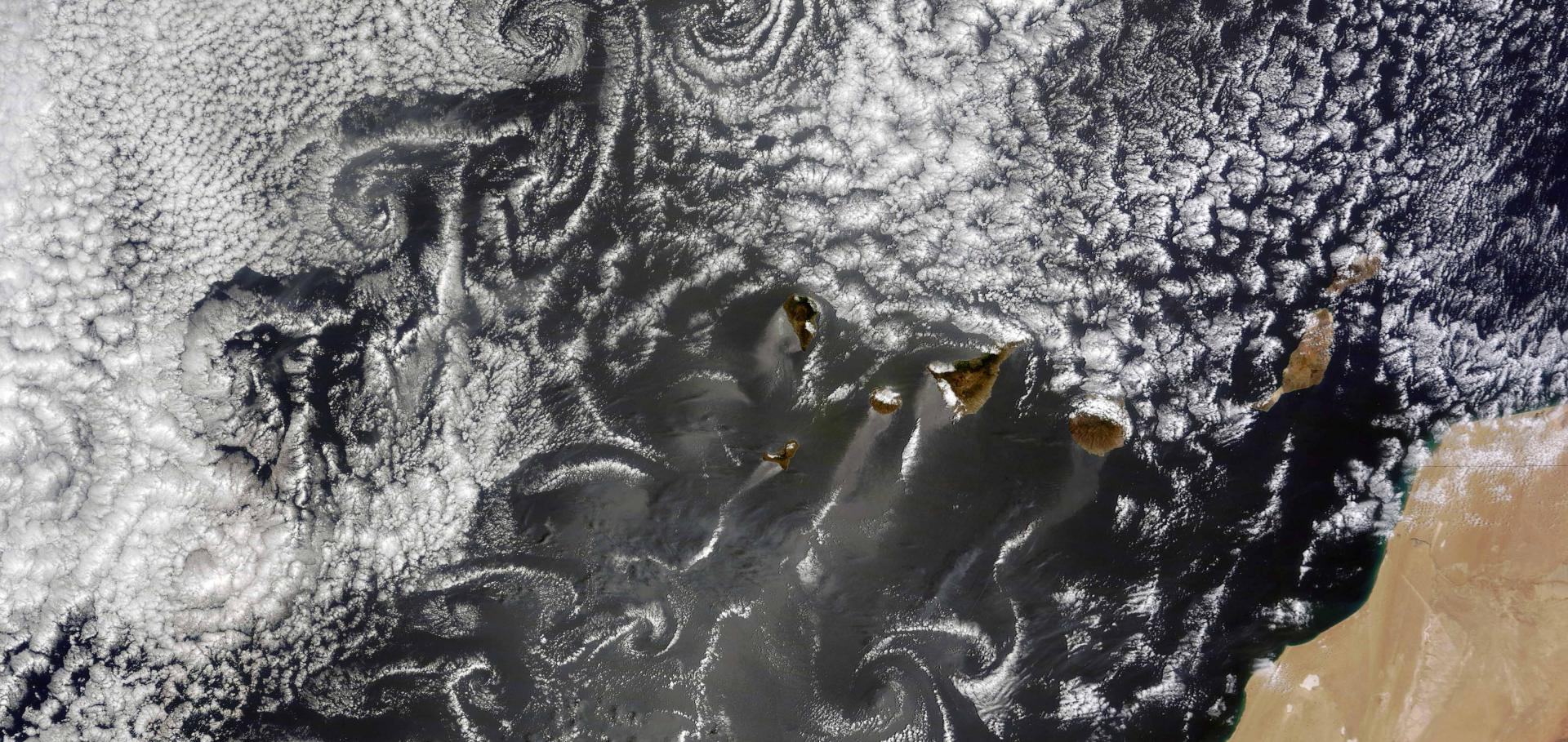
von Kármán vortex street over Canary Islands
Credit: NASA

Philip Stier

Professor of Atmospheric Physics

Research theme

  • Climate physics

Sub department

  • Atmospheric, Oceanic and Planetary Physics

Research groups

  • Climate processes
philip.stier@physics.ox.ac.uk
Telephone: 01865 (2)72887
Atmospheric Physics Clarendon Laboratory, room 103
  • About
  • Research
  • Teaching
  • CV
  • Publications

Will a perfect model agree with perfect observations? The impact of spatial sampling

Copernicus Publications (2016)

Authors:

NAJ Schutgens, E Gryspeerdt, N Weigum, S Tsyro, D Goto, M Schulz, P Stier
More details from the publisher

Limitations of passive satellite remote sensing to constrain global cloud condensation nuclei

Atmospheric Chemistry and Physics European Geosciences Union 15:22 (2015) 32607-32637

Abstract:

Aerosol–cloud interactions are considered a key uncertainty in our understanding of climate change (Boucher et al., 2013). Knowledge of the global abundance of aerosols suitable to act as cloud condensation nuclei (CCN) is fundamental to determine the strength of the anthropogenic climate perturbation. Direct measurements are limited and sample only a very small fraction of the globe so that remote sensing from satellites and ground based instruments is widely used as a proxy for cloud condensation nuclei (Nakajima et al., 2001; Andreae, 2009; Clarke and Kapustin, 2010; Boucher et al., 2013). However, the underlying assumptions cannot be robustly tested with the small number of measurements available so that no reliable global estimate of cloud condensation nuclei exists. This study overcomes this limitation using a fully self-consistent global model (ECHAM-HAM) of aerosol radiative properties and cloud condensation nuclei. An analysis of the correlation of simulated aerosol radiative properties and cloud condensation nuclei reveals that common assumptions about their relationships are violated for a significant fraction of the globe: 71 % of the area of the globe shows correlation coefficients between CCN0.2% at cloud base and aerosol optical depth (AOD) below 0.5, i.e. AOD variability explains only 25 % of the CCN variance. This has significant implications for satellite based studies of aerosol–cloud interactions. The findings also suggest that vertically resolved remote sensing techniques, such as satellite-based high spectral resolution lidars, have a large potential for global monitoring of cloud condensation nuclei.
More details from the publisher
Details from ORA

Satellite observations of convection and their implications for parameterizations

Chapter in Parameterization of Atmospheric Convection, World Scientific Publishing 1 (2015) 47-58

Authors:

J Quaas, P Stier
More details from the publisher

Wet scavenging limits the detection of aerosol effects on precipitation

Atmospheric Chemistry and Physics Copernicus Publications 15:13 (2015) 7557-7570

Authors:

E Gryspeerdt, P Stier, BA White, Z Kipling
More details from the publisher

Wet scavenging limits the detection of aerosol–cloud–precipitation interactions

Atmo 15 (2015) 6851-6886

Authors:

E Gryspeerdt, P Stier, BA White, Z Kipling
More details from the publisher
Details from ORA

Pagination

  • First page First
  • Previous page Prev
  • …
  • Page 46
  • Page 47
  • Page 48
  • Page 49
  • Current page 50
  • Page 51
  • Page 52
  • Page 53
  • Page 54
  • …
  • Next page Next
  • Last page Last

Footer Menu

  • Contact us
  • Giving to the Dept of Physics
  • Work with us
  • Media

User account menu

  • Log in

Follow us

FIND US

Clarendon Laboratory,

Parks Road,

Oxford,

OX1 3PU

CONTACT US

Tel: +44(0)1865272200

University of Oxfrod logo Department Of Physics text logo
IOP Juno Champion logo Athena Swan Silver Award logo

© University of Oxford - Department of Physics

Cookies | Privacy policy | Accessibility statement

Built by: Versantus

  • Home
  • Research
  • Study
  • Engage
  • Our people
  • News & Comment
  • Events
  • Our facilities & services
  • About us
  • Giving to Physics
  • Current students
  • Staff intranet