


My Research
My research interests revolve around confinement in fusion plasmas. Magnetic-confinement fusion devices obey a power balance where the majority of the heat injected into the device is transported radially outwards. In an ideal world, the transport would be strictly diffusive, and the plasma flow laminar, but all fusion plasmas that are hot enough are unstable to gradient-driven instabilities. Some instabilities compromise the entire confinement and completely disrupt the experiment, and they can be mitigated. However, the others generate micro-scale stirring in the form of turbulence, and it amounts to extremely efficient energy transport - completely undesirable for a fusion plasma.
In operating tokamaks, it is found that a spontaneous suppression of turbulence occurs close to the edge of the device, increasing confinement and resulting in immense gradients in the edge of the plasma (a drop of 100 times the temperature of the surface of the sun over the thickness of a double-glazed window); this region is called the pedestal after the shape of the radial pressure profile. Alongside this, most of the plasma sustains far higher densities and temperatures, which is is conducive to far higher fusion output. Because of this, future tokamaks aim to operate with such an edge-transport barrier, and the correct prediction of the properties of the pedestal is crucial for the design of these devices and, without exaggeration, for the future of fusion.
My experimental work revolves around analysing the pedestal structure and anomalous transport in the edge-plasmas of JET-ILW, employing both physical models and machine-learning techniques. We uncovered interesting and previously unknown structural properties of these pedestals, alongside developing tools for large-scale experimental validation of anomalous transport laws.
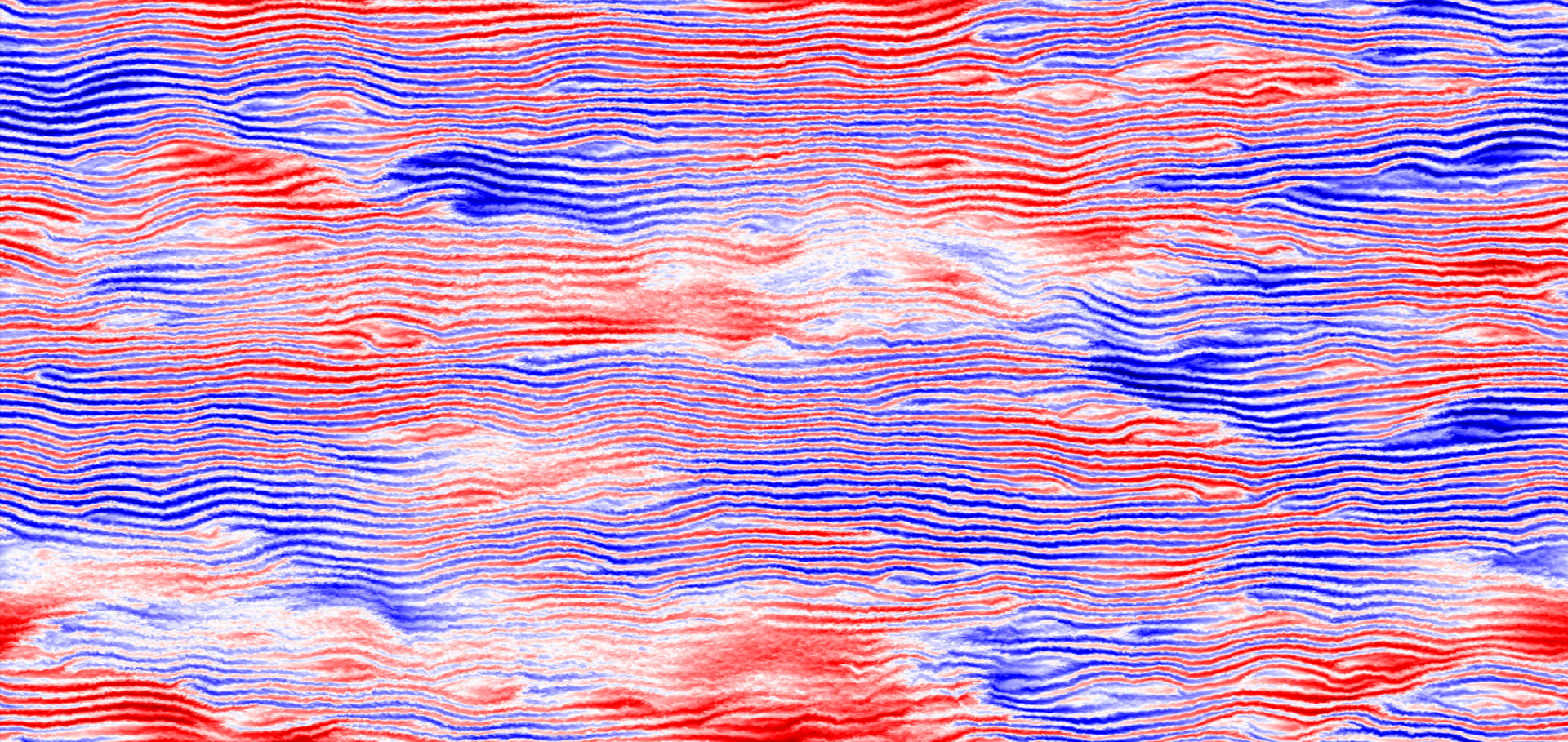
Additionally, I am developing a theory of electron-scale electrostatic turbulent transport in a fluid model of collisional plasmas, aiming to mimic the effect of density gradients and temperature gradients in the pedestal. As of now, we are investigating the lack of universality of such turbulent systems which avoid establishing a typical fluid-mechanical turbulent cascade, in favour of a direct non-local transfer of free energy to scales near dissipation. This is an important result as it defines a fundamentally distinct means of turbulent saturation from those currently known, and it raises important questions regarding the numerical investigation of turbulent plasmas using gyrokinetic simulations, which is ubiquitous in our field.
Bio
I completed my undergraduate studies at Magdalen College, Oxford, from 2018 to 2022, earning a First in the BA in Physics and a Distinction in the Master of Mathematical and Theoretical Physics.
In 2022, I began my DPhil at University College, supervised by Prof. Alexander Schekochihin (Oxford) in collaboration with UKAEA.
Since 2022, I have held a Lectureship at Magdalen College, teaching a variety of courses across the undergraduate physics curriculum. Alongside this, I taught plasma-physics-related topics in the MMathPhys program.