Home
Department Of Physics text logo
  • Research
    • Our research
    • Our research groups
    • Our research in action
    • Research funding support
    • Summer internships for undergraduates
  • Study
    • Undergraduates
    • Postgraduates
  • Engage
    • For young people
    • For teachers
    • For the public
    • For alumni
    • For business
  • Support
Menu
CMP
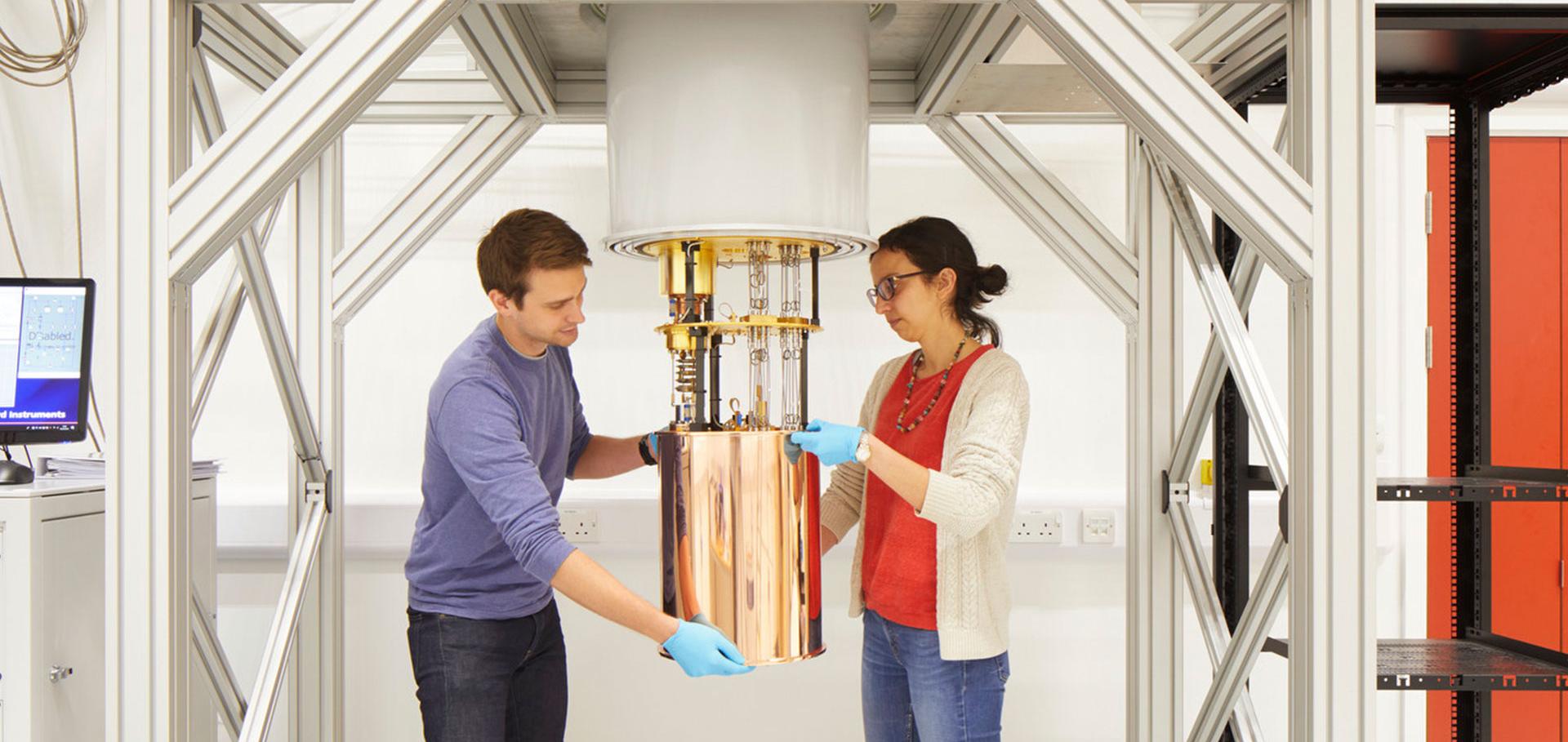
Credit: Jack Hobhouse

Roger Ward

Retired

Sub department

  • Condensed Matter Physics
Roger.Ward@physics.ox.ac.uk
Clarendon Laboratory, room 164
  • About
  • Publications

Epitaxial PtMn/NiFe exchange-biased bilayers containing directly deposited ordered PtMn

Journal of Applied Physics 97:10 (2005)

Authors:

YS Choi, AK Petford-Long, RCC Ward

Abstract:

PtMnNiFe exchange-biased bilayers have been grown epitaxially on Si (001) using molecular-beam epitaxy. Spontaneous formation of the chemically ordered face-centered-tetragonal phase of PtMn layer was confirmed without postgrowth magnetic-field annealing, whose Ńel axis is perpendicular to the PtMnNiFe interface. The exchange anisotropy field stabilizes above a PtMn thickness of 15 nm which is much lower than that for polycrystalline PtMn-based exchange-biased systems. For comparison, PtMnNiFe exchange-biased bilayers have been prepared epitaxially on MgO (001) substrate. Spontaneous formation of the chemically ordered PtMn layer was also confirmed with Ńel axis parallel to the PtMnNiFe interface. The exchange anisotropy field of the bilayer on MgO stabilizes beyond a PtMn thickness of 15 nm as well. © 2005 American Institute of Physics.
More details from the publisher
More details

Thickness effects on the magnetism of Ho thin films

Journal of Physics Condensed Matter 17:17 (2005) 2543-2552

Authors:

ADF Herring, WJ Nuttall, MF Thomas, JP Goff, A Stunault, RCC Ward, MR Wells, WG Stirling

Abstract:

This study was undertaken to probe any thickness dependence of the magnetic ordering in Ho film samples of thickness 1000 monolayers (ML), 100 ML and 50 ML. The study was carried out on the antiferromagnetic helical magnetic phase in the temperature range 65 → 132 K (TN). The magnetism was studied by x-ray magnetic scattering using the resonant process at the Ho L III absorption edge, 8.071 keV. It was found that the magnetic modulation wavevector, τ, of the Ho helical structure changed systematically with temperature over the range 65 K → TN. No evidence of a change in τ with changing layer thickness was seen. The value of the Néel temperature TN decreased from 130 K for the 1000 ML sample to 110 K for the 50 ML sample. The critical exponent β of the transition between the helical to paramagnetic state is measured as β ≈ 0.5 for the 1000 and 100 ML samples compared to a literature value of β = 0.39 for bulk. For the 50 ML film, β = 0.28 ± 0.05. The measured values of β are discussed in terms of strain and reduced dimensionality. © 2005 IOP Publishing Ltd.
More details from the publisher

Magnetism of uranium/iron multilayers: II. Magnetic properties

Journal of Physics Condensed Matter 16:47 (2004) 8507-8518

Authors:

AM Beesley, SW Zochowski, MF Thomas, ADF Herring, S Langridge, SD Brown, RCC Ward, MR Wells, R Springel, WG Stirling, GH Lander

Abstract:

Well-defined U/Fe multilayers of varying layer thicknesses and bilayer repeat numbers were prepared by a dc magnetron sputtering method. Polarized neutron reflectometry, off-specular neutron diffraction and magnetic moment measurements were used to determine the physical properties of the multilayers leading to an evaluation of the magnetic moments associated with the U and Fe atoms. The multilayers exhibit ferromagnetic behaviour with the easy axis in the plane of the multilayer. The saturation magnetization was found to increase with increasing Fe-layer thickness and the magnetic moment averaged over the structured iron layers was below the bulk value of 2.2 μB/Fe atom. No anomalies were observed in the magnetization from 4.2 to 375 K in temperature-dependent scans at 0.005 and 0.1 T or in magnetic field scans from 0 to 7 T at 4.2 and 295 K. The hysteresis curves exhibited a small degree of perpendicular magnetic anisotropy. The Curie temperatures for the multilayers were.determined from ac susceptibility measurements and were found to be less than the bulk Fe value of 1043 K.
More details from the publisher

Magnetism of uranium/iron multilayers: I. Fabrication and characterization

Journal of Physics Condensed Matter 16:47 (2004) 8491-8505

Authors:

AM Beesley, MF Thomas, ADF Herring, RCC Ward, MR Wells, S Langridge, SD Brown, SW Zochowski, L Bouchenoire, WG Stirling, GH Lander

Abstract:

U/Fe multilayers constitute a magnetic system in which the 3d magnetism of the Fe layers will be modified by hybridization with the U 5f electrons. This paper describes a programme of measurements of the magnetic behaviour of these systems beginning with the fabrication and thorough characterization of the samples. Metallic U/Fe multilayers were prepared by DC sputtering in a UHV chamber. A range of samples with measured U thicknesses, tU, in the range 18-66 Å and Fe thicknesses, tFe, from 7 to 108 Å was fabricated. X-ray and neutron reflectivity measurements showed strong peaks indicating good layer structure and gave a determination of the bilayer thickness. X-ray diffraction analysis showed crystalline α-U and α-Fe for layer thicknesses greater than about 20 Å. The α-Fe is strongly textured with (110) planes in the layer plane. The Fe lattice parameter is larger for the case of thin layers, but approaches the bulk value of 2.866 Å at tFe ∼ 75 Å. Mössbauer spectra of α-Fe were obtained for tFe ≥ 18 Å; a non-magnetic component of thickness ∼12 Å per layer is always present. The results from these different experimental techniques are combined to present a detailed description of these multilayer systems.
More details from the publisher
More details

Magnetocrystalline and magnetoelastic basal plane anisotropies in Ho∕Lu superlattices

Physical Review B American Physical Society (APS) 70:5 (2004) 052403

Authors:

L Benito, JI Arnaudas, M Ciria, C de la Fuente, A del Moral, RCC Ward, MR Wells
More details from the publisher
More details

Pagination

  • First page First
  • Previous page Prev
  • …
  • Page 9
  • Page 10
  • Page 11
  • Page 12
  • Current page 13
  • Page 14
  • Page 15
  • Page 16
  • Page 17
  • …
  • Next page Next
  • Last page Last

Footer Menu

  • Contact us
  • Giving to the Dept of Physics
  • Work with us
  • Media

User account menu

  • Log in

Follow us

FIND US

Clarendon Laboratory,

Parks Road,

Oxford,

OX1 3PU

CONTACT US

Tel: +44(0)1865272200

University of Oxfrod logo Department Of Physics text logo
IOP Juno Champion logo Athena Swan Silver Award logo

© University of Oxford - Department of Physics

Cookies | Privacy policy | Accessibility statement

Built by: Versantus

  • Home
  • Research
  • Study
  • Engage
  • Our people
  • News & Comment
  • Events
  • Our facilities & services
  • About us
  • Giving to Physics
  • Current students
  • Staff intranet