Home
Department Of Physics text logo
  • Research
    • Our research
    • Our research groups
    • Our research in action
    • Research funding support
    • Summer internships for undergraduates
  • Study
    • Undergraduates
    • Postgraduates
  • Engage
    • For young people
    • For teachers
    • For the public
    • For alumni
    • For business
  • Support
Menu
CMP
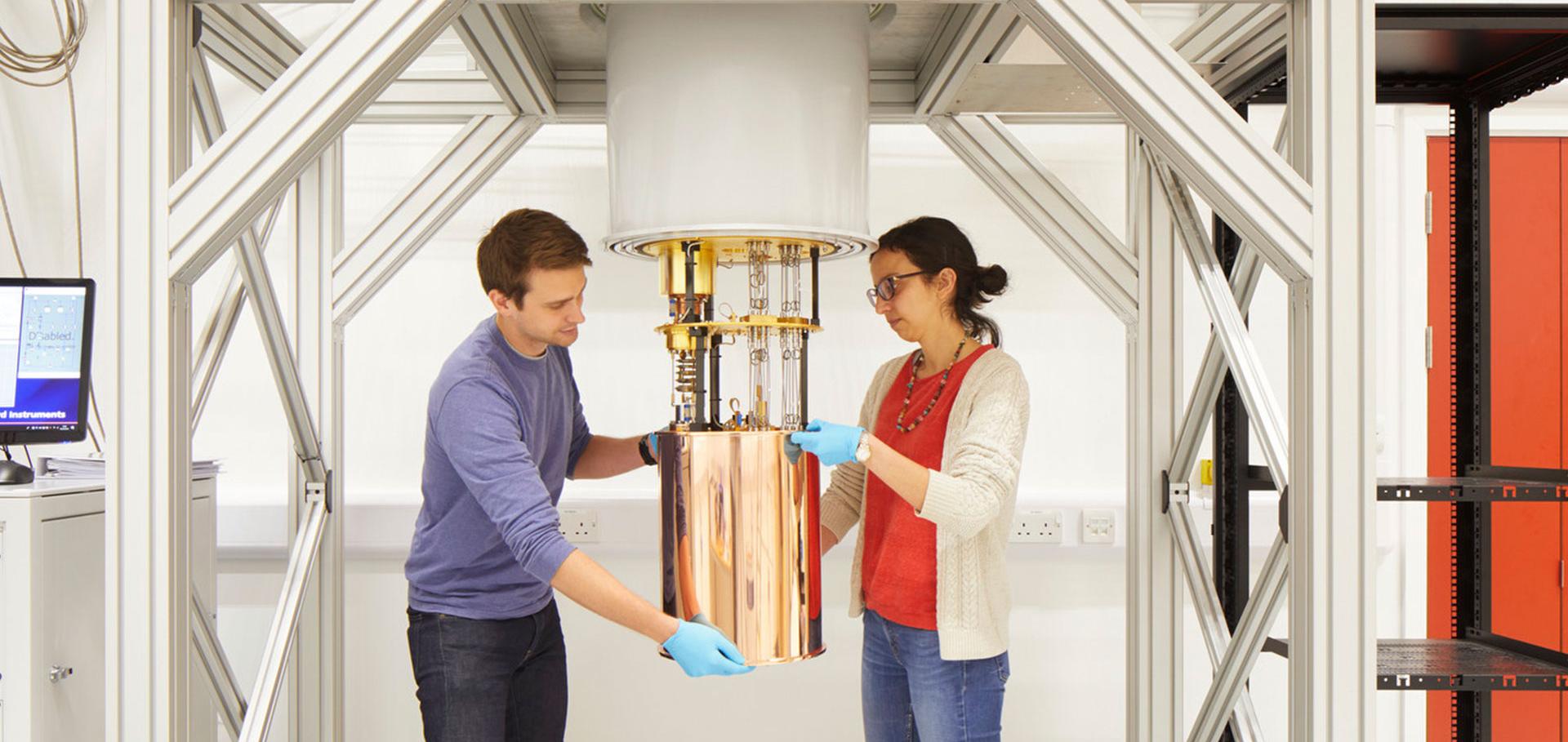
Credit: Jack Hobhouse

Roger Ward

Retired

Sub department

  • Condensed Matter Physics
Roger.Ward@physics.ox.ac.uk
Clarendon Laboratory, room 164
  • About
  • Publications

The effect of inter-layer diffusion on magnetic exchange spring behaviour

JOURNAL OF PHYSICS-CONDENSED MATTER 20:12 (2008) ARTN 125223

Authors:

GJ Bowden, KN Martin, A Fox, BD Rainford, RCC Ward, PAJ de Groot
More details from the publisher

The structure of epitaxial layers of uranium

JOURNAL OF PHYSICS-CONDENSED MATTER 20:13 (2008) ARTN 135003

Authors:

RCC Ward, RA Cowley, N Ling, W Goetze, GH Lander, WG Stirling
More details from the publisher

Transition metal sublattice magnetization and the anomalous Hall effect in (110)-ErFe2/YFe2 multilayers

PHYSICAL REVIEW B 78:17 (2008) ARTN 172401

Authors:

KN Martin, C Morrison, GJ Bowden, PAJ de Groot, RCC Ward
More details from the publisher

Investigation of magnetization reversal in micron-sized stripes of epitaxial-grown (1 1 0) Laves phase DyFe2 films

Journal of Alloys and Compounds 440:1-2 (2007) 23-25

Authors:

K Wang, C Morrison, KN Martin, RCC Ward, GJ Bowden, PAJ de Groot

Abstract:

A large-scale striped array of width 3.4 μm has been fabricated in 400-nm-thick epitaxial (1 1 0) DyFe2 films with Laves phase structure using a UV direct write system. The magnetic and magneto-optical properties of the sample were characterized by a vibrating sample magnetometer and magneto-optical Kerr magnetometry, respectively. The close easy-axis [-1 1 0] direction, confirmed by VSM, was chosen for patterning. The MO Kerr loops reveal that an additional anisotropy can be induced by the shape of the stripes, which can obviously enhance the coercivity of the close easy-axis [-1 1 0] loop. The magnitude of this additional anisotropy was determined to be 4.2 × 10⁵ erg/cm3, which is not sufficient to change the coercivity of the hard-axis loop due to a large intrinsic anisotropy along the hard-axis [0 0 1] direction. © 2006 Elsevier B.V. All rights reserved.
More details from the publisher
More details

Transmission electron microscopy study of the Fe(001)vertical bar MgO(001) interface for magnetic tunnel junctions

IEEE T MAGN 43:6 (2007) 2779-2781

Authors:

C Wang, SG Wang, A Kohn, RCC Ward, AK Petford-Long

Abstract:

Transmission electron microscopy (TEM) is employed to characterize ex situ the interface between the bottom Fe (001) electrode and MgO (001) barrier in a magnetic tunnel junction (MTJ) deposited by molecular beam epitaxy. High resolution TEM images are compared with multislice-based simulations of oxidized and sharp interfaces to conclude that at least the part of the interface is not oxidized. In addition, the, spacing between the Fe and O layers at the interface is measured and found to be comparable with theoretical calculations in the literature of sharp interfaces. This result offers a methodology to characterize the interface structure of MTJs, which is important to determine the magneto-transport properties of the device.
More details from the publisher
More details

Pagination

  • First page First
  • Previous page Prev
  • …
  • Page 5
  • Page 6
  • Page 7
  • Page 8
  • Current page 9
  • Page 10
  • Page 11
  • Page 12
  • Page 13
  • …
  • Next page Next
  • Last page Last

Footer Menu

  • Contact us
  • Giving to the Dept of Physics
  • Work with us
  • Media

User account menu

  • Log in

Follow us

FIND US

Clarendon Laboratory,

Parks Road,

Oxford,

OX1 3PU

CONTACT US

Tel: +44(0)1865272200

University of Oxfrod logo Department Of Physics text logo
IOP Juno Champion logo Athena Swan Silver Award logo

© University of Oxford - Department of Physics

Cookies | Privacy policy | Accessibility statement

Built by: Versantus

  • Home
  • Research
  • Study
  • Engage
  • Our people
  • News & Comment
  • Events
  • Our facilities & services
  • About us
  • Giving to Physics
  • Current students
  • Staff intranet