Home
Department Of Physics text logo
  • Research
    • Our research
    • Our research groups
    • Our research in action
    • Research funding support
    • Summer internships for undergraduates
  • Study
    • Undergraduates
    • Postgraduates
  • Engage
    • For young people
    • For teachers
    • For the public
    • For alumni
    • For business
  • Support
Menu
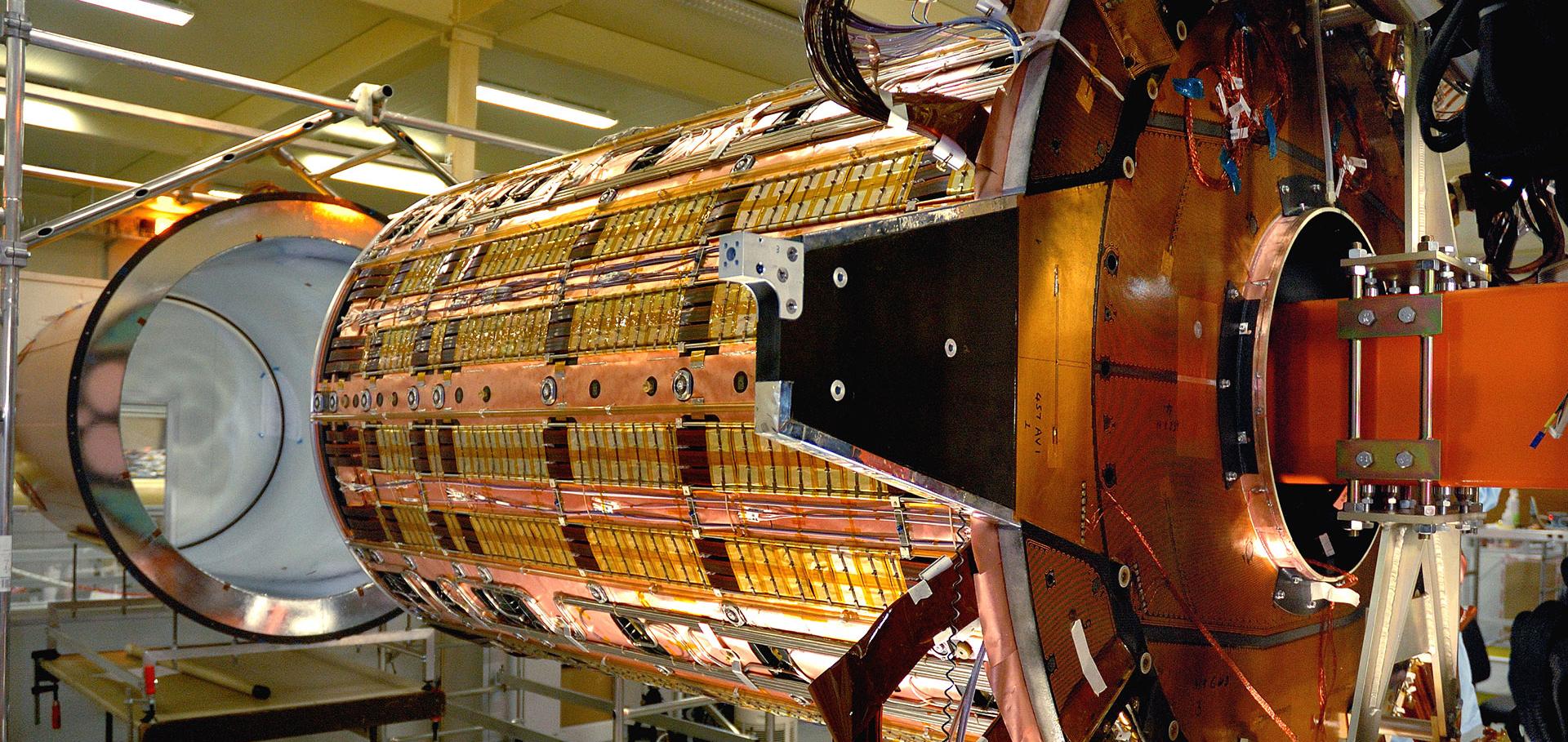
Insertion of STC into TRT at the Department of Physics, Oxford
Credit: CERN

Guy Wilkinson

Professor of Physics

Sub department

  • Particle Physics

Research groups

  • LHCb
Guy.Wilkinson@physics.ox.ac.uk
Telephone: 01865 (2)83110
Denys Wilkinson Building, room 608a
  • About
  • Publications

Flavor physics in the quark sector

Physics Reports 494:3-4 (2010) 197-414

Authors:

M Antonelli, DM Asner, D Bauer, T Becher, M Beneke, AJ Bevan, M Blanke, C Bloise, M Bona, A Bondar, C Bozzi, J Brod, AJ Buras, N Cabibbo, A Carbone, G Cavoto, V Cirigliano, M Ciuchini, JP Coleman, DP Cronin-Hennessy, JP Dalseno, CH Davies, F Di Lodovico, J Dingfelder, Z Dolezal, S Donati, W Dungel, G Eigen, U Egede, R Faccini, T Feldmann, F Ferroni, JM Flynn, E Franco, M Fujikawa, IK Furić, P Gambino, E Gardi, TJ Gershon, S Giagu, E Golowich, T Goto, C Greub, C Grojean, D Guadagnoli, UA Haisch, RF Harr, AH Hoang, T Hurth, G Isidori, DE Jaffe, A Jüttner, S Jäger, A Khodjamirian, P Koppenburg, RV Kowalewski, P Krokovny, AS Kronfeld, J Laiho, G Lanfranchi, TE Latham, J Libby, A Limosani, D Lopes Pegna, CD Lu, V Lubicz, E Lunghi, VG Lüth, K Maltman, WJ Marciano, EC Martin, G Martinelli, F Martinez-Vidal, A Masiero, V Mateu, F Mescia, G Mohanty, M Moulson, M Neubert, H Neufeld, S Nishida, N Offen, M Palutan, P Paradisi, Z Parsa, E Passemar, M Patel, BD Pecjak, AA Petrov, A Pich, M Pierini, B Plaster, A Powell, S Prell, J Rademaker, M Rescigno, S Ricciardi, P Robbe, E Rodrigues, M Rotondo

Abstract:

In the past decade, one of the major challenges of particle physics has been to gain an in-depth understanding of the role of quark flavor. In this time frame, measurements and the theoretical interpretation of their results have advanced tremendously. A much broader understanding of flavor particles has been achieved; apart from their masses and quantum numbers, there now exist detailed measurements of the characteristics of their interactions allowing stringent tests of Standard Model predictions. Among the most interesting phenomena of flavor physics is the violation of the CP symmetry that has been subtle and difficult to explore. In the past, observations of CP violation were confined to neutral . K mesons, but since the early 1990s, a large number of CP-violating processes have been studied in detail in neutral . B mesons. In parallel, measurements of the couplings of the heavy quarks and the dynamics for their decays in large samples of . K,D, and . B mesons have been greatly improved in accuracy and the results are being used as probes in the search for deviations from the Standard Model.In the near future, there will be a transition from the current to a new generation of experiments; thus a review of the status of quark flavor physics is timely. This report is the result of the work of physicists attending the 5th CKM workshop, hosted by the University of Rome "La Sapienza", September 9-13, 2008. It summarizes the results of the current generation of experiments that are about to be completed and it confronts these results with the theoretical understanding of the field which has greatly improved in the past decade. © 2010 Elsevier B.V.
More details from the publisher

Measurements of CP-conserving trilinear gauge boson couplings WWV (V ≡ γ, Z) in e+e- collisions at LEP2

European Physical Journal C 66:1 (2010) 35-56

Authors:

J Abdallah, P Abreu, W Adam, P Adzic, T Albrecht, R Alemany-Fernandez, T Allmendinger, PP Allport, U Amaldi, N Amapane, S Amato, E Anashkin, A Andreazza, S Andringa, N Anjos, P Antilogus, W Apel, Y Arnoud, S Ask, B Asman, JE Augustin, A Augustinus, P Baillon, A Ballestrero, P Bambade, R Barbier, D Bardin, GJ Barker, A Baroncelli, M Battaglia, M Baubillier, K Becks, M Begalli, A Behrmann, E Ben-Haim, N Benekos, A Benvenuti, C Berat, M Berggren, D Bertrand, M Besancon, N Besson, D Bloch, M Blom, M Bluj, M Bonesini, M Boonekamp, PSL Booth, G Borisov, O Botner, B Bouquet, TJV Bowcock, I Boyko, M Bracko, R Brenner, E Brodet, P Bruckman, JM Brunet, B Buschbeck, P Buschmann, M Calvi, T Camporesi, V Canale, F Carena, N Castro, F Cavallo, M Chapkin, P Charpentier, P Checchia, R Chierici, P Chliapnikov, J Chudoba, SU Chung, K Cieslik, P Collins, R Contri, G Cosme, F Cossutti, MJ Costa, D Crennell, J Cuevas, J D'Hondt, T da Silva, W da Silva, G della Ricca, A de Angelis, W de Boer, C de Clercq, B de Lotto, N de Maria, A de Min, L de Paula, LD Ciaccio, AD Simone, K Doroba, J Drees, G Eigen, T Ekelof, M Ellert, M Elsing

Abstract:

The data taken by Delphi at centre-of-mass energies between 189 and 209 GeV are used to place limits on the CP-conserving trilinear gauge boson couplings Δ gZ1, λγ and Δκγ associated to W+W- and single W production at Lep2. Using data from the jjℓν, jjjj, jjX and ℓX final states, where j, ℓ and X represent a jet, a lepton and missing four-momentum, respectively, the following limits are set on the couplings when one parameter is allowed to vary and the others are set to their Standard Model values of zero: Results are also presented when two or three parameters are allowed to vary. All observations are consistent with the predictions of the Standard Model and supersede the previous results on these gauge coupling parameters published by Delphi. © © Springer-Verlag / Società Italiana di Fisica 2010.
More details from the publisher
More details

Prompt KS 0 production in pp collisions at s=0.9 TeV

Physics Letters Section B Nuclear Elementary Particle and High Energy Physics 693:2 (2010) 69-80

Authors:

R Aaij, C Abellan Beteta, B Adeva, M Adinolfi, C Adrover, A Affolder, M Agari, Z Ajaltouni, J Albrecht, F Alessio, M Alexander, M Alfonsi, P Alvarez Cartelle, AA Alves, S Amato, Y Amhis, J Amoraal, J Anderson, R Antunes Nobrega, R Appleby, O Aquines Gutierrez, A Arefyev, L Arrabito, M Artuso, E Aslanides, G Auriemma, S Bachmann, Y Bagaturia, DS Bailey, V Balagura, W Baldini, G Barber, C Barham, RJ Barlow, S Barsuk, S Basiladze, A Bates, C Bauer, T Bauer, A Bay, I Bediaga, T Bellunato, K Belous, I Belyaev, M Benayoun, G Bencivenni, R Bernet, RP Bernhard, MO Bettler, M van Beuzekom, JH Bibby, S Bifani, A Bizzeti, PM Bjørnstad, T Blake, F Blanc, C Blanks, J Blouw, S Blusk, A Bobrov, V Bocci, B Bochin, E Bonaccorsi, A Bondar, N Bondar, W Bonivento, S Borghi, A Borgia, E Bos, TJV Bowcock, C Bozzi, T Brambach, J van den Brand, L Brarda, J Bressieux, S Brisbane, M Britsch, NH Brook, H Brown, S Brusa, A Büchler-Germann, A Bursche, J Buytaert, S Cadeddu, JM Caicedo Carvajal, O Callot, M Calvi, M Calvo Gomez, A Camboni, W Cameron, L Camilleri, P Campana, A Carbone, G Carboni, R Cardinale, A Cardini, J Carroll, L Carson, K Carvalho Akiba, G Casse

Abstract:

The production of KS 0 mesons in pp collisions at a centre-of-mass energy of 0.9 TeV is studied with the LHCb detector at the Large Hadron Collider. The luminosity of the analysed sample is determined using a novel technique, involving measurements of the beam currents, sizes and positions, and is found to be 6.8±1.0 μb-1. The differential prompt KS 0 production cross-section is measured as a function of the KS0 transverse momentum and rapidity in the region 0
More details from the publisher

Quantum-correlated D-decays at CLEO-c

Proceedings of Science 120 (2010)

Abstract:

The 818 fb−1 dataset collected at the ψ(3770) resonance at CLEO-c offers interesting possibilities for measuring strong phase differences in neutral D decays. The measurements require that both D mesons in the event are fully reconstructed, usually with one decaying to the signal mode of interest, and the other to a CP-eigenstate. The strong phase differences extracted from these decays are important inputs to measurements of the CKM angle γ in B → DK decays. Results are presented from D decays into KS0π+π−, KS0K+K−, and the impact of the γ measurement is discussed. A summary is also given of measurements in other two- three- and four-body modes.
More details

The landscape of flavour physics

Proceedings of the 45th Rencontres De Moriond 2010 Qcd and High Energy Interactions (2010) 57-64

Abstract:

The importance of Flavour Physics as a method to search for non-Standard Model effects is explained. A brief summary is given of some of those topics in Flavour Physics where there are intriguing discrepancies between measurement and expectation. The prospects are discussed for the LHCb experiment in helping to make progress in these and other areas.

Pagination

  • First page First
  • Previous page Prev
  • …
  • Page 272
  • Page 273
  • Page 274
  • Page 275
  • Current page 276
  • Page 277
  • Page 278
  • Page 279
  • Page 280
  • …
  • Next page Next
  • Last page Last

Footer Menu

  • Contact us
  • Giving to the Dept of Physics
  • Work with us
  • Media

User account menu

  • Log in

Follow us

FIND US

Clarendon Laboratory,

Parks Road,

Oxford,

OX1 3PU

CONTACT US

Tel: +44(0)1865272200

University of Oxfrod logo Department Of Physics text logo
IOP Juno Champion logo Athena Swan Silver Award logo

© University of Oxford - Department of Physics

Cookies | Privacy policy | Accessibility statement

Built by: Versantus

  • Home
  • Research
  • Study
  • Engage
  • Our people
  • News & Comment
  • Events
  • Our facilities & services
  • About us
  • Giving to Physics
  • Current students
  • Staff intranet