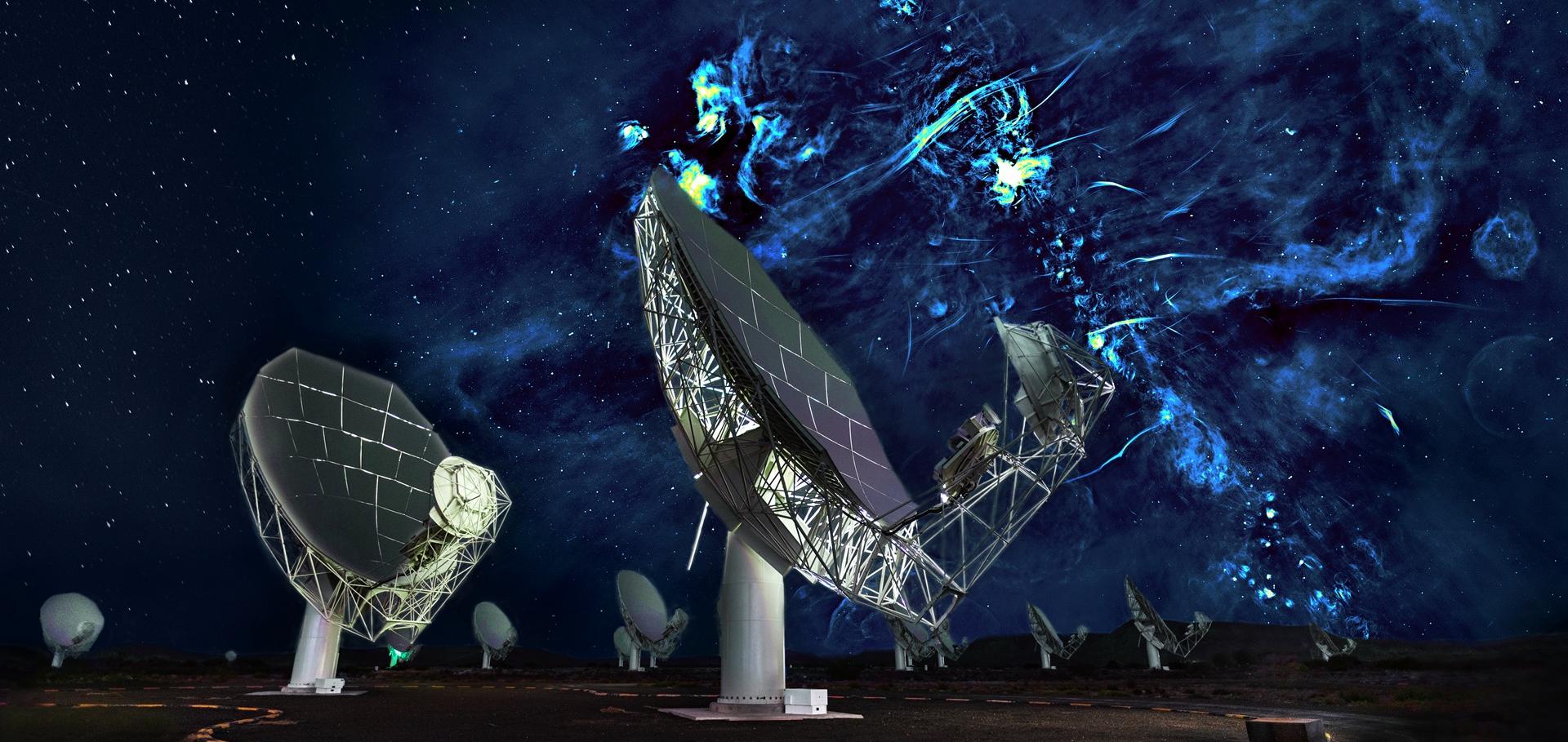
Revival of the Magnetar PSR J1622-4950: Observations with MeerKAT, Parkes, XMM-Newton, Swift, Chandra, and NuSTAR
ASTROPHYSICAL JOURNAL 856:2 (2018) ARTN 180
Authors:
F Camilo, P Scholz, M Serylak, S Buchner, M Merryfield, VM Kaspi, RF Archibald, M Bailes, A Jameson, W van Straten, J Sarkissian, JE Reynolds, S Johnston, G Hobbs, TD Abbott, RM Adam, GB Adams, T Alberts, R Andreas, KMB Asad, DE Baker, T Baloyi, EF Bauermeister, T Baxana, TGH Bennett, G Bernardi, D Booisen, RS Booth, DH Bothar, L Boyana, LRS Brederode, JP Burger, T Cheetham, J Conradie, JP Conradie, DB Davidson, G De Bruin, B de Swardt, C de Villiers, DIL de Villiers, MS de Villiers, W de Villiers, C De Waal, MA Dikgale, G du Toit, LJ du Toit, SWP Esterhuysel, B Fanaroff, S Fataari, AR Foley, G Foster, D Fourier, R Gamatham, T Gatsi, R Geschke, S Goedhart, TL Grobler, SC Gumede, MJ Hlakola, A Hokwana, DH Hoorn, D Horn, J Horrell, B Hugo, A Isaacson, O Jacobs, JPJ van Rensburg, JL Jonas, B Jordaan, A Joubert, F Joubert, GIG Jozsa, R Julie, CC Julius, F Kapp, A Karastergiou, F Karels, M Kariseb, R Karuppusamy, V Kasper, EC Knox-Davies, D Koch, PPA Kotze, A Krebs, N Krick, H Kriel, T Kusel, S Lamoor, R Lehmensiek, D Liebenberg, I Liebenberg, RT Lord, B Lunsky, N Mabombo, T Macdonald, P Macfarlane, K Madisa, L Mafhungo, LG Magnus, C Magozore, O Mahgoub, JPL Main, S Makhathini, JA Malan, P Malgas, JR Manley, M Manzini, L Marais, N Marais, SJ Marais, M Maree, A Martens, SD Matshawule, N Matthysen, T Mauch, LD Mc Nally, B Merry, RP Millenaar, C Mjikelo, N Mikhabela, N Mnyandu, IT Moeng, OJ Mokone, TE Monama, K Montshiwa, V Moss, M Mphego, W New, B Ngcebetsha, K Ngoasheng, H Niehaus, P Ntuli, A Nzama, F Obies, M Obrocka, MT Ockards, C Olyn, N Oozeer, AJ Otto, Y Padayachee, S Passmoor, AA Patel, S Paula, A Peens-Hough, B Pholoholo, P Prozesky, S Rakoma, AJT Ramaila, I Rammala, ZR Ramudzuli, M Rasivhaga, S Ratcliffe, HC Reader, R Renil, L Richter, A Robyntjies, D Rosekrans, A Rust, S Salle, N Sambu, CTG Schollar, L Schwardt, S Seranyane, G Sethosa, C Sharper, R Siebrits, SK Sirothia, MJ Slabber, O Smirnov, S Smith, L Sofeya, N Songqumase, R Spann, B Stappers, D Steyn, TJ Steyn, R Strong, A Struthers, C Stuart, P Sunnylall, PS Swart, B Taljaard, C Tasse, G Taylor, IP Theron, V Thondikulam, K Thorat, A Tiplady, O Toruvanda, J van Aardt, T van Balla, L van den Heever, A van der Byl, C van der Merwe, P van der Merwe, PC van Niekerk, R van Rooyen, JP van Staden, V van Tonder, R van Wyk, I Wait, AL Walker, B Wallace, M Welz, LP Williams, B Xaia, N Young, S Zitha