

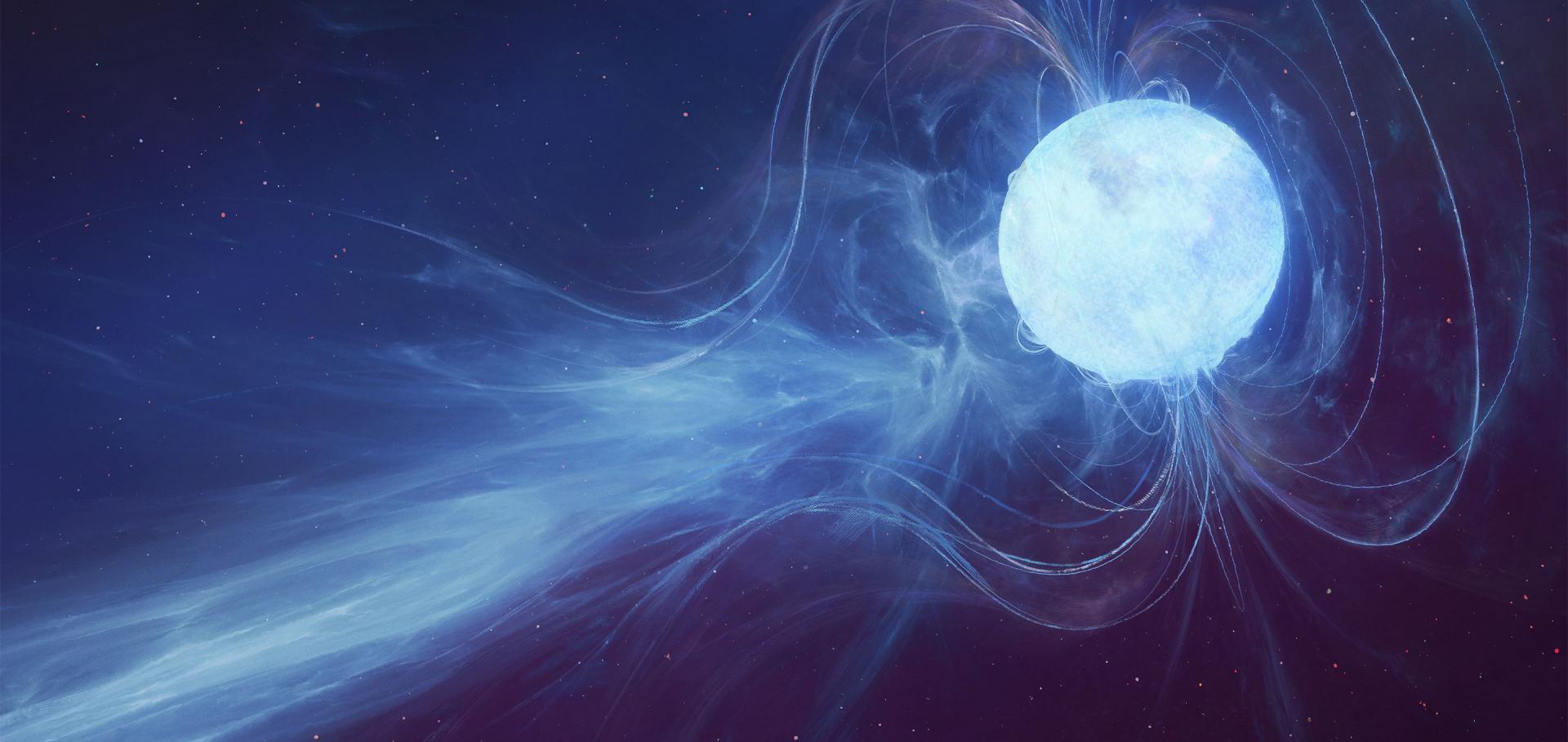
JWST detection of heavy neutron capture elements in a compact object merger
Multimessenger science opportunities with mHz gravitational waves
Abstract:
LISA will open the mHz band of gravitational waves (GWs) to the astronomy community. The strong gravity which powers the variety of GW sources in this band is also crucial in a number of important astrophysical processes at the current frontiers of astronomy. These range from the beginning of structure formation in the early universe, through the origin and cosmic evolution of massive black holes in concert with their galactic environments, to the evolution of stellar remnant binaries in the Milky Way and in nearby galaxies. These processes and their associated populations also drive current and future observations across the electromagnetic (EM) spectrum. We review opportunities for science breakthroughs, involving either direct coincident EM+GW observations, or indirect multimessenger studies. We argue that for the US community to fully capitalize on the opportunities from the LISA mission, the US efforts should be accompanied by a coordinated and sustained program of multi-disciplinary science investment, following the GW data through to its impact on broad areas of astrophysics. Support for LISA-related multimessenger observers and theorists should be sized appropriately for a flagship observatory and may be coordinated through a dedicated mHz GW research center.Ordering the chaos: stellar black hole mergers from non-hierarchical triples
Abstract:
We investigate the evolution of triple, non-hierarchical, black hole (BH) systems making use of $2.9\times10^4$ 3-body simulations. Varying the mutual orbital inclination, the three BH masses and the inner and outer eccentricities, we show that retrograde, nearly planar configurations lead to a significant shrinkage of the inner binary. We find an universal trend of triple systems, that they tend to evolve toward prograde configurations, Moreover, we demonstrate that the orbital flip, driven by the torque exerted on the inner BH binary (BHB) by the outer BH, leads in general to tighter inner orbits. In some cases, the resulting BHB undergoes coalescence within a Hubble time, releasing gravitational waves (GWs). Frequently, the inner BHB merger occurs after a component swap between one of its components and the outer BH. The mass spectrum of the BHBs that underwent the component exchange differs significantly from the case in which the BHB merge without any swap. A large fraction of merging BHBs with initial separation $1$ AU enter the $10^{-3}-10^{-1}$ Hz frequency band with large eccentricities, thus representing potential LISA sources. Mergers originating from initially tighter BHB ($a\sim 0.01$ AU), instead, have a large probability to have eccentricities above 0.7 in the $1$ Hz band. We find that the mergers' mass distribution in this astrophysical channel maps the original BH binary spectrum. This might have interesting consequences in light of the growing population of BH mergers detected by LIGO.Post-outburst radio spectral evolution of Cygnus X-3
Abstract:
Multifrequency VLA and OVRO observations of the radio outburst of Cygnus X-3 in September 2001 are presented, illustrating the evolution of the spectrum of the source over a period of six days. An estimate of the magnetic field in the emitting region is made from the spectral turnover and possible explanations for the spectral evolution are suggested.Radio studies of relativistic outflows from black hole transients
Abstract:
In this thesis I will present observational studies of transient systems that produce mildly to extremely relativistic outflows through a coupling to an accretion flow. I will focus on the analysis of data taken from three source classes: black hole X-ray binaries (BHXRBs; particularly the system MAXI J1820+070), gamma-ray bursts (GRBs; particularly the system GRB 171010A), and tidal disruption events (TDEs; particularly the systems ASASSN-14li and Swift J1644+57).
I will present an extensive radio monitoring campaign on MAXI J1820+070 utilising five different interferometers, along with extensive X-ray observations, during the system's 2018 outburst. Together these data allowed me to probe the coupling between accretion and jet production throughout an entire outburst cycle, as well as during multiple hard accretion state only re-brightenings, tracked over a two year time frame. As MAXI J1820+070 transitioned from the hard to soft accretion state, contemporaneous time-series indicators of the launch of bipolar relativistic ejections were observed at both radio and X-ray frequencies (manifesting as a radio flare and an evolving quasi-period oscillation, respectively). I then confirmed the presence of these ejecta utilising multiple interferometers, and was able to track the evolution of both the approaching and receding ejecta for over ~150 d. Through utilising interferometers sensitive to very different angular scales, I was able to infer the internal energy of the ejection, and found it to be much larger than the value implied from the state transition radio flare. This is strong evidence for ongoing particle acceleration as ejections interact with the surrounding interstellar medium. In addition to the study of MAXI J1820+070, I will also present a broader population study of state transition radio flares from black hole X-ray binaries, and demonstrate that commonly employed models (which attribute flares to an optical depth evolution from an expanding region) are not appropriate for the majority of flares in the sample studied. I describe the ability of extended periods of particle acceleration to explain the flare profiles.
GRB 171010A was a luminous and nearby long GRB detected at early times by the Arcminute Microkelvin Imager Large Array interferometer, as well as with the Swift X-ray telescope. Long GRBs produce highly relativistic outflows that are best studied through their interaction with the circumburst material. This interaction produced a broadband synchrotron afterglow. I present a study of the radio through X-ray afterglow of GRB 171010A in the context of the fireball model (which details the interaction of the jet and interstellar medium). By fitting the time evolving spectra, the values and evolution of the characteristic synchrotron frequencies can be inferred. GRB 171010A is one of the most energetic GRBs detected below z~0.5, allowing for our theoretical understanding of afterglows to be investigated. While I find general agreement with the canonical models (particularly the spectral indices either side of the minimum energy frequency) a number of deviations are seen. I discuss possible solutions to these deviations, which likely include the addition of a second spectral component resulting from a reverse shock.
Finally, I will present late time radio and X-ray observations of the thermal TDE ASASSN-14li, and late time radio only observations of the relativistic TDE Swift J1644+57. Tidal disruption events occur when a star passes too close to a supermassive black hole and is torn apart by tidal forces. Approximately half of the stellar material is accreted and the rest is unbound. ASASSN-14li is a radio bright thermal TDE, and the origin of this radio emission is disputed. I will show that the late time radio properties are now consistent with background AGN activity, but that while the TDE was the dominant radio component, the radio emission was correlated with the X-ray emission. This provides evidence that thermal TDEs produce jets. It is not disputed that the relativistic TDE Swift J1644+57 produced a jet, and said jet's radio emission has now been monitored for ~10 yrs. I will present the most recent monitoring of Swift J1644+57 in the context of previously proposed jet models for the source. I will additionally discuss the up-to-date population of radio loud TDEs.
My conclusions contain a comparison of the outflows produced by these sources, and how they are analysed in different frameworks.