

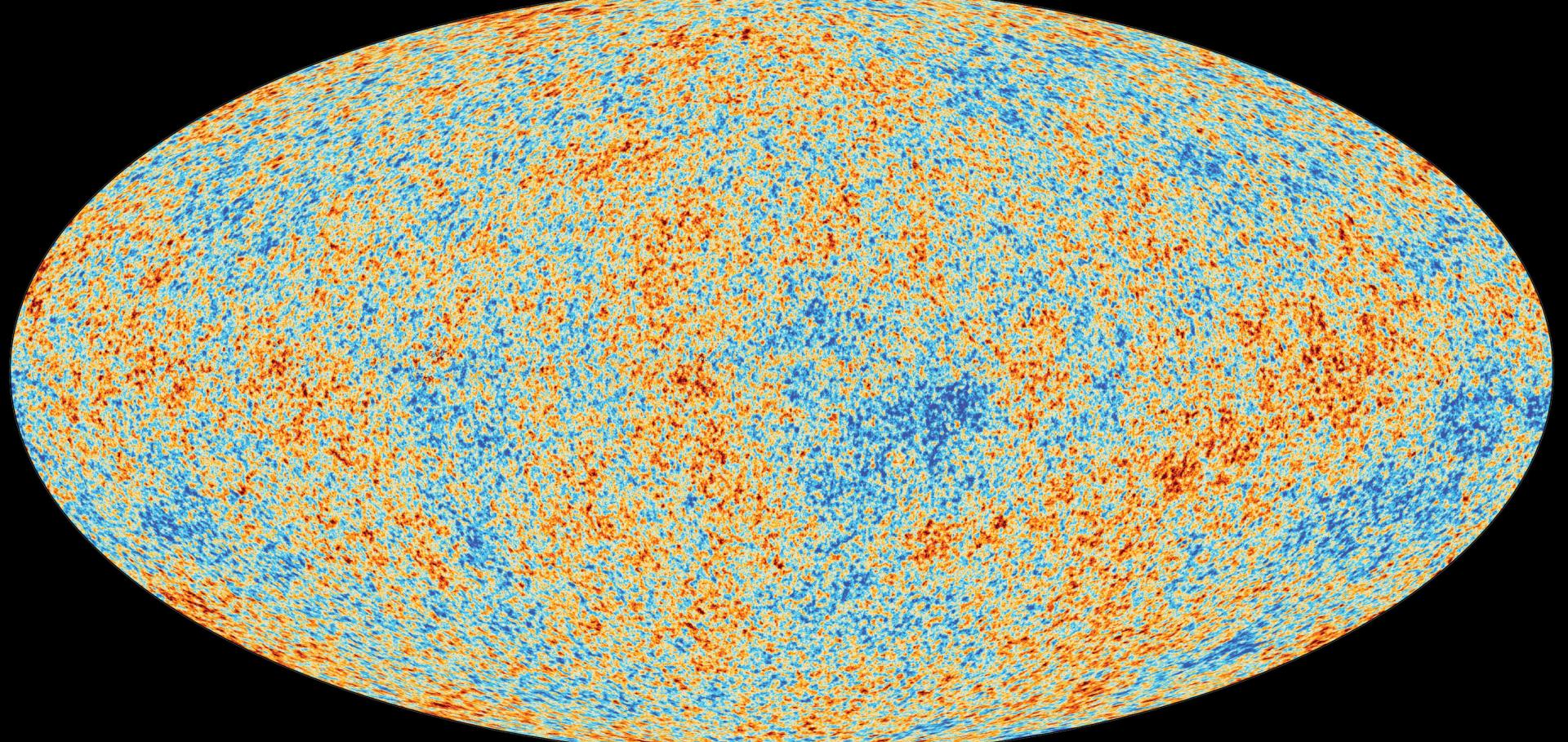
A space mission to map the entire observable universe using the CMB as a backlight: Voyage 2050 science white paper
Experimental Astronomy (2021)
Abstract:
This Science White Paper, prepared in response to the ESA Voyage 2050 call for long-term mission planning, aims to describe the various science possibilities that can be realized with an L-class space observatory that is dedicated to the study of the interactions of cosmic microwave background (CMB) photons with the cosmic web. Our aim is specifically to use the CMB as a backlight – and survey the gas, total mass, and stellar content of the entire observable Universe by means of analyzing the spatial and spectral distortions imprinted on it. These distortions result from two major processes that impact on CMB photons: scattering by free electrons and atoms (Sunyaev-Zeldovich effect in diverse forms, Rayleigh scattering, resonant scattering) and deflection by gravitational potential (lensing effect). Even though the list of topics collected in this White Paper is not exhaustive, it helps to illustrate the exceptional diversity of major scientific questions that can be addressed by a space mission that will reach an angular resolution of 1.5 arcmin (goal 1 arcmin), have an average sensitivity better than 1 μK-arcmin, and span the microwave frequency range from roughly 50 GHz to 1 THz. The current paper also highlights the synergy of our Backlight mission concept with several upcoming and proposed ground-based CMB experiments.Exploring the origin of thick disks using the NewHorizon and Galactica simulations
Astrophysical Journal Supplement Series American Astronomical Society (2021)
Abstract:
Ever since the thick disk was proposed to explain the vertical distribution of the Milky Way disk stars, its origin has been a recurrent question. We aim to answer this question by inspecting 19 disk galaxies with stellar mass greater than $10^{10}\,\rm M_\odot$ in recent cosmological high-resolution zoom-in simulations: Galactica and NewHorizon. The thin and thick disks are reproduced by the simulations with scale heights and luminosity ratios that are in reasonable agreement with observations. When we spatially classify the disk stars into thin and thick disks by their heights from the galactic plane, the "thick" disk stars are older, less metal-rich, kinematically hotter, and higher in accreted star fraction than the "thin" disk counterparts. However, both disks are dominated by stellar particles formed in situ. We find that approximately half of the in-situ stars in the thick disks are formed even before the galaxies develop their disks, and the other half are formed in spatially and kinematically thinner disks and then thickened with time by heating. We thus conclude from our simulations that the thin and thick disk components are not entirely distinct in terms of formation processes, but rather markers of the evolution of galactic disks. Moreover, as the combined result of the thickening of the existing disk stars and the continued formation of young thin-disk stars, the vertical distribution of stars does not change much after the disks settle, pointing to the modulation of both orbital diffusion and star formation by the same confounding factor: the proximity of galaxies to marginal stability.VINTERGATAN III: how to reset the metallicity of the Milky Way
Monthly Notices of the Royal Astronomical Society Oxford University Press (OUP) 503:4 (2021) 5868-5876
Abstract:
VINTERGATAN – I. The origins of chemically, kinematically, and structurally distinct discs in a simulated Milky Way-mass galaxy
Monthly Notices of the Royal Astronomical Society Oxford University Press (OUP) 503:4 (2021) 5826-5845
Abstract:
VINTERGATAN – II. The history of the Milky Way told by its mergers
Monthly Notices of the Royal Astronomical Society Oxford University Press (OUP) 503:4 (2021) 5846-5867