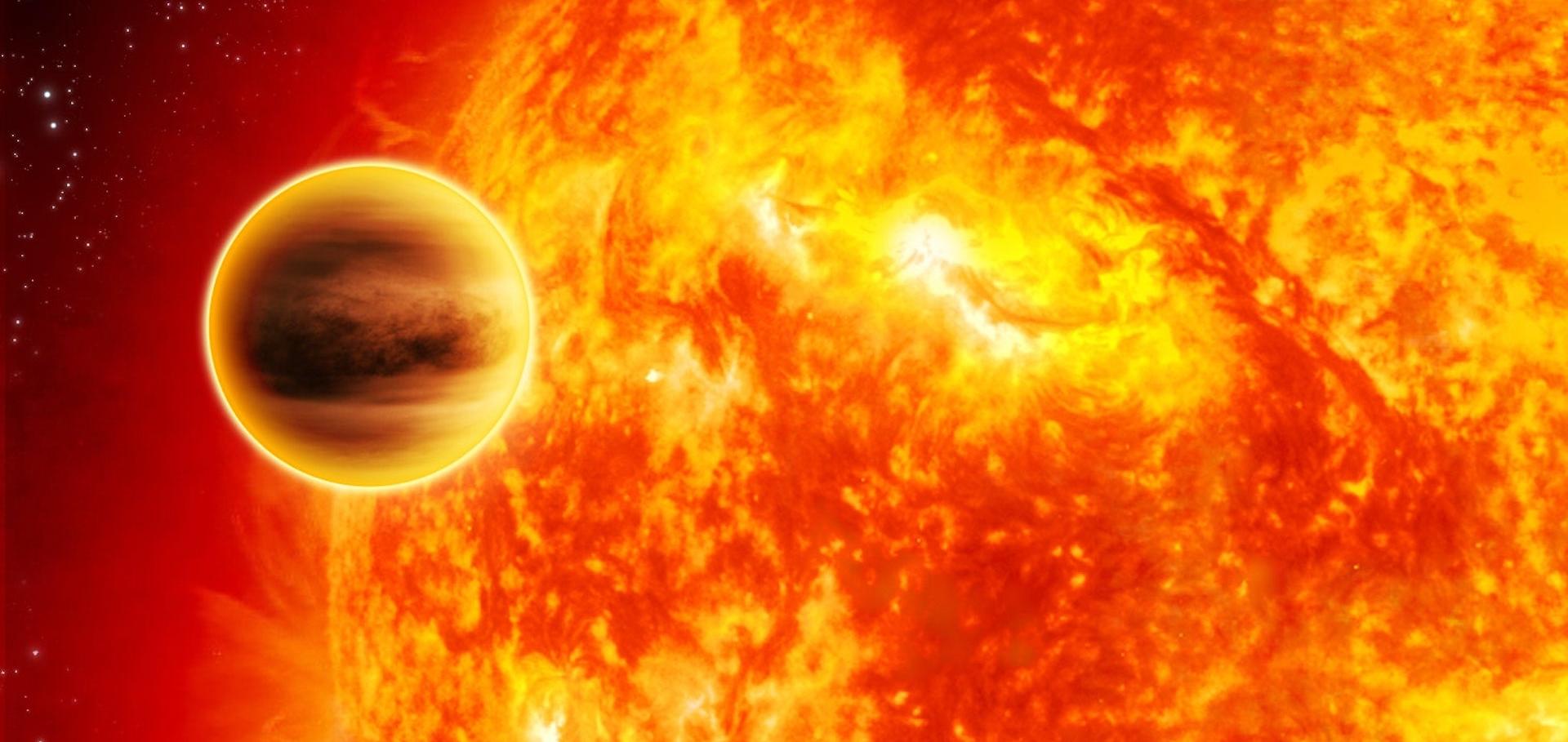
K2-290: a warm Jupiter and a mini-Neptune in a triple-star system

Monthly Notices of the Royal Astronomical Society Oxford University Press (OUP) 484:3 (2019) 3522-3536

Authors:

M Hjorth, AB Justesen, T Hirano, S Albrecht, D Gandolfi, F Dai, R Alonso, O Barragán, M Esposito, M Kuzuhara, KWF Lam, JH Livingston, P Montanes-Rodriguez, N Narita, G Nowak, J Prieto-Arranz, S Redfield, F Rodler, V Van Eylen, JN Winn, G Antoniciello, J Cabrera, WD Cochran, Sz Csizmadia, J de Leon, H Deeg, Ph Eigmüller, M Endl, A Erikson, M Fridlund, S Grziwa, E Guenther, AP Hatzes, P Heeren, D Hidalgo, J Korth, R Luque, D Nespral, E Palle, M Pätzold, CM Persson, H Rauer, AMS Smith, T Trifonov

Stellar activity and rotation of the planet host Kepler-17 from long-term space-borne photometry

(2019)

Authors:

AF Lanza, Y Netto, AS Bonomo, H Parviainen, A Valio, S Aigrain

Detecting Earth-like Biosignatures on Rocky Exoplanets around Nearby Stars with Ground-based Extremely Large Telescopes

(2019)

Authors:

Mercedes López-Morales, Thayne Currie, Johanna Teske, Eric Gaidos, Eliza Kempton, Jared Males, Nikole Lewis, Benjamin V Rackham, Sagi Ben-Ami, Jayne Birkby, David Charbonneau, Laird Close, Jeff Crane, Courtney Dressing, Cynthia Froning, Yasuhiro Hasegawa, Quinn Konopacky, Ravi K Kopparapu, Dimitri Mawet, Bertrand Mennesson, Ramses Ramirez, Deno Stelter, Andrew Szentgyorgyi, Ji Wang

K2-264: a transiting multiplanet system in the Praesepe open cluster

Monthly Notices of the Royal Astronomical Society Oxford University Press (OUP) 484:1 (2019) 8-18

Authors:

John H Livingston, Fei Dai, Teruyuki Hirano, Davide Gandolfi, Alessandro A Trani, Grzegorz Nowak, William D Cochran, Michael Endl, Simon Albrecht, Oscar Barragan, Juan Cabrera, Szilard Csizmadia, Jerome P de Leon, Hans Deeg, Philipp Eigmüller, Anders Erikson, Malcolm Fridlund, Akihiko Fukui, Sascha Grziwa, Eike W Guenther, Artie P Hatzes, Judith Korth, Masayuki Kuzuhara, Pilar Montañes, Norio Narita, David Nespral, Enric Palle, Martin Pätzold, Carina M Persson, Jorge Prieto-Arranz, Heike Rauer, Motohide Tamura, Vincent Van Eylen, Joshua N Winn

Craters, boulders and regolith of (101955) Bennu indicative of an old and dynamic surface

Nature Geoscience Springer Nature 12:4 (2019) 242-246

Authors:

KJ Walsh, ER Jawin, R-L Ballouz, OS Barnouin, EB Bierhaus, CHC Jr, JL Molaro, TJ McCoy, M Delbo', CM Hartzell, M Pajola, D Trang, E Asphaug, KJ Becker, CB Beddingfield, CA Bennett, WF Bottke, KN Burke, BC Clark, DN Dellagiustina, JP Dworkin, CM Elder

Abstract:

Small, kilometre-sized near-Earth asteroids are expected to have young and frequently refreshed surfaces for two reasons: collisional disruptions are frequent in the main asteroid belt where they originate, and thermal or tidal processes act on them once they become near-Earth asteroids. Here we present early measurements of numerous large candidate impact craters on near-Earth asteroid (101955) Bennu by the OSIRIS-REx (Origins, Spectral Interpretation, Resource Identification, and Security-Regolith Explorer) mission, which indicate a surface that is between 100 million and 1 billion years old, predating Bennu’s expected duration as a near-Earth asteroid. We also observe many fractured boulders, the morphology of which suggests an influence of impact or thermal processes over a considerable amount of time since the boulders were exposed at the surface. However, the surface also shows signs of more recent mass movement: clusters of boulders at topographic lows, a deficiency of small craters and infill of large craters. The oldest features likely record events from Bennu’s time in the main asteroid belt.