Home
Department Of Physics text logo
  • Research
    • Our research
    • Our research groups
    • Our research in action
    • Research funding support
    • Summer internships for undergraduates
  • Study
    • Undergraduates
    • Postgraduates
  • Engage
    • For alumni
    • For business
    • For schools
    • For the public
  • Support
Menu
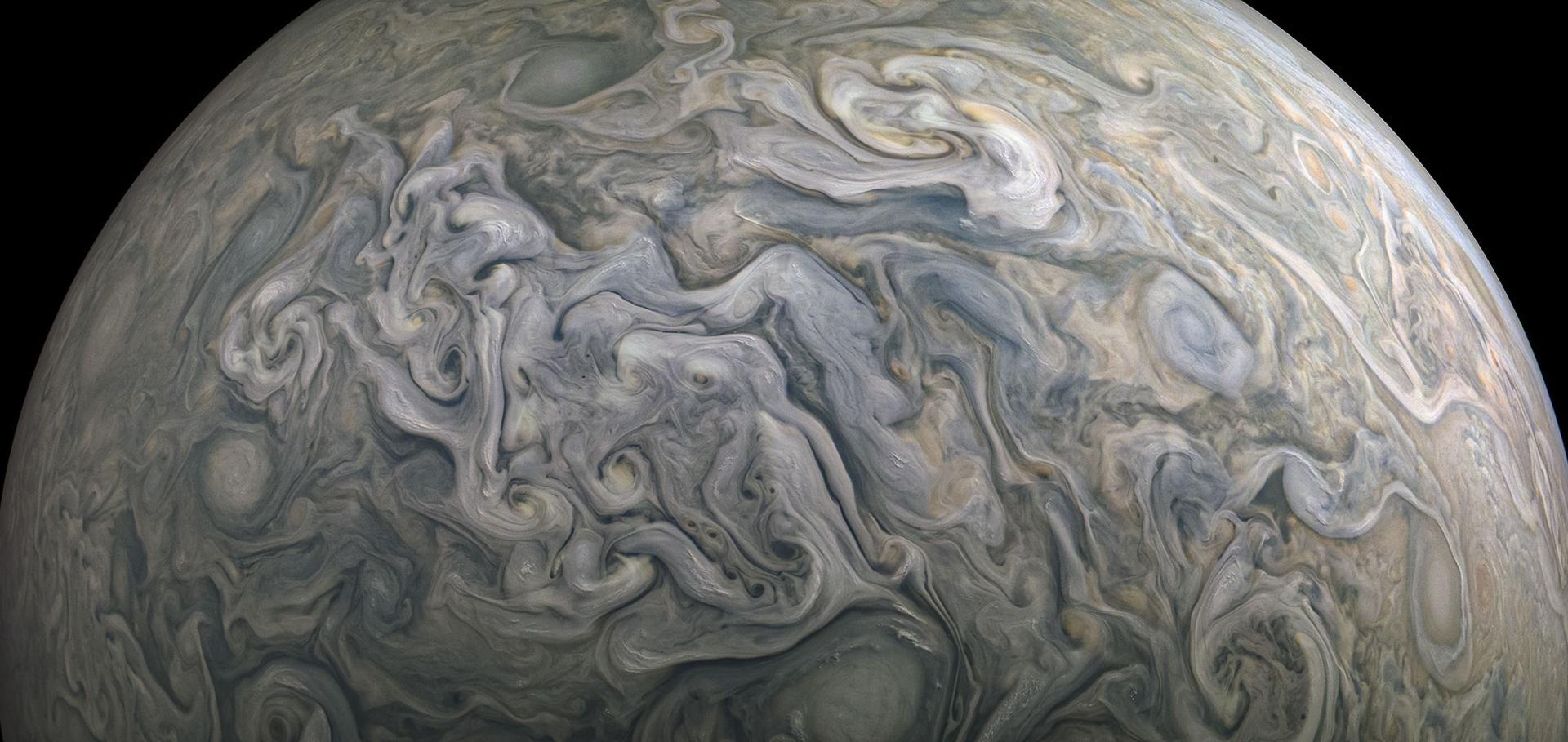
Juno Jupiter image

Namrah Habib

Postdoctoral Research Assistant in Space Instrumentation

Research theme

  • Astronomy and astrophysics
  • Instrumentation
  • Exoplanets and planetary physics

Sub department

  • Atmospheric, Oceanic and Planetary Physics

Research groups

  • Exoplanet atmospheres
  • Exoplanets and Stellar Physics
  • Planetary Climate Dynamics
  • Planetary surfaces
  • Solar system
  • Space instrumentation
  • About
  • Publications

The unexpected surface of asteroid (101955) Bennu

Nature Springer Nature 568:7750 (2019) 55-60

Authors:

DS Lauretta, DN Dellagiustina, CA Bennett, KJ Becker, SS Balram-Knutson, OS Barnouin, TL Becker, WF Bottke, WV Boynton, H Campins, BE Clark, HC Connolly, CY Drouet D'Aubigny, JP Dworkin, JP Emery, HL Enos, VE Hamilton, CW Hergenrother, ES Howell, MRM Izawa, HH Kaplan, MC Nolan, B Rizk, HL Roper, DJ Scheeres, PH Smith, KJ Walsh, CWV Wolner, Neil Bowles

Abstract:

NASA'S Origins, Spectral Interpretation, Resource Identification and Security-Regolith Explorer (OSIRIS-REx) spacecraft recently arrived at the near-Earth asteroid (101955) Bennu, a primitive body that represents the objects that may have brought prebiotic molecules and volatiles such as water to Earth1. Bennu is a low-albedo B-type asteroid2 that has been linked to organic-rich hydrated carbonaceous chondrites3. Such meteorites are altered by ejection from their parent body and contaminated by atmospheric entry and terrestrial microbes. Therefore, the primary mission objective is to return a sample of Bennu to Earth that is pristine-that is, not affected by these processes4. The OSIRIS-REx spacecraft carries a sophisticated suite of instruments to characterize Bennu's global properties, support the selection of a sampling site and document that site at a sub-centimetre scale5-11. Here we consider early OSIRIS-REx observations of Bennu to understand how the asteroid's properties compare to pre-encounter expectations and to assess the prospects for sample return. The bulk composition of Bennu appears to be hydrated and volatile-rich, as expected. However, in contrast to pre-encounter modelling of Bennu's thermal inertia12 and radar polarization ratios13-which indicated a generally smooth surface covered by centimetre-scale particles-resolved imaging reveals an unexpected surficial diversity. The albedo, texture, particle size and roughness are beyond the spacecraft design specifications. On the basis of our pre-encounter knowledge, we developed a sampling strategy to target 50-metre-diameter patches of loose regolith with grain sizes smaller than two centimetres4. We observe only a small number of apparently hazard-free regions, of the order of 5 to 20 metres in extent, the sampling of which poses a substantial challenge to mission success.
More details from the publisher
Details from ORA
More details
More details

Overcoming the Challenges Associated with Image‐Based Mapping of Small Bodies in Preparation for the OSIRIS‐REx Mission to (101955) Bennu

Earth and Space Science American Geophysical Union (AGU) 5:12 (2018) 929-949

Authors:

DN DellaGiustina, CA Bennett, K Becker, DR Golish, L Le Corre, DA Cook, KL Edmundson, M Chojnacki, SS Sutton, MP Milazzo, B Carcich, MC Nolan, N Habib, KN Burke, T Becker, PH Smith, KJ Walsh, K Getzandanner, DR Wibben, JM Leonard, MM Westermann, AT Polit, JN Kidd, CW Hergenrother, WV Boynton, J Backer, S Sides, J Mapel, K Berry, H Roper, C Drouet d'Aubigny, B Rizk, MK Crombie, EK Kinney‐Spano, J de León, JL Rizos, J Licandro, HC Campins, BE Clark, HL Enos, DS Lauretta

Abstract:

AbstractThe OSIRIS‐REx Asteroid Sample Return Mission is the third mission in National Aeronautics and Space Administration (NASA)'s New Frontiers Program and is the first U.S. mission to return samples from an asteroid to Earth. The most important decision ahead of the OSIRIS‐REx team is the selection of a prime sample‐site on the surface of asteroid (101955) Bennu. Mission success hinges on identifying a site that is safe and has regolith that can readily be ingested by the spacecraft's sampling mechanism. To inform this mission‐critical decision, the surface of Bennu is mapped using the OSIRIS‐REx Camera Suite and the images are used to develop several foundational data products. Acquiring the necessary inputs to these data products requires observational strategies that are defined specifically to overcome the challenges associated with mapping a small irregular body. We present these strategies in the context of assessing candidate sample sites at Bennu according to a framework of decisions regarding the relative safety, sampleability, and scientific value across the asteroid's surface. To create data products that aid these assessments, we describe the best practices developed by the OSIRIS‐REx team for image‐based mapping of irregular small bodies. We emphasize the importance of using 3‐D shape models and the ability to work in body‐fixed rectangular coordinates when dealing with planetary surfaces that cannot be uniquely addressed by body‐fixed latitude and longitude.
More details from the publisher
More details

Pagination

  • First page First
  • Previous page Prev
  • Page 1
  • Page 2
  • Page 3
  • Page 4
  • Current page 5

Footer Menu

  • Contact us
  • Giving to the Dept of Physics
  • Work with us
  • Media

User account menu

  • Log in

Follow us

FIND US

Clarendon Laboratory,

Parks Road,

Oxford,

OX1 3PU

CONTACT US

Tel: +44(0)1865272200

University of Oxfrod logo Department Of Physics text logo
IOP Juno Champion logo Athena Swan Silver Award logo

© University of Oxford - Department of Physics

Cookies | Privacy policy | Accessibility statement

Built by: Versantus

  • Home
  • Research
  • Study
  • Engage
  • Our people
  • News & Comment
  • Events
  • Our facilities & services
  • About us
  • Giving to Physics
  • Current students
  • Staff intranet