Home
Department Of Physics text logo
  • Research
    • Our research
    • Our research groups
    • Our research in action
    • Research funding support
    • Summer internships for undergraduates
  • Study
    • Undergraduates
    • Postgraduates
  • Engage
    • For alumni
    • For business
    • For schools
    • For the public
  • Support
Menu
Atomic and Laser Physics
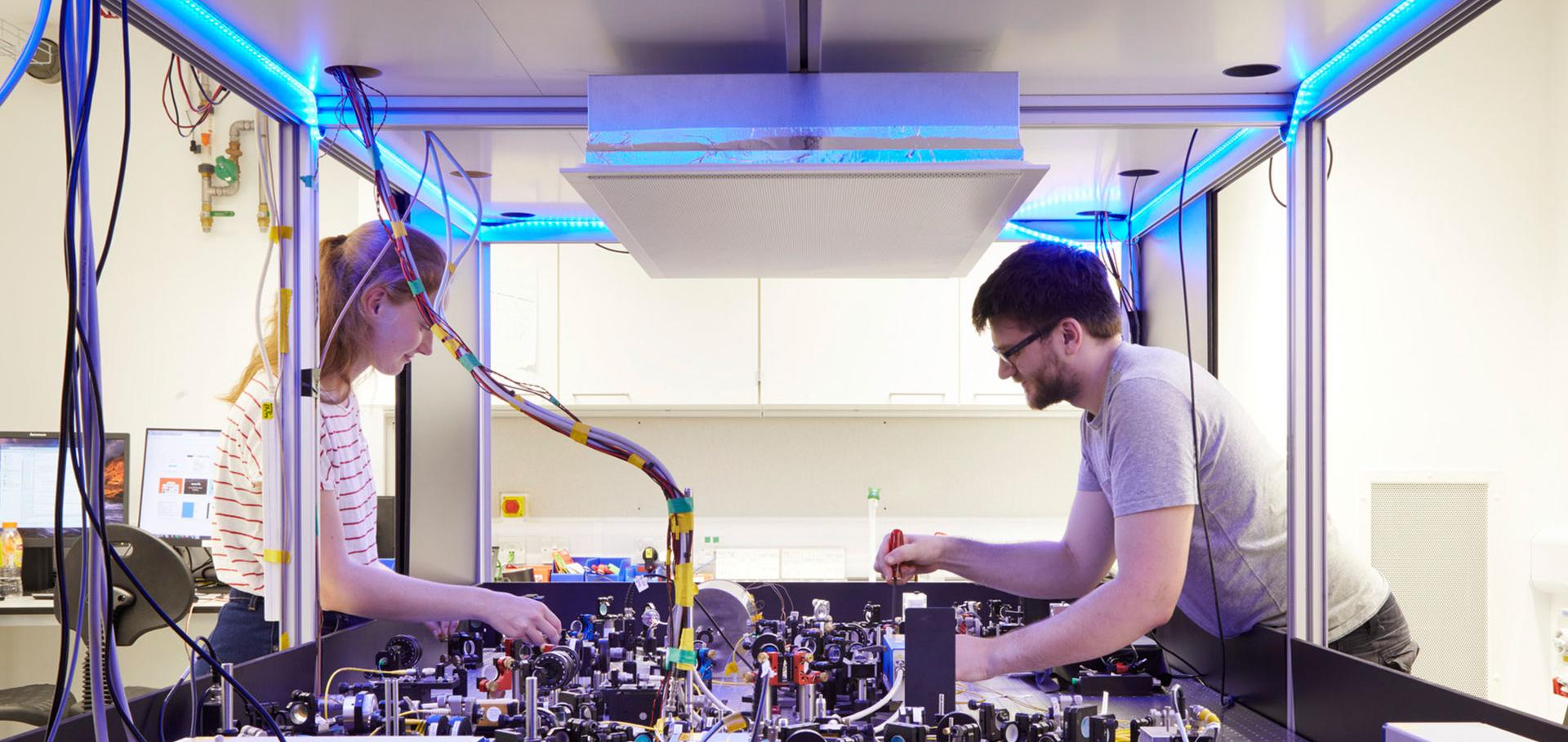
Credit: Jack Hobhouse

Prof Christopher Ramsey

Professor of Archaeological Science

Research theme

  • Accelerator physics
  • Climate physics
  • Instrumentation

Sub department

  • Atomic and Laser Physics
christopher.ramsey@physics.ox.ac.uk
Telephone: 01865285215
School of Archaeology
  • About
  • Publications

Challenges and opportunities for the construction of the next IntCal and SHCal radiocarbon calibration curves

Philosophical Transactions of the Royal Society A: Mathematical, Physical and Engineering Sciences The Royal Society 384:2329 (2026) 20250265

Authors:

Timothy J Heaton, Alex Bayliss, Maarten Blaauw, Christopher Bronk Ramsey, E Marian Scott

Abstract:

Abstract Radiocarbon (14C) provides the most frequently used approach to dating the last 55 000 years. However, owing to fluctuations in past levels of 14C, all radiocarbon dating requires calibration to convert the 14C measurement obtained from a sample into a calendar age. This is achieved by comparing the sample's 14C determination against a suitable calibration curve constructed from 14C measurements of reference samples that have known, or independently estimated, calendar age. The internationally agreed standards for these 14C calibration curves are provided by the IntCal working group, which ensures comparability between derived chronologies. The IntCal curves are periodically updated as significant new reference 14C datasets and Earth system insights become available. Since the last IntCal update in 2020, we have seen a substantial increase in the volume of reference 14C datasets available for use in calibration curve construction, in particular, measurements of annual growth rings in trees that represent individual calendar years. The rapid increase in reference 14C datasets provides exciting new opportunities for the radiocarbon community, but also presents challenges to ensure that 14C calibration remains reliable and accurate for all users. In this paper, we present some of these challenges and opportunities, and discuss some of the ideas under consideration for the next set of IntCal curve updates, which are planned to be released within the next year. This article is part of the Theo Murphy meeting issue ‘Radiocarbon and cosmic radiation events’.
More details from the publisher

Managing and visualising geochemical data for tephra correlation with the IntChron Integration Tool

Journal of Quaternary Science Wiley (2026) jqs.70111

Authors:

Victoria C Smith, Danielle McLean, Eloise Wilkinson‐Rowe, Emma L Horn, Gavin Kane, Christopher Bronk Ramsey

Abstract:

ABSTRACT There is now a wealth of glass‐shard geochemical data for volcanic ash (tephra) layers from a wide range of volcanoes and eruptions, providing invaluable datasets for tephrochronology. However, compilation of published data to assess tephra correlations leads to large files and requires careful management. Here, we show that a project within the IntChron Integration Tool (Ramsey et al., 2019), an open‐access and versatile online application, can be used to effectively store and manage tephra information, geochemical data and relevant metadata, while also providing visualisation and statistical tools. The visualisation functionality allows sites to be plotted on a variety of base maps, enables the plotting of tephra shard concentrations through a sequence and generates biplots of major and trace elements. The statistical tools are similarly invaluable for investigating compositional variability and relationships, and for assessing the probability that datasets correlate. An IntChron Integration Tool project supports the entire workflow, from sample and data collection through analysis and interpretation, to the generation of publication‐ready plots. Here, we present an example project to show the functionality using published data from distal tephra layers in the Lake Suigetsu core, and proximal eruption deposits from volcanoes across Japan. This project contains over 7000 geochemical analyses from 12 publications, demonstrating the power of the IntChron Integration Tool to manage, visualise and archive geochemical datasets.
More details from the publisher

Lethal plague outbreaks in Lake Baikal hunter-gatherers 5,500 years ago

Nature Nature Research 654:8119 (2026) 697-705

Authors:

Ruairidh Macleod, Frederik V Seersholm, Bianca De Sanctis, Angela Lieverse, Adrian Timpson, Rick Schulting, Jesper T Stenderup, Charleen Gaunitz, Lasse Vinner, Olga Ivanovna Goriunova, Vladimir Ivanovich Bazaliiskii, Sergei V Vasilyev, Erin Jessup, Yucheng Wang, Christopher Bronk Ramsey, Mark G Thomas, Russell Corbett-Detig, Astrid KN Iversen, Andrzej W Weber, Martin Sikora, Eske Willerslev

Abstract:

Plague is among the most devastating diseases in human history1. However, early strains of the plague-causing bacterium Yersinia pestis lacked virulence factors that are required for the bubonic form until around 3,800 years ago2, 3. Consequently, the morbidity and mortality of early plague strains remain unclear. Here we describe early plague strains that are associated with two phases of outbreaks among mid-Holocene hunter-gatherers near Lake Baikal in southeast Siberia, beginning from about 5,500 years ago. These outbreaks occur across four hunter-gatherer cemeteries, with a 39% detection rate for plague infection. By reconstructing kinship pedigrees, we show that small familial groups were affected, consistent with human-to-human spread of disease, and that the first outbreak occurred within a single generation. The infections appear to have resulted in acute mortality, especially among children (aged 8 to 11 years). We further note functional differences, including in the ypm superantigen locus, which is also present in present day Yersinia pseudotuberculosis. The new strains diverge ancestrally to known Y. pestis and constrain the timing of its emergence, indicating that this happened before approximately 5,700 years ago. These findings show that plague outbreaks happened earlier than previously thought and were indeed lethal. We contend that the occurrence of outbreaks among mid-Holocene hunter-gatherer communities well outside the sphere of Late Neolithic Europe challenges the notion that higher population densities and lifestyle changes during the Neolithic agricultural transition were prerequisites for plague epidemics.
More details from the publisher
Details from ORA
More details

A compound-specific radiocarbon dating protocol for archaeological pottery at the ORAU

Radiocarbon: An International Journal of Cosmogenic Isotope Research Cambridge University Press (2026) 1-10

Authors:

Qian Ma, Ka Lee Lai, Mckenzie R Bentley, David Chivall, Rachel Wood, Christopher Bronk Ramsey, Lisa Briggs, Benjamin Chan, Roz Cleal, Oliver E Craig, Tanya Dzhanfezova, Laura Pereira Furquim, Angelos Gkotsinas, Robert Hilton, Thiago Kater, Zihan Li, Mike Parker Pearson, Josh Pollard, Rosalind EM Rickaby, Alicia Van Ham-Meert, Bethan Linscott, Lorena Becerra-Valdivia

Abstract:

Radiocarbon dating is essential for establishing robust chronologies in archaeological and paleoenvironmental contexts spanning the last 55,000 years. Pottery, pervasive in the archaeological record, offers a crucial framework for dating human activity during the Holocene. Traditionally, radiocarbon dating of pottery has relied on targeting carbonaceous inclusions such as organic temper or measuring stratigraphically associated materials like bone and charcoal. Inaccuracies can arise, however, if the targeted fraction does not reflect the timing of vessel use or if stratigraphic associations are uncertain. An alternative involves radiocarbon dating of lipid residues, particularly fatty acids absorbed into the ceramic matrix during the processing and storage of plant and animal-derived resources. This approach holds promise for delivering highly accurate measurements directly correlating to vessel use. At the Oxford Radiocarbon Accelerator Unit, efforts have been made to develop this methodology through compound-specific radiocarbon dating of pottery, employing a gas chromatography (GC)-preparative fraction collector (PFC) approach. Here, we describe the protocol and present preliminary findings, including analyses conducted on pottery samples sourced from an archaeological site with an established chronology.
More details from the publisher
Details from ORA
More details

A large mass grave from the Early Iron Age indicates selective violence towards women and children in the Carpathian Basin.

Nature human behaviour 10:4 (2026) 656-668

Authors:

Linda Fibiger, Miren Iraeta-Orbegozo, Jovan Koledin, Jason E Laffoon, Cheryl A Makarewicz, Dorothea Mylopotamitaki, Caroline Bruyere, Thomas Booth, Christopher Bronk Ramsey, Robert Layfield, Lucas Anchieri, Yuejiao Huang, Anna Kjær Knudsen, Jonas Niemann, Darko Radmanović, Neil J Oldham, Barry Shaw, Saoirse Tracy, Sara Nylund, J Stephen Daly, Christine Winter-Schuh, David van Acken, Harald Ringbauer, Alissa Mittnik, Jazmin Ramos-Madrigal, Hannes Schroeder, Barry Molloy

Abstract:

Narratives about the motivations and conditions for mass violence as a persistent feature of conflict throughout human history have evolved in complexity and materiality. Victims of these events are key for understanding the evolution and transformative power of violent behaviour as it developed from simple intergroup conflict to more strategic mass violence. Here we present the results of a bioarchaeological study of 77 and biomolecular analysis of 25 individuals from a ninth-century BCE mass grave from Gomolava in the Carpathian Basin, Southeast Europe. The site is located at the interface of complex sociospatial relations, divergent cultural traditions and values, and competing ideologies of landscape use. We show that excessive lethal violence enacted mostly on women and children suggests a selective demographic bias. The people buried together shared few, even distant, genetic relationships, and so their killing presents striking evidence for an episode of cross-regional conflict and an underlying aggressive shift in power, violence and gender relations in the region. Gomolava provides evidence consistent with deliberate annihilation of select sections of a regional population as a motivation for mass violence behaviour in later prehistoric Europe. It also shines new light on the socioeconomic agency and importance of women and young individuals in later European prehistory.
More details from the publisher
More details
More details

Pagination

  • Current page 1
  • Page 2
  • Page 3
  • Page 4
  • Page 5
  • Page 6
  • Page 7
  • Page 8
  • Page 9
  • …
  • Next page Next
  • Last page Last

Footer Menu

  • Contact us
  • Giving to the Dept of Physics
  • Work with us
  • Media

User account menu

  • Log in

Follow us

FIND US

Clarendon Laboratory,

Parks Road,

Oxford,

OX1 3PU

CONTACT US

Tel: +44(0)1865272200

University of Oxfrod logo Department Of Physics text logo
IOP Juno Champion logo Athena Swan Silver Award logo

© University of Oxford - Department of Physics

Cookies | Privacy policy | Accessibility statement

Built by: Versantus

  • Home
  • Research
  • Study
  • Engage
  • Our people
  • News & Comment
  • Events
  • Our facilities & services
  • About us
  • Giving to Physics
  • Current students
  • Staff intranet