Home
Department Of Physics text logo
  • Research
    • Our research
    • Our research groups
    • Our research in action
    • Research funding support
    • Summer internships for undergraduates
  • Study
    • Undergraduates
    • Postgraduates
  • Engage
    • For alumni
    • For business
    • For schools
    • For the public
  • Support
Menu
Atomic and Laser Physics
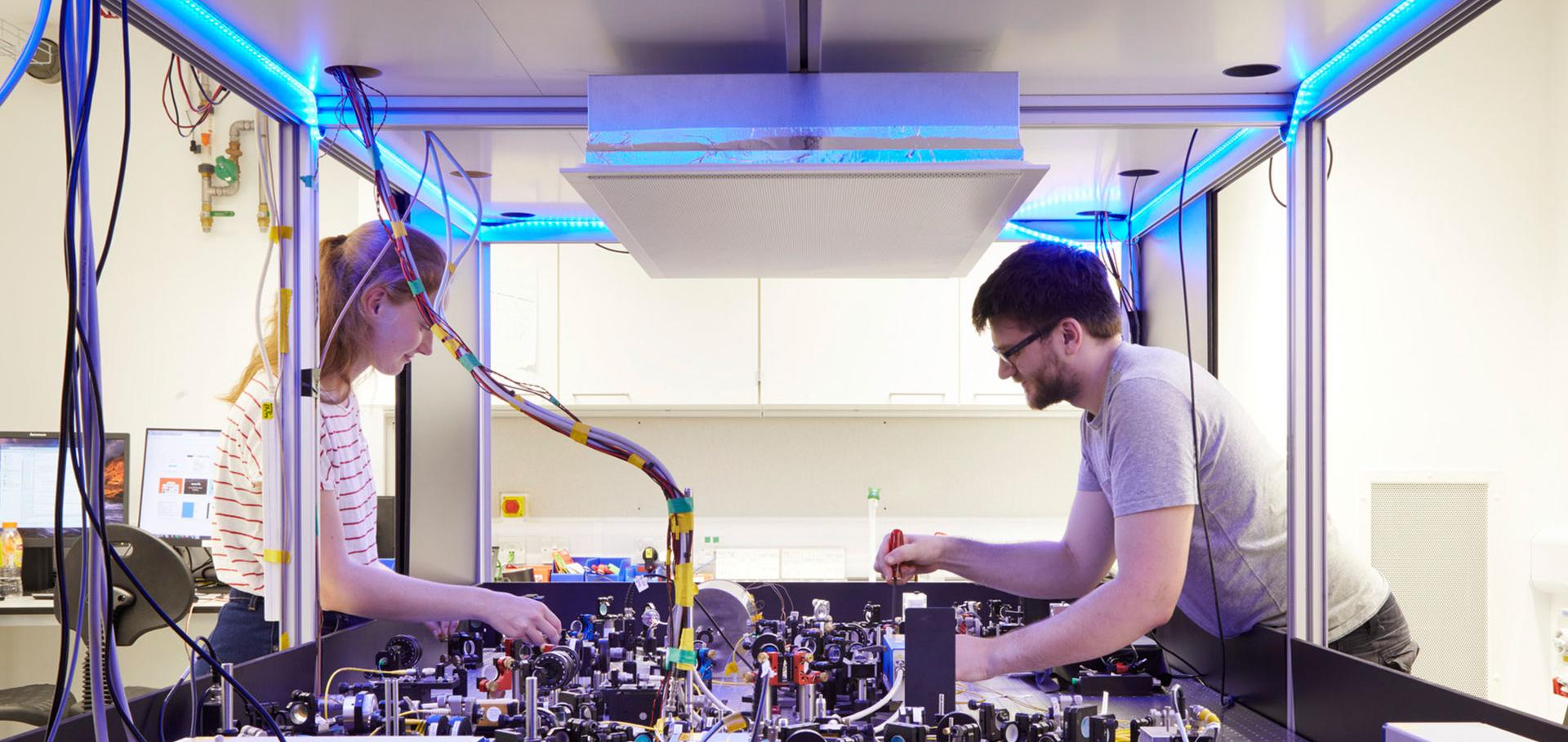
Credit: Jack Hobhouse

Prof Christopher Ramsey

Professor of Archaeological Science

Research theme

  • Accelerator physics
  • Climate physics
  • Instrumentation

Sub department

  • Atomic and Laser Physics
christopher.ramsey@physics.ox.ac.uk
Telephone: 01865285215
School of Archaeology
  • About
  • Publications

Feeding Medieval England: A Long ‘Agricultural Revolution’, 700–1300

, 2025

Authors:

H Hamerowm, A McKerracher, A Bogaard, M Charles, E Forster, M Holmes, C Bronk Ramsey, EB Stroud, RR Thomas

Abstract:

As in the rest of Europe, the population of medieval England grew steeply, especially between the tenth and thirteenth centuries. This volume investigates how medieval farmers managed to produce sufficiently large harvests to sustain this growth—which in turn fuelled a major expansion of towns and markets—and the impact of this ‘cerealisation’ on the landscape. It presents new evidence recovered from hundreds of archaeological excavations for the development of the medieval farming regimes that shaped the English landscape in ways still visible today. Medieval farming is a contentious topic, not least because of the different approaches taken by historians, archaeologists, and geographers. No consensus has been reached about the cultivation regimes that underpinned the remarkable increase in cereal production seen in this period. A large-scale analysis of the excavated remains of medieval crops, weeds, livestock, and pollen has generated new evidence using a range of science-based methods. The results reveal the conditions in which medieval crops were grown and the way in which land use changed between the late Roman period and the Black Death. The authors relate the results to archaeological and written evidence for farms and farming, bringing an ecological perspective to the debate about the so-called medieval agricultural revolution. The ‘cerealisation’ of England emerges as a regionally variegated process lasting several centuries, whose overall impact can nevertheless be described as ‘revolutionary’.
More details from the publisher

Radiocarbon Date Lists 2025

Vernacular Architecture (2025)

Authors:

N Alcock, C Tyers, S Farid, A Bayliss, CB Ramsey, M Dee, E Dunbar, P Marshall, P Reimer, L Wacker, R Howard
More details from the publisher

Extreme solar storms and the quest for exact dating with radiocarbon

Nature Springer Nature 633:8029 (2024) 306-317

Authors:

Timothy J Heaton, Edouard Bard, Alex Bayliss, Maarten Blaauw, Christopher Bronk Ramsey, Paula J Reimer, Chris SM Turney, Ilya Usoskin

Abstract:

Radiocarbon (14C) is essential for creating chronologies to study the timings and drivers of pivotal events in human history and the Earth system over the past 55,000 years. It is also a fundamental proxy for investigating solar processes, including the potential of the Sun for extreme activity. Until now, fluctuations in past atmospheric 14C levels have limited the dating precision possible using radiocarbon. However, the discovery of solar super-storms known as extreme solar particle events (ESPEs) has driven a series of advances with the potential to transform the calendar-age precision of radiocarbon dating. Organic materials containing unique 14C ESPE signatures can now be dated to annual precision. In parallel, the search for further storms using high-precision annual 14C measurements has revealed fine-scaled variations that can be used to improve calendar-age precision, even in periods that lack ESPEs. Furthermore, the newly identified 14C fluctuations provide unprecedented insight into solar variability and the carbon cycle. Here, we review the current state of knowledge and share our insights into these rapidly developing, diverse research fields. We identify links between radiocarbon, archaeology, solar physics and Earth science to stimulate transdisciplinary collaboration, and we propose how researchers can take advantage of these recent developments.
More details from the publisher
Details from ORA
More details
More details

Survival of mammoths (Mammuthus sp.) into the Late Pleistocene in Southwestern British Columbia (Vancouver Island), Canada

Canadian Journal of Earth Sciences Canadian Science Publishing 61:8 (2024) 843-854

Authors:

L Termes, G Keddie, R Hebda, P Trask, V Arbour, C Speller, L Paskulin, Christopher Ramsey, Mr Richards

Abstract:

As part of a larger project identifying and directly radiocarbon dating Late Pleistocene megafaunal remains in British Columbia (B.C.), Canada we have confirmed the identity of many newly identified mammoth (Mammuthus sp.) specimens (n=32) from Vancouver Island in Southwestern B.C. We undertook radiocarbon dating on all specimens and were able to obtain dates (due to preservation) on 16 of these remains, including re-dating a previously dated mammoth using newer radiocarbon extraction methods. The mammoth dates span a wide range, from >47,500 to 18,000 radiocarbon years BP (uncalibrated). These later new dates support other lines of evidence for portions of Vancouver Island remaining unglaciated towards the end of Late Pleistocene.
More details from the publisher
Details from ORA

Biodiversity responses to Lateglacial climate change in the subdecadally-resolved record of Lake Hämelsee (Germany)

Quaternary Science Reviews Elsevier 331 (2024) 108634

Authors:

S Engels, Cs Lane, Wz Hoek, I Baneschi, A Bouwman, E Brogan, C Bronk Ramsey, J Collins, R de Bruijn, A Haliuc, O Heiri, K Hubay, G Jones, V Jones, A Laug, J Merkt, F Muschitiello, M Müller, T Peters, F Peterse, A Pueschel, Ra Staff, A ter Schure, F Turner, V van den Bos

Abstract:

Anthropogenically-driven climate warming and land use change are the main causes of an ongoing decrease in global biodiversity. It is unclear how ecosystems, particularly freshwater habitats, will respond to such continuous and potentially intensifying disruptions. Here we analyse how different components of terrestrial and aquatic ecosystems responded to natural climate change during the Lateglacial. By applying a range of analytical techniques (sedimentology, palaeoecology, geochemistry) to the well-dated sediment archive from Lake Hämelsee (Germany), we show evidence for vegetation development, landscape dynamics and aquatic ecosystem change typical for northwest Europe during the Lateglacial. By particularly focussing on periods of abrupt climate change, we determine the timing and duration of changes in biodiversity in response to external forcing. We show that onsets of changes in biodiversity indicators (e.g. diatom composition, Pediastrum concentrations) lag changes in environmental records (e.g. loss-on-ignition) by a few decades, particularly at the Allerød/Younger Dryas transition. Most biodiversity indicators showed transition times of 10–50 years, whereas environmental records typically showed a 50–100 year long transition. In some cases, transition times observed for the compositional turnover or productivity records were up to 185 years, which could have been the result of the combined effects of direct (e.g. climate) and indirect (e.g. lake stratification) drivers of ecosystem change. Our results show differences in timing and duration of biodiversity responses to external disturbances, suggesting that a multi-decadal view needs to be taken when designing effective conservation management of freshwater ecosystems under current global warming.
More details from the publisher
Details from ORA
More details

Pagination

  • First page First
  • Previous page Prev
  • …
  • Page 3
  • Page 4
  • Page 5
  • Page 6
  • Current page 7
  • Page 8
  • Page 9
  • Page 10
  • Page 11
  • …
  • Next page Next
  • Last page Last

Footer Menu

  • Contact us
  • Giving to the Dept of Physics
  • Work with us
  • Media

User account menu

  • Log in

Follow us

FIND US

Clarendon Laboratory,

Parks Road,

Oxford,

OX1 3PU

CONTACT US

Tel: +44(0)1865272200

University of Oxfrod logo Department Of Physics text logo
IOP Juno Champion logo Athena Swan Silver Award logo

© University of Oxford - Department of Physics

Cookies | Privacy policy | Accessibility statement

Built by: Versantus

  • Home
  • Research
  • Study
  • Engage
  • Our people
  • News & Comment
  • Events
  • Our facilities & services
  • About us
  • Giving to Physics
  • Current students
  • Staff intranet