

Home
Department Of Physics text logo
  • Research
    • Our research
    • Our research groups
    • Our research in action
    • Research funding support
    • Summer internships for undergraduates
  • Study
    • Undergraduates
    • Postgraduates
  • Engage
    • For young people
    • For teachers
    • For the public
    • For alumni
    • For business
  • Support
Menu
where I'd like to be ...

Prof Subir Sarkar

Professor Emeritus

Research theme

  • Particle astrophysics & cosmology
  • Fundamental particles and interactions

Sub department

  • Rudolf Peierls Centre for Theoretical Physics

Research groups

  • Particle theory
Subir.Sarkar@physics.ox.ac.uk
Telephone: 01865 (2)73962
Rudolf Peierls Centre for Theoretical Physics, room 60.12
Old homepage
Brief CV
  • About
  • Research
  • Teaching
  • Service
  • Outreach
  • Awards/News
  • IceCube@Oxford
  • Publications

IceCube

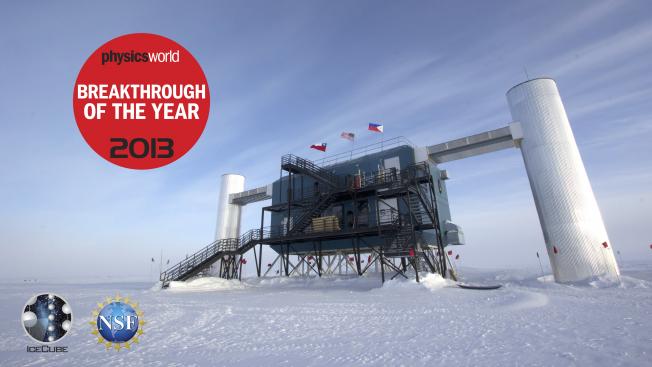
Physics World 2013 Breakthrough of the Year
IceCube at Oxford

I am a member since 2004 of the IceCube collaboration which discovered cosmic high energy neutrinos and identified some of their astrophysical sources.

IceCube @ Oxford

New results in cosmology

ArXiv hep-ph/0201140 (2002)

Abstract:

From an observational perspective cosmology is today in excellent shape - advances in instrumentation and data processing have enabled us to study the universe in detail back to when the first galaxies formed, map the fluctuations in the cosmic microwave background which provide a measure of the overall geometry, and reconstruct the thermal history reliably back to at least the primordial nucleosynthesis era. However recent deep studies of the Hubble expansion rate have suggested that the universe is accelerating, driven by some form of `dark' (vacuum) energy. If true, this implies a new energy scale in Nature of order 0.001 eV, well below any known scale of fundamental physics. This has refocussed attention on the notorious cosmological constant problem at the interface of general relativity and quantum field theory. It is possible that the resolution of this situation will require fundamental modifications to our ideas about gravity.
Details from ArXiV
More details from the publisher

New results in cosmology

(2002)
More details from the publisher

No cosmological domain wall problem for weakly coupled fields

Physical Review D 65:2 (2002)

Authors:

H Casini, S Sarkar

Abstract:

After inflation occurs, a weakly coupled scalar field will in general not be in thermal equilibrium but have a distribution of values determined by the inflationary Hubble parameter. If such a field subsequently undergoes discrete symmetry breaking, then the different degenerate vacua may not be equally populated so the domain walls which form will be "biased" and the wall network will subsequently collapse. Thus the cosmological domain wall problem may be solved for sufficiently weakly coupled fields in a post inflationary universe. We quantify the criteria for determining whether this does happen, using a Higgs-like potential, with a spontaneously broken Z2 symmetry. © 2001 The American Physical Society.
Details from ArXiV
More details from the publisher

Big-bang nucleosynthesis (New)

(2002)

Authors:

BD Fields, S Sarkar

Cosmological Parameters and the Baryon Density from CMB and Galaxy Fluctuations

Astrophysics and Space Science Library Springer Nature 274 (2002) 303-308

Authors:

E Gaztañaga, J Barriga, MG Santos, S Sarkar
More details from the publisher
More details

Pagination

  • First page First
  • Previous page Prev
  • …
  • Page 267
  • Page 268
  • Page 269
  • Page 270
  • Current page 271
  • Page 272
  • Page 273
  • Page 274
  • Page 275
  • …
  • Next page Next
  • Last page Last

Footer Menu

  • Contact us
  • Giving to the Dept of Physics
  • Work with us
  • Media

User account menu

  • Log in

Follow us

FIND US

Clarendon Laboratory,

Parks Road,

Oxford,

OX1 3PU

CONTACT US

Tel: +44(0)1865272200

University of Oxfrod logo Department Of Physics text logo
IOP Juno Champion logo Athena Swan Silver Award logo

© University of Oxford - Department of Physics

Cookies | Privacy policy | Accessibility statement

Built by: Versantus

  • Home
  • Research
  • Study
  • Engage
  • Our people
  • News & Comment
  • Events
  • Our facilities & services
  • About us
  • Giving to Physics
  • Current students
  • Staff intranet