

Home
Department Of Physics text logo
  • Research
    • Our research
    • Our research groups
    • Our research in action
    • Research funding support
    • Summer internships for undergraduates
  • Study
    • Undergraduates
    • Postgraduates
  • Engage
    • For young people
    • For teachers
    • For the public
    • For alumni
    • For business
  • Support
Menu
where I'd like to be ...

Prof Subir Sarkar

Professor Emeritus

Research theme

  • Particle astrophysics & cosmology
  • Fundamental particles and interactions

Sub department

  • Rudolf Peierls Centre for Theoretical Physics

Research groups

  • Particle theory
Subir.Sarkar@physics.ox.ac.uk
Telephone: 01865 (2)73962
Rudolf Peierls Centre for Theoretical Physics, room 60.12
Old homepage
Brief CV
  • About
  • Research
  • Teaching
  • Service
  • Outreach
  • Awards/News
  • IceCube@Oxford
  • Publications

IceCube

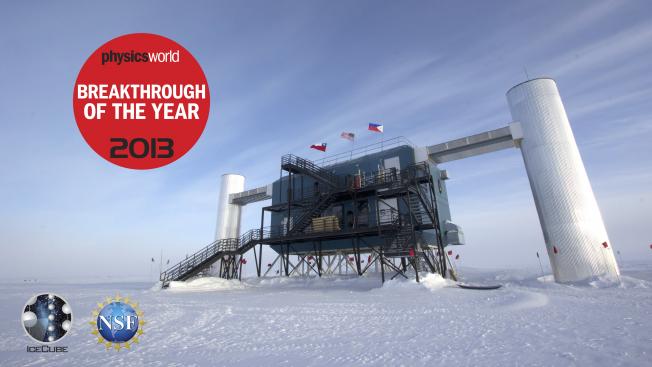
Physics World 2013 Breakthrough of the Year
IceCube at Oxford

I am a member since 2004 of the IceCube collaboration which discovered cosmic high energy neutrinos and identified some of their astrophysical sources.

IceCube @ Oxford

Could the end be in sight for ultrahigh-energy cosmic rays?

PHYSICS WORLD 15:9 (2002) 23-24
More details from the publisher

The High-energy cosmic ray spectrum from relic particle decay

Nucl.Phys. B621 (2002) 495-520

Authors:

Subir Sarkar, Ramon Toldra
More details from the publisher
More details
Details from ArXiV

The solution to Olbers' paradox

PHYSICS WORLD 15:10 (2002) 17-17
More details from the publisher

The high energy cosmic ray spectrum from relic particle decay

(2001)

Authors:

Subir Sarkar, Ramon Toldra
More details from the publisher

Low-scale inflation

Nuclear Physics B 608:1-2 (2001) 423-450

Authors:

G Germán, G Ross, S Sarkar

Abstract:

We show that the scale of the inflationary potential may be the electroweak scale or even lower, while still generating an acceptable spectrum of primordial density perturbations. Thermal effects readily lead to the initial conditions necessary for low scale inflation to occur, and even the moduli problem can be evaded if there is such an inflationary period. We discuss how low scale inflationary models may arise in supersymmetric theories or in theories with large new space dimensions. © 2001 Elsevier Science B.V.
Details from ArXiV
More details from the publisher

Pagination

  • First page First
  • Previous page Prev
  • …
  • Page 268
  • Page 269
  • Page 270
  • Page 271
  • Current page 272
  • Page 273
  • Page 274
  • Page 275
  • Page 276
  • …
  • Next page Next
  • Last page Last

Footer Menu

  • Contact us
  • Giving to the Dept of Physics
  • Work with us
  • Media

User account menu

  • Log in

Follow us

FIND US

Clarendon Laboratory,

Parks Road,

Oxford,

OX1 3PU

CONTACT US

Tel: +44(0)1865272200

University of Oxfrod logo Department Of Physics text logo
IOP Juno Champion logo Athena Swan Silver Award logo

© University of Oxford - Department of Physics

Cookies | Privacy policy | Accessibility statement

Built by: Versantus

  • Home
  • Research
  • Study
  • Engage
  • Our people
  • News & Comment
  • Events
  • Our facilities & services
  • About us
  • Giving to Physics
  • Current students
  • Staff intranet