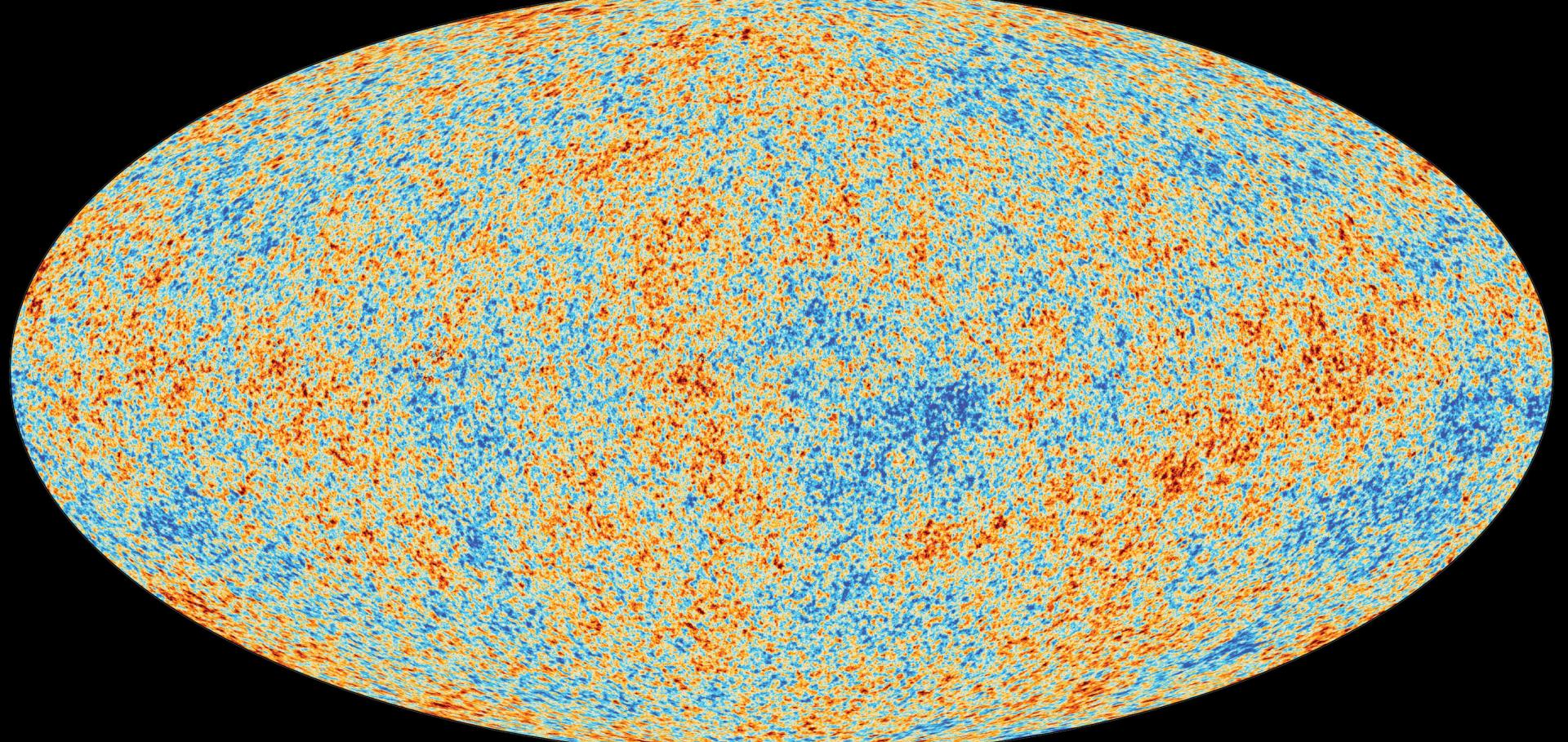
The Simons Observatory: science goals and forecasts for the enhanced Large Aperture Telescope

Journal of Cosmology and Astroparticle Physics IOP Publishing 2025:08 (2025) 034

Authors:

M Abitbol, I Abril-Cabezas, S Adachi, P Ade, AE Adler, P Agrawal, J Aguirre, Z Ahmed, S Aiola, T Alford, A Ali, David Alonso, MA Alvarez, R An, K Arnold, P Ashton, Z Atkins, J Austermann, Susanna Azzoni, C Baccigalupi, A Baleato Lizancos, D Barron, P Barry, J Bartlett, Michael Jones, Adrien La Posta, Jamie Leech, Angela C Taylor

Abstract:

We describe updated scientific goals for the wide-field, millimeter-wave survey that will be produced by the Simons Observatory (SO). Significant upgrades to the 6-meter SO Large Aperture Telescope (LAT) are expected to be complete by 2028, and will include a doubled mapping speed with 30,000 new detectors and an automated data reduction pipeline. In addition, a new photovoltaic array will supply most of the observatory's power. The LAT survey will cover about 60% of the sky at a regular observing cadence, with five times the angular resolution and ten times the map depth of the Planck satellite. The science goals are to: (1) determine the physical conditions in the early universe and constrain the existence of new light particles; (2) measure the integrated distribution of mass, electron pressure, and electron momentum in the late-time universe, and, in combination with optical surveys, determine the neutrino mass and the effects of dark energy via tomographic measurements of the growth of structure at redshifts z ≲ 3; (3) measure the distribution of electron density and pressure around galaxy groups and clusters, and calibrate the effects of energy input from galaxy formation on the surrounding environment; (4) produce a sample of more than 30,000 galaxy clusters, and more than 100,000 extragalactic millimeter sources, including regularly sampled AGN light-curves, to study these sources and their emission physics; (5) measure the polarized emission from magnetically aligned dust grains in our Galaxy, to study the properties of dust and the role of magnetic fields in star formation; (6) constrain asteroid regoliths, search for Trans-Neptunian Objects, and either detect or eliminate large portions of the phase space in the search for Planet 9; and (7) provide a powerful new window into the transient universe on time scales of minutes to years, concurrent with observations from the Vera C. Rubin Observatory of overlapping sky.

The emergence and ionizing feedback of Pop III.1 stars as progenitors for supermassive black holes

Monthly Notices of the Royal Astronomical Society Oxford University Press 542:2 (2025) 1532-1543

Authors:

Mahsa Sanati, Jonathan C Tan, Julien Devriendt, Adrianne Slyz, Sergio Martin-Alvarez, Matteo la Torre, Benjamin Keller, Maya A Petkova, Pierluigi Monaco, Vieri Cammelli, Jasbir Singh, Matthew Hayes

Abstract:

Recent observations by James Webb Space Telescope reveal an unexpectedly abundant population of rapidly growing supermassive black holes (SMBHs) in the early Universe, underscoring the need for improved models for their origin and growth. Employing new full radiative transfer hydrodynamical simulations of galaxy formation, we investigate the local and intergalactic feedback of SMBH progenitors for the Population III.1 (Pop III.1) scenario, i.e. efficient formation of supermassive stars from pristine, undisturbed dark matter minihaloes. Our cosmological simulations capture the R-type expansion phase of these Pop III.1 stars, with their H-ionizing photon luminosities of generating H ii regions that extend deep into the intergalactic medium, reaching comoving radii of . We vary both the Pop III.1 ionization flux and cosmological formation environments, finding the former regulates their final , whereas the latter is more important in setting their formation redshift. We use the results from our radiation-hydrodynamics simulations to estimate the cosmic number density of SMBHs, , expected from Pop III.1 progenitors. We find , consistent with the results inferred from recent observations of the local and high-redshift universe. Overall, this establishes Pop III.1 progenitors as viable candidates for the formation of the first SMBH, and emphasizes the importance of exploring heavy mass seed scenarios.

The emergence and ionizing feedback of Pop III.1 stars as progenitors for supermassive black holes

(2025)

Authors:

Mahsa Sanati, Jonathan C Tan, Julien Devriendt, Adrianne Slyz, Sergio Martin-Alvarez, Matteo la Torre, Benjamin Keller, Maya A Petkova, Pierluigi Monaco, Vieri Cammelli, Jasbir Singh, Matthew Hayes

Euclid Quick Data Release (Q1). The active galaxies of Euclid

Astronomy & Astrophysics EDP Sciences (2025)

Authors:

S Fotopoulou, F Ricci, M Bolzonella, F La Franca, A Viitanen, G Zamorani, MB Taylor, M Mezcua, B Laloux, A Bongiorno, K Jahnke, G Stevens, RA Shaw, L Bisigello, W Roster, Y Fu, B Margalef-Bentabol, A La Marca, F Tarsitano, A Feltre, J Calhau, X López López, M Scialpi, M Salvato, V Allevato, M Siudek, C Saulder, D Vergani, MN Bremer, L Wang, M Giulietti, DM Alexander, D Sluse, F Shankar, L Spinoglio, D Scott, R Shirley, H Landt, M Selwood, Y Toba, P Dayal, N Aghanim, B Altieri, A Amara, S Andreon, N Auricchio, H Aussel, C Baccigalupi, M Baldi, S Bardelli, A Basset, P Battaglia, A Biviano, A Bonchi, E Branchini, M Brescia, J Brinchmann, S Camera, G Cañas-Herrera, V Capobianco, C Carbone, J Carretero, S Casas, FJ Castander, M Castellano, G Castignani, S Cavuoti, KC Chambers, A Cimatti, C Colodro-Conde, G Congedo, CJ Conselice, L Conversi, Y Copin, F Courbin, HM Courtois, M Cropper, A Da Silva, H Degaudenzi, G De Lucia, AM Di Giorgio, C Dolding, H Dole, F Dubath, CAJ Duncan, X Dupac, S Dusini, A Ealet, S Escoffier, M Fabricius, M Farina, R Farinelli, F Faustini, S Ferriol, F Finelli, N Fourmanoit, M Frailis, E Franceschi, S Galeotta, K George, B Gillis, C Giocoli, P Gómez-Alvarez, J Gracia-Carpio, BR Granett, A Grazian, F Grupp, S Gwyn, SVH Haugan, H Hoekstra, W Holmes, IM Hook, F Hormuth, A Hornstrup, P Hudelot, M Jhabvala, E Keihänen, S Kermiche, A Kiessling, B Kubik, M Kümmel, M Kunz, H Kurki-Suonio, Q Le Boulc'h, AMC Le Brun, D Le Mignant, P Liebing, S Ligori, PB Lilje, V Lindholm, I Lloro, G Mainetti, D Maino, E Maiorano, O Mansutti, S Marcin, O Marggraf, M Martinelli, N Martinet, F Marulli, R Massey, DC Masters, S Maurogordato, E Medinaceli, S Mei, M Melchior, Y Mellier, M Meneghetti, E Merlin, G Meylan, A Mora, M Moresco, L Moscardini, R Nakajima, C Neissner, S-M Niemi, JW Nightingale, C Padilla, S Paltani, F Pasian, K Pedersen, WJ Percival, V Pettorino, S Pires, G Polenta, M Poncet, LA Popa, L Pozzetti, F Raison, R Rebolo, A Renzi, J Rhodes, G Riccio, E Romelli, M Roncarelli, E Rossetti, HJA Rottgering, B Rusholme, R Saglia, Z Sakr, AG Sánchez, D Sapone, B Sartoris, JA Schewtschenko, P Schneider, T Schrabback, M Scodeggio, A Secroun, G Seidel, M Seiffert, S Serrano, P Simon, C Sirignano, G Sirri, J Skottfelt, L Stanco, J Steinwagner, P Tallada-Crespí, AN Taylor, I Tereno, S Toft, R Toledo-Moreo, F Torradeflot, I Tutusaus, L Valenziano, J Valiviita, T Vassallo, G Verdoes Kleijn, A Veropalumbo, Y Wang, J Weller, A Zacchei, FM Zerbi, IA Zinchenko, E Zucca, M Ballardini, E Bozzo, C Burigana, R Cabanac, A Cappi, D Di Ferdinando, JA Escartin Vigo, G Fabbian, L Gabarra, J Martín-Fleitas, S Matthew, N Mauri, RB Metcalf, A Pezzotta, M Pöntinen, C Porciani, I Risso, V Scottez, M Sereno, M Tenti, M Viel, M Wiesmann, Y Akrami, IT Andika, S Anselmi, M Archidiacono, F Atrio-Barandela, C Benoist, K Benson, D Bertacca, M Bethermin, A Blanchard, L Blot, H Böhringer, ML Brown, S Bruton, A Calabro, B Camacho Quevedo, F Caro, CS Carvalho, T Castro, F Cogato, T Contini, AR Cooray, O Cucciati, S Davini, F De Paolis, G Desprez, A Díaz-Sánchez, J Diaz, S Di Domizio, JM Diego, P-A Duc, A Enia, Y Fang, AG Ferrari, A Finoguenov, A Fontana, F Fontanot, A Franco, K Ganga, J García-Bellido, T Gasparetto, V Gautard, E Gaztanaga, F Giacomini, F Gianotti, G Gozaliasl, A Gregorio, M Guidi, CM Gutierrez, A Hall, WG Hartley, S Hemmati, C Hernández-Monteagudo, H Hildebrandt, J Hjorth, JE Kajava, Y Kang, V Kansal, D Karagiannis, K Kiiveri, C Kirkpatrick, S Kruk, L Legrand, M Lembo, F Lepori, G Leroy, GF Lesci, J Lesgourgues, L Leuzzi, TI Liaudat, A Loureiro, J Macias-Perez, G Maggio, M Magliocchetti, EA Magnier, F Mannucci, R Maoli, CJAP Martins, L Maurin, M Miluzio, P Monaco, C Moretti, G Morgante, C Murray, K Naidoo, A Navarro-Alsina, S Nesseris, F Passalacqua, K Paterson, L Patrizii, A Pisani, D Potter, S Quai, M Radovich, P-F Rocci, G Rodighiero, S Sacquegna, M Sahlén, DB Sanders, E Sarpa, A Schneider, M Schultheis, D Sciotti, E Sellentin, A Shulevski, LC Smith, SA Stanford, K Tanidis, G Testera, R Teyssier, S Tosi, A Troja, M Tucci, C Valieri, A Venhola, G Verza, P Vielzeuf, NA Walton, E Soubrie

Abstract:

We present three catalogues of candidate active galactic nuclei (AGN) in the Euclid Quick Release (Q1) fields. For each Euclid source, we collected multi-wavelength photometric and spectroscopic information from surveys such as the Galaxy Evolution Explorer (GALEX) the Dark Energy Survey (DES), the Wide-field Infrared Survey Explorer (WISE) Spitzer the Dark Energy Spectroscopic Instrument (DESI), and the Sloan Digital Sky Survey (SDSS), including spectroscopic redshifts from public compilations when available. We investigated the AGN content of the Q1 fields using multiple selection methods. Applying Euclid colours and WISE-AllWISE cuts, we identified 292,222 and 65,131 candidates, respectively. We compiled a high-purity QSO catalogue based on DR3 information, containing 1971 candidates. Using spectroscopic information from DESI, we performed broad-line and narrow-line AGN selections, yielding 4392 AGN candidates across the Q1 fields. We investigated and refined the Euclid Q1 probabilistic random forest QSO population, selecting a refined sample of 180,666 candidates. Additionally, we performed spectral energy distribution (SED) fitting on sources with available z_ spec and utilising the derived AGN fraction, we identified 7766 AGN candidates. To improve the purity of the selection, we defined two new colour criteria (JH_I_E Y and I_E H_gz), finding 313,714 and 267,513 candidates, respectively, across the Q1 fields. We have found a total of 229,779 AGN candidates equivalent to an AGN surface density of 3641 deg^-2 for $18< 24.5$ and a subsample of 30,422 candidates corresponding to an AGN surface density of 482 deg^-2 when limiting the depth to $18< 22$. The AGN surface densities recovered are consistent with predictions based on AGN X-ray luminosity functions.

The ALMA REBELS survey: [OIII]88μm line scans of UV-bright z ≳ 7.6 galaxies

Monthly Notices of the Royal Astronomical Society Oxford University Press (OUP) (2025) staf1287

Authors:

IF van Leeuwen, RJ Bouwens, JA Hodge, PP van der Werf, HSB Algera, S Schouws, M Aravena, RAA Bowler, P Dayal, A Ferrara, R Fisher, Y Fudamoto, C Gulis, T Herard-Demanche, H Inami, I de Looze, A Pallottini, R Smit, L Sommovigo, M Stefanon

Abstract:

Abstract We present the [OIII]88μm spectral scan results from the ALMA Large Program REBELS (Reionization Era Bright Emission Line Survey). The generally high luminosity of [OIII]88μm and ALMA’s Band 7 efficiency motivated its use for line scans of REBELS targets at z > 8. Spectral scans of four sources covered 326.4-373.0 GHz (z = 8.10-9.39), reaching [OIII]88μm luminosities of ∼7.6 × 10⁸ L⊙ (5σ) for a FWHM of 400 km s−1. No credible lines are detected for the four targets. For REBELS-04, the non-detection is unexpected given the ≥92% coverage of the redshift likelihood distribution and its estimated SFR of 40 M⊙ yr−1. Possible explanations for the faint [OIII]88μm emission (assuming a FWHM of 100 km s−1) include high ISM densities (>ncrit ≈ 510 cm−3) and low ionization parameters (log10 Uion ≲ −2.5). For REBELS-37, a subsequent detection of [CII]158μm (z = 7.643) confirmed it lay outside our scan range. For REBELS-11 and REBELS-13, it remains unclear if the non-detection is due to the depth of the line scan or redshift coverage. REBELS-04 and REBELS-37 show significant (≥3.8σ) dust continuum emission in Band 7. If the photometric redshift of REBELS-04 is accurate, i.e., $z_{\mathrm{phot}}=8.57^{+0.10}_{-0.09}$ or $z_{\mathrm{phot}}=8.43^{+0.10}_{-0.10}$ accounting for additional neutral hydrogen in the circumgalactic medium, REBELS-04 would constitute the most distant dust-detected galaxy identified with ALMA to date. Additional Band 6 dust observations of REBELS-37 constrain the shape of the far-IR SED, ruling out cold dust temperatures (≲ 28 K) at 3σ. Further insight into these galaxies will require spectroscopic redshifts and deeper multi-band dust observations.