Home
Department Of Physics text logo
  • Research
    • Our research
    • Our research groups
    • Our research in action
    • Research funding support
    • Summer internships for undergraduates
  • Study
    • Undergraduates
    • Postgraduates
  • Engage
    • For alumni
    • For business
    • For schools
    • For the public
  • Support
Menu
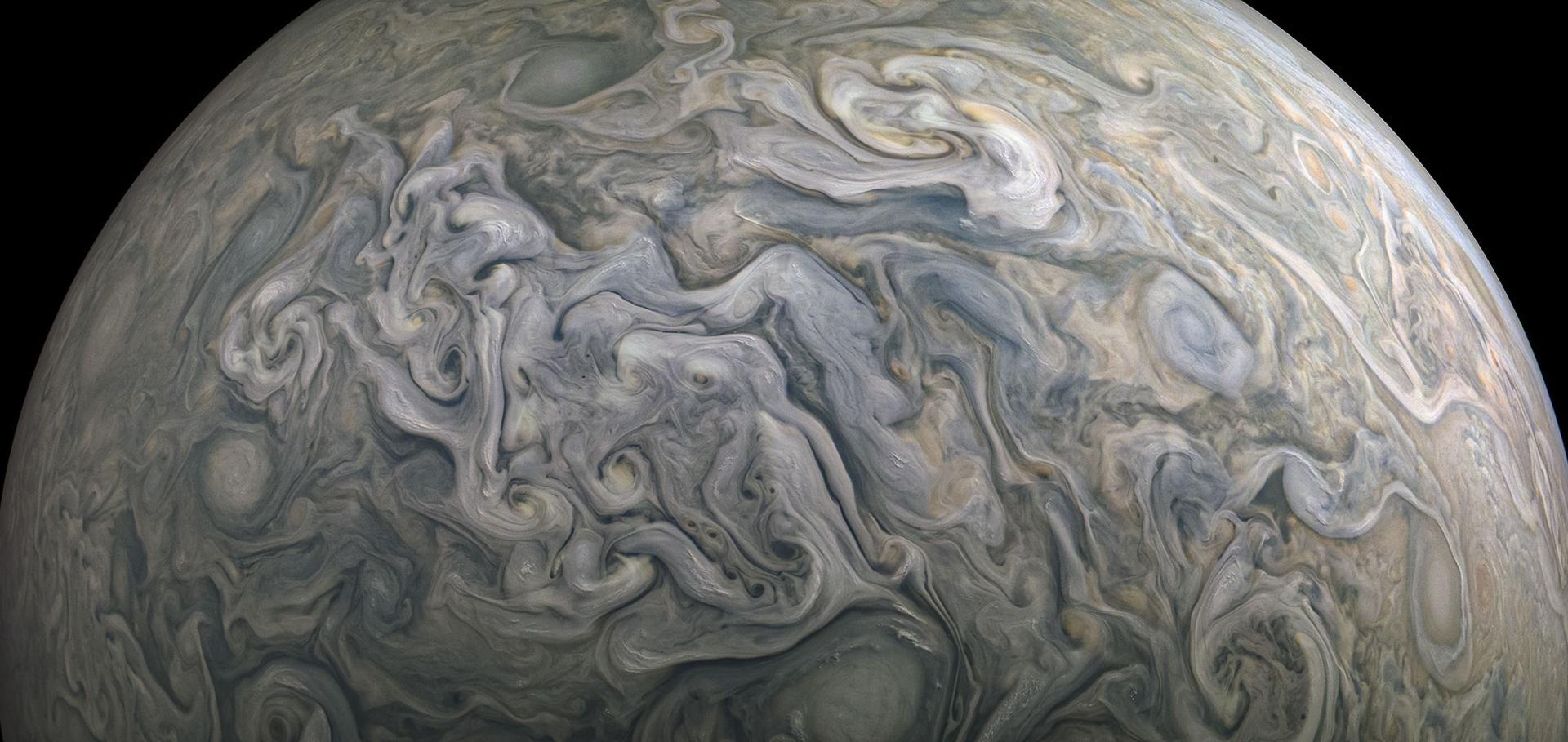
Juno Jupiter image

Hannah Christensen (she/her)

Associate Professor

Research theme

  • Climate physics

Sub department

  • Atmospheric, Oceanic and Planetary Physics

Research groups

  • Atmospheric processes
Hannah.Christensen@physics.ox.ac.uk
Telephone: 01865 (2)72908
Atmospheric Physics Clarendon Laboratory, room F52
  • About
  • Teaching
  • Outreach and Media
  • DPhil applicants
  • Publications

Evaluation of ensemble forecast uncertainty using a new proper score: Application to medium‐range and seasonal forecasts

Quarterly Journal of the Royal Meteorological Society Wiley 141:687 (2015) 538-549

Authors:

HM Christensen, IM Moroz, TN Palmer
More details from the publisher
More details

Stochastic Parameterisations and Model Uncertainty in the Lorenz '96 system

Philosophical Transactions of the Royal Society A: Mathematical, Physical and Engineering Sciences Royal Society 371 (2013) 20110479

Authors:

HM Arnold, IM Moroz, TN Palmer
More details from the publisher
More details
More details

Should weather and climate prediction models be deterministic or stochastic?

Weather Wiley 68:10 (2013) 264-264
More details from the publisher

Aerodynamic Stability and the Growth of Triangular Snow Crystals

The Microscope McCrone Research Institute 4:57 (2009) 157-163

Authors:

KG Libbrecht, HM Arnold

Abstract:

We describe laboratory-grown snow crystals that exhibit a triangular, plate-like morphology, and we show that the occurrence of these crystals is much more frequent than one would expect from random growth perturbations of the more-typical hexagonal forms. We then describe an aerodynamic model that explains the formation of these crystals. A single growth perturbation on one facet of a hexagonal plate leads to air flow around the crystal that promotes the growth of alternating facets. Aerodynamic effects thus produce a weak growth instability that can cause hexagonal plates to develop into triangular plates. This mechanism solves a very old puzzle, as observers have been documenting the unexplained appearance of triangular snow crystals in nature for nearly two centuries.

Can Weather Patterns Contribute to Predicting Winter Flood Magnitudes Using Machine Learning?

Authors:

Emma Ford, Manuela I Brunner, Hannah Christensen, Louise Slater
More details from the publisher

Pagination

  • First page First
  • Previous page Prev
  • …
  • Page 12
  • Page 13
  • Page 14
  • Page 15
  • Page 16
  • Current page 17
  • Page 18
  • Page 19
  • Page 20
  • Next page Next
  • Last page Last

Footer Menu

  • Contact us
  • Giving to the Dept of Physics
  • Work with us
  • Media

User account menu

  • Log in

Follow us

FIND US

Clarendon Laboratory,

Parks Road,

Oxford,

OX1 3PU

CONTACT US

Tel: +44(0)1865272200

University of Oxfrod logo Department Of Physics text logo
IOP Juno Champion logo Athena Swan Silver Award logo

© University of Oxford - Department of Physics

Cookies | Privacy policy | Accessibility statement

Built by: Versantus

  • Home
  • Research
  • Study
  • Engage
  • Our people
  • News & Comment
  • Events
  • Our facilities & services
  • About us
  • Giving to Physics
  • Current students
  • Staff intranet