Home
Department Of Physics text logo
  • Research
    • Our research
    • Our research groups
    • Our research in action
    • Research funding support
    • Summer internships for undergraduates
  • Study
    • Undergraduates
    • Postgraduates
  • Engage
    • For alumni
    • For business
    • For schools
    • For the public
  • Support
Menu
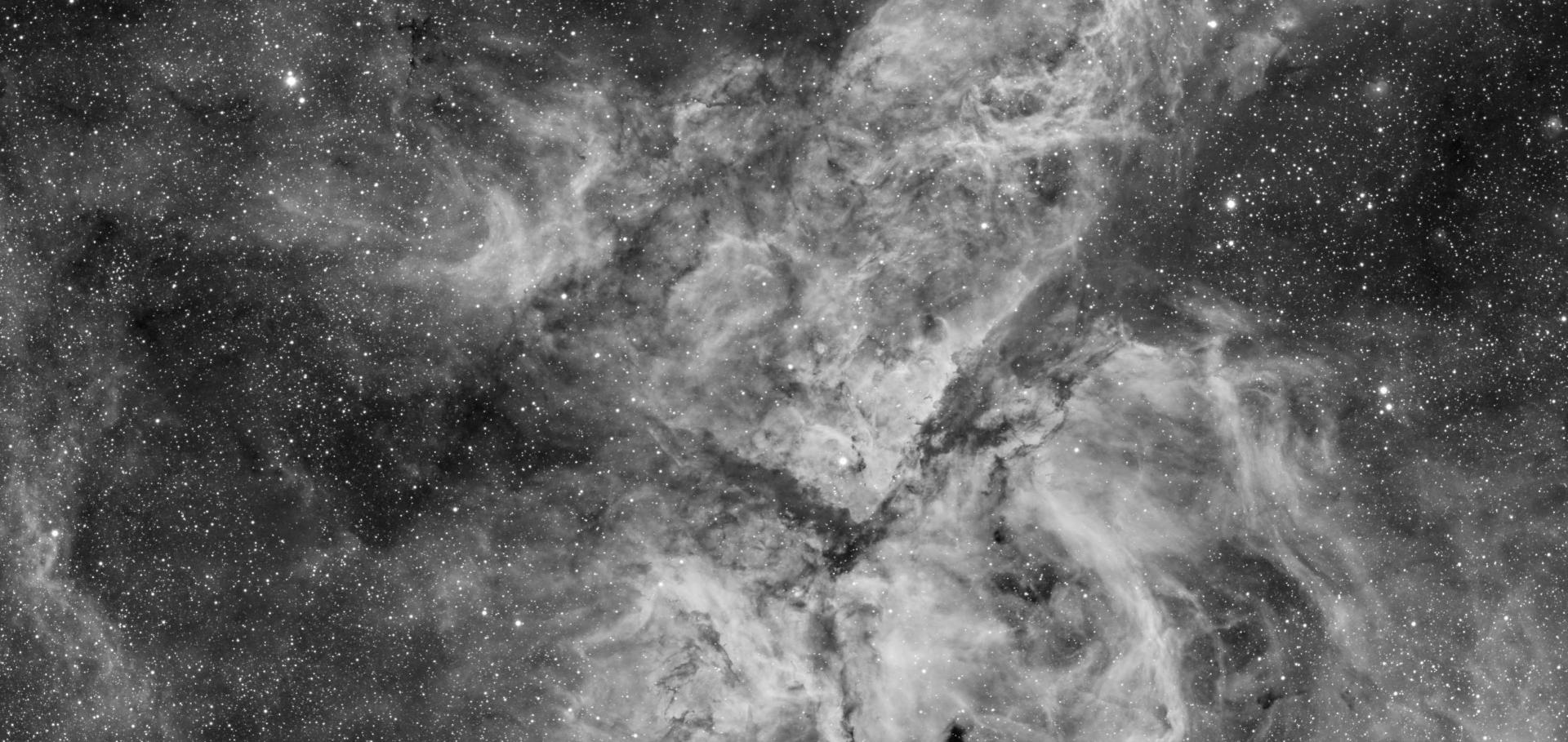
Test image

Katherine Blundell OBE

Professor of Astrophysics

Research theme

  • Astronomy and astrophysics
  • Plasma physics

Sub department

  • Astrophysics

Research groups

  • Global Jet Watch
  • Pulsars, transients and relativistic astrophysics
Katherine.Blundell@physics.ox.ac.uk
Telephone: 01865 (2)73308
Denys Wilkinson Building, room 707
www.GlobalJetWatch.net
orcid.org/0000-0001-8509-4939
  • About
  • Research
  • Gresham Professorship
  • Books
  • Teaching
  • Prizes
  • Publications

The Global Jet Watch

Radio image of the microquasar SS433
The micro quasar SS433
Link to the site

The Nuclear Bulge extinction

AIP CONF PROC 1010 (2008) 168-170

Authors:

J Andrew, KM Blundell, RM Bandyopadhyay, P Lucas

Abstract:

We present a new, high resolution (5 '' per pixel) near-infrared extinction map of the Nuclear Bulge using data from the UKIDSS-GPS. Using photometry from the J, H and K-bands we show that the extinction law parameter a is also highly variable in this region on similar scales to the absolute extinction. We show that only when this extinction law variation is taken into account can the extinction be measured consistently at different wavelengths.
More details
More details from the publisher
Details from ArXiV

Energy... Beyond Oil

OUP Oxford, 2007

Authors:

Fraser A Armstrong, Katherine M Blundell

Abstract:

This book focuses on solutions to the energy problem, and not just the problem itself.

Detection of a relic X-ray jet in Cygnus A

ArXiv 0712.3024 (2007)

Authors:

KC Steenbrugge, KM Blundell, P Duffy

Abstract:

We present a 200 ks Chandra ACIS-I image of Cygnus A, and discuss a long linear feature seen in its counterlobe. This feature has a non-thermal spectrum and lies on the line connecting the brighter hotspot on the approaching side and the nucleus. We therefore conclude that this feature is (or was) a jet. However, the outer part of this X-ray jet does not trace the current counterjet observed in radio. No X-ray counterpart is observed on the jet side. Using light-travel time effects we conclude that this X-ray 50 kpc linear feature is a relic jet that contains enough low-energy plasma (gamma ~ 10^3) to inverse-Compton scatter cosmic microwave background photons, producing emission in the X-rays.
Details from ArXiV
More details from the publisher

Detection of a relic X-ray jet in Cygnus A

(2007)

Authors:

KC Steenbrugge, KM Blundell, P Duffy
More details from the publisher

Radio and X-ray study of Cygnus a

Astrophysics and Space Science 311:1-3 (2007) 323-327

Authors:

KC Steenbrugge, KM Blundell

Abstract:

We present a comparative analysis of 5 GHz VLA and 200 ks Chandra ACIS-I image. In the 5 GHz image the familiar jet and much weaker counterjet are seen, which bend as the jet propagates towards the hotspots. Furthermore, where the lobe detected in 5 GHz emission starts to interact with the jet, we see that the jet "threads". In the 0.2-10 keV X-ray image we do not detect the jet, but do detect a relic of the counterjet. © 2007 Springer Science+Business Media B.V.
More details from the publisher

Pagination

  • First page First
  • Previous page Prev
  • …
  • Page 30
  • Page 31
  • Page 32
  • Page 33
  • Current page 34
  • Page 35
  • Page 36
  • Page 37
  • Page 38
  • …
  • Next page Next
  • Last page Last

Footer Menu

  • Contact us
  • Giving to the Dept of Physics
  • Work with us
  • Media

User account menu

  • Log in

Follow us

FIND US

Clarendon Laboratory,

Parks Road,

Oxford,

OX1 3PU

CONTACT US

Tel: +44(0)1865272200

University of Oxfrod logo Department Of Physics text logo
IOP Juno Champion logo Athena Swan Silver Award logo

© University of Oxford - Department of Physics

Cookies | Privacy policy | Accessibility statement

Built by: Versantus

  • Home
  • Research
  • Study
  • Engage
  • Our people
  • News & Comment
  • Events
  • Our facilities & services
  • About us
  • Giving to Physics
  • Current students
  • Staff intranet