Home
Department Of Physics text logo
  • Research
    • Our research
    • Our research groups
    • Our research in action
    • Research funding support
    • Summer internships for undergraduates
  • Study
    • Undergraduates
    • Postgraduates
  • Engage
    • For alumni
    • For business
    • For schools
    • For the public
Menu
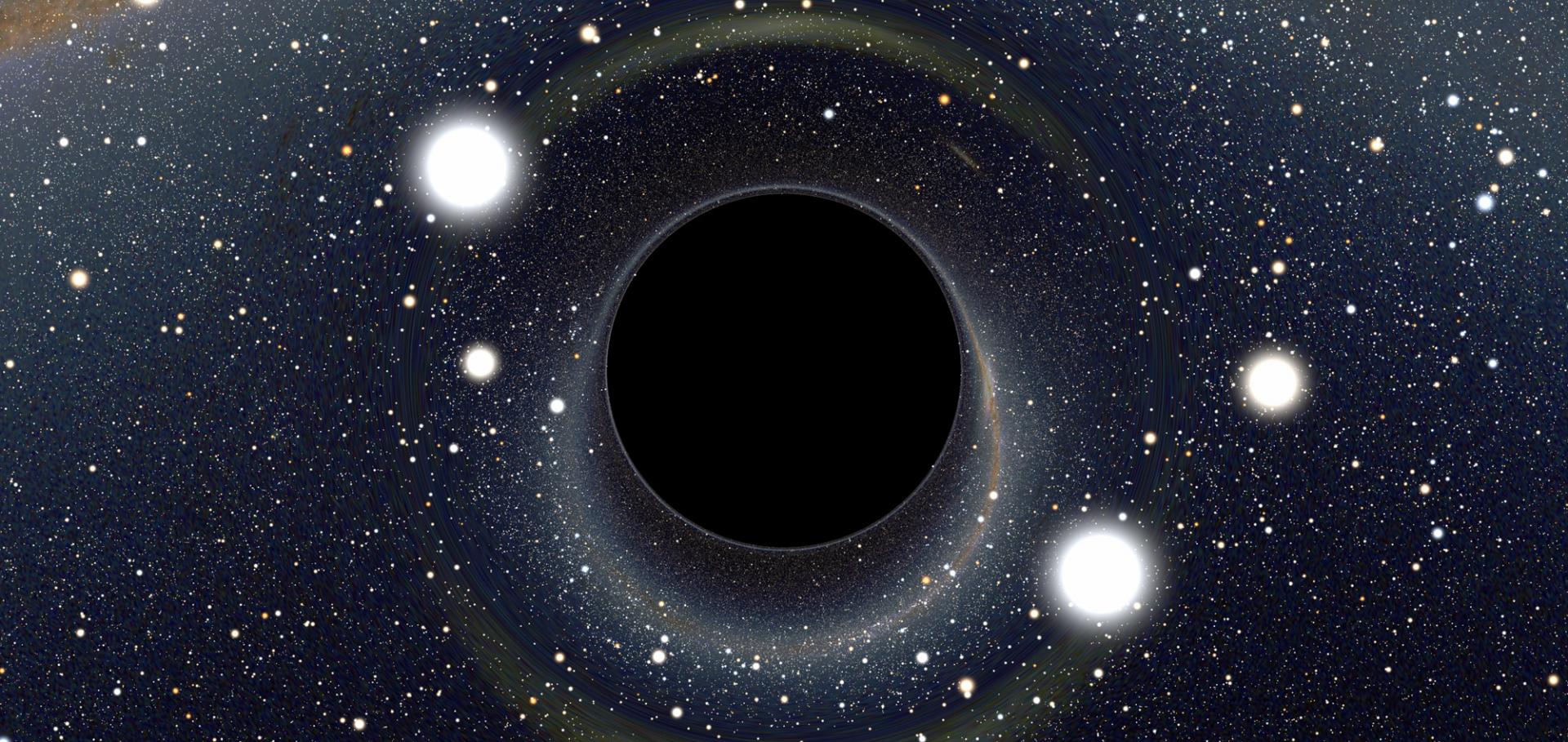
Black Hole

Lensing of space time around a black hole. At Oxford we study black holes observationally and theoretically on all size and time scales - it is some of our core work.

Credit: ALAIN RIAZUELO, IAP/UPMC/CNRS. CLICK HERE TO VIEW MORE IMAGES.

Martin Bureau

Professor of Astrophysics

Research theme

  • Astronomy and astrophysics

Sub department

  • Astrophysics

Research groups

  • Galaxy formation and evolution
  • Hintze Centre for Astrophysical Surveys
martin.bureau@physics.ox.ac.uk
Telephone: 01865 (2)73377
Denys Wilkinson Building, room 701
Home page
ORCID
  • About
  • Publications

ISM chemistry in metal-rich environments: Molecular tracers of metallicity

Monthly Notices of the Royal Astronomical Society 433:2 (2013) 1659-1674

Authors:

TA Davis, E Bayet, A Crocker, S Topal, M Bureau

Abstract:

In this paper we use observations of molecular tracers inmetal-rich and a-enhanced galaxies to study the effect of abundance changes on molecular chemistry. We selected a sample of metalrich spiral and star-bursting objects from the literature, and present here new data for a sample of early-type galaxies (ETGs) previously studied by Crocker et al. We conducted the first survey of carbon monosulphide (CS) and methanol emission in ETGs, detecting seven objects in at least one CS transition, and methanol emission in five ETGs. We find that ETGs whose gas is dominated by ionization from star formation have enhanced CS emission, compared to their hydrogen cyanide (HCN) emission, supporting the hypothesis that CS is a better tracer of dense star-forming gas than HCN. We suggest that the methanol emission in these sources is driven by dust mantle destruction due to ionization from high-mass star formation in dense molecular clouds, but cannot rule out a component due to shocks dominating in some sources. We construct rotation diagrams for each early-type source where at least two transitions of a given species were detected. The rotational temperatures we derive for linear molecules vary between 3 and 9 K, with the majority of sources having rotational temperatures around 5 K. Despite the large uncertainty inherent in this method, the derived source-averaged CS and methanol column densities are similar to those found by other authors for normal spiral and starburst galaxies. This may suggest dense clouds are little affected by the differences between early-and late-type galaxies. Finally, we used the total column density ratios for both our ETG and literature galaxy sample to show for the first time that some molecular tracers do seem to show systematic variations that appear to correlate with metallicity, and that these variations roughly match those predicted by chemical models. Using this fact, the chemical models of Bayet et al. and assumptions about the optical depth we are able to roughly predict the metallicity of our spiral and ETG sample, with a scatter of ~0.3 dex. We provide the community with linear approximations to the relationship between the HCN and CS column density ratio and metallicity. Further study will clearly be required to determine if this, or any, molecular tracer can be used to robustly determine gas-phase metallically, but that a relationship exists at all suggests that in the future it may be possible to calibrate a metallicity indicator for the molecular interstellar medium. © 2013 The Authors.
More details from the publisher
More details

The ATLAS3D project - XVIII. CARMA CO imaging survey of early-type galaxies

Monthly Notices of the Royal Astronomical Society 432:3 (2013) 1796-1844

Authors:

K Alatalo, TA Davis, M Bureau, LM Young, L Blitz, AF Crocker, E Bayet, M Bois, F Bournaud, M Cappellari, RL Davies, PT De Zeeuw, PA Duc, E Emsellem, S Khochfar, D Krajnović, H Kuntschner, PY Lablanche, R Morganti, RM McDermid, T Naab, T Oosterloo, M Sarzi, N Scott, P Serra, AM Weijmans

Abstract:

We present the Combined Array for Research in Millimeter Astronomy (CARMA) ATLAS3D molecular gas imaging survey, a systematic study of the distribution and kinematics of molecular gas in CO-rich early-type galaxies. Our full sample of 40 galaxies (30 newly mapped and 10 taken from the literature) is complete to a 12CO(1-0) integrated flux of 18.5 Jy km s-1,1 and it represents the largest, best studied sample of its type to date. A comparison of the CO distribution of each galaxy to the g - r colour image (representing dust) shows that the molecular gas and dust distributions are in good agreement and trace the same underlying interstellar medium. The galaxies exhibit a variety of CO morphologies, including discs (50 per cent), rings (15 per cent), bars+rings (10 per cent), spiral arms (5 per cent) and mildly (12.5 per cent) and strongly (7.5 per cent) disrupted morphologies. There appear to be weak trends between galaxy mass and CO morphology, whereby the most massive galaxies in the sample tend to have molecular gas in a disc morphology. We derive a lower limit to the total accreted molecular gas mass across the sample of 2.48 × 10¹⁰Mȯ, or approximately 8.3 × 10⁸Mȯ per minor merger within the sample, consistent with minor merger stellar mass ratios. © 2013 The Authors Published by Oxford University Press on behalf of the Royal Astronomical Society.
More details from the publisher
More details

The ATLAS3D project - XVI. Physical parameters and spectral line energy distributions of the molecular gas in gas-rich early-type galaxies

Monthly Notices of the Royal Astronomical Society 432:3 (2013) 1742-1767

Authors:

E Bayet, M Bureau, TA Davis, LM Young, AF Crocker, K Alatalo, L Blitz, M Bois, F Bournaud, M Cappellari, RL Davies, PT de Zeeuw, PA Duc, E Emsellem, S Khochfar, D Krajnović, H Kuntschner, RM McDermid, R Morganti, T Naab, T Oosterloo, M Sarzi, N Scott, P Serra, AM Weijmans

Abstract:

We present a detailed study of the physical properties of the molecular gas in a sample of 18 molecular gas-rich early-type galaxies (ETGs) from the ATLAS3D sample. Our goal is to better understand the star formation processes occurring in those galaxies, starting here with the dense star-forming gas. We use existing integrated 12CO (1-0, 2-1), 13CO (1-0, 2-1), HCN (1-0) and HCO+ (1-0) observations and new 12 CO (3-2) single-dish data. From these, we derive for the first time the average kinetic temperature, H2 volume density and column density of the emitting gas in a significant sample of ETGs, using a non-local thermodynamical equilibrium theoretical model. Since the CO lines trace different physical conditions than of those the HCN and HCO+ lines, the two sets of lines are treated separately. For most of the molecular gas-rich ETGs studied here, the CO transitions can be reproduced with kinetic temperatures of 10-20 K, H2 volume densities of 103-4 cm-3 and CO column densities of 1018-20 cm-2. The physical conditions corresponding to the HCN and HCO+ gas component have large uncertainties and must be considered as indicative only. We also compare for the first time the predicted CO spectral line energy distributions and gas properties of our molecular gas-rich ETGs with those of a sample of nearby well-studied disc galaxies. The gas excitation conditions in 13 of our 18 ETGs appear analogous to those in the centre of theMilky Way, hence the star formation activity driving these conditions is likely of a similar strength and nature. Such results have never been obtained before for ETGs and open a new window to explore further star-formation processes in the Universe. The conclusions drawn should nevertheless be considered carefully, as they are based on a limited number of observations and on a simple model. In the near future, with higher CO transition observations, it should be possible to better identify the various gas components present in ETGs, as well as more precisely determine their associated physical conditions. To achieve these goals, we show here from our theoretical study, that mid-J CO lines [such as the 12CO (6-5) line] are particularly useful. © 2013 The Authors Published by Oxford University Press on behalf of the Royal Astronomical Society.
More details from the publisher
More details

The ATLAS3D project - XV. Benchmark for early-type galaxies scaling relations from 260 dynamical models: Mass-to-light ratio, dark matter, fundamental plane and mass plane

Monthly Notices of the Royal Astronomical Society 432:3 (2013) 1709-1741

Authors:

M Cappellari, N Scott, K Alatalo, L Blitz, M Bois, F Bournaud, M Bureau, AF Crocker, RL Davies, TA Davis, PT de Zeeuw, PA Duc, E Emsellem, S Khochfar, D Krajnović, H Kuntschner, RM McDermid, R Morganti, T Naab, T Oosterloo, M Sarzi, P Serra, AM Weijmans, LM Young

Abstract:

We study the volume-limited and nearly mass-selected (stellar mass Mstars ≳ 6 × 10⁹ M⊙) ATLAS3D sample of 260 early-type galaxies (ETGs, ellipticals Es and lenticulars S0s). We construct detailed axisymmetric dynamical models (Jeans Anisotropic MGE), which allow for orbital anisotropy, include a dark matter halo and reproduce in detail both the galaxy images and the high-quality integral-field stellar kinematics out to about 1Re, the projected half-light radius. We derive accurate total mass-to-light ratios (M/L)e and dark matter fractions fDM, within a sphere of radius r = Re centred on the galaxies.We alsomeasure the stellar (M/L)stars and derive a median dark matter fraction fDM = 13 per cent in our sample. We infer masses MJAM = L × (M/L)e ≈ 2 ×M1/2, where M1/2 is the total mass within a sphere enclosing half of the galaxy light. We find that the thin two-dimensional subset spanned by galaxies in the (MJAM, σe,Rmaje ) coordinates system, which we call the Mass Plane (MP) has an observed rms scatter of 19 per cent, which implies an intrinsic one of 11 per cent. Here, Rmaje is the major axis of an isophote enclosing half of the observed galaxy light, while σe is measuredwithin that isophote. The MP satisfies the scalar virial relation MJAM ∝ σ2e Rmaje within our tight errors. This show that the larger scatter in the Fundamental Plane (FP) (L, σe, Re) is due to stellar population effects [including trends in the stellar initial mass function (IMF)]. It confirms that the FP deviation from the virial exponents is due to a genuine (M/L)e variation. However, the details of how both Re and σe are determined are critical in defining the precise deviation from the virial exponents. The main uncertainty in masses or M/L estimates using the scalar virial relation is in the measurement of Re. This problem is already relevant for nearby galaxies and may cause significant biases in virial mass and size determinations at high redshift. Dynamical models can eliminate these problems.We revisit the (M/L)e-σe relation, which describes most of the deviations between the MP and the FP. The best-fitting relation is (M/L)e ∝ σ0.72e (r band). It provides an upper limit to any systematic increase of the IMF mass normalization with σe. The correlation is more shallow and has smaller scatter for slow rotating systems or for galaxies in Virgo. For the latter, when using the best distance estimates, we observe a scatter in (M/L)e of 11 per cent, and infer an intrinsic one of 8 per cent. We perform an accurate empirical study of the link between se and the galaxies circular velocity Vcirc within 1Re (where stars dominate) and find the relation max (Vcirc) ≈ 1.76 × σe, which has an observed scatter of 7 per cent. The accurate parameters described in this paper are used in the companion Paper XX (Cappellari et al.) of this series to explore the variation of global galaxy properties, including the IMF, on the projections of the MP. © 2013 The Authors Published by Oxford University Press on behalf of the Royal Astronomical Society.
More details from the publisher
More details
Details from ArXiV

The ATLAS3D project - XXI. Correlations between gradients of local escape velocity and stellar populations in early-type galaxies

Monthly Notices of the Royal Astronomical Society 432:3 (2013) 1894-1913

Authors:

N Scott, M Cappellari, RL Davies, GV Kleijn, M Bois, K Alatalo, L Blitz, F Bournaud, M Bureau, A Crocker, TA Davis, PT de Zeeuw, PA Duc, E Emsellem, S Khochfar, D Krajnović, H Kuntschner, RM McDermid, R Morganti, T Naab, T Oosterloo, M Sarzi, P Serra, AM Weijmans, LM Young

Abstract:

We explore the connection between the local escape velocity, Vesc, and the stellar population properties in the ATLAS3D survey, a complete, volume-limited sample of nearby early-type galaxies. We make use of ugriz photometry to construct Multi-Gaussian Expansion models of the surface brightnesses of our galaxies. We are able to fit the full range of surface brightness profiles found in our sample, and in addition we reproduce the results of state-ofthe- art photometry in the literature with residuals of 0.04 mag. We utilize these photometric models and SAURON integral-field spectroscopy, combined with Jeans dynamical modelling, to determine the local Vesc derived from the surface brightness. We find that the local Vesc is tightly correlated with the Mg b and Fe5015 line strengths and optical colours, and anticorrelated with the Hβ line strength. In the case of the Mg b and colour-Vesc relations we find that the relation within individual galaxies follows the global relation between different galaxies. We intentionally ignored any uncertain contribution due to dark matter since we are seeking an empirical description of stellar population gradients in early-type galaxies that is ideal for quantitative comparison with model predictions. We also make use of single stellar population (SSP) modelling to transform our line strength index measurements into the SSP-equivalent parameters age (t), metallicity ([Z/H]) and α-enhancement [α/Fe]. The residuals from the relation are correlated with age, [α/Fe], molecular gas mass and local environmental density. We identify a population of galaxies that occur only at low Vesc that exhibit negative gradients in the Mg b-and Colour-Vesc relations. These galaxies typically have young central stellar populations and contain significant amounts of molecular gas and dust. Combining these results with N-body simulations of binary mergers we use the Mgb-Vesc relation to constrain the possible number of dry mergers experienced by the local early-type galaxy population-a typical massive early-type galaxy can have experienced only ∼1.5 major mergers before becoming a significant outlier in the Mgb-Vesc relation. © 2013 The Authors Published by Oxford University Press on behalf of the Royal Astronomical Society.
More details from the publisher
More details

Pagination

  • First page First
  • Previous page Prev
  • …
  • Page 36
  • Page 37
  • Page 38
  • Page 39
  • Current page 40
  • Page 41
  • Page 42
  • Page 43
  • Page 44
  • …
  • Next page Next
  • Last page Last

Footer Menu

  • Contact us
  • Giving to the Dept of Physics
  • Work with us
  • Media

User account menu

  • Log in

Follow us

FIND US

Clarendon Laboratory,

Parks Road,

Oxford,

OX1 3PU

CONTACT US

Tel: +44(0)1865272200

University of Oxfrod logo Department Of Physics text logo
IOP Juno Champion logo Athena Swan Silver Award logo

© University of Oxford - Department of Physics

Cookies | Privacy policy | Accessibility statement

Built by: Versantus

  • Home
  • Research
  • Study
  • Engage
  • Our people
  • News & Comment
  • Events
  • Our facilities & services
  • About us
  • Giving to Physics
  • Current students
  • Staff intranet