Home
Department Of Physics text logo
  • Research
    • Our research
    • Our research groups
    • Our research in action
    • Research funding support
    • Summer internships for undergraduates
  • Study
    • Undergraduates
    • Postgraduates
  • Engage
    • For alumni
    • For business
    • For schools
    • For the public
Menu
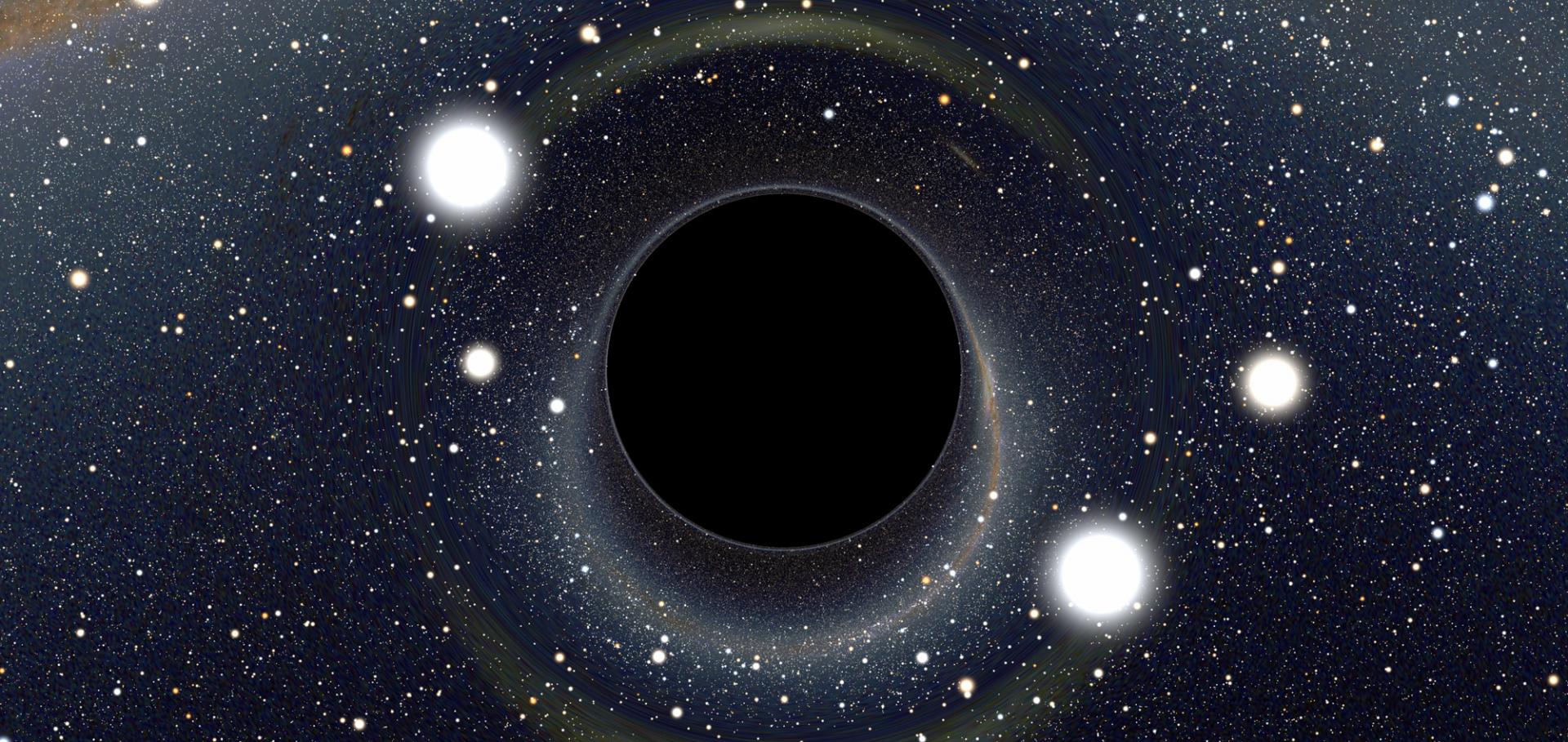
Black Hole

Lensing of space time around a black hole. At Oxford we study black holes observationally and theoretically on all size and time scales - it is some of our core work.

Credit: ALAIN RIAZUELO, IAP/UPMC/CNRS. CLICK HERE TO VIEW MORE IMAGES.

Martin Bureau

Professor of Astrophysics

Research theme

  • Astronomy and astrophysics

Sub department

  • Astrophysics

Research groups

  • Galaxy formation and evolution
  • Hintze Centre for Astrophysical Surveys
martin.bureau@physics.ox.ac.uk
Telephone: 01865 (2)73377
Denys Wilkinson Building, room 701
Home page
ORCID
  • About
  • Publications

The SAURON project-XXI. The spatially-resolved UV-line strength relations of early-type galaxies

(2012)

Authors:

Hyunjin Jeong, Sukyoung K Yi, Martin Bureau, Roger L Davies, Roland Bacon, Michele Cappellari, P Tim de Zeeuw, Eric Emsellem, Jesus Falcon-Barroso, Davor Krajnovic, Harald Kuntschner, Richard M McDermid, Reynier F Peletier, Marc Sarzi, Remco CE van den Bosch, Glenn van de Ven
More details from the publisher

The Hi Environment of Counter-rotating Gas Hosts: Gas Accretion from Cold Gas Blobs

(2012)

Authors:

Aeree Chung, Martin Bureau, JH van Gorkom, Baerbel Koribalski
More details from the publisher

A systematic variation of the stellar initial mass function in early-type galaxies

(2012)

Authors:

Michele Cappellari, Richard M McDermid, Katherine Alatalo, Leo Blitz, Maxime Bois, Frederic Bournaud, M Bureau, Alison F Crocker, Roger L Davies, Timothy A Davis, PT de Zeeuw, Pierre-Alain Duc, Eric Emsellem, Sadegh Khochfar, Davor Krajnovic, Harald Kuntschner, Pierre-Yves Lablanche, Raffaella Morganti, Thorsten Naab, Tom Oosterloo, Marc Sarzi, Nicholas Scott, Paolo Serra, Anne-Marie Weijmans, Lisa M Young
More details from the publisher

Simulations of binary galaxy mergers and the link with Fast Rotators, Slow Rotators, and Kinematically Distinct Cores

(2012)

Authors:

Maxime Bois, Eric Emsellem, Frédéric Bournaud, Katherine Alatalo, Leo Blitz, Martin Bureau, Michele Cappellari, Roger L Davies, Timothy A Davis, PT de Zeeuw, Pierre-Alain Duc, Sadegh Khochfar, Davor Krajnović, Harald Kuntschner, Pierre-Yves Lablanche, Richard M McDermid, Raffaella Morganti, Thorsten Naab, Tom Oosterloo, Marc Sarzi, Nicholas Scott, Paolo Serra, Anne-Marie Weijmans, Lisa M Young
More details from the publisher

Galaxy Zoo: Dust and molecular gas in early-type galaxies with prominent dust lanes

Monthly Notices of the Royal Astronomical Society 423:1 (2012) 49-58

Authors:

S Kaviraj, YS Ting, M Bureau, SS Shabala, RM Crockett, J Silk, C Lintott, A Smith, WC Keel, KL Masters, K Schawinski, SP Bamford

Abstract:

We explore the properties of dust and associated molecular gas in 352 nearby (0.01 < z < 0.07) early-type galaxies (ETGs) with prominent dust lanes, drawn from the Sloan Digital Sky Survey (SDSS). Two-thirds of these 'dusty ETGs' (D-ETGs) are morphologically disturbed, which suggests a merger origin, making these galaxies ideal test beds for studying the merger process at low redshift. The D-ETGs preferentially reside in lower density environments, compared to a control sample drawn from the general ETG population. Around 80per cent of D-ETGs inhabit the field (compared to 60per cent of the control ETGs) and less than 2per cent inhabit clusters (compared to 10per cent of the control ETGs). Compared to their control-sample counterparts, D-ETGs exhibit bluer ultraviolet-optical colours (indicating enhanced levels of star formation) and an active galactic nucleus fraction that is more than an order of magnitude greater (indicating a strikingly higher incidence of nuclear activity). The mass of clumpy dust residing in large-scale dust features is estimated, using the SDSS r-band images, to be in the range 104.5-106.5M⊙. A comparison to the total (clumpy + diffuse) dust masses - calculated using the far-infrared fluxes of 15per cent of the D-ETGs that are detected by the Infrared Astronomical Satellite (IRAS) - indicates that only 20per cent of the dust is typically contained in these large-scale dust features. The dust masses are several times larger than the maximum value expected from stellar mass loss, ruling out an internal origin. The dust content shows no correlation with the blue luminosity, indicating that it is not related to a galactic scale cooling flow. Furthermore, no correlation is found with the age of the recent starburst, suggesting that the dust is accreted directly in the merger rather than being produced in situ by the triggered star formation. Using molecular gas-to-dust ratios of ETGs in the literature, we estimate that the median current molecular gas fraction in the IRAS-detected ETGs is ∼1.3per cent. Adopting reasonable values for gas depletion time-scales and starburst ages, the median initial gas fraction in these D-ETGs is ∼4per cent. Recent work has suggested that the merger © 2012 The Authors Monthly Notices of the Royal Astronomical Society © 2012 RAS.
More details from the publisher

Pagination

  • First page First
  • Previous page Prev
  • …
  • Page 44
  • Page 45
  • Page 46
  • Page 47
  • Current page 48
  • Page 49
  • Page 50
  • Page 51
  • Page 52
  • …
  • Next page Next
  • Last page Last

Footer Menu

  • Contact us
  • Giving to the Dept of Physics
  • Work with us
  • Media

User account menu

  • Log in

Follow us

FIND US

Clarendon Laboratory,

Parks Road,

Oxford,

OX1 3PU

CONTACT US

Tel: +44(0)1865272200

University of Oxfrod logo Department Of Physics text logo
IOP Juno Champion logo Athena Swan Silver Award logo

© University of Oxford - Department of Physics

Cookies | Privacy policy | Accessibility statement

Built by: Versantus

  • Home
  • Research
  • Study
  • Engage
  • Our people
  • News & Comment
  • Events
  • Our facilities & services
  • About us
  • Giving to Physics
  • Current students
  • Staff intranet