Home
Department Of Physics text logo
  • Research
    • Our research
    • Our research groups
    • Our research in action
    • Research funding support
    • Summer internships for undergraduates
  • Study
    • Undergraduates
    • Postgraduates
  • Engage
    • For alumni
    • For business
    • For schools
    • For the public
  • Support
Menu
CMP
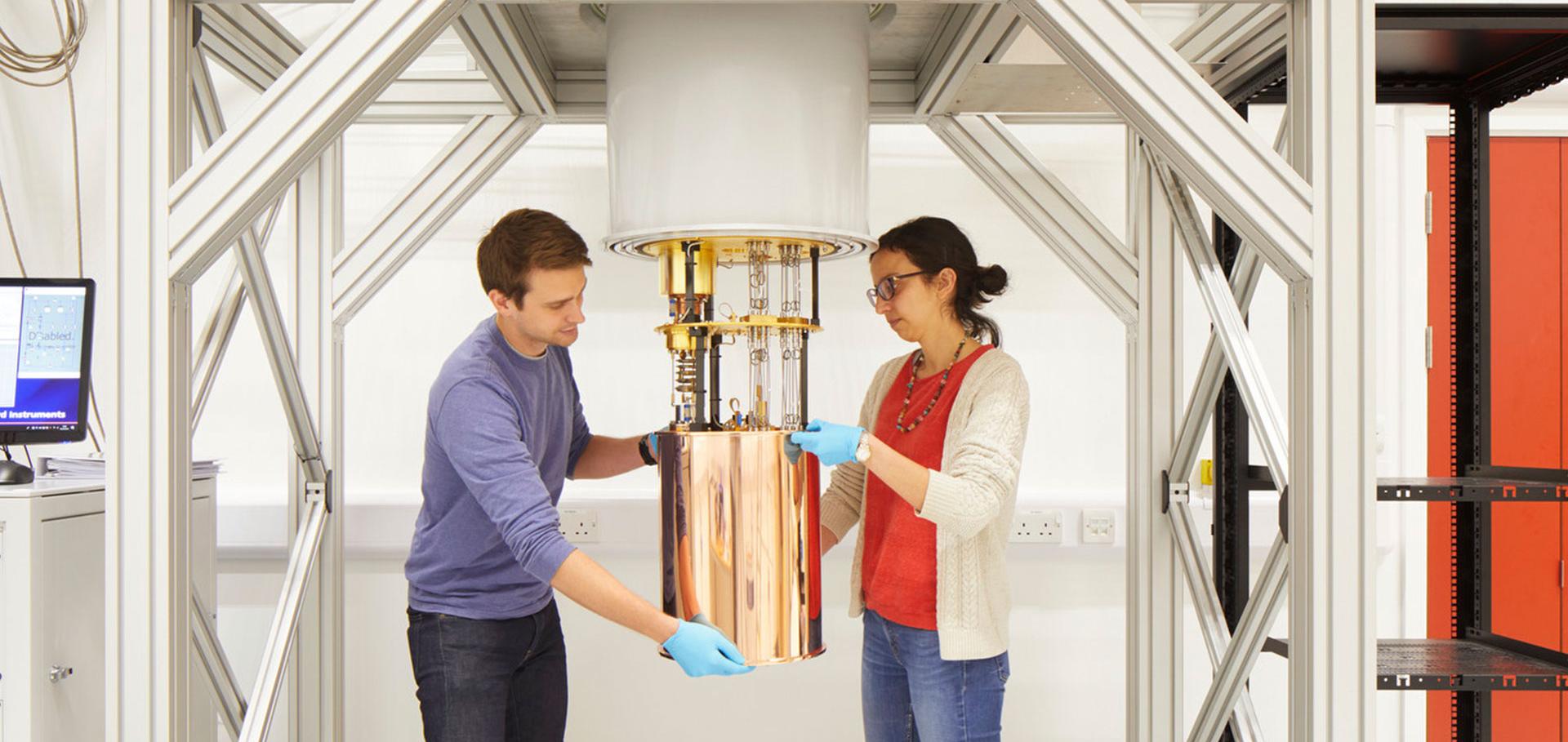
Credit: Jack Hobhouse

Simon Cassidy

Visitor - Long Term

Sub department

  • Condensed Matter Physics
simon.cassidy@chem.ox.ac.uk
  • About
  • Publications

Polytypism of layered MX2 materials

Physical Review Materials American Physical Society 7:9 (2023) 093605

Authors:

Emma H Wolpert, Simon Cassidy, Andrew L Goodwin

Abstract:

We revisit the problem of polytypism in layered MX2 materials, with a view to reinterpreting the phase space accessible to this family. Our starting point is to develop a simple, constructive, and compact label for the most commonly observed stacking arrangements, similar to the Glazer notation used to label tilt systems in perovskites. The key advantage of this label in the context of MX2 systems is that it contains sufficient information to generate the corresponding stacking sequences uniquely. Using a related approach, we generate a Cartesian representation of the phase space containing all possible MX2 polytypes, with the most common structures appearing as limiting cases. We argue that variation in, e.g., composition, temperature, or pressure may allow navigation of this phase space along continuous paths. This interpretation is shown to be consistent with the structural evolution of stacking-faulted MX2 systems as a function in temperature and pressure. In this way, our study highlights the potential for controlling composition/structure/property relationships among layered MX2 materials in ways that might not previously have been obvious.
More details from the publisher
Details from ORA
More details

Lithium intercalation into the excitonic insulator candidate Ta2NiSe5

Inorganic Chemistry American Chemical Society 62:30 (2023) 12027-12037

Authors:

PA Hyde, J Cen, Simon J Cassidy, NH Rees, P Holdship, RI Smith, B Zhu, DO Scanlon, Simon J Clarke

Abstract:

A new reduced phase derived from the excitonic insulator candidate Ta2NiSe5 has been synthesized via the intercalation of lithium. LiTa2NiSe5 crystallizes in the orthorhombic space group Pmnb (no. 62) with lattice parameters a = 3.50247(3) Å, b = 13.4053(4) Å, c = 15.7396(2) Å, and Z = 4, with an increase of the unit cell volume by 5.44(1)% compared with Ta2NiSe5. Significant rearrangement of the Ta-Ni-Se layers is observed, in particular a very significant relative displacement of the layers compared to the parent phase, similar to that which occurs under hydrostatic pressure. Neutron powder diffraction experiments and computational analysis confirm that Li occupies a distorted triangular prismatic site formed by Se atoms of adjacent Ta2NiSe5 layers with an average Li–Se bond length of 2.724(2) Å. Li-NMR experiments show a single Li environment at ambient temperature. Intercalation suppresses the distortion to monoclinic symmetry that occurs in Ta2NiSe5 at 328 K and that is believed to be driven by the formation of an excitonic insulating state. Magnetometry data show that the reduced phase has a smaller net diamagnetic susceptibility than Ta2NiSe5 due to the enhancement of the temperature-independent Pauli paramagnetism caused by the increased density of states at the Fermi level evident also from the calculations, consistent with the injection of electrons during intercalation and formation of a metallic phase.
More details from the publisher
Details from ORA
More details
More details

Anion redox as a means to ferive layered manganese oxychalcogenides with exotic intergrowth structures

Nature Communications Springer Nature 14 (2023) 2917

Authors:

Shunsuke Sasaki, Souvik Giri, Simon Cassidy, Simon Clarke

Abstract:

Topochemistry enables step-by-step conversions of solid-state materials often leading to metastable structures that retain initial structural motifs. Recent advances in this field revealed many examples where relatively bulky anionic constituents were actively involved in redox reactions during (de)intercalation processes. Such reactions are often accompanied by anion-anion bond formation, which heralds possibilities to design novel structure types disparate from known precursors, in a controlled manner. Here we present the multistep conversion of layered oxychalcogenides Sr2MnO2Cu1.5Ch2 (Ch = S, Se) into Cu-deintercalated phases where antifluorite type [Cu1.5Ch2]2.5- slabs collapsed into two-dimensional arrays of chalcogen dimers. The collapse of the chalcogenide layers on deintercalation led to various stacking types of Sr2MnO2Ch2 slabs, which formed polychalcogenide structures unattainable by conventional high-temperature syntheses. Anion-redox topochemistry is demonstrated to be of interest not only for electrochemical applications but also as a means to design complex layered architectures.
More details from the publisher
Details from ORA
More details
More details
More details

Magneto‐Structural Correlations in a Mixed Porphyrin(Cu2+)/Trityl Spin System: Magnitude, Sign, and Distribution of the Exchange Coupling Constant

Chemistry - A European Journal Wiley 29:14 (2023) e202203148

Authors:

Dinar Abdullin, Tobias Hett, Nico Fleck, Kevin Kopp, Simon Cassidy, Sabine Richert, Olav Schiemann
More details from the publisher
More details
More details

Delocalised electron-holes on oxygen in a battery cathode

Nature Energy Springer Nature 8:4 (2023) 351-360

Authors:

Robert House, Gregory Rees, Kit McColl, John-Joseph Marie, Simon Cassidy, M Saiful Islam, Peter Bruce

Abstract:

Oxide ions in transition metal oxide cathodes can store charge at high voltage offering a route towards higher energy density batteries. However, upon charging these cathodes, the oxidized oxide ions condense to form molecular O2 trapped in the material. Consequently, the discharge voltage is much lower than charge, leading to undesirable voltage hysteresis. Here we capture the nature of the electron holes on O2− before O2 formation by exploiting the suppressed transition metal rearrangement in ribbon-ordered Na0.6[Li0.2Mn0.8]O2. We show that the electron holes formed are delocalized across the oxide ions coordinated to two Mn (O–Mn2) arranged in ribbons in the transition metal layers. Furthermore, we track these delocalized hole states as they gradually localize in the structure in the form of trapped molecular O2 over a period of days. Establishing the nature of hole states on oxide ions is important if truly reversible high-voltage O-redox cathodes are to be realized.
More details from the publisher
Details from ORA
More details

Pagination

  • First page First
  • Previous page Prev
  • Page 1
  • Current page 2
  • Page 3
  • Page 4
  • Page 5
  • Page 6
  • Page 7
  • Page 8
  • Page 9
  • …
  • Next page Next
  • Last page Last

Footer Menu

  • Contact us
  • Giving to the Dept of Physics
  • Work with us
  • Media

User account menu

  • Log in

Follow us

FIND US

Clarendon Laboratory,

Parks Road,

Oxford,

OX1 3PU

CONTACT US

Tel: +44(0)1865272200

University of Oxfrod logo Department Of Physics text logo
IOP Juno Champion logo Athena Swan Silver Award logo

© University of Oxford - Department of Physics

Cookies | Privacy policy | Accessibility statement

Built by: Versantus

  • Home
  • Research
  • Study
  • Engage
  • Our people
  • News & Comment
  • Events
  • Our facilities & services
  • About us
  • Giving to Physics
  • Current students
  • Staff intranet