Home
Department Of Physics text logo
  • Research
    • Our research
    • Our research groups
    • Our research in action
    • Research funding support
    • Summer internships for undergraduates
  • Study
    • Undergraduates
    • Postgraduates
  • Engage
    • For alumni
    • For business
    • For schools
    • For the public
  • Support
Menu
CMP
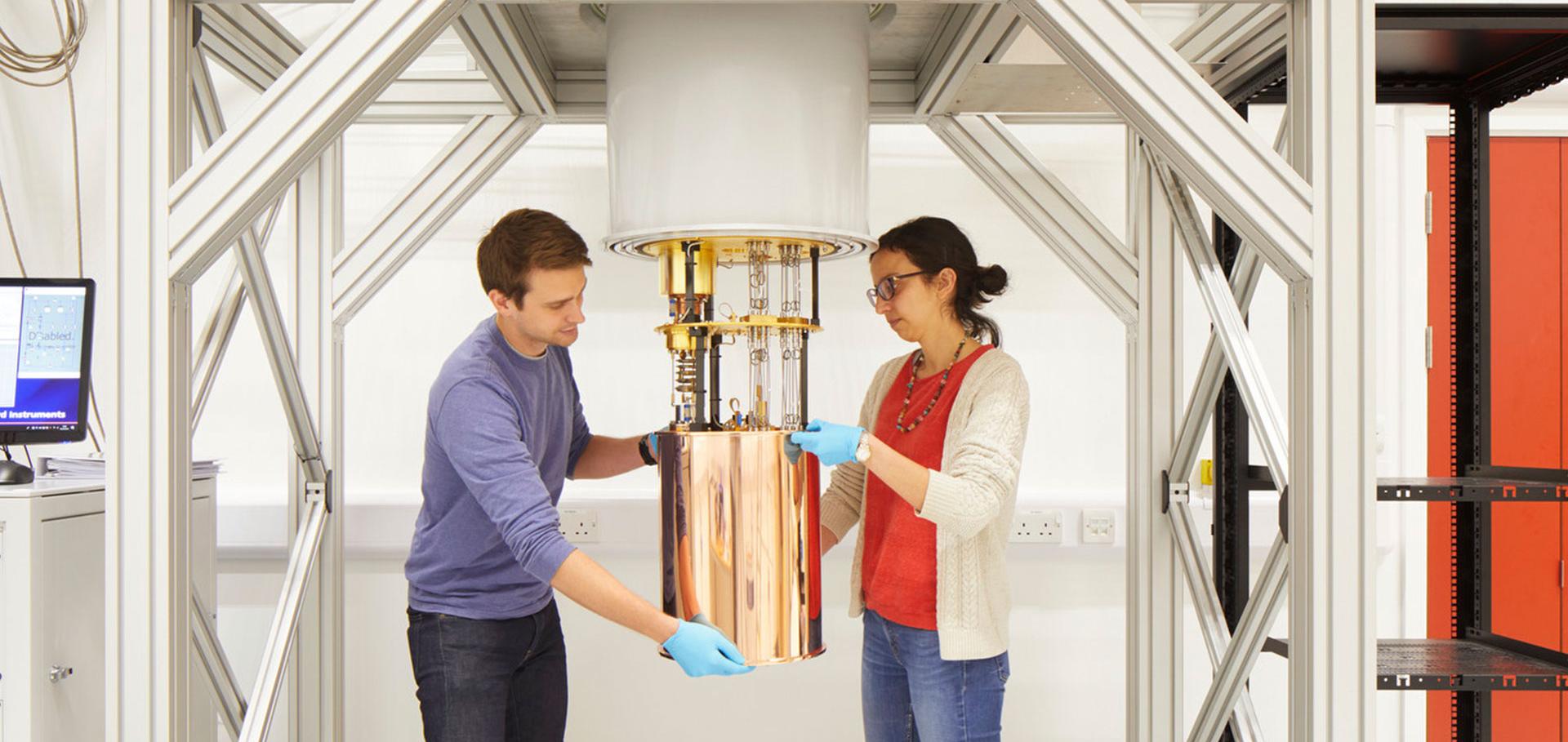
Credit: Jack Hobhouse

Simon Cassidy

Visitor - Long Term

Sub department

  • Condensed Matter Physics
simon.cassidy@chem.ox.ac.uk
  • About
  • Publications

Intercalation effect on hyperfine parameters of Fe in FeSe superconductor with Tc = 42 K

EPL (Europhysics Letters) IOP Publishing 109:6 (2015) 67004

Authors:

Sergii I Shylin, Vadim Ksenofontov, Stefan J Sedlmaier, Simon J Clarke, Simon J Cassidy, Gerhard Wortmann, Sergey A Medvedev, Claudia Felser
More details from the publisher
More details

Soft chemical control of superconductivity in lithium iron selenide hydroxides Li1–xFex(OH)Fe1–ySe

Inorganic Chemistry American Chemical Society 54:4 (2015) 1958-1964

Authors:

H Sun, Dn Woodruff, Sj Cassidy, Gm Allcroft, Sj Sedlmaier, Amber Thompson, Pa Bingham, Sd Forder, S Cartenet, N Mary, S Ramos, Fr Foronda, Bh Williams, X Li, Stephen Blundell, Simon Clarke

Abstract:

Hydrothermal synthesis is described of layered lithium iron selenide hydroxides Li1–xFex(OH)Fe1–ySe (x ∼ 0.2; 0.02 < y < 0.15) with a wide range of iron site vacancy concentrations in the iron selenide layers. This iron vacancy concentration is revealed as the only significant compositional variable and as the key parameter controlling the crystal structure and the electronic properties. Single crystal X-ray diffraction, neutron powder diffraction, and X-ray absorption spectroscopy measurements are used to demonstrate that superconductivity at temperatures as high as 40 K is observed in the hydrothermally synthesized samples when the iron vacancy concentration is low (y < 0.05) and when the iron oxidation state is reduced slightly below +2, while samples with a higher vacancy concentration and a correspondingly higher iron oxidation state are not superconducting. The importance of combining a low iron oxidation state with a low vacancy concentration in the iron selenide layers is emphasized by the demonstration that reductive postsynthetic lithiation of the samples turns on superconductivity with critical temperatures exceeding 40 K by displacing iron atoms from the Li1–xFex(OH) reservoir layer to fill vacancies in the selenide layer.

More details from the publisher
Details from ORA
More details
More details

Local Structure of Sodium‐ and Iron‐deintercalated NaFeAs

Zeitschrift für anorganische und allgemeine Chemie Wiley 640:14 (2014) 2889-2896

Authors:

Simon J Cassidy, Silvia Ramos, Simon J Clarke
More details from the publisher
More details

Control of the superconducting properties of Sr2−x Ca x VO3FeAs through isovalent substitution

Journal of Solid State Chemistry Elsevier 216 (2014) 91-98

Authors:

Alex J Corkett, David G Free, Simon J Cassidy, Silvia Ramos, Simon J Clarke
More details from the publisher
More details

Control of the superconducting properties of Sr2-xCa xVO3FeAs through isovalent substitution

Journal of Solid State Chemistry 216 (2014) 91-98

Authors:

AJ Corkett, DG Free, SJ Cassidy, S Ramos, SJ Clarke

Abstract:

The effect of the isovalent substitution of Sr2+ by Ca 2+ on the structure and superconducting properties of Sr 2-xCaxVO3FeAs is described in the compositional range 0 ≤ x ≤ 0.5. SQUID magnetometry measurements reveal that after an initial increase in Tc, which is maximised at 29.5 K in Sr 1.95Ca0.05VO3FeAs, a rapid suppression of superconductivity is observed with increasing x. XANES spectra of Sr 2-xCaxVO3FeAs collected on the Fe and V absorption K-edges show that the position of both edges are invariant with composition within the experimental uncertainty. A combination of synchrotron X-ray powder diffraction and neutron powder diffraction techniques is used to rationalise the observed changes in Tc with x, in terms of changes to the structure of the FeAs layer upon partial Ca substitution. These findings demonstrate that superconductivity in the Fe-based superconductors is extremely sensitive to the crystal structure with Tc maximised in samples with regular FeAs4-tetrahedra. © 2014 Elsevier Inc.
More details from the publisher

Pagination

  • First page First
  • Previous page Prev
  • …
  • Page 2
  • Page 3
  • Page 4
  • Page 5
  • Page 6
  • Page 7
  • Current page 8
  • Page 9
  • Page 10
  • Next page Next
  • Last page Last

Footer Menu

  • Contact us
  • Giving to the Dept of Physics
  • Work with us
  • Media

User account menu

  • Log in

Follow us

FIND US

Clarendon Laboratory,

Parks Road,

Oxford,

OX1 3PU

CONTACT US

Tel: +44(0)1865272200

University of Oxfrod logo Department Of Physics text logo
IOP Juno Champion logo Athena Swan Silver Award logo

© University of Oxford - Department of Physics

Cookies | Privacy policy | Accessibility statement

Built by: Versantus

  • Home
  • Research
  • Study
  • Engage
  • Our people
  • News & Comment
  • Events
  • Our facilities & services
  • About us
  • Giving to Physics
  • Current students
  • Staff intranet