Home
Department Of Physics text logo
  • Research
    • Our research
    • Our research groups
    • Our research in action
    • Research funding support
    • Summer internships for undergraduates
  • Study
    • Undergraduates
    • Postgraduates
  • Engage
    • For young people
    • For teachers
    • For the public
    • For alumni
    • For business
  • Support
Menu
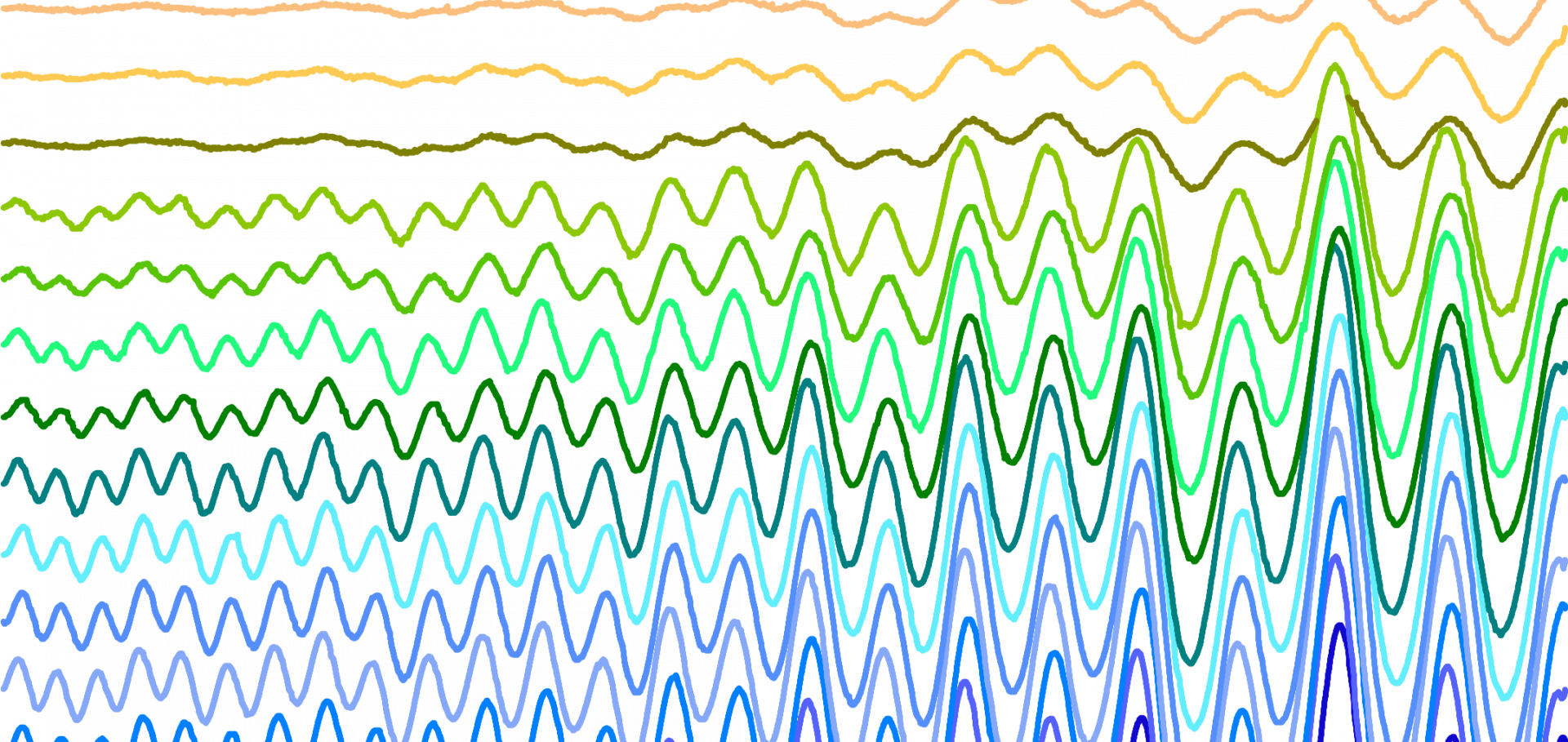
Quantum oscillations

Amalia Coldea

Professor of Physics

Research theme

  • Quantum materials

Sub department

  • Condensed Matter Physics

Research groups

  • Quantum matter in high magnetic fields
amalia.coldea@physics.ox.ac.uk
Telephone: 01865 (2)82196
Clarendon Laboratory, room 264,265,253,,162,152.1,166 (office)
orcid.org/0000-0002-6732-5964
  • About
  • Research
  • Teaching
  • Selected invited lectures
  • Prizes, awards and recognition
  • Publications

Upper critical field in a stoichiometric iron-based superconductor, CaKFe4As4

University of Oxford (2020)

Authors:

Matthew Bristow, Amalia Coldea

Abstract:

These data are part of the manuscript (arXiv:2003.02888) entitled: "Competing pairing interactions responsible for the large upper critical field in a stoichiometric iron-based superconductor, CaKFe4As4". The data represent resistivity data collected at low temperatures and in magnetic fields up 16T using a superconducting magnet in Oxford as well as in pulsed fields up to 80T at the LNCMI in Toulouse, France. The measurements were performed between 2K and 300K either at constant temperature and varying the magnetic field or keeping the field constant and varying the temperature.
More details from the publisher
Details from ORA

Quenched nematic criticality and two superconducting domes in an iron-based superconductor

Nature Physics Springer Science and Business Media LLC 16:1 (2020) 89-94

Authors:

Pascal Reiss, David Graf, Amir A Haghighirad, William Knafo, Loïc Drigo, Matthew Bristow, Andrew J Schofield, Amalia I Coldea
More details from the publisher
Details from ORA
More details
More details
Details from ArXiV

Optimization of superconducting properties of the stoichiometric CaKFe4As4

Supercond. Sci. Technol. 33 (2020) 025003 IOP Publishing (2019)

Authors:

Shiv J Singh, Simon J Cassidy, Matthew Bristow, Stephen Blundell, Simon J Clarke, AI Coldea
More details from the publisher
Details from ORA
More details

An ideal Weyl semimetal induced by magnetic exchange

Physical review B: Condensed matter and materials physics American Physical Society 100 (2019) 201102(R)

Authors:

J-R Soh, F De Juan, M Vergniory, N Schroeter, M Rahn, DY Yan, J Jiang, M Bristow, P Reiss, J Blandy, Y Guo, Y Shi, T Kim, A McCollam, S Simon, Y Chen, A Coldea, Andrew Boothroyd
More details from the publisher
Details from ORA

An ideal Weyl semimetal induced by magnetic exchange

Physical Review B: Condensed Matter and Materials Physics American Physical Society (2019)

Authors:

J-R Soh, FD Juan, Vergniory, NBM Schröter, MC Rahn, DY Yan, M Bristow, PA Reiss, JN Blandy, YF Guo, YG Shi, TK Kim, A McCollam, SH Simon, Y Chen, AMALIA Coldea, AT Boothroyd

Abstract:

Weyl semimetals exhibit exceptional quantum electronic transport due to the presence of topologically-protected band crossings called Weyl nodes. The nodes come in pairs with opposite chirality, but their number and location in momentum space is otherwise material specific. Following the initial discoveries there is now a need for better material realizations, ideally comprising a single pair of Weyl nodes located at or very close to the Fermi level and in an energy window free from other overlapping bands. Here we propose the layered intermetallic EuCd$_2$As$_2$ to be such a system. We show that Weyl nodes in EuCd$_2$As$_2$ are magnetically-induced via exchange coupling, emerging when the Eu spins are aligned by a small external magnetic field. The identification of EuCd$_2$As$_2$ as a model magnetic Weyl semimetal, evidenced here by ab initio calculations, photoemission spectroscopy, quantum oscillations and anomalous Hall transport measurements, opens the door to fundamental tests of Weyl physics.
More details from the publisher
More details
Details from ArXiV

Pagination

  • First page First
  • Previous page Prev
  • …
  • Page 7
  • Page 8
  • Page 9
  • Page 10
  • Current page 11
  • Page 12
  • Page 13
  • Page 14
  • Page 15
  • …
  • Next page Next
  • Last page Last

Footer Menu

  • Contact us
  • Giving to the Dept of Physics
  • Work with us
  • Media

User account menu

  • Log in

Follow us

FIND US

Clarendon Laboratory,

Parks Road,

Oxford,

OX1 3PU

CONTACT US

Tel: +44(0)1865272200

University of Oxfrod logo Department Of Physics text logo
IOP Juno Champion logo Athena Swan Silver Award logo

© University of Oxford - Department of Physics

Cookies | Privacy policy | Accessibility statement

Built by: Versantus

  • Home
  • Research
  • Study
  • Engage
  • Our people
  • News & Comment
  • Events
  • Our facilities & services
  • About us
  • Giving to Physics
  • Current students
  • Staff intranet