Home
Department Of Physics text logo
  • Research
    • Our research
    • Our research groups
    • Our research in action
    • Research funding support
    • Summer internships for undergraduates
  • Study
    • Undergraduates
    • Postgraduates
  • Engage
    • For young people
    • For teachers
    • For the public
    • For alumni
    • For business
  • Support
Menu
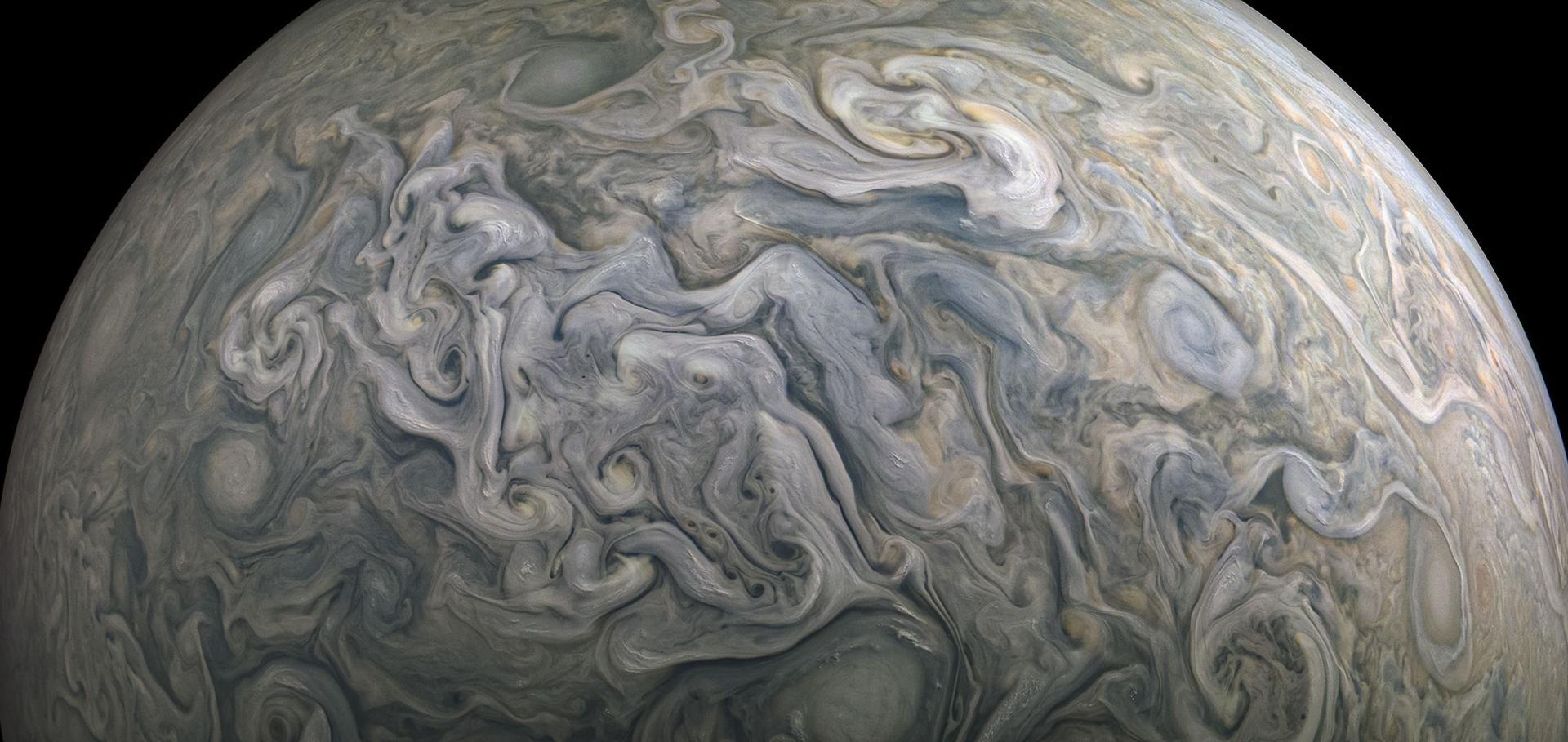
Juno Jupiter image

Greg Colyer

Visitor

Research theme

  • Climate physics
  • Exoplanets and planetary physics
  • Plasma physics

Sub department

  • Atmospheric, Oceanic and Planetary Physics

Research groups

  • Geophysical and Astrophysical Fluid Dynamics
Telephone: 01865 (2)82436
Atmospheric Physics Clarendon Laboratory, room 209E
  • About
  • Publications

Isca, v1.0: A Framework for the Global Modelling of the Atmospheres of Earth and Other Planets at Varying Levels of Complexity

Copernicus Publications (2017) 1-25

Authors:

Geoffrey K Vallis, Greg Colyer, Ruth Geen, Edwin Gerber, Martin Jucker, Penelope Maher, Alexander Paterson, Marianne Pietschnig, James Penn, Stephen I Thomson
More details from the publisher
More details

Collisionality scaling of the electron heat flux in ETG turbulence

(2016)

Authors:

GJ Colyer, AA Schekochihin, FI Parra, CM Roach, MA Barnes, Y-C Ghim, W Dorland
More details from the publisher

Overview of MAST results

Nuclear Fusion IOP Publishing 55:10 (2015) 104008

Authors:

IT Chapman, J Adamek, RJ Akers, S Allan, L Appel, O Asunta, M Barnes, N Ben Ayed, T Bigelow, W Boeglin, J Bradley, J Brünner, P Cahyna, M Carr, J Caughman, M Cecconello, C Challis, S Chapman, J Chorley, G Colyer, N Conway, WA Cooper, M Cox, N Crocker, B Crowley, G Cunningham, A Danilov, D Darrow, R Dendy, A Diallo, D Dickinson, S Diem, W Dorland, B Dudson, D Dunai, L Easy, S Elmore, A Field, G Fishpool, M Fox, E Fredrickson, S Freethy, L Garzotti, YC Ghim, K Gibson, J Graves, C Gurl, W Guttenfelder, C Ham, J Harrison, D Harting, E Havlickova, J Hawke, N Hawkes, T Hender, S Henderson, E Highcock, J Hillesheim, B Hnat, J Holgate, J Horacek, J Howard, B Huang, K Imada, O Jones, S Kaye, D Keeling, A Kirk, I Klimek, M Kocan, H Leggate, M Lilley, B Lipschultz, S Lisgo, YQ Liu, B Lloyd, B Lomanowski, I Lupelli, G Maddison, J Mailloux, R Martin, G McArdle, K McClements, B McMillan, A Meakins, H Meyer, C Michael, F Militello, J Milnes, AW Morris, G Motojima, D Muir, E Nardon, V Naulin, G Naylor, A Nielsen, M O'Brien, T O'Gorman, Y Ono, H Oliver, S Pamela, L Pangione, F Parra, A Patel, W Peebles, M Peng, R Perez, S Pinches, L Piron, M Podesta, M Price, M Reinke, Y Ren, C Roach, J Robinson, M Romanelli, V Rozhansky, S Saarelma, S Sangaroon, A Saveliev, R Scannell, A Schekochihin, S Sharapov, R Sharples, V Shevchenko, S Silburn, J Simpson, J Storrs, Y Takase, H Tanabe, H Tanaka, D Taylor, G Taylor, D Thomas, N Thomas-Davies, A Thornton, M Turnyanskiy, M Valovic, R Vann, N Walkden, H Wilson, LV Wyk, T Yamada, S Zoletnik
More details from the publisher

Overview of physics results from MAST towards ITER/DEMO and the MAST Upgrade

Nuclear Fusion 53:10 (2013)

Authors:

H Meyer, IG Abel, RJ Akers, A Allan, SY Allan, LC Appel, O Asunta, M Barnes, NC Barratt, N Ben Ayed, JW Bradley, J Canik, P Cahyna, M Cecconello, CD Challis, IT Chapman, D Ciric, G Colyer, NJ Conway, M Cox, BJ Crowley, SC Cowley, G Cunningham, A Danilov, A Darke, MFM De Bock, G De Temmerman, RO Dendy, P Denner, D Dickinson, AY Dnestrovsky, Y Dnestrovsky, MD Driscoll, B Dudson, D Dunai, M Dunstan, P Dura, S Elmore, AR Field, G Fishpool, S Freethy, W Fundamenski, L Garzotti, YC Ghim, KJ Gibson, MP Gryaznevich, J Harrison, E Havlíčková, NC Hawkes, WW Heidbrink, TC Hender, E Highcock, D Higgins, P Hill, B Hnat, MJ Hole, J Horáček, DF Howell, K Imada, O Jones, E Kaveeva, D Keeling, A Kirk, M Kočan, RJ Lake, M Lehnen, HJ Leggate, Y Liang, MK Lilley, SW Lisgo, YQ Liu, B Lloyd, GP Maddison, J Mailloux, R Martin, GJ McArdle, KG McClements, B McMillan, C Michael, F Militello, P Molchanov, S Mordijck, T Morgan, AW Morris, DG Muir, E Nardon, V Naulin, G Naylor, AH Nielsen, MR O'Brien, T O'Gorman, S Pamela, FI Parra, A Patel, SD Pinches, MN Price, CM Roach, JR Robinson, M Romanelli, V Rozhansky

Abstract:

New diagnostic, modelling and plant capability on the Mega Ampère Spherical Tokamak (MAST) have delivered important results in key areas for ITER/DEMO and the upcoming MAST Upgrade, a step towards future ST devices on the path to fusion currently under procurement. Micro-stability analysis of the pedestal highlights the potential roles of micro-tearing modes and kinetic ballooning modes for the pedestal formation. Mitigation of edge localized modes (ELM) using resonant magnetic perturbation has been demonstrated for toroidal mode numbers n = 3, 4, 6 with an ELM frequency increase by up to a factor of 9, compatible with pellet fuelling. The peak heat flux of mitigated and natural ELMs follows the same linear trend with ELM energy loss and the first ELM-resolved Ti measurements in the divertor region are shown. Measurements of flow shear and turbulence dynamics during L-H transitions show filaments erupting from the plasma edge whilst the full flow shear is still present. Off-axis neutral beam injection helps to strongly reduce the redistribution of fast-ions due to fishbone modes when compared to on-axis injection. Low-k ion-scale turbulence has been measured in L-mode and compared to global gyro-kinetic simulations. A statistical analysis of principal turbulence time scales shows them to be of comparable magnitude and reasonably correlated with turbulence decorrelation time. Te inside the island of a neoclassical tearing mode allow the analysis of the island evolution without assuming specific models for the heat flux. Other results include the discrepancy of the current profile evolution during the current ramp-up with solutions of the poloidal field diffusion equation, studies of the anomalous Doppler resonance compressional Alfvén eigenmodes, disruption mitigation studies and modelling of the new divertor design for MAST Upgrade. The novel 3D electron Bernstein synthetic imaging shows promising first data sensitive to the edge current profile and flows. © 2013 IAEA, Vienna.
More details from the publisher

TRANSP modelling of neutron emissivity on MAST

39th EPS Conference on Plasma Physics 2012, EPS 2012 and the 16th International Congress on Plasma Physics 3 (2012) 1786-1789

Authors:

I Wodniak, M Gorelenkova, S Conroy, M Cecconello, R Akers, M Turnyanskiy, S Sangaroon, D Keeling, C Michael, G Colyer, G Ericsson

Abstract:

The aim of this paper is to validate a set of methods to model the measured neutron emission on Mega Amp Spherical Tokamak (MAST) using TRANSP. Neutrons are measured along a set of collimated lines of sight (LoS) at MAST by a Neutron Camera (NC). The neutron emissivity is modeled with TRANSP [1] for different plasma discharges using a selfconsistent data set produced by a data preparation and analysis tool. The modeled neutron emissivity is then compared with NC experimental data using a full 3D solid angle calculation to model the transport of neutrons from plasma to detector. A good agreement between the modelled and experimental neutron rate was found.

Pagination

  • First page First
  • Previous page Prev
  • Page 1
  • Page 2
  • Current page 3
  • Page 4
  • Page 5
  • Next page Next
  • Last page Last

Footer Menu

  • Contact us
  • Giving to the Dept of Physics
  • Work with us
  • Media

User account menu

  • Log in

Follow us

FIND US

Clarendon Laboratory,

Parks Road,

Oxford,

OX1 3PU

CONTACT US

Tel: +44(0)1865272200

University of Oxfrod logo Department Of Physics text logo
IOP Juno Champion logo Athena Swan Silver Award logo

© University of Oxford - Department of Physics

Cookies | Privacy policy | Accessibility statement

Built by: Versantus

  • Home
  • Research
  • Study
  • Engage
  • Our people
  • News & Comment
  • Events
  • Our facilities & services
  • About us
  • Giving to Physics
  • Current students
  • Staff intranet