Home
Department Of Physics text logo
  • Research
    • Our research
    • Our research groups
    • Our research in action
    • Research funding support
    • Summer internships for undergraduates
  • Study
    • Undergraduates
    • Postgraduates
  • Engage
    • For alumni
    • For business
    • For schools
    • For the public
  • Support
Menu
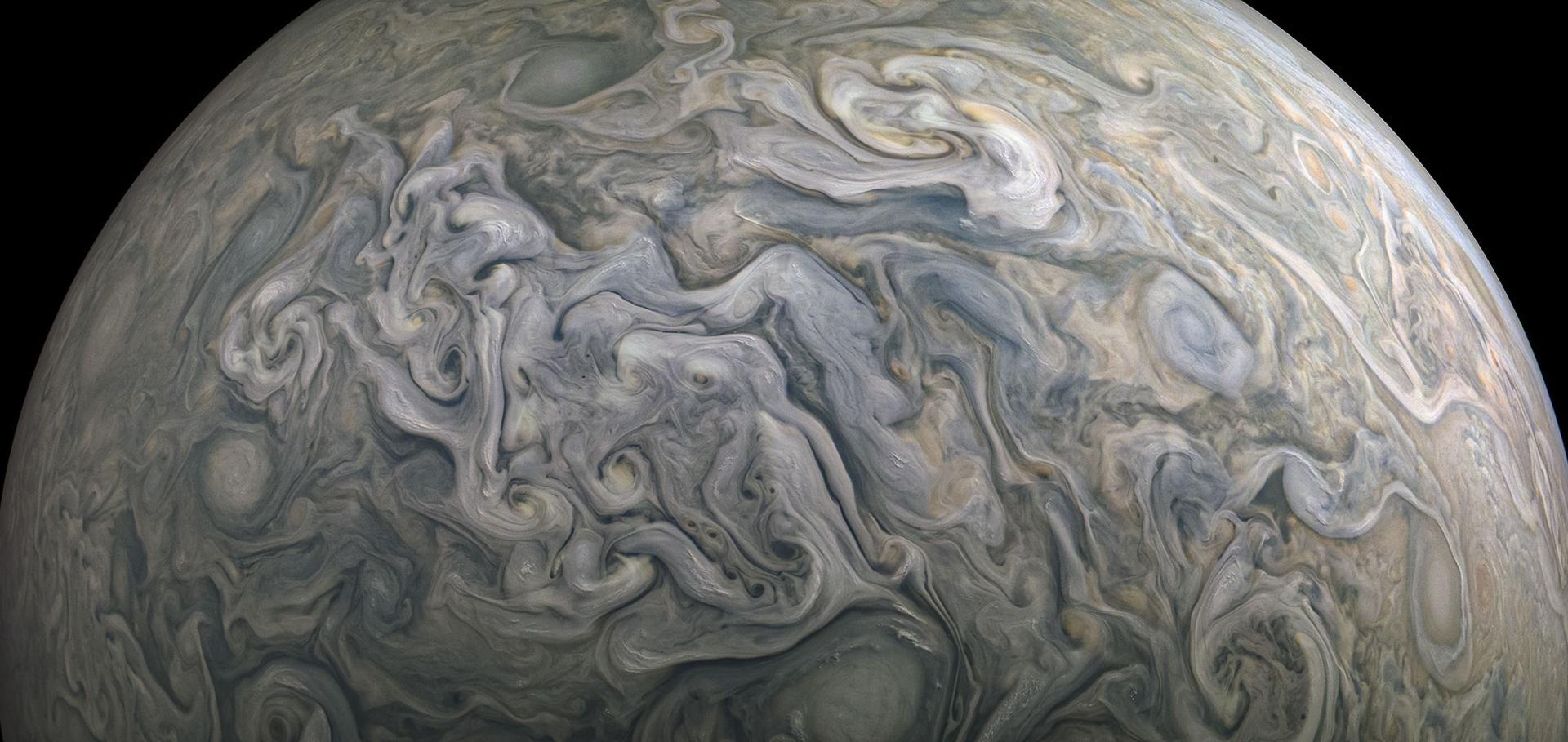
Juno Jupiter image

Namrah Habib

Software Developer for Space Instrumentatio

Research theme

  • Astronomy and astrophysics
  • Instrumentation
  • Exoplanets and planetary physics

Sub department

  • Atmospheric, Oceanic and Planetary Physics

Research groups

  • Exoplanet atmospheres
  • Exoplanets and Stellar Physics
  • Planetary Climate Dynamics
  • Planetary surfaces
  • Solar system
  • Space instrumentation
  • About
  • Publications

Modelling Non-Condensing Compositional Convection for Applications to Super-Earth and Sub-Neptune Atmospheres

(2023)

Authors:

Namrah Habib, Raymond T Pierrehumbert
More details from the publisher

Geophysical constraints on the properties of a subglacial lake in northwest Greenland

Cryosphere 15:7 (2021) 3279-3291

Authors:

R Maguire, N Schmerr, E Pettit, K Riverman, C Gardner, DN Dellagiustina, B Avenson, N Wagner, AG Marusiak, N Habib, JI Broadbeck, VJ Bray, SH Bailey

Abstract:

In this study, we report the results of an active-source seismology and ground-penetrating radar survey performed in northwestern Greenland at a site where the presence of a subglacial lake beneath the accumulation area has previously been proposed. Both seismic and radar results show a flat reflector approximately 830-845ĝ€¯m below the surface, with a seismic reflection coefficient of -0.43ĝ€¯±ĝ€¯0.17, which is consistent with the acoustic impedance contrast between a layer of water and glacial ice. Additionally, in the seismic data we observe an intermittent lake bottom reflection arriving between 14-20ĝ€¯ms after the lake top reflection, corresponding to a lake depth of approximately 10-15ĝ€¯m. A strong coda following the lake top and lake bottom reflections is consistent with a package of lake bottom sediments although its thickness and material properties are uncertain. Finally, we use these results to conduct a first-order assessment of the lake origins using a one-dimensional thermal model and hydropotential modeling based on published surface and bed topography. Using these analyses, we narrow the lake origin hypotheses to either anomalously high geothermal flux or hypersalinity due to local ancient evaporite. Because the origins are still unclear, this site provides an intriguing opportunity for the first in situ sampling of a subglacial lake in Greenland, which could better constrain mechanisms of subglacial lake formation, evolution, and relative importance to glacial hydrology.
More details from the publisher

The Deployment of the Seismometer to Investigate Ice and Ocean Structure (SIIOS) in Northwest Greenland: An Analog Experiment for Icy Ocean World Seismic Deployments

Seismological Research Letters Seismological Society of America (SSA) 92:3 (2021) 2036-2049

Authors:

Angela G Marusiak, Nicholas C Schmerr, Daniella N DellaGiustina, Brad Avenson, S Hop Bailey, Veronica J Bray, Juliette I Brodbeck, Chris G Carr, Peter H Dahl, Namrah Habib, Erin C Pettit, Natalie Wagner, Renee C Weber
More details from the publisher
More details

Author Correction: Shape of (101955) Bennu indicative of a rubble pile with internal stiffness

Nature Geoscience Springer Nature 13:11 (2020) 764-764

Authors:

OS Barnouin, MG Daly, EE Palmer, RW Gaskell, JR Weirich, CL Johnson, MM Al Asad, JH Roberts, ME Perry, HCM Susorney, RT Daly, EB Bierhaus, JA Seabrook, RC Espiritu, AH Nair, L Nguyen, GA Neumann, CM Ernst, WV Boynton, MC Nolan, CD Adam, MC Moreau, B Rizk, CY Drouet D’Aubigny, ER Jawin, KJ Walsh, P Michel, SR Schwartz, R-L Ballouz, EM Mazarico, DJ Scheeres, JW McMahon, WF Bottke, S Sugita, N Hirata, N Hirata, S-I Watanabe, KN Burke, DN DellaGiustina, CA Bennett, DS Lauretta
More details from the publisher
More details

The Fukang pallasite: Characterization and implications for the history of the Main‐group parent body

Meteoritics & Planetary Science Wiley 54:8 (2019) 1781-1807

Authors:

Daniella N DellaGiustina, Namrah Habib, Kenneth J Domanik, Dolores H Hill, Dante S Lauretta, Yulia S Goreva, Marvin Killgore, Yang Hexiong, Robert T Downs

Abstract:

AbstractWe report the results of a study of the Fukang pallasite that includes measurements of bulk composition, mineral chemistry, mineral structure, and petrology. Fukang is a Main‐group pallasite that consists of semiangular olivine grains (Fo 86.3) embedded in an Fe‐Ni matrix with 9–10 wt% Ni and low‐Ir (45 ppb). Olivine grains sometimes occur in large clusters up to 11 cm across. The Fe‐Ni phase is primarily kamacite with accessory taenite and plessite. Minor phases include schreibersite, chromite, merrillite, troilite, and low‐Ca pyroxene. We describe a variety of silicate inclusions enclosed in olivine that contain phases rarely or not previously reported in Main‐group pallasites, including clinopyroxene (augite), tridymite, K‐rich felsic glass, and an unknown Ca‐Cr silicate. Pressure constraints determined from tridymite (<0.4 GPa), two‐pyroxene barometry (0.39 ± 0.07 GPa), and geophysical calculations that assume pallasite formation at the core–mantle boundary (CMB), provide an upper estimate on the size of the Main‐group parent body from which Fukang originated. We conclude that Fukang originated at the CMB of a large differentiated planetesimal 400–680 km in radius.
More details from the publisher
More details

Pagination

  • First page First
  • Previous page Prev
  • Page 1
  • Current page 2
  • Page 3
  • Page 4
  • Next page Next
  • Last page Last

Footer Menu

  • Contact us
  • Giving to the Dept of Physics
  • Work with us
  • Media

User account menu

  • Log in

Follow us

FIND US

Clarendon Laboratory,

Parks Road,

Oxford,

OX1 3PU

CONTACT US

Tel: +44(0)1865272200

University of Oxfrod logo Department Of Physics text logo
IOP Juno Champion logo Athena Swan Silver Award logo

© University of Oxford - Department of Physics

Cookies | Privacy policy | Accessibility statement

Built by: Versantus

  • Home
  • Research
  • Study
  • Engage
  • Our people
  • News & Comment
  • Events
  • Our facilities & services
  • About us
  • Giving to Physics
  • Current students
  • Staff intranet