Home
Department Of Physics text logo
  • Research
    • Our research
    • Our research groups
    • Our research in action
    • Research funding support
    • Summer internships for undergraduates
  • Study
    • Undergraduates
    • Postgraduates
  • Engage
    • For alumni
    • For business
    • For schools
    • For the public
  • Support
Menu
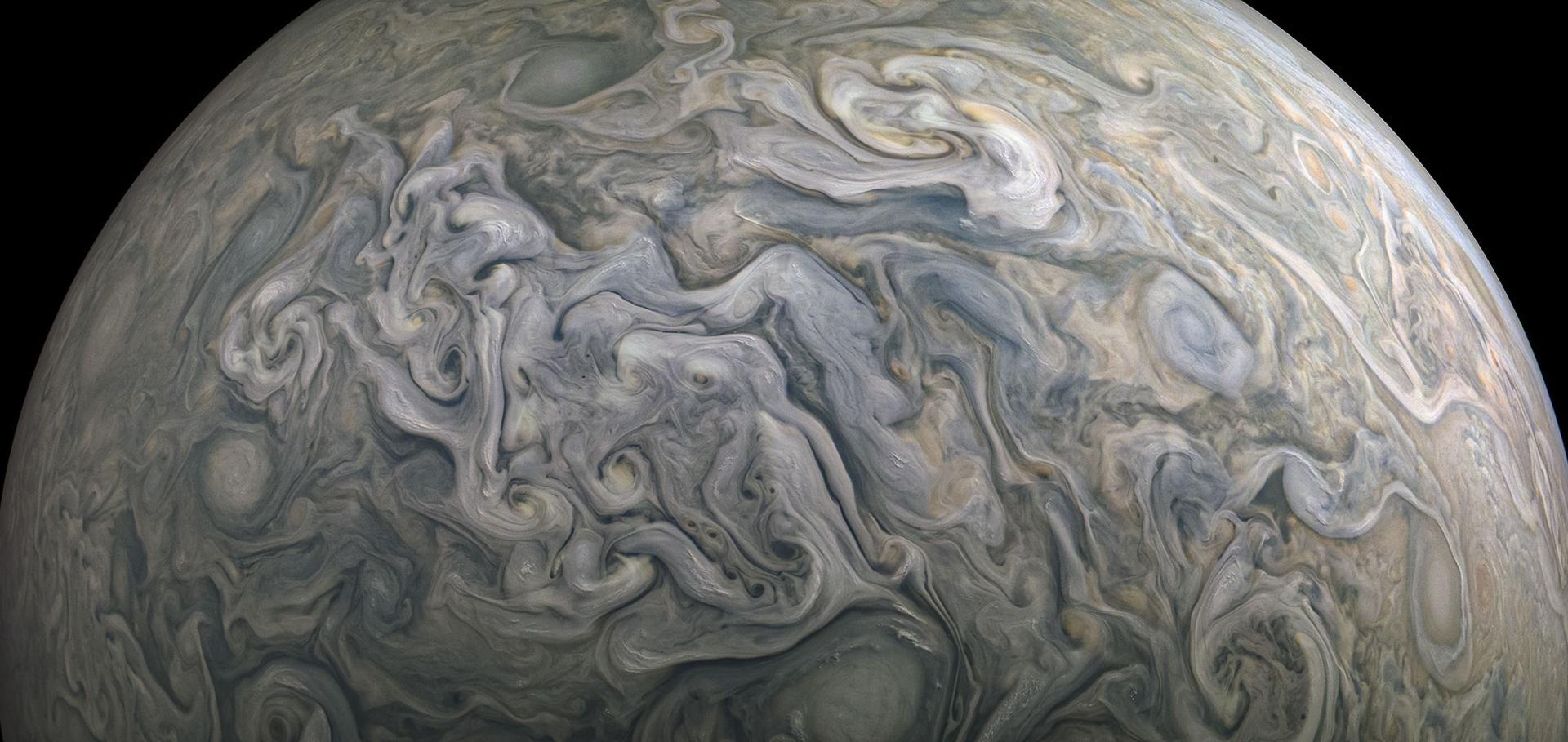
Juno Jupiter image

Thaddeus Komacek

Associate Professor of Physics of Exoplanet Atmospheres

Research theme

  • Exoplanets and planetary physics

Sub department

  • Atmospheric, Oceanic and Planetary Physics

Research groups

  • Exoplanet atmospheres
tad.komacek@physics.ox.ac.uk
Atmospheric Physics Clarendon Laboratory, room 209D
  • About
  • Teaching
  • Research
  • Publications

A New Analysis of Eight Spitzer Phase Curves and Hot Jupiter Population Trends: Qatar-1b, Qatar-2b, WASP-52b, WASP-34b, and WASP-140b

The Astronomical Journal American Astronomical Society 163:6 (2022) 256

Authors:

EM May, KB Stevenson, Jacob L Bean, Taylor J Bell, Nicolas B Cowan, Lisa Dang, Jean-Michel Desert, Jonathan J Fortney, Dylan Keating, Eliza M-R Kempton, Thaddeus D Komacek, Nikole K Lewis, Megan Mansfield, Caroline Morley, Vivien Parmentier, Emily Rauscher, Mark R Swain, Robert T Zellem, Adam Showman
More details from the publisher
More details
More details

Patchy nightside clouds on ultra-hot Jupiters: General Circulation Model simulations with radiatively active cloud tracers

(2022)

Authors:

Thaddeus D Komacek, Xianyu Tan, Peter Gao, Elspeth KH Lee
More details from the publisher
Details from ArXiV

A New Analysis of 8 Spitzer Phase Curves and Hot Jupiter Population Trends: Qatar-1b, Qatar-2b, WASP-52b, WASP-34b, and WASP-140b

(2022)

Authors:

Erin May, Kevin Stevenson, Jacob Bean, Taylor Bell, Nicolas Cowan, Lisa Dang, Jean-Michel Desert, Jonathan Fortney, Dylan Keating, Eliza Kempton, Thaddeus Komacek, Nikole Lewis, Megan Mansfield, Caroline Morley, Vivien Parmentier, Emily Rauscher, Mark Swain, Robert Zellem, Adam Showman
More details from the publisher

TESS Giants Transiting Giants. II. The Hottest Jupiters Orbiting Evolved Stars

The Astronomical Journal IOP Publishing 163:3 (2022) 120-120

Authors:

Samuel K Grunblatt, Nicholas Saunders, Meng Sun, Ashley Chontos, Melinda Soares-Furtado, Nora Eisner, Filipe Pereira, Thaddeus Komacek, Daniel Huber, Karen Collins, Gavin Wang, Chris Stockdale, Samuel N Quinn, Rene Tronsgaard, George Zhou, Grzegorz Nowak, Hans J Deeg, David R Ciardi, Andrew Boyle, Malena Rice, Fei Dai, Sarah Blunt, Judah Van Zandt, Corey Beard, Joseph M Akana Murphy

Abstract:

Giant planets on short-period orbits are predicted to be inflated and eventually engulfed by their host stars. However, the detailed timescales and stages of these processes are not well known. Here, we present the discovery of three hot Jupiters (P < 10 days) orbiting evolved, intermediate-mass stars (M ⋆ ≈ 1.5 M ⊙, 2 R ⊙ < R ⋆ < 5 R ⊙). By combining TESS photometry with ground-based photometry and radial velocity measurements, we report masses and radii for these three planets of between 0.4 and 1.8 M J and 0.8 and 1.8 R J. TOI-2337b has the shortest period (P = 2.99432 ± 0.00008 days) of any planet discovered around a red giant star to date. Both TOI-4329b and TOI-2669b appear to be inflated, but TOI-2337b does not show any sign of inflation. The large radii and relatively low masses of TOI-4329b and TOI-2669b place them among the lowest density hot Jupiters currently known, while TOI-2337b is conversely one of the highest. All three planets have orbital eccentricities of below 0.2. The large spread in radii for these systems implies that planet inflation has a complex dependence on planet mass, radius, incident flux, and orbital properties. We predict that TOI-2337b has the shortest orbital decay timescale of any planet currently known, but do not detect any orbital decay in this system. Transmission spectroscopy of TOI-4329b would provide a favorable opportunity for the detection of water, carbon dioxide, and carbon monoxide features in the atmosphere of a planet orbiting an evolved star, and could yield new information about planet formation and atmospheric evolution
More details from the publisher
Details from ORA
More details

No Umbrella Needed: Confronting the Hypothesis of Iron Rain on WASP-76b with Post-processed General Circulation Models

The Astrophysical Journal American Astronomical Society 926:1 (2022) 85

Authors:

Arjun B Savel, Eliza M-R Kempton, Matej Malik, Thaddeus D Komacek, Jacob L Bean, Erin M May, Kevin B Stevenson, Megan Mansfield, Emily Rauscher
More details from the publisher
More details

Pagination

  • First page First
  • Previous page Prev
  • …
  • Page 12
  • Page 13
  • Page 14
  • Page 15
  • Current page 16
  • Page 17
  • Page 18
  • Page 19
  • Page 20
  • …
  • Next page Next
  • Last page Last

Footer Menu

  • Contact us
  • Giving to the Dept of Physics
  • Work with us
  • Media

User account menu

  • Log in

Follow us

FIND US

Clarendon Laboratory,

Parks Road,

Oxford,

OX1 3PU

CONTACT US

Tel: +44(0)1865272200

University of Oxfrod logo Department Of Physics text logo
IOP Juno Champion logo Athena Swan Silver Award logo

© University of Oxford - Department of Physics

Cookies | Privacy policy | Accessibility statement

Built by: Versantus

  • Home
  • Research
  • Study
  • Engage
  • Our people
  • News & Comment
  • Events
  • Our facilities & services
  • About us
  • Giving to Physics
  • Current students
  • Staff intranet