Home
Department Of Physics text logo
  • Research
    • Our research
    • Our research groups
    • Our research in action
    • Research funding support
    • Summer internships for undergraduates
  • Study
    • Undergraduates
    • Postgraduates
  • Engage
    • For alumni
    • For business
    • For schools
    • For the public
  • Support
Menu
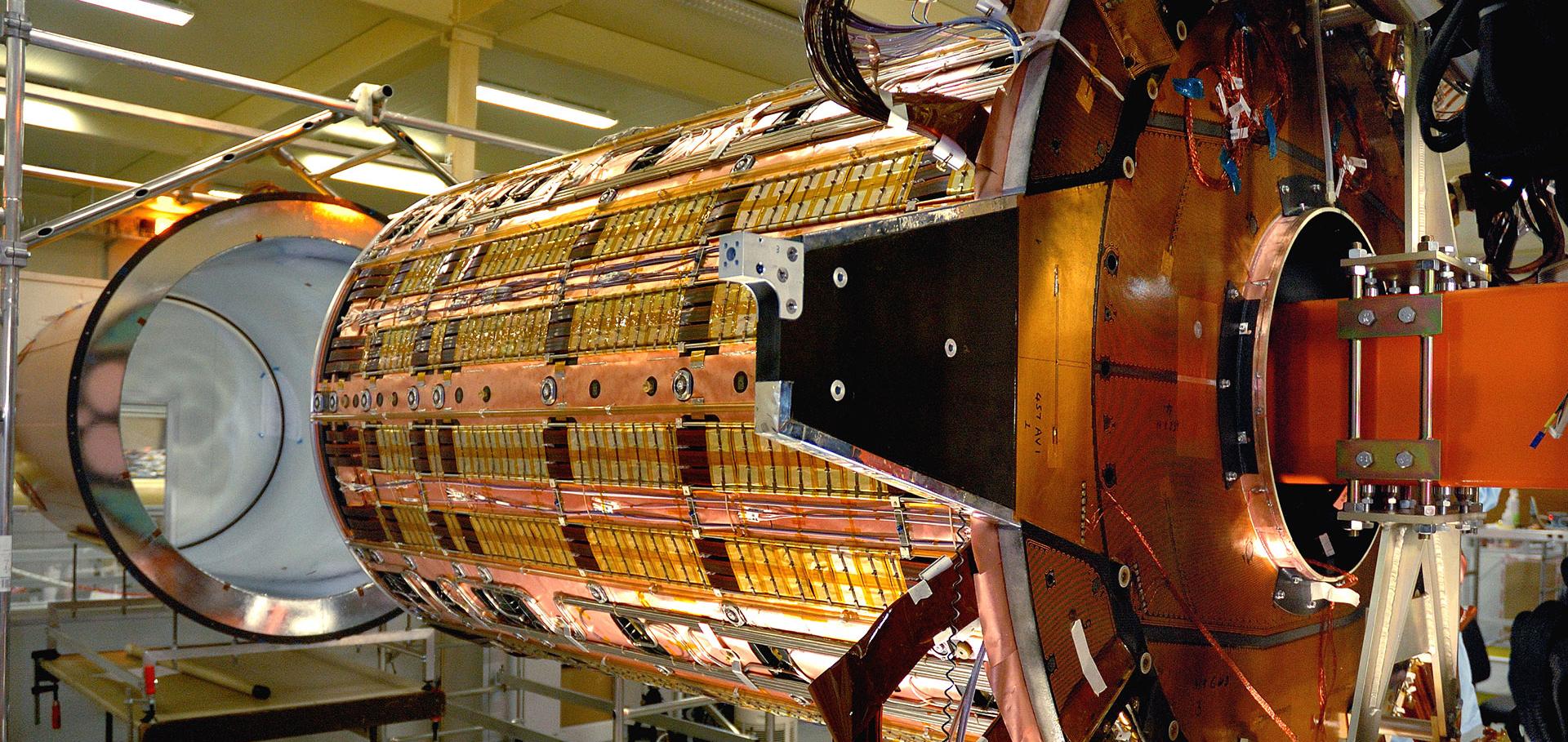
Insertion of STC into TRT at the Department of Physics, Oxford
Credit: CERN

Hans Kraus

Professor of Physics

Research theme

  • Particle astrophysics & cosmology

Sub department

  • Particle Physics

Research groups

  • LUX-ZEPLIN
Hans.Kraus@physics.ox.ac.uk
Telephone: 01865 (2)73361
Denys Wilkinson Building, room 623
  • About
  • Publications

Projected sensitivity of the LUX-ZEPLIN experiment to the 0νββ decay of Xe136

Physical Review C American Physical Society (APS) 102:1 (2020) 014602

Authors:

DS Akerib, CW Akerlof, A Alqahtani, SK Alsum, TJ Anderson, N Angelides, HM Araújo, JE Armstrong, M Arthurs, X Bai, J Balajthy, S Balashov, J Bang, A Baxter, J Bensinger, EP Bernard, A Bernstein, A Bhatti, A Biekert, TP Biesiadzinski, HJ Birch, KE Boast, B Boxer, P Brás, JH Buckley, VV Bugaev, S Burdin, JK Busenitz, R Cabrita, C Carels, DL Carlsmith, MC Carmona-Benitez, M Cascella, C Chan, NI Chott, A Cole, A Cottle, JE Cutter, CE Dahl, L de Viveiros, JEY Dobson, E Druszkiewicz, TK Edberg, SR Eriksen, A Fan, S Fiorucci, H Flaecher, ED Fraser, T Fruth, RJ Gaitskell, J Genovesi, C Ghag, E Gibson, MGD Gilchriese, S Gokhale, MGD van der Grinten, CR Hall, A Harrison, SJ Haselschwardt, SA Hertel, JY-K Hor, M Horn, DQ Huang, CM Ignarra, O Jahangir, W Ji, J Johnson, AC Kaboth, AC Kamaha, K Kamdin, K Kazkaz, D Khaitan, A Khazov, I Khurana, CD Kocher, L Korley, EV Korolkova, J Kras, H Kraus, S Kravitz, L Kreczko, B Krikler, VA Kudryavtsev, EA Leason, J Lee, DS Leonard, KT Lesko, C Levy, J Li, J Liao, F-T Liao, J Lin, A Lindote, R Linehan, WH Lippincott, R Liu, X Liu, C Loniewski, MI Lopes, B López Paredes, W Lorenzon, S Luitz, JM Lyle, PA Majewski, A Manalaysay, L Manenti, RL Mannino, N Marangou, MF Marzioni, DN McKinsey, J McLaughlin, Y Meng, EH Miller, E Mizrachi, A Monte, ME Monzani, JA Morad, E Morrison, BJ Mount, A St. J. Murphy, D Naim, A Naylor, C Nedlik, C Nehrkorn, HN Nelson, F Neves, JA Nikoleyczik, A Nilima, K O'Sullivan, I Olcina, KC Oliver-Mallory, S Pal, KJ Palladino, J Palmer, N Parveen, EK Pease, B Penning, G Pereira, K Pushkin, J Reichenbacher, CA Rhyne, Q Riffard, GRC Rischbieter, R Rosero, P Rossiter, G Rutherford, D Santone, ABMR Sazzad, RW Schnee, M Schubnell, D Seymour, S Shaw, TA Shutt, JJ Silk, C Silva, R Smith, M Solmaz, VN Solovov, P Sorensen, I Stancu, A Stevens, K Stifter, TJ Sumner, N Swanson, M Szydagis, M Tan, WC Taylor, R Taylor, DJ Temples, PA Terman, DR Tiedt, M Timalsina, A Tomás, M Tripathi, DR Tronstad, W Turner, L Tvrznikova, U Utku, A Vacheret, A Vaitkus, JJ Wang, W Wang, JR Watson, RC Webb, RG White, TJ Whitis, FLH Wolfs, D Woodward, X Xiang, J Xu, M Yeh, P Zarzhitsky
More details from the publisher
More details

Simulations of events for the LUX-ZEPLIN (LZ) dark matter experiment

Astroparticle Physics Elseveir 125 (2020) 102480

Authors:

DS Akerib, CW Akerlof, A Alqahtani, Kathryn Boast, C Carels, A Cottle, T Fruth, E Gibson, H Kraus, F-T Liao, KJ Palladino, A Stevens, M Tan

Abstract:

The LUX-ZEPLIN dark matter search aims to achieve a sensitivity to the WIMP-nucleon spin-independent cross-section down to (1–2) x 10–12 pb at a WIMP mass of 40  GeV/c2. This paper describes the simulations framework that, along with radioactivity measurements, was used to support this projection, and also to provide mock data for validating reconstruction and analysis software. Of particular note are the event generators, which allow us to model the background radiation, and the detector response physics used in the production of raw signals, which can be converted into digitized waveforms similar to data from the operational detector. Inclusion of the detector response allows us to process simulated data using the same analysis routines as developed to process the experimental data.
More details from the publisher
Details from ORA
More details

The LUX-ZEPLIN (LZ) radioactivity and cleanliness control programs

(2020)

Authors:

DS Akerib, CW Akerlof, D Yu Akimov, A Alquahtani, SK Alsum, TJ Anderson, N Angelides, HM Araújo, A Arbuckle, JE Armstrong, M Arthurs, H Auyeung, S Aviles, X Bai, AJ Bailey, J Balajthy, S Balashov, J Bang, MJ Barry, D Bauer, P Bauer, A Baxter, J Belle, P Beltrame, J Bensinger, T Benson, EP Bernard, A Bernstein, A Bhatti, A Biekert, TP Biesiadzinski, HJ Birch, B Birrittella, KE Boast, AI Bolozdynya, EM Boulton, B Boxer, R Bramante, S Branson, P Brás, M Breidenbach, CAJ Brew, JH Buckley, VV Bugaev, R Bunker, S Burdin, JK Busenitz, R Cabrita, JS Campbell, C Carels, DL Carlsmith, B Carlson, MC Carmona-Benitez, M Cascella, C Chan, JJ Cherwinka, AA Chiller, C Chiller, NI Chott, A Cole, J Coleman, D Colling, RA Conley, A Cottle, R Coughlen, G Cox, WW Craddock, D Curran, A Currie, JE Cutter, JP da Cunhaw, CE Dahl, S Dardin, S Dasu, J Davis, TJR Davison, L de Viveiros, N Decheine, A Dobi, JEY Dobson, E Druszkiewicz, A Dushkin, TK Edberg, WR Edwards, BN Edwards, J Edwards, MM Elnimr, WT Emmet, SR Eriksen, CH Faham, A Fan, S Fayer, S Fiorucci, H Flaecher, IM Fogarty Florang, P Ford, VB Francis, ED Fraser, F Froborg, T Fruth, RJ Gaitskell, NJ Gantos, D Garcia, VM Gehman, R Gelfand, J Genovesi, RM Gerhard, C Ghag, E Gibson, MGD Gilchriese, S Gokhale, B Gomber, TG Gonda, A Greenall, S Greenwood, G Gregerson, MGD van der Grinten, CB Gwilliam, CR Hall, D Hamilton, S Hans, K Hanzel, T Harrington, A Harrison, J Harrison, C Hasselkus, SJ Haselschwardt, D Hemer, SA Hertel, J Heise, S Hillbrand, O Hitchcock, C Hjemfelt, MD Hoff, B Holbrook, E Holtom, JY-K Hor, M Horn, DQ Huang, TW Hurteau, CM Ignarra, MN Irving, RG Jacobsen, O Jahangir, SN Jeffery, W Ji, M Johnson, J Johnson, P Johnson, WG Jones, AC Kaboth, A Kamaha, K Kamdin, V Kasey, K Kazkaz, J Keefner, D Khaitan, M Khaleeq, A Khazov, AV Khromov, I Khurana, YD Kim, WT Kim, CD Kocher, D Kodroff, AM Konovalov, L Korley, EV Korolkova, M Koyuncu, J Kras, H Kraus, SW Kravitz, HJ Krebs, L Kreczko, B Krikler, VA Kudryavtsev, AV Kumpan, S Kyre, AR Lambert, B Landerud, NA Larsen, A Laundrie, EA Leason, HS Lee, J Lee, C Lee, BG Lenardo, DS Leonard, R Leonard, KT Lesko, C Levy, J Li, Y Liu, J Liao, F-T Liao, J Lin, A Lindote, R Linehan, WH Lippincott, R Liu, X Liu, C Loniewski, MI Lopes, E Lopez-Asamar, B López Paredes, W Lorenzon, D Lucero, S Luitz, JM Lyle, C Lynch, PA Majewski, J Makkinje, DC Malling, A Manalaysay, L Manenti, RL Mannino, N Marangou, DJ Markley, P MarrLaundrie, TJ Martin, MF Marzioni, C Maupin, CT McConnell, DN McKinsey, J McLaughlin, D-M Mei, Y Meng, EH Miller, ZJ Minaker, E Mizrachi, J Mock, D Molash, A Monte, ME Monzani, JA Morad, E Morrison, BJ Mount, A St J Murphy, D Naim, A Naylor, C Nedlik, C Nehrkorn, HN Nelson, J Nesbit, F Neves, JA Nikkel, JA Nikoleyczik, A Nilima, J O'Dell, H Oh, FG O'Neill, K O'Sullivan, I Olcina, MA Olevitch, KC Oliver-Mallory, L Oxborough, A Pagac, D Pagenkopf, S Pal, KJ Palladino, VM Palmaccio, J Palmer, M Pangilinan, N Parveen, SJ Patton, EK Pease, BP Penning, G Pereira, C Pereira, IB Peterson, A Piepke, S Pierson, S Powell, RM Preece, K Pushkin, Y Qie, M Racine, BN Ratcliff, J Reichenbacher, L Reichhart, CA Rhyne, A Richards, Q Riffard, GRC Rischbieter, JP Rodrigues, HJ Rose, R Rosero, P Rossiter, R Rucinski, G Rutherford, JS Saba, L Sabarots, D Santone, M Sarychev, ABMR Sazzad, RW Schnee, M Schubnell, PR Scovell, M Severson, D Seymour, S Shaw, GW Shutt, TA Shutt, JJ Silk, C Silva, K Skarpaas, W Skulski, AR Smith, RJ Smith, RE Smith, J So, M Solmaz, VN Solovov, P Sorensen, VV Sosnovtsev, I Stancu, MR Stark, S Stephenson, N Stern, A Stevens, TM Stiegler, K Stifter, R Studley, TJ Sumner, K Sundarnath, P Sutcliffe, N Swanson, M Szydagis, M Tan, WC Taylor, R Taylor, DJ Taylor, D Temples, BP Tennyson, PA Terman, KJ Thomas, JA Thomson, DR Tiedt, M Timalsina, WH To, A Tomás, TE Tope, M Tripathi, DR Tronstad, CE Tull, W Turner, L Tvrznikova, M Utes, U Utku, S Uvarov, J Va'vra, A Vacheret, A Vaitkus, JR Verbus, T Vietanen, E Voirin, CO Vuosalo, S Walcott, WL Waldron, K Walker, JJ Wang, R Wang, L Wang, W Wang, Y Wang, JR Watson, J Migneault, S Weatherly, RC Webb, W-Z Wei, M While, RG White, JT White, DT White, TJ Whitis, WJ Wisniewski, K Wilson, MS Witherell, FLH Wolfs, JD Wolfs, D Woodward, SD Worm, X Xiang, Q Xiao, J Xu, M Yeh, J Yin, I Young, C Zhang, P Zarzhitsky
More details from the publisher

Bright and fast scintillations of an inorganic halide perovskite CsPbBr3 crystal at cryogenic temperatures

Scientific Reports Nature Research 10 (2020) 8601

Authors:

Vb Mykhaylyk, H Kraus, V Kapustianyk, Hj Kim, P Mercere, M Rudko, P Da Silva, O Antonyak, M Dendebera

Abstract:

Highly efficient scintillation crystals with short decay times are indispensable for improving the performance of numerous detection and imaging instruments that use- X-rays, gamma-quanta, ionising particles or neutrons. Halide perovskites emerged recently as very promising materials for detection of ionising radiation that motivated further exploration of the materials. In this work, we report on excellent scintillation properties of CsPbBr3 crystals when cooled to cryogenic temperatures. The temperature dependence of luminescence spectra, decay kinetics and light yield under excitation with X-rays and α-particles was investigated. It is shown that the observed changes of spectral and kinetic characteristics of the crystal with temperature can be consistently explained by radiative decay of free excitons, bound and trapped excitons as well as electron-hole pairs originating from their disintegration. It has been found that the crystal exhibits a fast decay time constant of 1 ns at 7 K. The scintillation light yield of CsPbBr3 at 7 K is assessed to be 50,000 ± 10,000 ph/MeV at excitation with 12 keV X-rays and 109,000 ± 22,000 ph/MeV at excitation with α-particles of 241Am. This finding places CsPbBr3 in an excellent position for the development of a new generation of cryogenic, efficient scintillation detectors with nanosecond response time, marking a step-change in opportunities for scintillator-based applications.
More details from the publisher
Details from ORA
More details
More details

Cryogenic phonon-scintillation detectors with PMT readout for rare event search experiments

(2020)

Authors:

X Zhang, J Lin, VB Mikhailik, H Kraus
More details from the publisher

Pagination

  • First page First
  • Previous page Prev
  • …
  • Page 12
  • Page 13
  • Page 14
  • Page 15
  • Current page 16
  • Page 17
  • Page 18
  • Page 19
  • Page 20
  • …
  • Next page Next
  • Last page Last

Footer Menu

  • Contact us
  • Giving to the Dept of Physics
  • Work with us
  • Media

User account menu

  • Log in

Follow us

FIND US

Clarendon Laboratory,

Parks Road,

Oxford,

OX1 3PU

CONTACT US

Tel: +44(0)1865272200

University of Oxfrod logo Department Of Physics text logo
IOP Juno Champion logo Athena Swan Silver Award logo

© University of Oxford - Department of Physics

Cookies | Privacy policy | Accessibility statement

Built by: Versantus

  • Home
  • Research
  • Study
  • Engage
  • Our people
  • News & Comment
  • Events
  • Our facilities & services
  • About us
  • Giving to Physics
  • Current students
  • Staff intranet