Home
Department Of Physics text logo
  • Research
    • Our research
    • Our research groups
    • Our research in action
    • Research funding support
    • Summer internships for undergraduates
  • Study
    • Undergraduates
    • Postgraduates
  • Engage
    • For young people
    • For teachers
    • For the public
    • For alumni
    • For business
  • Support
Menu
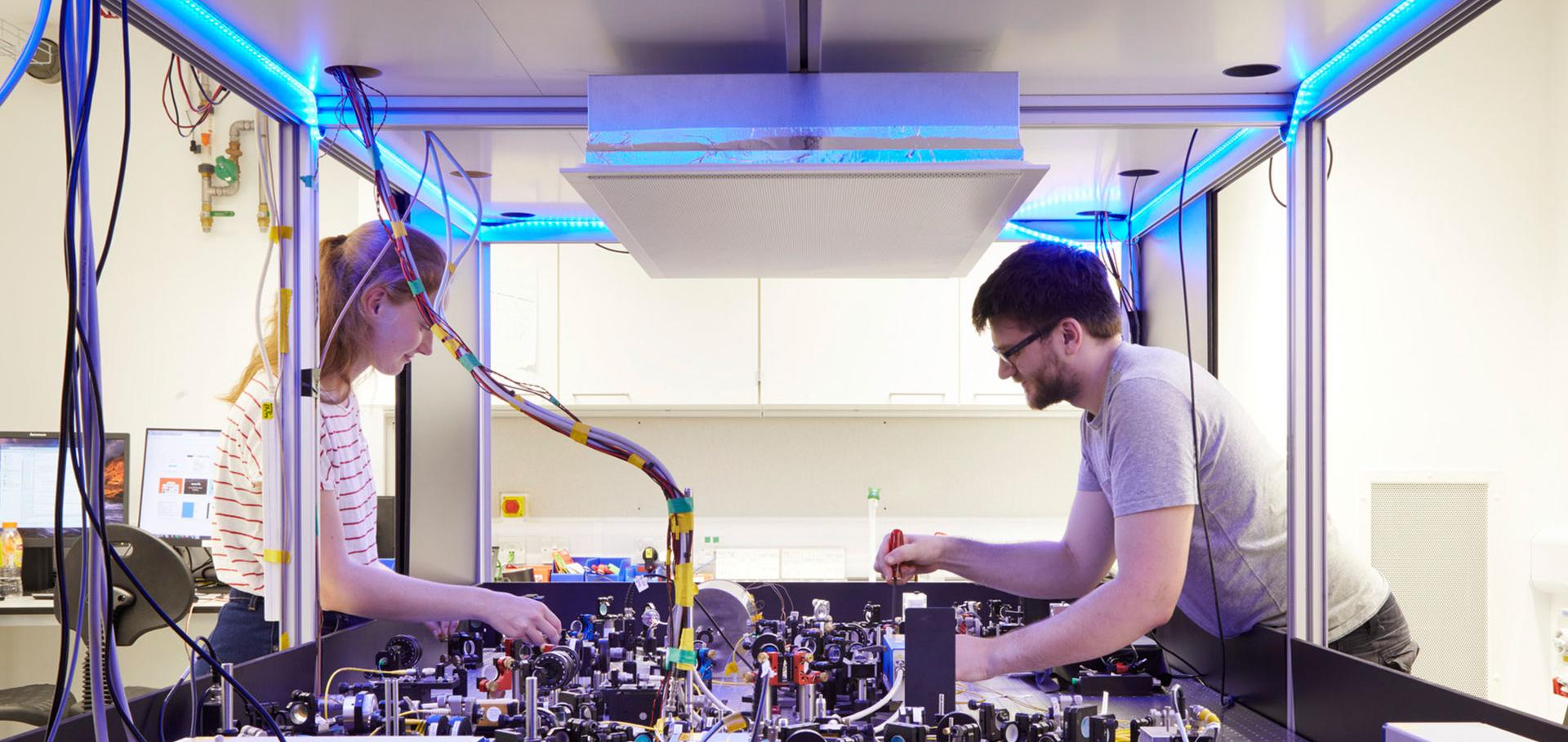
Atomic and Laser Physics
Credit: Jack Hobhouse

Prof Peter Norreys FInstP;

Professorial Research Fellow

Research theme

  • Accelerator physics
  • Lasers and high energy density science
  • Fundamental particles and interactions
  • Plasma physics

Sub department

  • Atomic and Laser Physics

Research groups

  • Oxford Centre for High Energy Density Science (OxCHEDS)
peter.norreys@physics.ox.ac.uk
Telephone: 01865 (2)72220
Clarendon Laboratory, room 141.1
Peter Norreys' research group
  • About
  • Research
  • Teaching
  • Publications

Development and application of ultra-bright laser and harmonic XUV sources

INST PHYS CONF SER (1996) 9-16

Authors:

MH Key, TW Barbee, JW Blyth, K Burnett, GF Cairns, AE Dangor, T Ditmire, A Djaoui, LB DaSilva, A Demir, A Dyson, AP Fews, EE Fill, P Gibbon, P Lee, S Healy, M Holden, DH Kalantar, NS Kim, CLS Lewis, Y Li, J Lin, P Loukakos, AG McPhee, I Mercer, S Moustaizis, M Nakai, D Neely, P Norreys, AA Offenberger, GJ Pert, SG Preston, BA Remmington, A Sanpera, D Schlogl, CG Smith, R Smith, J Steingruber, GJ Tallents, F Walsh, JS Wark, J Warwick, E Wolfrum, M Zepf, J Zhang

Abstract:

Experimental work with high intensity lasers at the Rutherford Appleton Laboratory has led to the production of both XUV laser and XUV harmonic sources with extreme brightness. In particular an efficient XUV laser source has been developed based on collisionally excited neon -like Ge XXIII(J=0-1) at 19.6 nm using the high power glass laser Vulcan generating 75 ps pulses. With Vulcan operating in sub -ps CPA mode, extremely powerful and short wavelength XUV high harmonic sources have been obtained by irradiation of solid targets and recombinant laser action with high gain has been demonstrated with fibre targets. An ultra-bright Krypton-fluoride laser system, Sprite(recently upgraded to a new configuration Titania) has produced the shortest harmonic wavelength (6.7 nm) and has been used to assess the possibilities of optical field ionised recombinant laser action with gas jet targets. The Ge XUV laser has been successfully applied in fusion research for radiographic measurements of the effect of laser speckle on the hydrodynamic stability of laser accelerated thin foils. The present status of the work, the comparative performance of the XUV laser and harmonic sources and near-term future directions are reviewed.
More details

Development of XUV lasers at the RAL central laser facility

OPTICAL AND QUANTUM ELECTRONICS 28:3 (1996) 201-208

Authors:

MH Key, WJ Blyth, AE Dangor, P Dhez, A Djoui, L Dwivedi, M Holden, PB Holden, P Jaegle, CLS Lewis, AG McPhee, A Modena, M Nakai, D Neely, PA Norreys, AA Offenberger, GJ Pert, JA Ploues, SG Preston, SA Ramsden, SJ Rose, B Russ, CG Smith, A Sureau, GJ Tallents, F Walsh, JS Wark, YL You, J Zhang
More details from the publisher

Efficient extreme UV harmonics generated from picosecond laser pulse interactions with solid targets

PHYSICAL REVIEW LETTERS 76:11 (1996) 1832-1835

Authors:

PA Norreys, M Zepf, S Moustaizis, AP Fews, J Zhang, P Lee, M Bakarezos, CN Danson, A Dyson, P Gibbon, P Loukakos, D Neely, FN Walsh, JS Wark, AE Dangor
More details from the publisher
More details

High gain recombination XUV lasers and efficient XUV harmonics from ps laser pulse interactions with solid targets

INST PHYS CONF SER (1996) 122-129

Authors:

J Zhang, AE Dangor, CN Danson, A Demir, A Dyson, AP Fews, EE Fill, P Gibbon, M Holden, MH Key, P Lee, CLS Lewis, YL Li, AG MacPhee, S Moustaizis, D Neely, PA Norreys, D Schlogl, J Steingruber, GJ Tallents, F Walsh, JS Wark, P Zeitoun, M Zepf

Abstract:

We present recent developments on high gain recombination XUV lasers and efficient XUV harmonics from solid targets using the CPA Vulcan laser beam at the Rutherford Appleton Laboratory (RAL). Following successful experiments on the hydrogen-like carbon recombination laser at 18.2 nm, high gain operation has also been demonstrated at 11.1 nm in the sodium-like copper recombination XUV laser by irradiating thin fibre targets at intensities of 6x10(15) Wcm(-2) with 2 ps laser pulses. This experiment has shown that 2 ps is the optimum pulse duration to drive the sodium-like copper laser. In addition to the recombination laser experiments, highly efficient harmonics up to 75th order at 14.0 nm have been observed in the interaction of 2 ps laser pulses with solid targets for intensities up to 10(19) Wcm(-2). The conversion efficiency is estimated to be greater than or equal to 10(-6) at 10(19) Wcm(-2) for harmonic orders up to the 68th.
More details

Measurements of the hole boring velocity from Doppler shifted harmonic emission from solid targets

PHYSICS OF PLASMAS 3:9 (1996) 3242-3244

Authors:

M Zepf, M CastroColin, D Chambers, SG Preston, JS Wark, J Zhang, CN Danson, D Neely, PA Norreys, AE Dangor, A Dyson, P Lee, AP Fews, P Gibbon, S Moustaizis, MH Key
More details from the publisher

Pagination

  • First page First
  • Previous page Prev
  • …
  • Page 86
  • Page 87
  • Page 88
  • Page 89
  • Current page 90
  • Page 91
  • Page 92
  • Page 93
  • Page 94
  • …
  • Next page Next
  • Last page Last

Footer Menu

  • Contact us
  • Giving to the Dept of Physics
  • Work with us
  • Media

User account menu

  • Log in

Follow us

FIND US

Clarendon Laboratory,

Parks Road,

Oxford,

OX1 3PU

CONTACT US

Tel: +44(0)1865272200

University of Oxfrod logo Department Of Physics text logo
IOP Juno Champion logo Athena Swan Silver Award logo

© University of Oxford - Department of Physics

Cookies | Privacy policy | Accessibility statement

Built by: Versantus

  • Home
  • Research
  • Study
  • Engage
  • Our people
  • News & Comment
  • Events
  • Our facilities & services
  • About us
  • Giving to Physics
  • Current students
  • Staff intranet