Home
Department Of Physics text logo
  • Research
    • Our research
    • Our research groups
    • Our research in action
    • Research funding support
    • Summer internships for undergraduates
  • Study
    • Undergraduates
    • Postgraduates
  • Engage
    • For alumni
    • For business
    • For schools
    • For the public
Menu
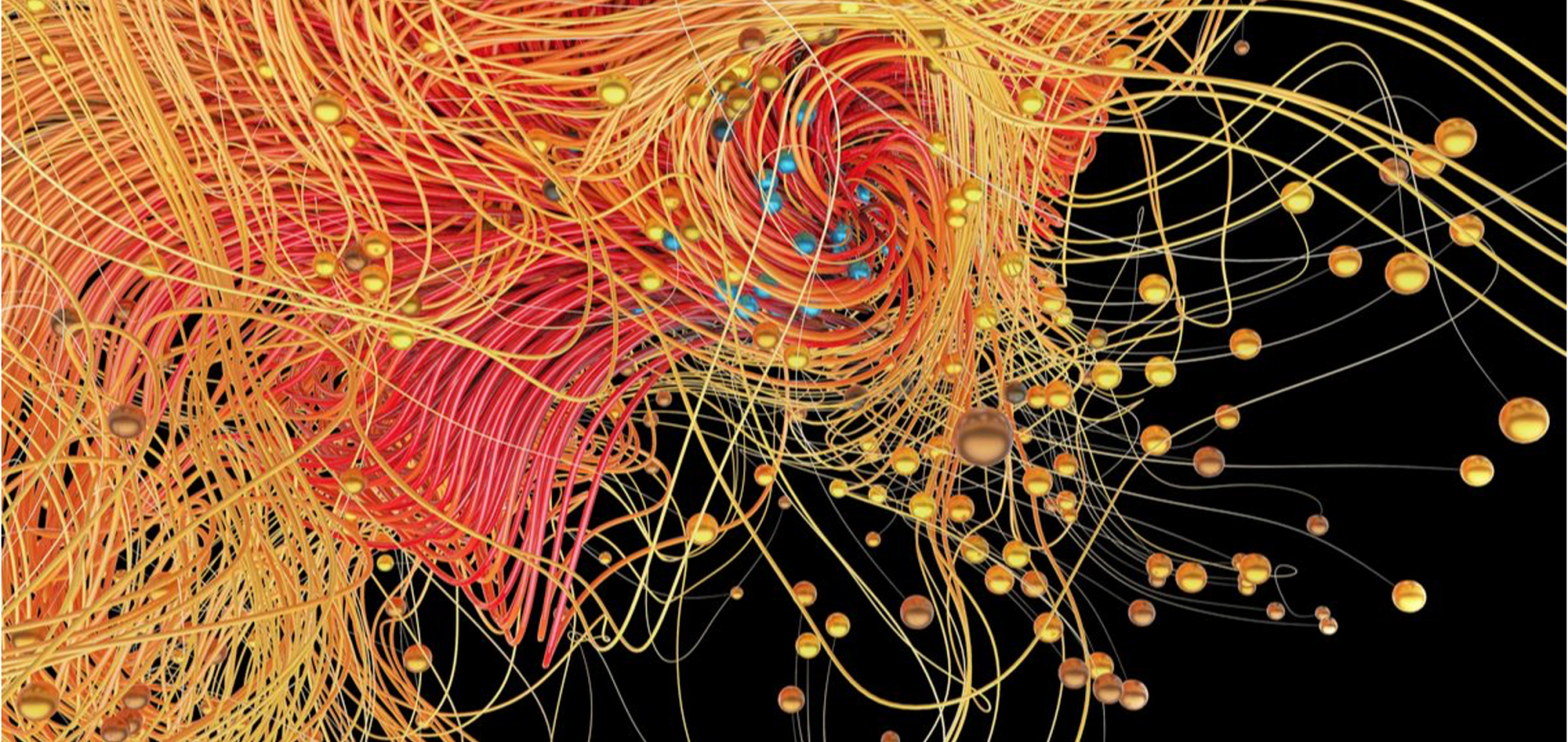
Cosmic strings in hematite

Professor Paolo G. Radaelli OSI

Dr Lee's Professor

Research theme

  • Quantum materials

Sub department

  • Condensed Matter Physics

Research groups

  • Oxide electronics
Paolo.Radaelli@physics.ox.ac.uk
Telephone: 01865 (2)70957
Clarendon Laboratory, room 111
  • About
  • Research
  • Publications

Prof Radaelli recognised with an MPLS "Excellent Supervisor" Award

Physics Award Winners
Prof Radaelli is one of the 5 Oxford Physicists recognised in the inaugural "Excellence in Research Supervision" award

Read the story at this link

Excellence in Research Supervision

Spin singlet formation in MgTi$_2$O$_4$: evidence of a helical dimerization pattern

ArXiv cond-mat/0308101 (2003)

Authors:

M Schmidt, W Ratcliff II, PG Radaelli, K Refson, NM Harrison, SW Cheong

Abstract:

The transition metal spinel MgTi$_2$O$_4$ undergoes a metal-insulator transition on cooling below $T_{M-I} = 260$ K. A sharp reduction of the magnetic susceptibility below $T_{M-I}$ suggests the onset of a magnetic singlet state. Using high-resolution synchrotron and neutron powder diffraction, we have solved the low-temperature crystal structure of MgTi$_2$O$_4$, which is found to contain dimers with short Ti-Ti distances (the locations of the spin singlets) alternating with long bonds to form helices. Band structure calculations based on hybrid exchange density functional theory show that, at low temperatures, MgTi$_2$O$_4$ is an orbitally ordered band insulator.
Details from ArXiV
More details from the publisher

High Performances Corrugated Feed Horns for Space Applications at Millimetre Wavelengths

(2003)

Authors:

F Villa, M Sandri, N Mandolesi, R Nesti, M Bersanelli, A Simonetto, C Sozzi, O D'Arcangelo, V Muzzini, A Mennella, P Guzzi, P Radaelli, R Fusi, E Alippi
More details from the publisher

Erratum: Structural transformation induced by magnetic field and "colossal-like" magnetoresistance response above 313 K in MnAs (Phys. Rev. Lett. (2003) 90 (097203))

Physical Review Letters 90:18 (2003) 189901/1

Authors:

J Mira, F Rivadulla, J Rivas, A Fondado, T Guidi, R Caciuffo, F Carsughi, PG Radaelli, JB Goodenough

Temperature-induced barium de-trapping from a double-well potential in Ba6Ge25

(2003)

Authors:

M Schmidt, PG Radaelli, MJ Gutmann, SJL Billinge, N Hur, SW Cheong
More details from the publisher

Temperature-induced barium de-trapping from a double-well potential in Ba6Ge25

ArXiv cond-mat/0303247 (2003)

Authors:

M Schmidt, PG Radaelli, MJ Gutmann, SJL Billinge, N Hur, SW Cheong

Abstract:

The crystal structure of barium-germanium clathrate Ba6Ge25 was studied using neutron powder diffraction in the temperature range 20-300K. The compound was found to be cubic (S.G. P4_1 23) in the entire temperature range. However, the fully-ordered model of the crystal structure (no split sites) is marginal at room temperature, and clearly fails at low temperature. A much better description of the crystal structure below 250K is given in terms of two split Ba sites, with random occupancies, for two out of three types of cages present in the Ba6Ge25 structure. The Ba atoms were found to interact strongly with the Ge host. The separation of the split Ba sites grows with decreasing temperature, with a sudden increase on cooling through the 200-250K temperature range, accompanied by an expansion of the entire crystal structure. We propose a simple model for this transition, based on temperature-induced de- trapping of Ba from a deep double-well potential. This transition is associated with sizeable anomalies in the transport and magnetic properties. The most significant of these effects, that is, the drop in electrical conductivity on cooling, can be easily explained within our model through the enhanced structural disorder, which would affect the relaxation time for all portions of the Fermi surface. We suggest that the other anomalies (increase in the absolute value of the negative Seebeck coefficient, decrease in the magnetic susceptibility) can be explained within the framework of the one-electron semi- classical model, without any need to invoke exotic electron-electron interaction mechanisms.
Details from ArXiV
More details from the publisher

Pagination

  • First page First
  • Previous page Prev
  • …
  • Page 46
  • Page 47
  • Page 48
  • Page 49
  • Current page 50
  • Page 51
  • Page 52
  • Page 53
  • Page 54
  • …
  • Next page Next
  • Last page Last

Footer Menu

  • Contact us
  • Giving to the Dept of Physics
  • Work with us
  • Media

User account menu

  • Log in

Follow us

FIND US

Clarendon Laboratory,

Parks Road,

Oxford,

OX1 3PU

CONTACT US

Tel: +44(0)1865272200

University of Oxfrod logo Department Of Physics text logo
IOP Juno Champion logo Athena Swan Silver Award logo

© University of Oxford - Department of Physics

Cookies | Privacy policy | Accessibility statement

Built by: Versantus

  • Home
  • Research
  • Study
  • Engage
  • Our people
  • News & Comment
  • Events
  • Our facilities & services
  • About us
  • Giving to Physics
  • Current students
  • Staff intranet