Home
Department Of Physics text logo
  • Research
    • Our research
    • Our research groups
    • Our research in action
    • Research funding support
    • Summer internships for undergraduates
  • Study
    • Undergraduates
    • Postgraduates
  • Engage
    • For alumni
    • For business
    • For schools
    • For the public
  • Support
Menu
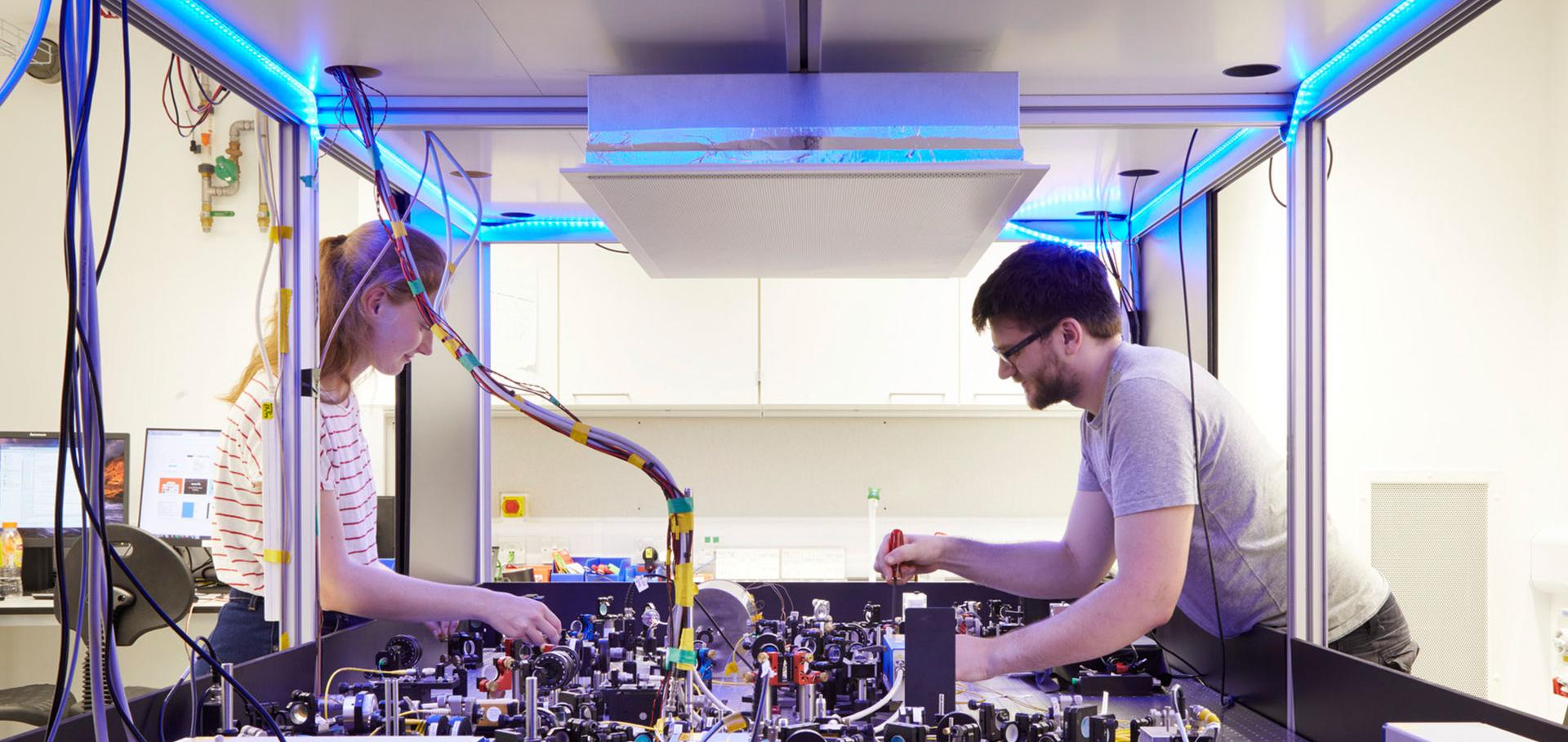
Atomic and Laser Physics
Credit: Jack Hobhouse

Prof Christopher Ramsey

Professor of Archaeological Science

Research theme

  • Accelerator physics
  • Climate physics
  • Instrumentation

Sub department

  • Atomic and Laser Physics
christopher.ramsey@physics.ox.ac.uk
Telephone: 01865285215
School of Archaeology
  • About
  • Publications

EFFECT OF FAT CONTENT ON PALATABILITY OF BROILED GROUND BEEF

JOURNAL OF ANIMAL SCIENCE 19:4 (1960) 1233-1233

Authors:

JW COLE, CB RAMSEY, LA ODOM
More details

FACTORS AFFECTING THE VISCERA WEIGHTS OF HOGS

JOURNAL OF ANIMAL SCIENCE 17:4 (1958) 1159-1160

Authors:

CB RAMSEY, JD KEMP
More details

Connecting the Greenland ice-core and U / Th timescales via cosmogenic radionuclides: Testing the synchronicity of Dansgaard-Oeschger events

Authors:

Florian Adolphi, Christopher Bronk Ramsey, Tobias Erhardt, R Lawrence Edwards, Hai Cheng, Chris SM Turney, Alan Cooper, Anders Svensson, Sune O Rasmussen, Hubertus Fischer, Raimund Muscheler
More details from the publisher

Mass violence, age and gender in the Early Iron Age of the Carpathian Basin

Nature Human Behaviour Springer Nature

Authors:

Linda Fibiger, Christopher Bronk Ramsey

Abstract:

Narratives about the motivations and conditions for mass violence as a persistent feature of conflict throughout human history have evolved in complexity and materiality. Victims of these events are key for understanding the evolution and transformative power of violent behaviour as it developed from simple inter-group conflict to more strategic mass violence. Here we present the results of a bioarchaeological study of 77 and biomolecular analysis of 25 individuals from a 9th century BCE mass grave from Gomolava in the Carpathian Basin, Southeast Europe. The site is located at the interface of complex socio-spatial relations, divergent cultural traditions and values, and competing ideologies of landscape use. Here we show that excessive lethal violence enacted mostly on women and children suggests a selective demographic bias. The people buried together shared few, even distant, genetic relationships, and so their killing presents striking evidence for an episode of cross-regional conflict and an underlying aggressive shift in power, violence and gender relations in the region. Gomolava provides evidence for the deliberate annihilation of select sections of a regional population as a motivation for mass violence behaviour in later prehistoric Europe. It also shines new light on the socioeconomic agency and importance of women and young individuals in later European prehistory.
Details from ORA

Pagination

  • First page First
  • Previous page Prev
  • …
  • Page 88
  • Page 89
  • Page 90
  • Page 91
  • Page 92
  • Page 93
  • Page 94
  • Page 95
  • Current page 96

Footer Menu

  • Contact us
  • Giving to the Dept of Physics
  • Work with us
  • Media

User account menu

  • Log in

Follow us

FIND US

Clarendon Laboratory,

Parks Road,

Oxford,

OX1 3PU

CONTACT US

Tel: +44(0)1865272200

University of Oxfrod logo Department Of Physics text logo
IOP Juno Champion logo Athena Swan Silver Award logo

© University of Oxford - Department of Physics

Cookies | Privacy policy | Accessibility statement

Built by: Versantus

  • Home
  • Research
  • Study
  • Engage
  • Our people
  • News & Comment
  • Events
  • Our facilities & services
  • About us
  • Giving to Physics
  • Current students
  • Staff intranet