Home
Department Of Physics text logo
  • Research
    • Our research
    • Our research groups
    • Our research in action
    • Research funding support
    • Summer internships for undergraduates
  • Study
    • Undergraduates
    • Postgraduates
  • Engage
    • For alumni
    • For business
    • For schools
    • For the public
  • Support
Menu
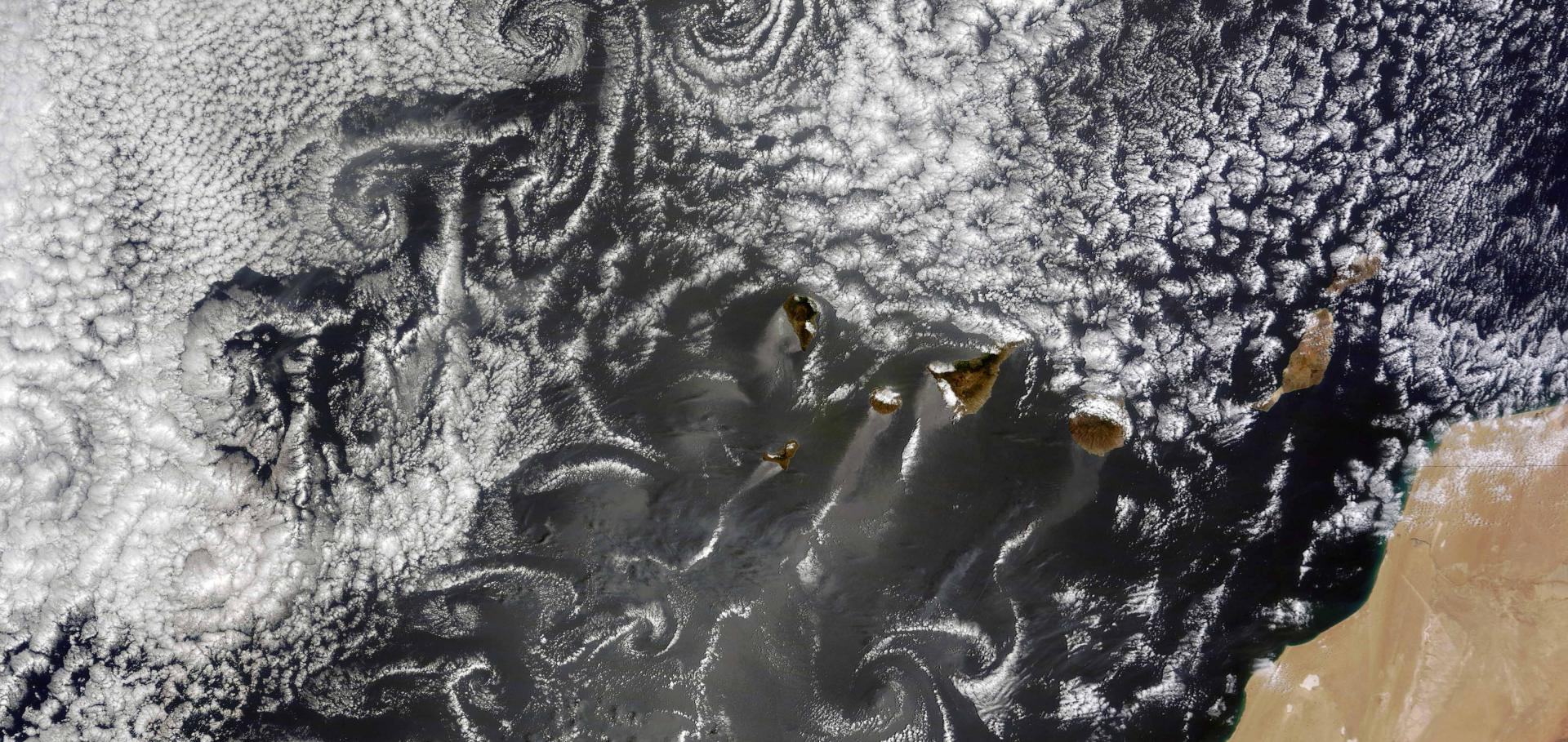
von Kármán vortex street over Canary Islands
Credit: NASA

Philip Stier

Professor of Atmospheric Physics

Research theme

  • Climate physics

Sub department

  • Atmospheric, Oceanic and Planetary Physics

Research groups

  • Climate processes
philip.stier@physics.ox.ac.uk
Telephone: 01865 (2)72887
Atmospheric Physics Clarendon Laboratory, room 103
  • About
  • Research
  • Teaching
  • CV
  • Publications

Constraint on precipitation response to climate change by combination of atmospheric energy and water budgets

npj Climate and Atmospheric Science Springer Nature 3 (2020) 34

Authors:

guy Dagan, Philip Stier

Abstract:

Global mean precipitation is expected to increase with increasing temperatures, a process which is fairly well understood. In contrast, local precipitation changes, which are key for society and ecosystems, demonstrate a large spread in predictions by climate models, can be of both signs and have much larger magnitude than the global mean change. Previously, two top-down approaches to constrain precipitation changes were proposed, using either the atmospheric water or energy budget. Here, using an ensemble of 27 climate models, we study the relative importance of these two budgetary constraints and present analysis of the spatial scales at which they hold. We show that specific geographical locations are more constrained by either one of the budgets and that the combination of water and energy budgets provides a significantly stronger constraint on the spatial scale of precipitation changes under anthropogenic climate change (on average about 3000 km, above which changes in precipitation approach the global mean change). These results could also provide an objective way to define the scale of ‘regional’ climate change.
More details from the publisher
Details from ORA
More details

Quantifying the sensitivity of aerosol optical properties to the parameterizations of physico-chemical processes during the 2010 Russian wildfires and heatwave

Atmospheric Chemistry and Physics Copernicus GmbH 20:16 (2020) 9679-9700

Authors:

Laura Palacios-Peña, Philip Stier, Raquel Lorente-Plazas, Pedro Jiménez-Guerrero

Abstract:

<jats:p>Abstract. The impact of aerosol–radiation and aerosol–cloud interactions on the radiative forcing is subject to large uncertainties. This is caused by the limited understanding of aerosol optical properties and the role of aerosols as cloud condensation/ice nuclei (CCN/IN). On the other hand, aerosol optical properties and vertical distribution are highly related, and their uncertainties come from different processes. This work attempts to quantify the sensitivity of aerosol optical properties (i.e. aerosol optical depth; AOD) and their vertical distribution (using the extinction coefficient, backscatter coefficient, and concentrations' species profiles) to key processes. In order to achieve this objective, sensitivity tests have been carried out, using the WRF-Chem regional fully coupled model by modifying the dry deposition, sub-grid convective transport, relative humidity, and wet scavenging. The 2010 Russian heatwave–wildfires episode has been selected as case study. Results indicate that AOD is sensitive to these key processes in the following order of importance: (1) modification of relative humidity, causing AOD differences of up to 0.6; (2) modification of vertical convection transport with AOD differences around −0.4; and (3) the dry deposition with AOD absolute differences of up to −0.35 and 0.3. Moreover, these AOD changes exhibit a nonlinear response. Both an increase and a decrease in the RH result in higher AOD values. On the other hand, both the increase and offset of the sub-grid convective transport lead to a reduction in the AOD over the fire area. In addition, a similar nonlinear response is found when reducing the dry deposition velocity; in particular, for the accumulation mode where the concentration of several species increases (while a decrease might be expected). These nonlinear responses are highly dependent on the equilibrium of the thermodynamics system sulfate–nitrate–SOA (secondary organic aerosol). In this sense, small changes in the concentration of one species can strongly affect others, finally affecting aerosol optical properties. Changes in this equilibrium could come from modifications in relative humidity, dry deposition, or vertical convective transport. By itself, dry deposition also presents a high uncertainty influencing the AOD representation. </jats:p>
More details from the publisher
Details from ORA
More details

Cloudy-sky contributions to the direct aerosol effect

Atmospheric Chemistry and Physics Copernicus GmbH 20:14 (2020) 8855-8865

Authors:

Gunnar Myhre, Bjørn H Samset, Christian W Mohr, Kari Alterskjær, Yves Balkanski, Nicolas Bellouin, Mian Chin, James Haywood, Øivind Hodnebrog, Stefan Kinne, Guangxing Lin, Marianne T Lund, Joyce E Penner, Michael Schulz, Nick Schutgens, Ragnhild B Skeie, Philip Stier, Toshihiko Takemura, Kai Zhang

Abstract:

The radiative forcing of the aerosol–radiation interaction can be decomposed into clear-sky and cloudy-sky portions. Two sets of multi-model simulations within Aerosol Comparisons between Observations and Models (AeroCom), combined with observational methods, and the time evolution of aerosol emissions over the industrial era show that the contribution from cloudy-sky regions is likely weak. A mean of the simulations considered is 0.01±0.1 W m−2. Multivariate data analysis of results from AeroComPhase II shows that many factors influence the strength of the cloudy-sky contribution to the forcing of the aerosol–radiation interaction. Overall, single-scattering albedo of anthropogenic aerosols and the interaction of aerosols with the short-wave cloud radiative effects are found to be important factors. A more dedicated focus on the contribution from the cloud-free and cloud-covered sky fraction, respectively, to the aerosol–radiation interaction will benefit the quantification of the radiative forcing and its uncertainty range.
More details from the publisher
Details from ORA
More details

The significant role of biomass burning aerosols in clouds and radiation in the South-eastern Atlantic Ocean

Atmospheric Chemistry and Physics Copernicus Publications (2020)

Authors:

Haochi Che, Philip Stier, Hamish Gordon, Duncan Watson-Parris, Lucia Deaconu

Abstract:

The South-eastern Atlantic Ocean (SEA) is semi-permanently covered by one of the most extensive stratocumulus cloud decks on the planet and experiences about one-third of the global biomass burning emissions from the southern Africa savannah region during the fire season. To get a better understanding of the impact of these biomass burning aerosols on clouds and radiation balance over the SEA, the latest generation of the UK Earth System Model (UKESM1) is employed. Measurements from the CLARIFY and ORACLES flight campaigns are used to evaluate the model, demonstrating that the model has good skill in reproducing the biomass burning plume. To investigate the underlying mechanisms in detail, the effects of biomass burning aerosols on the clouds are decomposed into radiative effects (via absorption and scattering) and microphysical effects (via perturbation of cloud condensation nuclei (CCN) and cloud microphysical processes). The July–August means are used to characterise aerosols, clouds and the radiation balance during the fire season. Results show around 68 % of CCN at 0.2 % supersaturation in the SEA domain can be attributed to biomass burning. The absorption effect of biomass burning aerosols is the most significant in affecting clouds and radiation. Near the continent it increases the maximum supersaturation diagnosed by the activation scheme, while further from the continent it reduces the altitude of the maximum supersaturation. As a result, the cloud droplet number concentration shows a similar pattern. The microphysical effect of biomass burning aerosols decreases the maximum supersaturation and increases the cloud droplets concentration over the ocean; however, this change is relatively small. The liquid water path is also significantly increased over the SEA (mainly caused by the absorption effect of biomass burning aerosols) when biomass burning aerosols are above the stratocumulus cloud deck. The microphysical pathways lead to a slight increase in the liquid water path over the ocean. These changes in cloud properties indicate the significant role of biomass burning aerosols on clouds in this region. Among the effects of biomass burning aerosols on radiation balance, the semi-direct radiative effects (rapid adjustments induced by biomass burning aerosols radiative effects) have a dominant cooling impact over the SEA, which offset the warming direct radiative effect (radiative forcing from biomass burning aerosol–radiation interactions). However, the magnitude and the sign of the semi-direct effects are dependent on the relative location of biomass burning aerosols and clouds. The net biomass burning aerosols radiative effect shows a negative cooling effect in the SEA, indicating the significant role of biomass burning aerosols in affecting the regional radiation balance and climate.
More details from the publisher
Details from ORA

Ensemble daily simulations for elucidating cloud–aerosol interactions under a large spread of realistic environmental conditions

Atmospheric Chemistry and Physics Copernicus GmbH 20:11 (2020) 6291-6303

Authors:

Guy Dagan, Philip Stier

Abstract:

Abstract. Aerosol effects on cloud properties and the atmospheric energy and radiation budgets are studied through ensemble simulations over two month-long periods during the NARVAL campaigns (Next-generation Aircraft Remote-Sensing for Validation Studies, December 2013 and August 2016). For each day, two simulations are conducted with low and high cloud droplet number concentrations (CDNCs), representing low and high aerosol concentrations, respectively. This large data set, which is based on a large spread of co-varying realistic initial conditions, enables robust identification of the effect of CDNC changes on cloud properties. We show that increases in CDNC drive a reduction in the top-of-atmosphere (TOA) net shortwave flux (more reflection) and a decrease in the lower-tropospheric stability for all cases examined, while the TOA longwave flux and the liquid and ice water path changes are generally positive. However, changes in cloud fraction or precipitation, that could appear significant for a given day, are not as robustly affected, and, at least for the summer month, are not statistically distinguishable from zero. These results highlight the need for using a large sample of initial conditions for cloud–aerosol studies for identifying the significance of the response. In addition, we demonstrate the dependence of the aerosol effects on the season, as it is shown that the TOA net radiative effect is doubled during the winter month as compared to the summer month. By separating the simulations into different dominant cloud regimes, we show that the difference between the different months emerges due to the compensation of the longwave effect induced by an increase in ice content as compared to the shortwave effect of the liquid clouds. The CDNC effect on the longwave flux is stronger in the summer as the clouds are deeper and the atmosphere is more unstable.
More details from the publisher
Details from ORA
More details

Pagination

  • First page First
  • Previous page Prev
  • …
  • Page 29
  • Page 30
  • Page 31
  • Page 32
  • Current page 33
  • Page 34
  • Page 35
  • Page 36
  • Page 37
  • …
  • Next page Next
  • Last page Last

Footer Menu

  • Contact us
  • Giving to the Dept of Physics
  • Work with us
  • Media

User account menu

  • Log in

Follow us

FIND US

Clarendon Laboratory,

Parks Road,

Oxford,

OX1 3PU

CONTACT US

Tel: +44(0)1865272200

University of Oxfrod logo Department Of Physics text logo
IOP Juno Champion logo Athena Swan Silver Award logo

© University of Oxford - Department of Physics

Cookies | Privacy policy | Accessibility statement

Built by: Versantus

  • Home
  • Research
  • Study
  • Engage
  • Our people
  • News & Comment
  • Events
  • Our facilities & services
  • About us
  • Giving to Physics
  • Current students
  • Staff intranet