Home
Department Of Physics text logo
  • Research
    • Our research
    • Our research groups
    • Our research in action
    • Research funding support
    • Summer internships for undergraduates
  • Study
    • Undergraduates
    • Postgraduates
  • Engage
    • For alumni
    • For business
    • For schools
    • For the public
  • Support
Menu
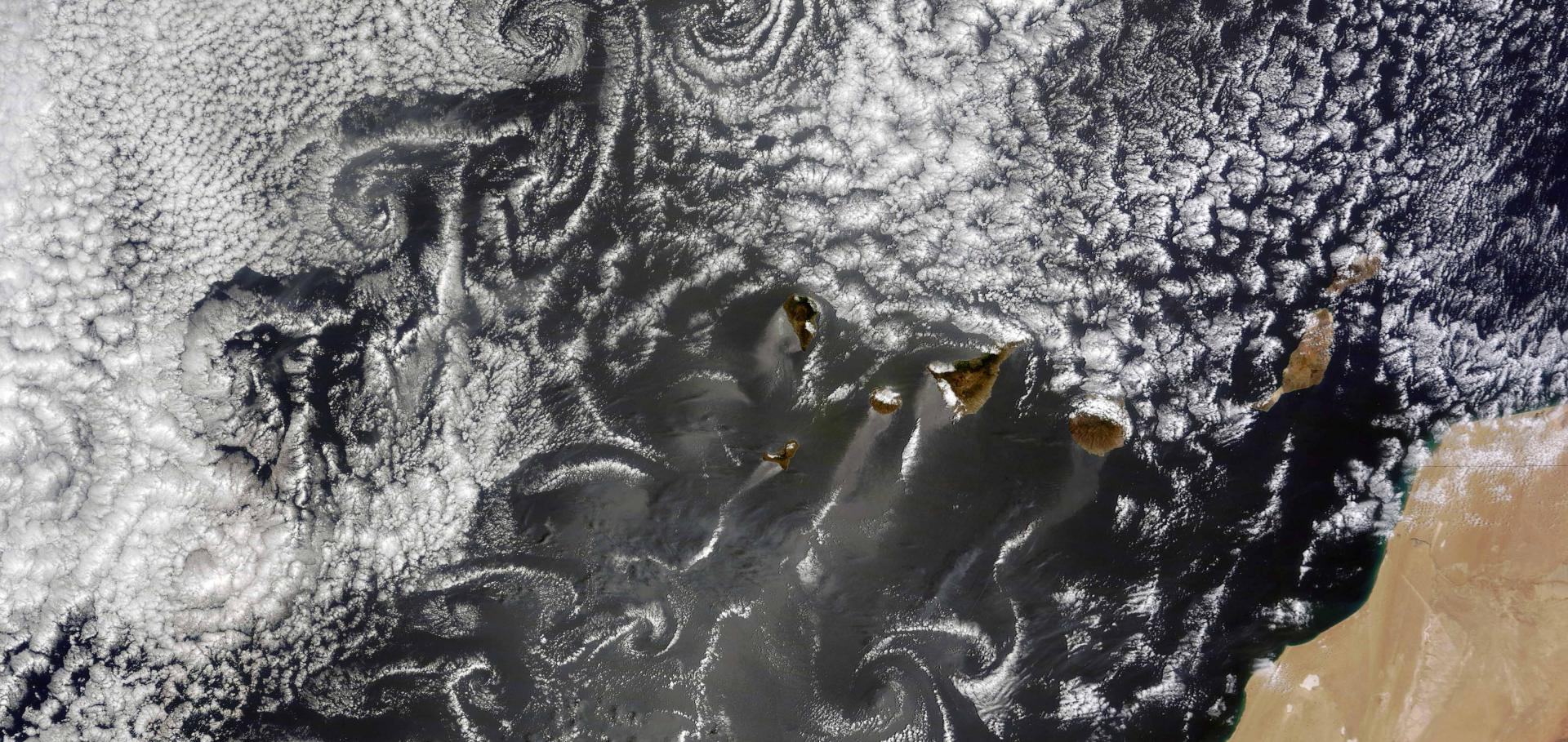
von Kármán vortex street over Canary Islands
Credit: NASA

Philip Stier

Professor of Atmospheric Physics

Research theme

  • Climate physics

Sub department

  • Atmospheric, Oceanic and Planetary Physics

Research groups

  • Climate processes
philip.stier@physics.ox.ac.uk
Telephone: 01865 (2)72887
Atmospheric Physics Clarendon Laboratory, room 103
  • About
  • Research
  • Teaching
  • CV
  • Publications

Description and evaluation of aerosol in UKESM1 and HadGEM3-GC3.1 CMIP6 historical simulations

Geoscientific Model Development Copernicus Publications 13:12 (2020) 6383-6423

Authors:

Jp Mulcahy, C Johnson, Cg Jones, Adam Povey, Ce Scott, A Sellar, St Turnock, Mt Woodhouse, Nl Abraham, Mb Andrews, N Bellouin, J Browse, Ks Carslaw, M Dalvi, Ga Folberth, M Glover, Dp Grosvenor, C Hardacre, R Hill, B Johnson, A Jones, Z Kipling, G Mann, J Mollard, Fm O'Connor, J Palmiéri, C Reddington, St Rumbold, M Richardson, Naj Schutgens, P Stier, M Stringer, Y Tang, J Walton, S Woodward, A Yool

Abstract:

We document and evaluate the aerosol schemes as implemented in the physical and Earth system models, the Global Coupled 3.1 configuration of the Hadley Centre Global Environment Model version 3 (HadGEM3-GC3.1) and the United Kingdom Earth System Model (UKESM1), which are contributing to the sixth Coupled Model Intercomparison Project (CMIP6). The simulation of aerosols in the present-day period of the historical ensemble of these models is evaluated against a range of observations. Updates to the aerosol microphysics scheme are documented as well as differences in the aerosol representation between the physical and Earth system configurations. The additional Earth system interactions included in UKESM1 lead to differences in the emissions of natural aerosol sources such as dimethyl sulfide, mineral dust and organic aerosol and subsequent evolution of these species in the model. UKESM1 also includes a stratospheric–tropospheric chemistry scheme which is fully coupled to the aerosol scheme, while GC3.1 employs a simplified aerosol chemistry mechanism driven by prescribed monthly climatologies of the relevant oxidants. Overall, the simulated speciated aerosol mass concentrations compare reasonably well with observations. Both models capture the negative trend in sulfate aerosol concentrations over Europe and the eastern United States of America (US) although the models tend to underestimate sulfate concentrations in both regions. Interactive emissions of biogenic volatile organic compounds in UKESM1 lead to an improved agreement of organic aerosol over the US. Simulated dust burdens are similar in both models despite a 2-fold difference in dust emissions. Aerosol optical depth is biased low in dust source and outflow regions but performs well in other regions compared to a number of satellite and ground-based retrievals of aerosol optical depth. Simulated aerosol number concentrations are generally within a factor of 2 of the observations, with both models tending to overestimate number concentrations over remote ocean regions, apart from at high latitudes, and underestimate over Northern Hemisphere continents. Finally, a new primary marine organic aerosol source is implemented in UKESM1 for the first time. The impact of this new aerosol source is evaluated. Over the pristine Southern Ocean, it is found to improve the seasonal cycle of organic aerosol mass and cloud droplet number concentrations relative to GC3.1 although underestimations in cloud droplet number concentrations remain. This paper provides a useful characterisation of the aerosol climatology in both models and will facilitate understanding in the numerous aerosol–climate interaction studies that will be conducted as part of CMIP6 and beyond.
More details from the publisher
Details from ORA
More details

Constraining the Twomey effect from satellite observations: issues and perspectives

Atmospheric Chemistry and Physics Discussions European Geosciences Union 20:23 (2020) 15079-15099

Authors:

Johannes Quaas, Arola Antti, Brian Cairns, Matthew Christensen, Hartwig Deneke, Annica ML Ekman, Graham Feingold, Ann Fridlind, Edward Gryspeerdt, Otto Hasekamp, Zhanqing Li, Antti Lipponen, Po-Lun Ma, Johannes Muelmenstaedt, Athanasios Nenes, Joyce Penner, Daniel Rosenfeld, Roland Schroedner, Kenneth Sinclair, Odran Sourdeval, Philip Stier, Matthias Tesche, Bastiaan van Dieedenhoven, Manfred Wendisch

Abstract:

The Twomey effect describes the radiative forcing associated with a change in cloud albedo due to an increase in anthropogenic aerosol emissions. It is driven by the perturbation in cloud droplet number concentration (ΔNd, ant) in liquid-water clouds and is currently understood to exert a cooling effect on climate. The Twomey effect is the key driver in the effective radiative forcing due to aerosol–cloud interactions, but rapid adjustments also contribute. These adjustments are essentially the responses of cloud fraction and liquid water path to ΔNd, ant and thus scale approximately with it. While the fundamental physics of the influence of added aerosol particles on the droplet concentration (Nd) is well described by established theory at the particle scale (micrometres), how this relationship is expressed at the large-scale (hundreds of kilometres) perturbation, ΔNd, ant, remains uncertain. The discrepancy between process understanding at particle scale and insufficient quantification at the climate-relevant large scale is caused by co-variability of aerosol particles and updraught velocity and by droplet sink processes. These operate at scales on the order of tens of metres at which only localised observations are available and at which no approach yet exists to quantify the anthropogenic perturbation. Different atmospheric models suggest diverse magnitudes of the Twomey effect even when applying the same anthropogenic aerosol emission perturbation. Thus, observational data are needed to quantify and constrain the Twomey effect. At the global scale, this means satellite data. There are four key uncertainties in determining ΔNd, ant, namely the quantification of (i) the cloud-active aerosol – the cloud condensation nuclei (CCN) concentrations at or above cloud base, (ii) Nd, (iii) the statistical approach for inferring the sensitivity of Nd to aerosol particles from the satellite data and (iv) uncertainty in the anthropogenic perturbation to CCN concentrations, which is not easily accessible from observational data. This review discusses deficiencies of current approaches for the different aspects of the problem and proposes several ways forward: in terms of CCN, retrievals of optical quantities such as aerosol optical depth suffer from a lack of vertical resolution, size and hygroscopicity information, non-direct relation to the concentration of aerosols, difficulty to quantify it within or below clouds, and the problem of insufficient sensitivity at low concentrations, in addition to retrieval errors. A future path forward can include utilising co-located polarimeter and lidar instruments, ideally including high-spectral-resolution lidar capability at two wavelengths to maximise vertically resolved size distribution information content. In terms of Nd, a key problem is the lack of operational retrievals of this quantity and the inaccuracy of the retrieval especially in broken-cloud regimes. As for the Nd-to-CCN sensitivity, key issues are the updraught distributions and the role of Nd sink processes, for which empirical assessments for specific cloud regimes are currently the best solutions. These considerations point to the conclusion that past studies using existing approaches have likely underestimated the true sensitivity and, thus, the radiative forcing due to the Twomey effect.
More details from the publisher
Details from ORA

Constraining the Twomey effect from satellite observations: issues and perspectives

ATMOSPHERIC CHEMISTRY AND PHYSICS Copernicus GmbH 20:23 (2020) 15079-15099

Authors:

Johannes Quaas, Antti Arola, Brian Cairns, Matthew Christensen, Hartwig Deneke, Annica ML Ekman, Graham Feingold, Ann Fridlind, Edward Gryspeerdt, Otto Hasekamp, Zhanqing Li, Antti Lipponen, Po-Lun Ma, Johannes Mulmenstadt, Athanasios Nenes, Joyce E Penner, Daniel Rosenfeld, Roland Schroedner, Kenneth Sinclair, Odran Sourdeval, Philip Stier, Matthias Tesche, Bastiaan van Diedenhoven, Manfred Wendisch

Abstract:

© 2020 BMJ Publishing Group. All rights reserved. The Twomey effect describes the radiative forcing associated with a change in cloud albedo due to an increase in anthropogenic aerosol emissions. It is driven by the perturbation in cloud droplet number concentration (1Nd; ant) in liquid-water clouds and is currently understood to exert a cooling effect on climate. The Twomey effect is the key driver in the effective radiative forcing due to aerosol cloud interactions, but rapid adjustments also contribute. These adjustments are essentially the responses of cloud fraction and liquid water path to 1Nd; ant and thus scale approximately with it. While the fundamental physics of the influence of added aerosol particles on the droplet concentration (Nd) is well described by established theory at the particle scale (micrometres), how this relationship is expressed at the large-scale (hundreds of kilometres) perturbation, 1Nd; ant, remains uncertain. The discrepancy between process understanding at particle scale and insufficient quantification at the climate-relevant large scale is caused by co-variability of aerosol particles and updraught velocity and by droplet sink processes. These operate at scales on the order of tens of me-Tres at which only localised observations are available and at which no approach yet exists to quantify the anthropogenic perturbation. Different atmospheric models suggest diverse magnitudes of the Twomey effect even when applying the same anthropogenic aerosol emission perturbation. Thus, observational data are needed to quantify and constrain the Twomey effect. At the global scale, this means satellite data. There are four key uncertainties in determining 1Nd; ant, namely the quantification of (i) the cloud-Active aerosol the cloud condensation nuclei (CCN) concentrations at or above cloud base, (ii) Nd, (iii) the statistical approach for inferring the sensitivity of Nd to aerosol particles from the satellite data and (iv) uncertainty in the anthropogenic perturbation to CCN concentrations, which is not easily accessible from observational data. This review discusses deficiencies of current approaches for the different aspects of the problem and proposes several ways forward: in terms of CCN, retrievals of optical quantities such as aerosol optical depth suffer from a lack of vertical resolution, size and hygroscopicity information, non-direct relation to the concentration of aerosols, difficulty to quantify it within or below clouds, and the problem of insufficient sensitivity at low concentrations, in addition to retrieval errors. A future path forward can include utilising co-located polarimeter and lidar instruments, ideally including high-spectral-resolution lidar capability at two wavelengths to maximise vertically resolved size distribution information content. In terms of Nd, a key problem is the lack of operational retrievals of this quantity and the inaccuracy of the retrieval especially in broken-cloud regimes. As for the Nd-To-CCN sensitivity, key issues are the updraught distributions and the role of Nd sink processes, for which empirical assessments for specific cloud regimes are currently the best solutions. These considerations point to the conclusion that past studies using existing approaches have likely underestimated the true sensitivity and, thus, the radiative forcing due to the Twomey effect.
More details from the publisher
More details

Aerosol forcing masks and delays the formation of the North-Atlantic warming hole by three decades

Geophysical Research Letters American Geophysical Union 47:22 (2020) e2020GL090778

Authors:

Guy Dagan, Philip Stier, Duncan Watson-Parris

Abstract:

The North-Atlantic warming hole (NAWH) is referred to as a reduced warming, or even cooling, of the North-Atlantic during an anthropogenic-driven global warming. A NAWH is predicted by climate models during the 21st century and its pattern is already emerging in observations. Despite the known key role of the North-Atlantic surface temperatures in setting the Northern-Hemisphere climate, the mechanisms behind the NAWH are still not fully understood. Using state-of-the-art climate models, we show that anthropogenic aerosol forcing opposes the formation of the NAWH (by leading to a local warming) and delays its emergence by about 30 years. In agreement with previous studies, we also demonstrate that the relative warming of the North-Atlantic under aerosol forcing is due to changes in ocean heat fluxes, rather than air-sea fluxes. These results suggest that the predicted reduction in aerosol forcing during the 21st century may accelerate the formation of the NAWH.
More details from the publisher
Details from ORA
More details
More details

An AeroCom–AeroSat study: intercomparison of satellite AOD datasets for aerosol model evaluation

Atmospheric Chemistry and Physics Copernicus GmbH 20:21 (2020) 12431-12457

Authors:

Nick Schutgens, Andrew M Sayer, Andreas Heckel, Christina Hsu, Hiren Jethva, Gerrit de Leeuw, Peter JT Leonard, Robert C Levy, Antti Lipponen, Alexei Lyapustin, Peter North, Thomas Popp, Caroline Poulsen, Virginia Sawyer, Larisa Sogacheva, Gareth Thomas, Omar Torres, Yujie Wang, Stefan Kinne, Michael Schulz, Philip Stier

Abstract:

<jats:p>Abstract. To better understand and characterize current uncertainties in the important observational constraint of climate models of aerosol optical depth (AOD), we evaluate and intercompare 14 satellite products, representing nine different retrieval algorithm families using observations from five different sensors on six different platforms. The satellite products (super-observations consisting of 1∘×1∘ daily aggregated retrievals drawn from the years 2006, 2008 and 2010) are evaluated with AErosol RObotic NETwork (AERONET) and Maritime Aerosol Network (MAN) data. Results show that different products exhibit different regionally varying biases (both under- and overestimates) that may reach ±50 %, although a typical bias would be 15 %–25 % (depending on the product). In addition to these biases, the products exhibit random errors that can be 1.6 to 3 times as large. Most products show similar performance, although there are a few exceptions with either larger biases or larger random errors. The intercomparison of satellite products extends this analysis and provides spatial context to it. In particular, we show that aggregated satellite AOD agrees much better than the spatial coverage (often driven by cloud masks) within the 1∘×1∘ grid cells. Up to ∼50 % of the difference between satellite AOD is attributed to cloud contamination. The diversity in AOD products shows clear spatial patterns and varies from 10 % (parts of the ocean) to 100 % (central Asia and Australia). More importantly, we show that the diversity may be used as an indication of AOD uncertainty, at least for the better performing products. This provides modellers with a global map of expected AOD uncertainty in satellite products, allows assessment of products away from AERONET sites, can provide guidance for future AERONET locations and offers suggestions for product improvements. We account for statistical and sampling noise in our analyses. Sampling noise, variations due to the evaluation of different subsets of the data, causes important changes in error metrics. The consequences of this noise term for product evaluation are discussed. </jats:p>
More details from the publisher
More details

Pagination

  • First page First
  • Previous page Prev
  • …
  • Page 28
  • Page 29
  • Page 30
  • Page 31
  • Current page 32
  • Page 33
  • Page 34
  • Page 35
  • Page 36
  • …
  • Next page Next
  • Last page Last

Footer Menu

  • Contact us
  • Giving to the Dept of Physics
  • Work with us
  • Media

User account menu

  • Log in

Follow us

FIND US

Clarendon Laboratory,

Parks Road,

Oxford,

OX1 3PU

CONTACT US

Tel: +44(0)1865272200

University of Oxfrod logo Department Of Physics text logo
IOP Juno Champion logo Athena Swan Silver Award logo

© University of Oxford - Department of Physics

Cookies | Privacy policy | Accessibility statement

Built by: Versantus

  • Home
  • Research
  • Study
  • Engage
  • Our people
  • News & Comment
  • Events
  • Our facilities & services
  • About us
  • Giving to Physics
  • Current students
  • Staff intranet