Home
Department Of Physics text logo
  • Research
    • Our research
    • Our research groups
    • Our research in action
    • Research funding support
    • Summer internships for undergraduates
  • Study
    • Undergraduates
    • Postgraduates
  • Engage
    • For alumni
    • For business
    • For schools
    • For the public
  • Support
Menu
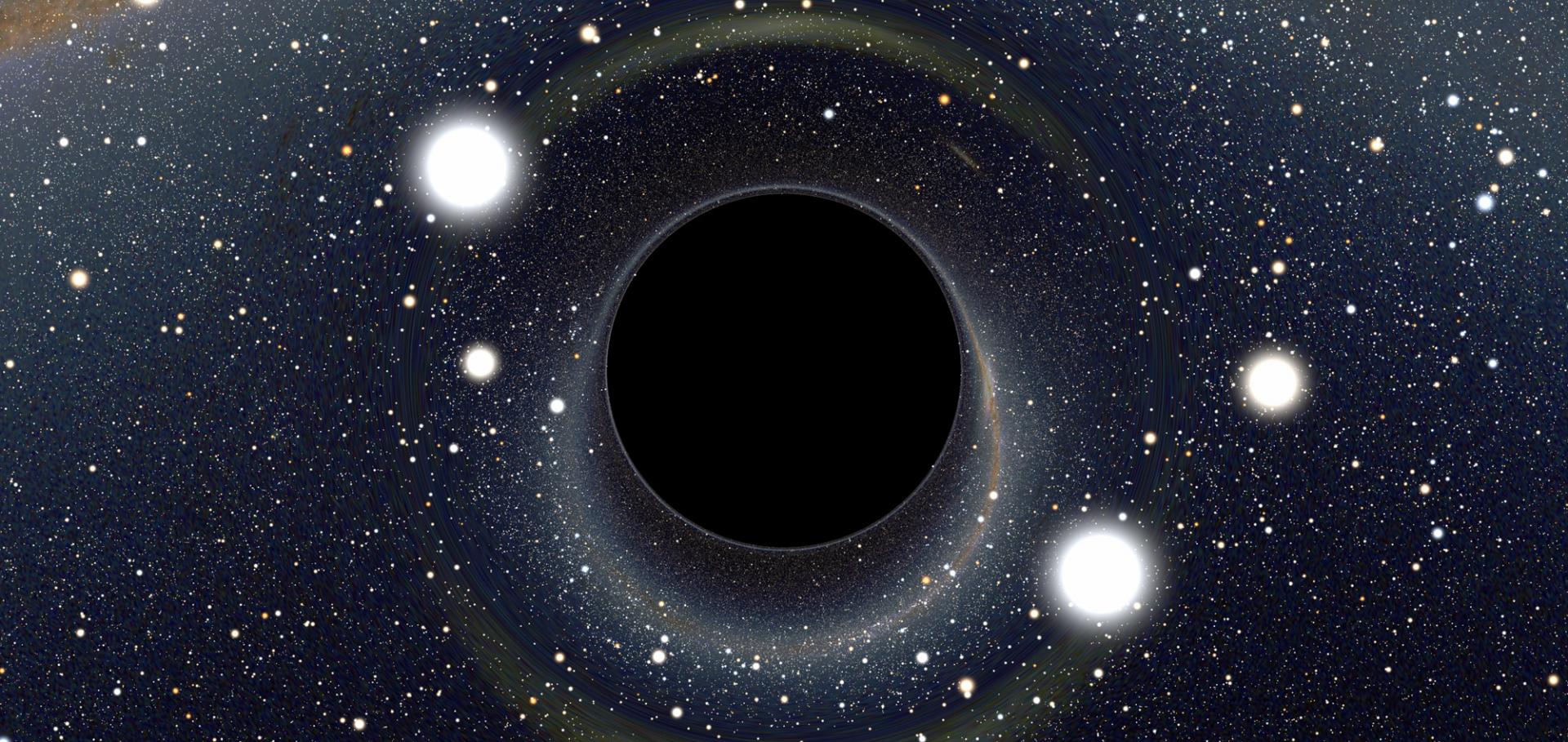
Black Hole

Lensing of space time around a black hole. At Oxford we study black holes observationally and theoretically on all size and time scales - it is some of our core work.

Credit: ALAIN RIAZUELO, IAP/UPMC/CNRS. CLICK HERE TO VIEW MORE IMAGES.

Dr Thomas Williams

Visitor

Research theme

  • Astronomy and astrophysics

Sub department

  • Astrophysics

Research groups

  • Galaxy formation and evolution
thomas.williams@physics.ox.ac.uk
Professional Website
  • About
  • Publications

PHANGS-ML: Dissecting Multiphase Gas and Dust in Nearby Galaxies Using Machine Learning

The Astrophysical Journal American Astronomical Society 968:1 (2024) 24

Authors:

Dalya Baron, Karin M Sandstrom, Erik Rosolowsky, Oleg V Egorov, Ralf S Klessen, Adam K Leroy, Médéric Boquien, Eva Schinnerer, Francesco Belfiore, Brent Groves, Jérémy Chastenet, Daniel A Dale, Guillermo A Blanc, José E Méndez-Delgado, Eric W Koch, Kathryn Grasha, Mélanie Chevance, David A Thilker, Dario Colombo, Thomas G Williams, Debosmita Pathak, Jessica Sutter, Toby Brown, John F Wu

Abstract:

The PHANGS survey uses Atacama Large Millimeter/submillimeter Array, Hubble Space Telescope, Very Large Telescope, and JWST to obtain an unprecedented high-resolution view of nearby galaxies, covering millions of spatially independent regions. The high dimensionality of such a diverse multiwavelength data set makes it challenging to identify new trends, particularly when they connect observables from different wavelengths. Here, we use unsupervised machine-learning algorithms to mine this information-rich data set to identify novel patterns. We focus on three of the PHANGS-JWST galaxies, for which we extract properties pertaining to their stellar populations; warm ionized and cold molecular gas; and polycyclic aromatic hydrocarbons (PAHs), as measured over 150 pc scale regions. We show that we can divide the regions into groups with distinct multiphase gas and PAH properties. In the process, we identify previously unknown galaxy-wide correlations between PAH band and optical line ratios and use our identified groups to interpret them. The correlations we measure can be naturally explained in a scenario where the PAHs and the ionized gas are exposed to different parts of the same radiation field that varies spatially across the galaxies. This scenario has several implications for nearby galaxies: (i) The uniform PAH ionized fraction on 150 pc scales suggests significant self-regulation in the interstellar medium, (ii) the PAH 11.3/7.7 μm band ratio may be used to constrain the shape of the non-ionizing far-ultraviolet to optical part of the radiation field, and (iii) the varying radiation field affects line ratios that are commonly used as PAH size diagnostics. Neglecting this effect leads to incorrect or biased PAH sizes.
More details from the publisher
Details from ORA
More details

WISDOM Project – XXI. Giant molecular clouds in the central region of the barred spiral galaxy NGC 613: a steep size – linewidth relation

Monthly Notices of the Royal Astronomical Society Oxford University Press 531:4 (2024) 4045-4059

Authors:

Woorak Choi, Martin Bureau, Lijie Liu, Michele Cappellari, Timothy A Davis, Jindra Gensior, Fu-Heng Liang, Anan Lu, Sanghyuk Moon, Ilaria Ruffa, Thomas G Williams, Aeree Chung

Abstract:

NGC 613 is a nearby barred spiral galaxy with a nuclear ring. Exploiting high spatial resolution (≈20 pc) Atacama Large Millimeter/sub-millimeter Array 12CO(1-0) observations, we study the giant molecular clouds (GMCs) in the nuclear ring and its vicinity, identifying 158 spatially- and spectrally-resolved GMCs. The GMC sizes (Rc) are comparable to those of the clouds in the Milky Way (MW) disc, but their gas masses, observed linewidths (σobs, los) and gas mass surface densities are larger. The GMC size – linewidth relation ($\sigma _{\mathrm{obs,los}}\propto R_{\mathrm{c}}^{0.77}$) is steeper than that of the clouds of the MW disc and centre, and the GMCs are on average only marginally gravitationally bound (with a mean virial parameter 〈αobs, vir〉 ≈ 1.7). We discuss the possible origins of the steep size – linewidth relation and enhanced observed linewidths of the clouds and suggest that a combination of mechanisms such as stellar feedback, gas accretion and cloud-cloud collisions, as well as the gas inflows driven by the large-scale bar, may play a role.
More details from the publisher
Details from ORA
More details

WISDOM project XX. – Strong shear tearing molecular clouds apart in NGC 524

Monthly Notices of the Royal Astronomical Society Oxford University Press 531:4 (2024) 3888-3904

Authors:

Anan Lu, Daryl Haggard, Martin Bureau, Jindra Gensior, Sarah Jeffreson, Carmelle Robert, Thomas G Williams, Fu-Heng Liang, Woorak Choi, Timothy A Davis, Sara Babic, Hope Boyce, Benjamin Cheung, Laurent Drissen, Jacob S Elford, Lijie Liu, Thomas Martin, Carter Rhea, Laurie Rousseau-Nepton, Ilaria Ruffa

Abstract:

Early-type galaxies (ETGs) are known to harbour dense spheroids of stars but scarce star formation (SF). Approximately a quarter of these galaxies have rich molecular gas reservoirs yet do not form stars efficiently. We study here the ETG NGC 524, with strong shear suspected to result in a smooth molecular gas disc and low star-formation efficiency (SFE). We present new spatially resolved observations of the 12CO(2-1)-emitting cold molecular gas from the Atacama Large Millimeter/sub-millimeter Array (ALMA) and of the warm ionized-gas emission lines from SITELLE at the Canada–France–Hawaii Telescope. Although constrained by the resolution of the ALMA observations (≈37 pc), we identify only 52 GMCs with radii ranging from 30 to 140 pc, a low mean molecular gas mass surface density ⟨Σgas⟩ ≈ 125 M⊙ pc−2 and a high mean virial parameter ⟨αobs, vir⟩ ≈ 5.3. We measure spatially resolved molecular gas depletion times (τdep ≡ 1/SFE) with a spatial resolution of ≈100 pc within a galactocentric distance of 1.5 kpc. The global depletion time is ≈2.0 Gyr but τdep increases towards the galaxy centre, with a maximum τdep, max ≈ 5.2 Gyr. However, no pure H ii region is identified in NGC 524 using ionized-gas emission-line ratio diagnostics, so the τdep inferred are in fact lower limits. Measuring the GMC properties and dynamical states, we conclude that shear is the dominant mechanism shaping the molecular gas properties and regulating SF in NGC 524. This is supported by analogous analyses of the GMCs in a simulated ETG similar to NGC 524.

More details from the publisher
Details from ORA
More details

Hidden Gems on a Ring: Infant Massive Clusters and Their Formation Timeline Unveiled by ALMA, HST, and JWST in NGC 3351

The Astrophysical Journal American Astronomical Society 967:2 (2024) 133

Authors:

Jiayi Sun, Hao He, Kyle Batschkun, Rebecca C Levy, Kimberly Emig, M Jimena Rodríguez, Hamid Hassani, Adam K Leroy, Eva Schinnerer, Eve C Ostriker, Christine D Wilson, Alberto D Bolatto, Elisabeth AC Mills, Erik Rosolowsky, Janice C Lee, Daniel A Dale, Kirsten L Larson, David A Thilker, Leonardo Ubeda, Bradley C Whitmore, Thomas G Williams, Ashley T Barnes, Frank Bigiel, Mélanie Chevance

Abstract:

We use 0.1″ observations from the Atacama Large Millimeter Array (ALMA), Hubble Space Telescope (HST), and JWST to study young massive clusters (YMCs) in their embedded “infant” phase across the central starburst ring in NGC 3351. Our new ALMA data reveal 18 bright and compact (sub-)millimeter continuum sources, of which 8 have counterparts in JWST images and only 6 have counterparts in HST images. Based on the ALMA continuum and molecular line data, as well as ancillary measurements for the HST and JWST counterparts, we identify 14 sources as infant star clusters with high stellar and/or gas masses (∼105 M ⊙), small radii (≲ 5 pc), large escape velocities (6–10 km s−1), and short freefall times (0.5–1 Myr). Their multiwavelength properties motivate us to divide them into four categories, likely corresponding to four evolutionary stages from starless clumps to exposed H ii region–cluster complexes. Leveraging age estimates for HST-identified clusters in the same region, we infer an evolutionary timeline, ranging from ∼1–2 Myr before cluster formation as starless clumps, to ∼4–6 Myr after as exposed H ii region–cluster complexes. Finally, we show that the YMCs make up a substantial fraction of recent star formation across the ring, exhibit a nonuniform azimuthal distribution without a very coherent evolutionary trend along the ring, and are capable of driving large-scale gas outflows.
More details from the publisher
Details from ORA
More details

Investigating the Drivers of Electron Temperature Variations in H ii Regions with Keck-KCWI and VLT-MUSE

The Astrophysical Journal American Astronomical Society 966:1 (2024) 130

Authors:

Ryan J Rickards Vaught, Karin M Sandstrom, Francesco Belfiore, Kathryn Kreckel, J Eduardo Méndez-Delgado, Eric Emsellem, Brent Groves, Guillermo A Blanc, Daniel A Dale, Oleg V Egorov, Simon CO Glover, Kathryn Grasha, Ralf S Klessen, Justus Neumann, Thomas G Williams

Abstract:

H ii region electron temperatures are a critical ingredient in metallicity determinations, and recent observations have revealed systematic variations in the temperatures measured using different ions. We present electron temperatures (T e ) measured using the optical auroral lines ([N ii]λ5756, [O ii]λ λ7320, 7330, [S ii]λ λ4069, 4076, [O iii]λ4363, and [S iii]λ6312) for a sample of H ii regions in seven nearby galaxies. We use observations from the Physics at High Angular resolution in Nearby Galaxies survey (PHANGS) obtained with integral field spectrographs on Keck (Keck Cosmic Web Imager) and the Very Large Telescope (Multi-Unit Spectroscopic Explorer). We compare the different T e measurements with H ii region and ISM environmental properties such as electron density, ionization parameter, molecular gas velocity dispersion, and stellar association/cluster mass and age obtained from PHANGS. We find that the temperatures from [O ii] and [S ii] are likely overestimated due to the presence of electron density inhomogeneities in H ii regions. We measure high [O iii] temperatures in a subset of regions with high molecular gas velocity dispersion and low ionization parameter, which may be explained by the presence of low-velocity shocks. In agreement with previous studies, the T e–T e between [N ii] and [S iii] temperatures have the lowest observed scatter and follow predictions from photoionization modeling, which suggests that these tracers reflect H ii region temperatures across the various ionization zones better than [O ii], [S ii], and [O iii].
More details from the publisher
Details from ORA
More details

Pagination

  • First page First
  • Previous page Prev
  • …
  • Page 9
  • Page 10
  • Page 11
  • Page 12
  • Current page 13
  • Page 14
  • Page 15
  • Page 16
  • Page 17
  • …
  • Next page Next
  • Last page Last

Footer Menu

  • Contact us
  • Giving to the Dept of Physics
  • Work with us
  • Media

User account menu

  • Log in

Follow us

FIND US

Clarendon Laboratory,

Parks Road,

Oxford,

OX1 3PU

CONTACT US

Tel: +44(0)1865272200

University of Oxfrod logo Department Of Physics text logo
IOP Juno Champion logo Athena Swan Silver Award logo

© University of Oxford - Department of Physics

Cookies | Privacy policy | Accessibility statement

Built by: Versantus

  • Home
  • Research
  • Study
  • Engage
  • Our people
  • News & Comment
  • Events
  • Our facilities & services
  • About us
  • Giving to Physics
  • Current students
  • Staff intranet