Home
Department Of Physics text logo
  • Research
    • Our research
    • Our research groups
    • Our research in action
    • Research funding support
    • Summer internships for undergraduates
  • Study
    • Undergraduates
    • Postgraduates
  • Engage
    • For alumni
    • For business
    • For schools
    • For the public
  • Support
Menu
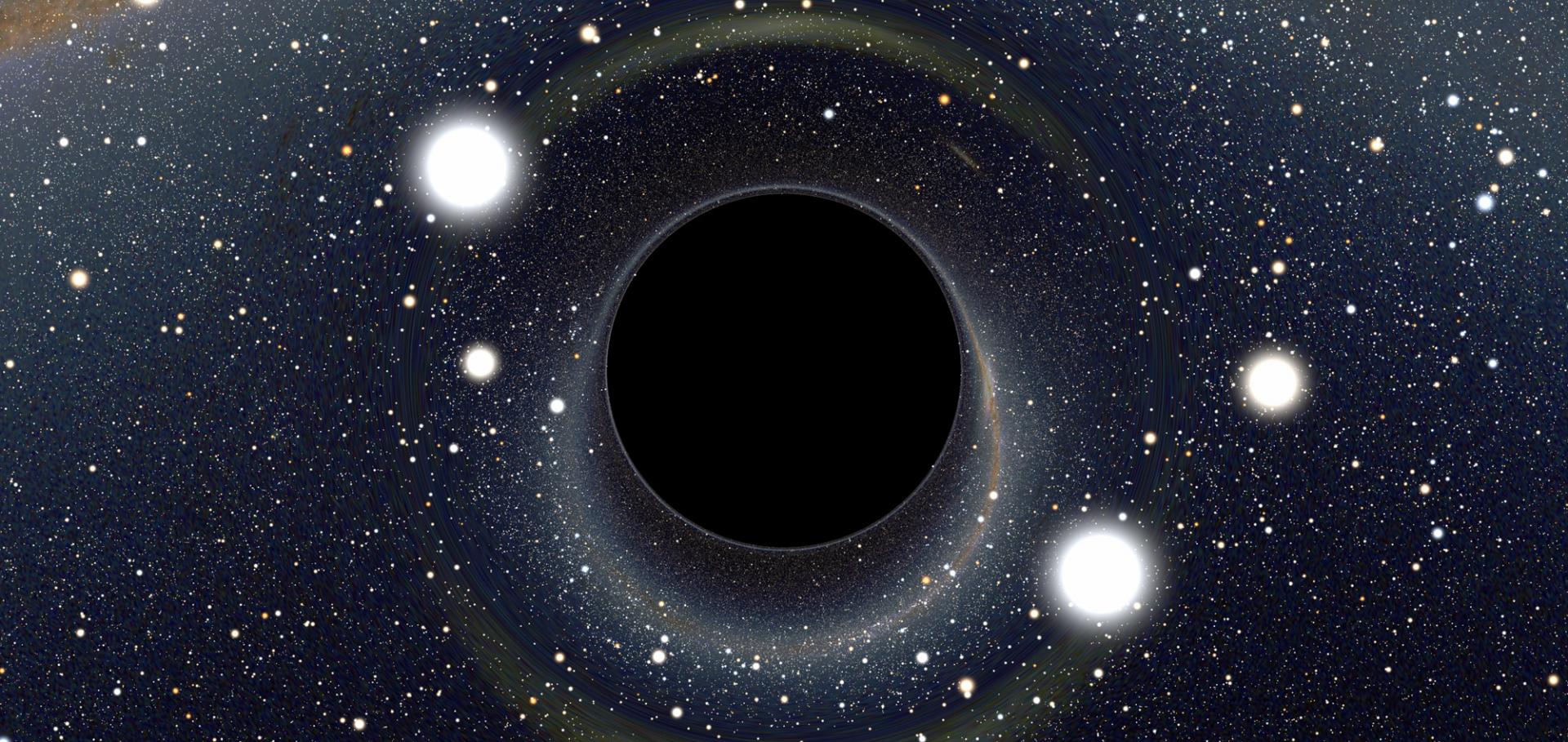
Black Hole

Lensing of space time around a black hole. At Oxford we study black holes observationally and theoretically on all size and time scales - it is some of our core work.

Credit: ALAIN RIAZUELO, IAP/UPMC/CNRS. CLICK HERE TO VIEW MORE IMAGES.

Dr Thomas Williams

Visitor

Research theme

  • Astronomy and astrophysics

Sub department

  • Astrophysics

Research groups

  • Galaxy formation and evolution
thomas.williams@physics.ox.ac.uk
Professional Website
  • About
  • Publications

Stellar associations powering H ii regions – I. Defining an evolutionary sequence

Monthly Notices of the Royal Astronomical Society Oxford University Press (OUP) 522:2 (2023) 2369-2383

Authors:

Fabian Scheuermann, Kathryn Kreckel, Ashley T Barnes, Francesco Belfiore, Brent Groves, Stephen Hannon, Janice C Lee, Rebecca Minsley, Erik Rosolowsky, Frank Bigiel, Guillermo A Blanc, Médéric Boquien, Daniel A Dale, Sinan Deger, Oleg V Egorov, Eric Emsellem, Simon CO Glover, Kathryn Grasha, Hamid Hassani, Sarah MR Jeffreson, Ralf S Klessen, JM Diederik Kruijssen, Kirsten L Larson, Adam K Leroy, Laura A Lopez, Hsi-An Pan, Patricia Sánchez-Blázquez, Francesco Santoro, Eva Schinnerer, David A Thilker, Bradley C Whitmore, Elizabeth J Watkins, Thomas G Williams
More details from the publisher
More details

Erratum: Molecular Gas Properties on Cloud Scales across the Local Star-forming Galaxy Population (ApJL (2020)901 (L8) DOI: 10.3847/2041-8213/abb3be)

Astrophysical Journal Letters 946:2 (2023)

Authors:

J Sun, AK Leroy, E Schinnerer, A Hughes, E Rosolowsky, M Querejeta, A Schruba, D Liu, T Saito, CN Herrera, C Faesi, A Usero, J Pety, JMD Kruijssen, EC Ostriker, F Bigiel, GA Blanc, AD Bolatto, M Boquien, M Chevance, DA Dale, S Deger, E Emsellem, SCO Glover, K Grasha, B Groves, J Henshaw, MJ Jimenez-Donaire, JJ Kim, RS Klessen, K Kreckel, JC Lee, S Meidt, K Sandstrom, AE Sardone, D Utomo, TG Williams

Abstract:

In the published article, the prefactor in Equation (3) was incorrectly written as 3.3 × 10⁴ as opposed to 3.3 × 10⁵. The correct equation should be. This was a typo and did not propagate into or affect any quantitative results of the paper.
More details from the publisher
More details

PHANGS-MUSE: Detection and Bayesian classification of ~40 000 ionised nebulae in nearby spiral galaxies

Astronomy and Astrophysics 672 (2023)

Authors:

E Congiu, GA Blanc, F Belfiore, F Santoro, F Scheuermann, K Kreckel, E Emsellem, B Groves, HA Pan, F Bigiel, DA Dale, SCO Glover, K Grasha, OV Egorov, A Leroy, E Schinnerer, EJ Watkins, TG Williams

Abstract:

In this work, we present a new catalogue of >40 000 ionised nebulae distributed across the 19 galaxies observed by the PHANGS-MUSE survey. The nebulae have been classified using a new model-comparison-based algorithm that exploits the odds ratio principle to assign a probabilistic classification to each nebula in the sample. The resulting catalogue is the largest catalogue containing complete spectral and spatial information for a variety of ionised nebulae available so far in the literature. We developed this new algorithm to address some of the main limitations of the traditional classification criteria, such as their binarity, the sharpness of the involved limits, and the limited amount of data they rely on for the classification. The analysis of the catalogue shows that the algorithm performs well when selecting H II regions. In fact, we can recover their luminosity function, and its properties are in line with what is available in the literature. We also identify a rather significant population of shock-ionised regions (mostly composed of supernova remnants), which is an order of magnitude larger than any other homogeneous catalogue of supernova remnants currently available in the literature. The number of supernova remnants we identify per galaxy is in line with results in our Galaxy and in other very nearby sources. However, limitations in the source detection algorithm result in an incomplete sample of planetary nebulae, even though their classification seems robust. Finally, we demonstrate how applying a correction for the contribution of the diffuse ionised gas to the nebulae's spectra is essential to obtain a robust classification of the objects and how a correct measurement of the extinction using diffuse-ionised-gas-corrected line fluxes prompts the use of a higher theoretical Hα/Hβ ratio (3.03) than what is commonly used when recovering the E(B -V) via the Balmer decrement technique in massive star-forming galaxies.
More details from the publisher
More details

The ALMOND survey: molecular cloud properties and gas density tracers across 25 nearby spiral galaxies with ALMA

Monthly Notices of the Royal Astronomical Society Oxford University Press (OUP) 521:3 (2023) 3348-3383

Authors:

Lukas Neumann, Molly J Gallagher, Frank Bigiel, Adam K Leroy, Ashley T Barnes, Antonio Usero, Jakob S den Brok, Francesco Belfiore, Ivana Bešlić, Yixian Cao, Mélanie Chevance, Daniel A Dale, Cosima Eibensteiner, Simon CO Glover, Kathryn Grasha, Jonathan D Henshaw, María J Jiménez-Donaire, Ralf S Klessen, JM Diederik Kruijssen, Daizhong Liu, Sharon Meidt, Jérôme Pety, Johannes Puschnig, Miguel Querejeta, Erik Rosolowsky, Eva Schinnerer, Andreas Schruba, Mattia C Sormani, Jiayi Sun, Yu-Hsuan Teng, Thomas G Williams
More details from the publisher
More details

Improving Star Cluster Age Estimates in PHANGS-HST Galaxies and the Impact on Cluster Demographics in NGC 628

Monthly Notices of the Royal Astronomical Society 520:1 (2023) 63-88

Authors:

BC Whitmore, R Chandar, JC Lee, M Floyd, S Deger, J Lilly, R Minsley, DA Thilker, M Boquien, DA Dale, K Henny, F Scheuermann, AT Barnes, F Bigiel, E Emsellem, S Glover, K Grasha, B Groves, S Hannon, RS Klessen, K Kreckel, JMD Kruijssen, KL Larson, A Leroy, A Mok, HA Pan, F Pinna, P Sánchez-Blázquez, E Schinnerer, MC Sormani, E Watkins, T Williams

Abstract:

A long-standing problem when deriving the physical properties of stellar populations is the degeneracy between age, reddening, and metallicity. When a single metallicity is used for all the star clusters in a galaxy, this degeneracy can result in ‘catastrophic’ errors for old globular clusters. Typically, approximately 10–20 per cent of all clusters detected in spiral galaxies can have ages that are incorrect by a factor of 10 or more. In this paper, we present a pilot study for four galaxies (NGC 628, NGC 1433, NGC 1365, and NGC 3351) from the PHANGS-HST survey. We describe methods to correct the age-dating for old globular clusters, by first identifying candidates using their colours, and then reassigning ages and reddening based on a lower metallicity solution. We find that young ‘Interlopers’ can be identified from their Hα flux. CO (2-1) intensity or the presence of dust can also be used, but our tests show that they do not work as well. Improvements in the success fraction are possible at the ≈15 per cent level (reducing the fraction of catastrophic age-estimates from between 13 and 21 per cent, to between 3 and 8 per cent). A large fraction of the incorrectly age-dated globular clusters are systematically given ages around 100 Myr, polluting the younger populations as well. Incorrectly age-dated globular clusters significantly impact the observed cluster age distribution in NGC 628, which affects the physical interpretation of cluster disruption in this galaxy. For NGC 1365, we also demonstrate how to fix a second major age-dating problem, where very dusty young clusters with E(B − V) > 1.5 mag are assigned old, globular-cluster like ages. Finally, we note the discovery of a dense population of ≈300 Myr clusters around the central region of NGC 1365 and discuss how this results naturally from the dynamics in a barred galaxy.
More details from the publisher
More details

Pagination

  • First page First
  • Previous page Prev
  • …
  • Page 15
  • Page 16
  • Page 17
  • Page 18
  • Current page 19
  • Page 20
  • Page 21
  • Page 22
  • Page 23
  • …
  • Next page Next
  • Last page Last

Footer Menu

  • Contact us
  • Giving to the Dept of Physics
  • Work with us
  • Media

User account menu

  • Log in

Follow us

FIND US

Clarendon Laboratory,

Parks Road,

Oxford,

OX1 3PU

CONTACT US

Tel: +44(0)1865272200

University of Oxfrod logo Department Of Physics text logo
IOP Juno Champion logo Athena Swan Silver Award logo

© University of Oxford - Department of Physics

Cookies | Privacy policy | Accessibility statement

Built by: Versantus

  • Home
  • Research
  • Study
  • Engage
  • Our people
  • News & Comment
  • Events
  • Our facilities & services
  • About us
  • Giving to Physics
  • Current students
  • Staff intranet