Home
Department Of Physics text logo
  • Research
    • Our research
    • Our research groups
    • Our research in action
    • Research funding support
    • Summer internships for undergraduates
  • Study
    • Undergraduates
    • Postgraduates
  • Engage
    • For alumni
    • For business
    • For schools
    • For the public
  • Support
Menu
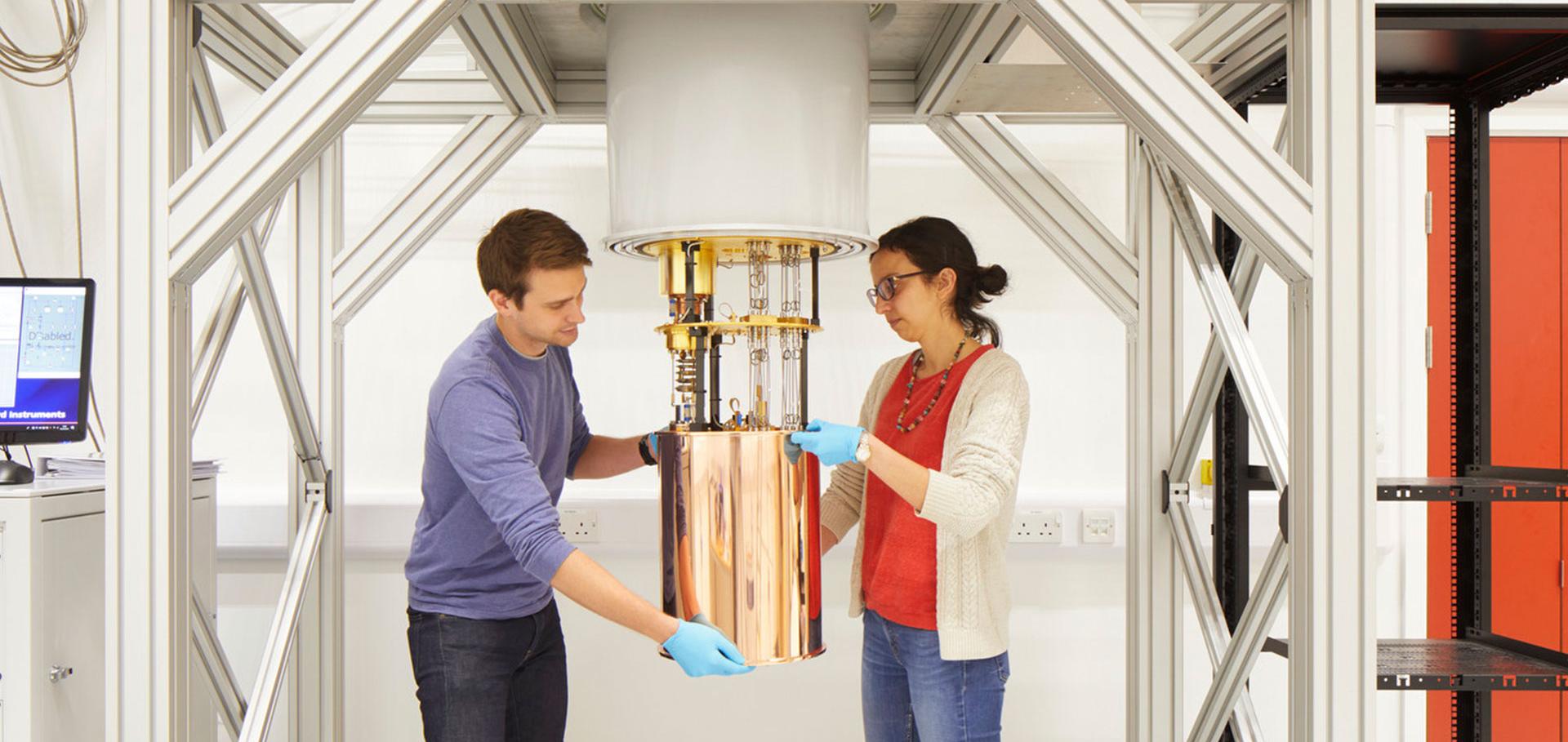
CMP
Credit: Jack Hobhouse

Professor Stephen Tucker

Professor of Biophysics

Research theme

  • Biological physics

Sub department

  • Condensed Matter Physics

Research groups

  • Ion channels
Stephen.Tucker@physics.ox.ac.uk
Telephone: 01865 (2)72382
Biochemistry Building, room 30-090 Kavli Institute, DCHB
  • About
  • Publications

State-independent intracellular access of quaternary ammonium blockers to the pore of TREK-1.

Channels (Austin) 6:6 (2012) 473-478

Authors:

Markus Rapedius, Matthias R Schmidt, Chetan Sharma, Phillip J Stansfeld, Mark SP Sansom, Thomas Baukrowitz, Stephen J Tucker

Abstract:

We previously reported that TREK-1 gating by internal pH and pressure occurs close to or within the selectivity filter. These conclusions were based upon kinetic measurements of high-affinity block by quaternary ammonium (QA) ions that appeared to exhibit state-independent accessibility to their binding site within the pore. Intriguingly, recent crystal structures of two related K2P potassium channels were also both found to be open at the helix bundle crossing. However, this did not exclude the possibility of gating at the bundle crossing and it was suggested that side-fenestrations within these structures might allow state-independent access of QA ions to their binding site. In this addendum to our original study we demonstrate that even hydrophobic QA ions do not access the TREK-1 pore via these fenestrations. Furthermore, by using a chemically reactive QA ion immobilized within the pore via covalent cysteine modification we provide additional evidence that the QA binding site remains accessible to the cytoplasm in the closed state. These results support models of K2P channel gating which occur close to or within the selectivity filter and do not involve closure at the helix bundle crossing.
More details from the publisher
More details

Structural and Mechanistic Insights into Gating of K2P Channels

BIOPHYSICAL JOURNAL 102:3 (2012) 121A-121A

Authors:

Markus Rapedius, Paula L Piechotta, Philip J Stansfeld, Murali K Bollepalli, Gunter Ehrlich, Isabelle Andres-Enguix, Hariolf Fritzenschaft, Niels Decher, Mark SP Sansom, Stephen J Tucker, Thomas Baukrowitz
More details from the publisher

Erratum: The pore structure and gating mechanism of K2P channels

The EMBO Journal Springer Nature 30:21 (2011) 4515-4515

Authors:

Paula L Piechotta, Markus Rapedius, Phillip J Stansfeld, Murali K Bollepalli, Gunter Ehrlich, Isabelle Andres‐Enguix, Hariolf Fritzenschaft, Niels Decher, Mark SP Sansom, Stephen J Tucker, Thomas Baukrowitz
More details from the publisher
More details

The pore structure and gating mechanism of K2P channels

The EMBO Journal Springer Science and Business Media LLC 30:21 (2011) 4515-4515

Authors:

Paula L Piechotta, Markus Rapedius, Phillip J Stansfeld, Murali K Bollepalli, Gunter Ehrlich, Isabelle Andres-Enguix, Hariolf Fritzenschaft, Niels Decher, Mark SP Sansom, Stephen J Tucker, Thomas Baukrowitz
More details from the publisher

The pore structure and gating mechanism of K2P channels

EMBO Journal 30:17 (2011) 3607-3619

Authors:

PL Piechotta, M Rapedius, PJ Stansfeld, MK Bollepalli, G Erhlich, I Andres-Enguix, H Fritzenschaft, N Decher, MSP Sansom, SJ Tucker, T Baukrowitz

Abstract:

Two-pore domain (K2P) potassium channels are important regulators of cellular electrical excitability. However, the structure of these channels and their gating mechanism, in particular the role of the bundle-crossing gate, are not well understood. Here, we report that quaternary ammonium (QA) ions bind with high-affinity deep within the pore of TREK-1 and have free access to their binding site before channel activation by intracellular pH or pressure. This demonstrates that, unlike most other K + channels, the bundle-crossing gate in this K2P channel is constitutively open. Furthermore, we used QA ions to probe the pore structure of TREK-1 by systematic scanning mutagenesis and comparison of these results with different possible structural models. This revealed that the TREK-1 pore most closely resembles the open-state structure of KvAP. We also found that mutations close to the selectivity filter and the nature of the permeant ion profoundly influence TREK-1 channel gating. These results demonstrate that the primary activation mechanisms in TREK-1 reside close to, or within the selectivity filter and do not involve gating at the cytoplasmic bundle crossing. © 2011 European Molecular Biology Organization | All Rights Reserved.
More details from the publisher

Pagination

  • First page First
  • Previous page Prev
  • …
  • Page 20
  • Page 21
  • Page 22
  • Page 23
  • Current page 24
  • Page 25
  • Page 26
  • Page 27
  • Page 28
  • …
  • Next page Next
  • Last page Last

Footer Menu

  • Contact us
  • Giving to the Dept of Physics
  • Work with us
  • Media

User account menu

  • Log in

Follow us

FIND US

Clarendon Laboratory,

Parks Road,

Oxford,

OX1 3PU

CONTACT US

Tel: +44(0)1865272200

University of Oxfrod logo Department Of Physics text logo
IOP Juno Champion logo Athena Swan Silver Award logo

© University of Oxford - Department of Physics

Cookies | Privacy policy | Accessibility statement

Built by: Versantus

  • Home
  • Research
  • Study
  • Engage
  • Our people
  • News & Comment
  • Events
  • Our facilities & services
  • About us
  • Giving to Physics
  • Current students
  • Staff intranet