Home
Department Of Physics text logo
  • Research
    • Our research
    • Our research groups
    • Our research in action
    • Research funding support
    • Summer internships for undergraduates
  • Study
    • Undergraduates
    • Postgraduates
  • Engage
    • For alumni
    • For business
    • For schools
    • For the public
  • Support
Menu
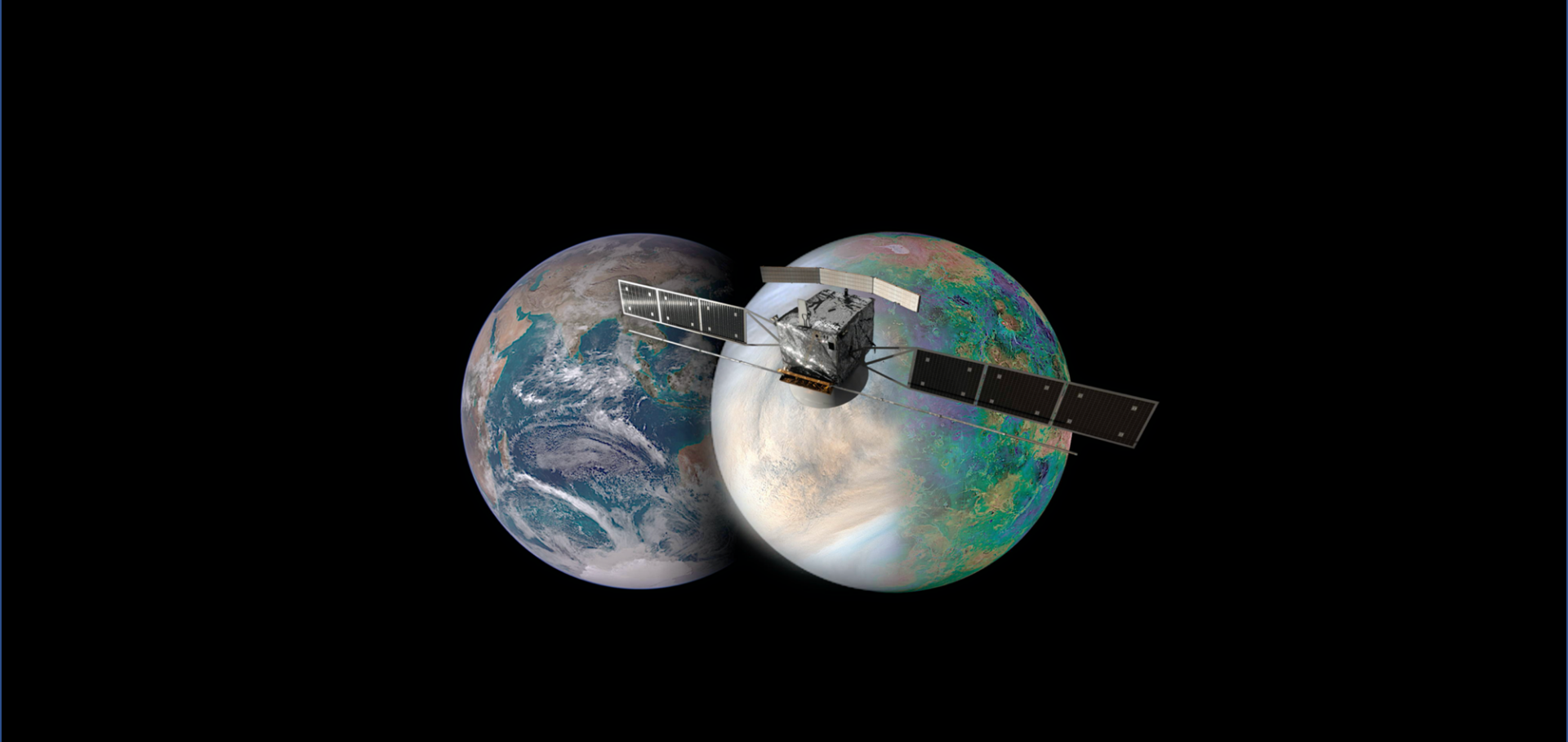
The EnVision Venus orbiter mission, proposed to ESA

Colin Wilson

Visitor

Research theme

  • Exoplanets and planetary physics

Sub department

  • Atmospheric, Oceanic and Planetary Physics

Research groups

  • Planetary atmosphere observation analysis
  • Planetary surfaces
  • Solar system
  • Space instrumentation
Colin.Wilson@physics.ox.ac.uk
Telephone: 01865 (2)72086
Atmospheric Physics Clarendon Laboratory, room 301
  • About
  • Publications

Mutual Radio Occultation Experiment Between Mars Orbiters: Algorithms Implementation and Validation

Radio Science 61:7 (2026)

Authors:

B Nava, Y Migoya-Orué, A Kashcheyev, B Sánchez-Cano, O Witasse, H Svedhem, J Parrott, SM Radicella, C Wilson, D Titov, CO Ao

Abstract:

Radio occultation (RO) is a very powerful technique as it offers great opportunities to study planetary atmospheres, providing information about their ionosphere and neutral atmosphere. Standard methods use a radio link at S and/or X bands between a spacecraft orbiting a planet and a ground station on the Earth. At Mars, such measurements have been conducted since the 60s. Three most recent data sets are from Mars Global Surveyor, Mars Express and the Mars Atmosphere and Volatile Evolution satellites. Furthermore, the possibility to obtain information about the Martian atmosphere with mutual RO events, using data from NASA Mars Odyssey and Mars Reconnaissance Orbiters, has been demonstrated by NASA scientists in 2015. Taking advantage of two European spacecraft in orbit around Mars, the ESA is currently performing an experiment that consists of mutual radio occultations between Mars Express (MEX) and ExoMars Trace Gas Orbiter (TGO). In preparation for MEX and TGO data inversion and analysis, a simulation-based strategy has been adopted and an algorithm, including the associated software, able to retrieve vertical electron density profiles from Doppler shift measurements has been implemented and validated. Subsequently, to test the mentioned algorithm with experimental data, the same three mutual RO events considered by NASA scientists have been re-processed. In this work, the research activities carried out through the simulation studies and the results obtained by the application of the mentioned inversion algorithm to experimental data are presented.
More details from the publisher

Densities of the Venusian thermosphere as revealed by Venus express torque data

Icarus Elsevier (2026) 117163

Authors:

M Persson, C Wilson, E Grotheer, I Mueller-Wodarg, B Piggin, S Bruinsma, P Rosenblatt, S Aizawa, H Svedhem

Abstract:

The density of the upper thermosphere of Venus was measured in situ using the attitude control system of Venus Express during twelve low-pericentre campaigns between 2008 and 2014. The spacecraft's counteraction to aerodynamic drag torque was used to derive total neutral densities for 91 orbits in the altitude range 160–200 km. The results agree with predictions from the widely used VTS3 model based on Pioneer Venus Orbiter data on the dayside, but shows a much more rapid decrease than expected in density beyond the terminator. Superimposed on the mean density, oscillations consistent with gravity wave activity are observed. The measured wavelengths vary from orbit to orbit, spanning 50–250 km along the spacecraft trajectory, and are present across all sampled latitudes (70°–90°N), solar zenith angles (70°–100°), local times (morning and evening), and altitudes (160–200 km). These results demonstrate that gravity waves are a persistent feature of the Venusian high-latitude thermosphere, providing a pathway for coupling between the lower atmosphere and the upper thermosphere.
More details from the publisher

Comparative analysis of Venera 11, 13, and 14 spectrophotometric data: implications for the near-surface particulate layer

(2026)

Authors:

Shubham Kulkarni, Patrick Irwin, Colin Wilson, Nikolay Ignatie

Abstract:

The extreme conditions in Venus’s lower atmosphere make robust calibration of in situ observations challenging. Consequently, measurements from past entry probes provided mixed evidence regarding the existence of a near-surface particulate layer (NSPL). Although the Venera 11 (1978) and Venera 13 and 14 (1982) landers performed in situ spectrophotometric observations during descent, the original datasets were later lost. However, a subset has been reconstructed by digitising graphical outputs produced during the missions’ initial data-processing phase [1]. Following careful analysis to identify and mitigate errors and other artefacts, the reconstructed dataset retains the reliable downward-looking spectra acquired by the three landers from ~62 km altitude to the surface.Previous retrievals from the reconstructed Venera 13 indicated an NSPL centred at ~3.5–5 km, with particulate optical properties consistent with a basaltic composition [2]. Following the methodology of [2], we use NEMESIS, a radiative transfer and retrieval code [3], to perform near-surface retrievals from the reconstructed Venera 11 and Venera 14 datasets. The results from Venera 11, 13, and 14 retrievals are compared with reported detections and non-detections from other instruments on earlier in situ missions, to explore potential formation pathways for the NSPL in light of the combined observational record.References:[1] Ignatiev, N. I., Moroz, V. I., Moshkin, B. E., Ekonomov, A. P., Gnedykh, V. I., Grigor’ev, A. V., and Khatuntsev, I. V. Cosmic Research 35(1), 1–14 (1997).[2] Kulkarni, S. V., Irwin, P. G. J., Wilson, C. F., & Ignatiev, N. I. Journal of Geophysical Research: Planets, 130, e2024JE008728, (2025).[3] Irwin, P. G., Teanby, N. A., de Kok, R., Fletcher, L. N., Howett, C. J., Tsang, C. C., Wilson, C. F., Calcutt, S. B., Nixon, C. A., and Parrish, P. D. Journal of Quantitative Spectroscopy and Radiative Transfer 109(6), 1136–1150 (2008). 
More details from the publisher

Martian ionospheric response during the may 2024 solar superstorm

Nature Communications Nature Research 17:1 (2026) 2017

Authors:

Jacob Parrott, Beatriz Sánchez-Cano, Håkan Svedhem, Olivier Witasse, Dikshita Meggi, Colin Wilson, Alejandro Cardesín-Moinelo, Ingo Müller-Wodarg

Abstract:

Solar energetic events can have considerable effects on planetary ionospheres. However, the erratic nature of these solar energetic events make observations difficult. Here we show a mutual radio occultation observation, which serendipitously occurred just 10 minutes after a large solar flare impacted Mars. This resulted in the largest lower ionospheric layer ever recorded, where it was 278% its typical size. We used in-situ soft x-ray irradiance measurements to show a threefold increase in flux. This infers a different relation of soft X-ray to this layer's density than previously thought, with variations depending on the amount of spectrum 'hardening' leading to the increase of ionisation from secondaries.
More details from the publisher
Details from ORA
More details

Mars Science and Exploration After Mars Express

Space Science Reviews 222:1 (2026)

Authors:

D Titov, P Martin, C Wilson, O Witasse, A Cardesín-Moinelo, H Svedhem, C Parfitt, D Paardekooper, JL Vago, E Sefton-Nash, G Kminek, A Chicarro

Abstract:

Mars Express (MEX) is one of the most productive planetary missions of the European Space Agency (ESA). This low cost (∼150 M€) mission has been instrumental in shaping the planetary community in Europe and has contributed to paving the way for many subsequent ESA endeavours. During more than two decades, Mars Express has collected a wealth of data in all disciplines of Martian science. This paper concludes the Topical Collection “Mars Express: Pioneering Two Decades of European Science and Exploration of Mars” prepared under the auspices of the International Space Science Institute. It briefly describes various aspects of the mission (leaving details to dedicated articles), summarizes the major science achievements, discusses the lessons learned from 20 years of Mars Express operations, and bridges with future Mars science and exploration.
More details from the publisher

Pagination

  • Current page 1
  • Page 2
  • Page 3
  • Page 4
  • Page 5
  • Page 6
  • Page 7
  • Page 8
  • Page 9
  • …
  • Next page Next
  • Last page Last

Footer Menu

  • Contact us
  • Giving to the Dept of Physics
  • Work with us
  • Media

User account menu

  • Log in

Follow us

FIND US

Clarendon Laboratory,

Parks Road,

Oxford,

OX1 3PU

CONTACT US

Tel: +44(0)1865272200

University of Oxfrod logo Department Of Physics text logo
IOP Juno Champion logo Athena Swan Silver Award logo

© University of Oxford - Department of Physics

Cookies | Privacy policy | Accessibility statement

Built by: Versantus

  • Home
  • Research
  • Study
  • Engage
  • Our people
  • News & Comment
  • Events
  • Our facilities & services
  • About us
  • Giving to Physics
  • Current students
  • Staff intranet