Home
Department Of Physics text logo
  • Research
    • Our research
    • Our research groups
    • Our research in action
    • Research funding support
    • Summer internships for undergraduates
  • Study
    • Undergraduates
    • Postgraduates
  • Engage
    • For alumni
    • For business
    • For schools
    • For the public
  • Support
Menu
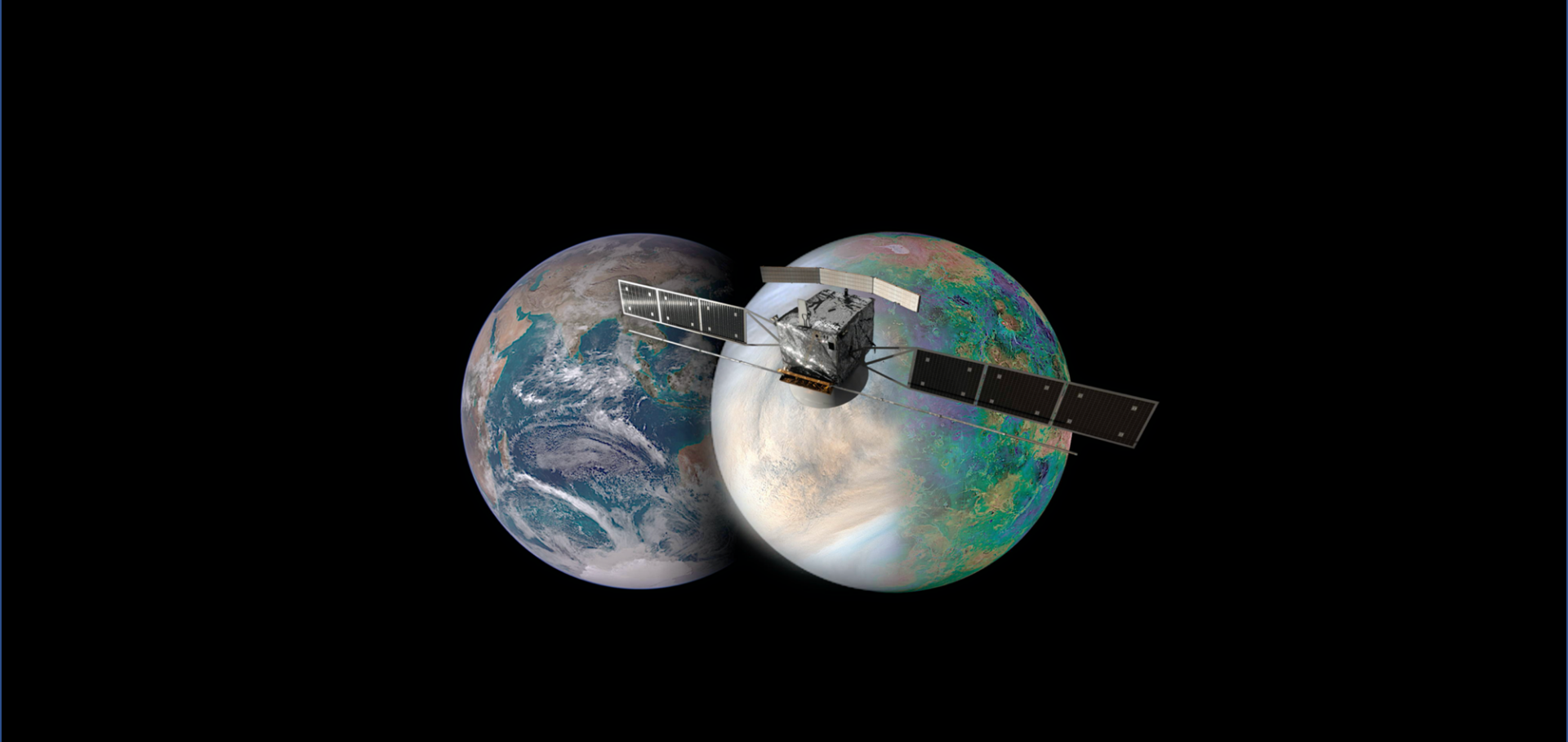
The EnVision Venus orbiter mission, proposed to ESA

Colin Wilson

Visitor

Research theme

  • Exoplanets and planetary physics

Sub department

  • Atmospheric, Oceanic and Planetary Physics

Research groups

  • Planetary atmosphere observation analysis
  • Planetary surfaces
  • Solar system
  • Space instrumentation
Colin.Wilson@physics.ox.ac.uk
Telephone: 01865 (2)72086
Atmospheric Physics Clarendon Laboratory, room 301
  • About
  • Publications

Spatial and Temporal Extent of Plasma Depletion Events in the Ionosphere of Mars

Journal of Geophysical Research Planets 130:10 (2025)

Authors:

P Basuvaraj, F Němec, CM Fowler, LH Regoli, Z Němeček, J Šafránková, O Witasse, CF Wilson

Abstract:

The Mars Atmosphere and Volatile Evolution (MAVEN) spacecraft has detected as many as 1,125 plasma depletion events (PDEs) in the Martian ionosphere from October 2014 to May 2021. PDEs, characterized by significantly reduced plasma density, elevated electron temperatures, and increased electrostatic fluctuations, remain poorly understood in terms of their formation and spatiotemporal characteristics. This study combines MAVEN data with concurrent observations from Mars Express (MEX) to investigate these aspects. The analysis of PDE recurrence rates across subsequent MAVEN orbits reveals 80 recurring events. These events are formed at the same locations within 18–30 hr. Additionally, we identified two conjugate PDEs observed by both MAVEN and MEX. These observations suggest that PDEs can extend spatially up to 750 km and last for a couple of hours. Our findings suggest that PDEs are large-scale and possibly recurring phenomena, potentially important for ion loss, and that understanding them is important for accurately characterizing the Martian ionosphere.
More details from the publisher
More details

Volcanic gas plumes’ effect on the spectrum of Venus

Icarus 438 (2025)

Authors:

JA Dias, P Machado, S Robert, J Erwin, M Lefèvre, CF Wilson, D Quirino, JC Duarte

Abstract:

Venus is home to thousands of volcanoes, with a wide range of volumes and sizes. Its surface is relatively young, with a temperature of approximately 735 K and an atmosphere of 92 bar. Past and possible ongoing volcanic outgassing is expected to provide a source to the sustenance of this massive atmosphere, dominated by CO2 and SO2. The lower atmosphere can be investigated in the near-infrared transparency windows on the nightside, such as the 2.3μm thermal emission window, which provides a chance of detection of species with volcanic origin, such as water vapor. The Planetary Spectrum Generator was used to simulate the nightside 2.3μm thermal emission window of Venus. We simulated the effect of a volcanic gas plume rising to a ceiling altitude, for species such as H2O, CO, OCS, HF and SO2. The sensitivity of the radiance spectrum at different wavelengths was explored as an attempt to qualitatively access detection for future measurements of both ground-based and space-instrumentation. We conclude from our qualitative analysis that for the H2O, CO and OCS plumes simulated there is potential to achieve a detection in the future, given a minimum required signal-to-noise ratio of 50. For SO2 and HF plumes, a higher signal-to-noise ratio would be needed.
More details from the publisher

Comparative study of the retrievals from Venera 11, 13, and 14 spectrophotometric data.

(2025)

Authors:

Shubham Kulkarni, Patrick Irwin, Colin Wilson, Nikolay Ignatiev

Abstract:

Over four decades have elapsed since the last in situ spectrophotometric observations of the Venusian atmosphere, specifically from the Venera 11 (1978) and Venera 13 and 14 (1982) missions. These missions recorded spectral data during their descent from approximately 62 km to the surface. Unfortunately, the original data were lost; however, a portion has been reconstructed by digitising the graphical outputs that were generated during the initial data processing phase of each of the three missions [1]. This reconstructed data is crucial as it remains the sole set of in situ spectrophotometric observations of Venus’s atmosphere and is likely to be so for the foreseeable future.While re-analysing the reconstructed Venera datasets, we identified several artefacts, errors and sources of noise, necessitating the implementation of some corrections and validation checks to isolate the most unaffected part of the reconstructed data. Then, using NEMESIS, a radiative transfer and retrieval tool [2], we conducted a series of retrievals to simultaneously fit the downward-going spectra at all altitudes. During this process, several parameters were retrieved. The first set of retrievals focused on the structure of the main cloud deck (MCD), which includes the cloud base altitude and abundance profiles of all four cloud modes. Previous corrections that were used to account for the effect of the unknown UV absorber did not result in good fits with the spectra shortward of 0.6 µm. Hence, we derived a new correction by retrieving the imaginary refractive index spectra of the Mode 1 particles.In the next phase, the MCD retrievals were used to update the model atmospheres for each of the missions. Then, the H2O volume mixing ratio profiles were retrieved and compared with the previous retrievals using the same data by [1] along with other remote sensing observations. The final retrieval phase concentrated on characterising particulate matter in the deep atmosphere. In [3], we outlined a methodology for retrieving a near-surface particulate layer using the reconstructed Venera 13 dataset. In this new work, we apply this methodology to encompass the Venera 11 and 14 datasets and compare the retrievals from the three datasets.This research thus provides a comprehensive overview of three distinct retrievals: 1) main cloud deck, 2) H2O, and 3) near-surface particulates using the reconstructed spectrophotometric data of Venera 11, 13, and 14.References: [1] Ignatiev, N. I., Moroz, V. I., Moshkin, B. E., Ekonomov, A. P., Gnedykh, V. I., Grigor’ev, A. V., and Khatuntsev, I. V. Cosmic Research 35(1), 1–14 (1997).[2] Irwin, P. G., Teanby, N. A., de Kok, R., Fletcher, L. N., Howett, C. J., Tsang, C. C., Wilson, C. F., Calcutt, S. B., Nixon, C. A., and Parrish, P. D. Journal of Quantitative Spectroscopy and Radiative Transfer 109(6), 1136–1150 (2008).[3] Kulkarni, S. V., Irwin, P. G. J., Wilson, C. F., & Ignatiev, N. I. Journal of Geophysical Research: Planets, 130, e2024JE008728, (2025).
More details from the publisher

Ionospheric Analysis With Martian Mutual Radio Occultation

Journal of Geophysical Research Planets 130:6 (2025)

Authors:

J Parrott, H Svedhem, B Sánchez-Cano, O Witasse, C Wilson, I Müller-Wodarg

Abstract:

This study presents a comprehensive analysis of the Martian ionosphere using Mutual Radio Occultation (RO) observations between Mars Express and Trace Gas Orbiter, featuring 71 full vertical profiles out of a total of 124 measurements. Among these, 35 measurements were taken from regions with Solar Zenith Angles lower than 40°. The profiles also represent the largest data set for the lower M1 ionospheric layer during the midday ever measured. This paper has also been submitted with a comprehensive data set, which marks the first time MEX-TGO RO data has been made available to the community. Additionally, neutral temperature profiles have been extracted from the measurements. We find unexpected features in the lower thermosphere temperature behavior which we conclude is likely due to the effects of local circulation and associated dynamical heating rather than solar-controlled.
More details from the publisher
More details

Mars Express: From the Launch Pad to a 20-Year Success Record at Mars

Space Science Reviews 221:4 (2025)

Authors:

P Martin, D Titov, C Wilson, A Cardesín-Moinelo, J Godfrey, JP Bibring, F González-Galindo, R Jaumann, A Määttänen, T Spohn, G Kminek, E Sefton-Nash

Abstract:

Mars Express was conceived and built by ESA as a successor of the unsuccessful Russian Mars-96 mission. It was planned from the onset as an orbiter and lander mission to be able to carry out long-term, remote sensing and in-situ scientific investigations of the planet Mars and its environment. As an exceptionally successful workhorse and a backbone of the Agency’s Science Programme in operation at Mars since end December 2003, Mars Express has proven to be a highly productive mission returning excellent scientific value for the investments made by ESA and its Member States. This paper is intended as the introduction to the series of papers that make this special collection. It briefly reviews the history of the mission, its science goals, its uniqueness while establishing its complementarity with other Mars missions in a collaborative context. It also lists the teams and operational aspects and innovations that made this mission a success. Then the paper highlights Mars Express’s scientific achievements throughout its 20-year lifetime. Mars Express results and discoveries continue playing an essential role in understanding the geological, atmospheric and climate evolution of the Red Planet and determining its potential past habitability. To conclude, a preview of the science and other topics covered by this collection is given. Mars Express, a pioneering mission for Europe at Mars, is currently continuing on its long scientific journey around the Red Planet.
More details from the publisher

Pagination

  • First page First
  • Previous page Prev
  • Page 1
  • Current page 2
  • Page 3
  • Page 4
  • Page 5
  • Page 6
  • Page 7
  • Page 8
  • Page 9
  • …
  • Next page Next
  • Last page Last

Footer Menu

  • Contact us
  • Giving to the Dept of Physics
  • Work with us
  • Media

User account menu

  • Log in

Follow us

FIND US

Clarendon Laboratory,

Parks Road,

Oxford,

OX1 3PU

CONTACT US

Tel: +44(0)1865272200

University of Oxfrod logo Department Of Physics text logo
IOP Juno Champion logo Athena Swan Silver Award logo

© University of Oxford - Department of Physics

Cookies | Privacy policy | Accessibility statement

Built by: Versantus

  • Home
  • Research
  • Study
  • Engage
  • Our people
  • News & Comment
  • Events
  • Our facilities & services
  • About us
  • Giving to Physics
  • Current students
  • Staff intranet