

Evidence of 100 TeV $\gamma$-ray emission from HESS J1702-420: A new PeVatron candidate
(2021)
Evidence of 100 TeVγ-ray emission from HESS J1702-420: A new PeVatron candidate
Astronomy & Astrophysics EDP Sciences 653 (2021) A152-A152
Abstract:
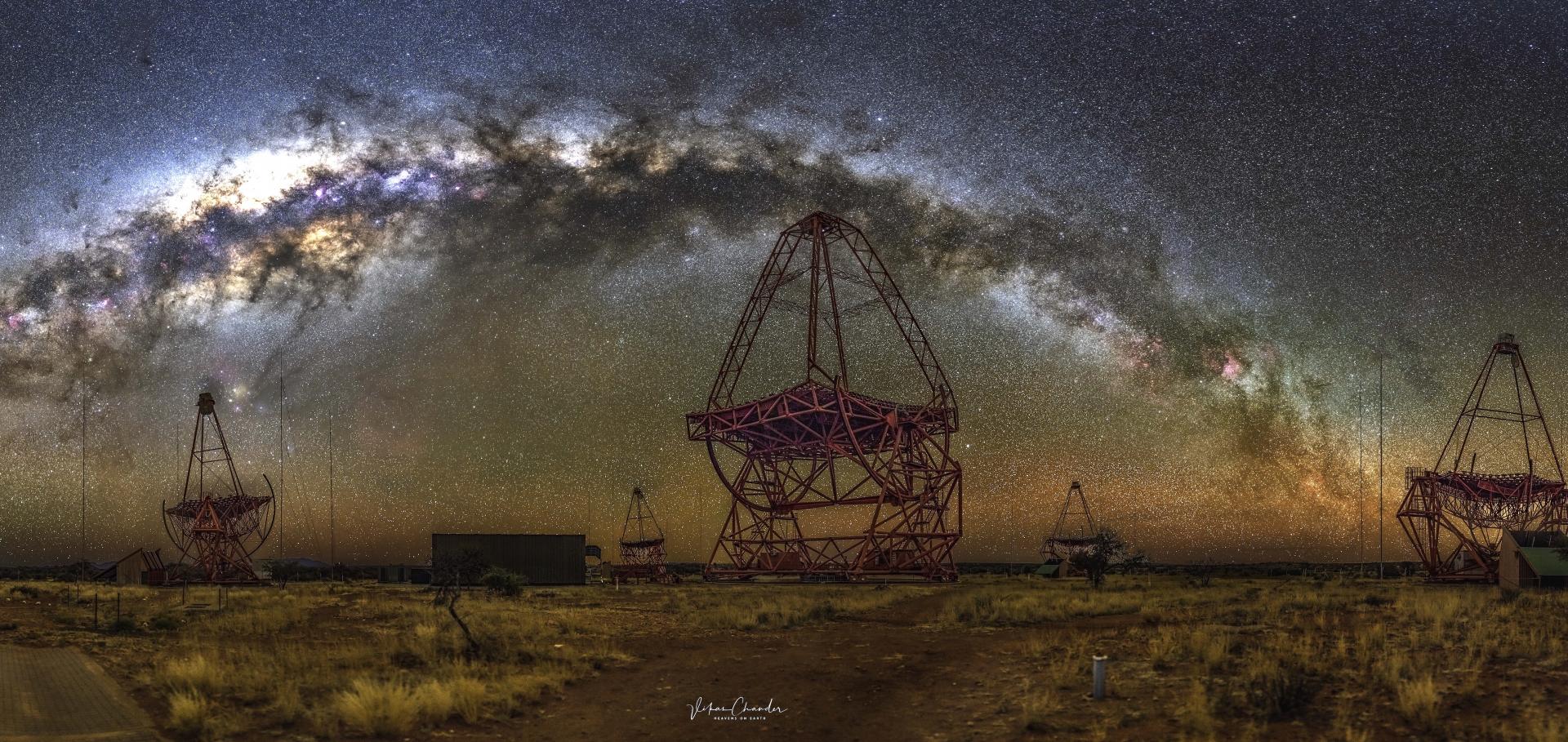
Der universitäre Beitrag zum Aufbau der Large Size Telescopes (LSTs) als Bestandteil des Cherenkov Telescope Arrays wird im Verbund mit den beteiligten Max-Planck Instituten und DESY-Zeuthen im Rahmen der internationalen Kooperation geleistet. Die Förderung im Rahmen von ErUM zum Thema Universum ermöglicht den universitären Partnern somit den Zugang zu Großgeräten der Astroteilchenphysik. In dem hier geförderten Teilprojekt an der Universität Hamburg wird der Aufbau und Optimierung von Komponenten und Methoden für die ersten vier LSTs am Standort La Palma gefördert. Mit den bereitgestellten Förderungsmitteln konnten nach der Unterbrechung der Förderung zwischen 2017 und 2020 die Arbeiten zur Kalibration der Instrumente wieder aufgenommen und intensiviert werden. Neben der Projektleitung hat Dr. Martin Tluczykont und Ali Baktash (Promotion) mit Unterstützung von studentischen Hilfskräften den wissenschaftlichen Teil der Arbeiten ausgeführt. Weiterhin haben Mitarbeiter und Mitarbeiterinnen der mechanischen Werkstatt die Anfertigung von Aktuatoren für die Spiegelhalterung übernommen. Der Schwerpunkt der Arbeiten lagen in der Entwicklung von einer Methode, um anhand von zwei CCD-Kameras die Ausrichtung der optischen Achsen des Cherenkovteleskops und die relative Position der Cherenkovkamera in Himmelskoordinaten zu kontrollieren. Ein weiterer wissenschaftlicher Beitrag ist das EASpy-Paket, mit dem sich Luftschauer auch bei sehr großen Zenitwinkeln verlässlich und schnell simulieren lassen. Im Gegensatz zu herkömmlichen Simulationsprogrammen können so Beobachtungen bei großen Zenitwinkeln mit verschiedenen Konfigurationen der Teleskope simuliert und die resultierende Empfindlichkeit absgechätzt und optimiert werden. Weiterhin ist es auch möglich, den Beitrag von Fluoreszenzlicht zu berechnen. Diese Option ist mit den bisherigen Werkzeugen nicht möglich. Weiterhin können die Leistungsfähigkeit von verschiedenen Teleskopen und Konfigurationen direkt miteinander verglichen werden (Gesichtsfeld, Granularität der Kamera, Größe des Spiegels, Anordnung von mehreren Teleskopen). Die Simulationen konnten direkt mit Beobachtungen mit dem sehr großen H.E.S.S.-Teleskop in Namibia verglichen werden. Die Optimierung der Kalibrationsmethoden für die Ausrichtung der Teleskope ist wegweisend für die Anordnung der CCD-Kameras der weiteren LSTs. Datei-Upload durch TIProbing Dark Matter and Fundamental Physics with the Cherenkov Telescope Array
(2021)
Probing extreme environments with the Cherenkov Telescope Array
(2021)