

Production of the excited charm mesons D 1 and D 2 * at HERA
Nuclear Physics B 866:3 (2013) 229-254
Abstract:
The production of the excited charm mesons D 1(2420) and D2*(2460) in ep collisions has been measured with the ZEUS detector at HERA using an integrated luminosity of 373pb -1. The masses of the neutral and charged states, the widths of the neutral states, and the helicity parameter of D 1(2420) 0 were determined and compared with other measurements and with theoretical expectations. The measured helicity parameter of the D10 allows for some mixing of S- and D-waves in its decay to D *±π Π. The result is also consistent with a pure D-wave decay. Ratios of branching fractions of the two decay modes of the D2*(2460)0 and D2*(2460)± states were measured and compared with previous measurements. The fractions of charm quarks hadronising into D 1 and D2* were measured and are consistent with those obtained in e +e - annihilations. © 2012 Elsevier B.V.Production of Z0 bosons in elastic and quasi-elastic ep collisions at HERA
Physics Letters, Section B: Nuclear, Elementary Particle and High-Energy Physics 718:3 (2013) 915-921
Abstract:
The production of Z0 bosons in the reaction ep→eZ0p(*), where p(*) stands for a proton or a low-mass nucleon resonance, has been studied in ep collisions at HERA using the ZEUS detector. The analysis is based on a data sample collected between 1996 and 2007, amounting to 496pb-1 of integrated luminosity. The Z0 was measured in the hadronic decay mode. The elasticity of the events was ensured by a cut on ηmax<3.0, where ηmax is the maximum pseudorapidity of energy deposits in the calorimeter defined with respect to the proton beam direction. A signal was observed at the Z0 mass. The cross section of the reaction ep→eZ0p(*) was measured to be σ(ep→eZ0p(*))=0.13±0.06(stat.)±0.01(syst.) pb, in agreement with the Standard Model prediction of 0.16 pb. This is the first measurement of Z0 production in ep collisions. © 2012 Elsevier B.V.Measurement of D*± production in deep inelastic scattering at HERA
Journal of High Energy Physics 2013:5 (2013)
Abstract:
The production of D *± mesons in deep inelastic ep scattering has been measured for exchanged photon virtualities 5 < Q 2 < 1000 GeV2, using an integrated luminosity of 363 pb-1 with the ZEUS detector at HERA. Differential cross sections have been measured and compared to next-to-leading-order QCD calculations. The cross-sections are used to extract the charm contribution to the proton structure functions, expressed in terms of the reduced charm cross section, σredc̄c. Theoretical calculations based on fits to inclusive HERA data are compared to the results. © 2013 SISSA.Combination and QCD analysis of charm production cross section measurements in deep-inelastic ep scattering at HERA
EUROPEAN PHYSICAL JOURNAL C 73:2 (2013) ARTN 2311
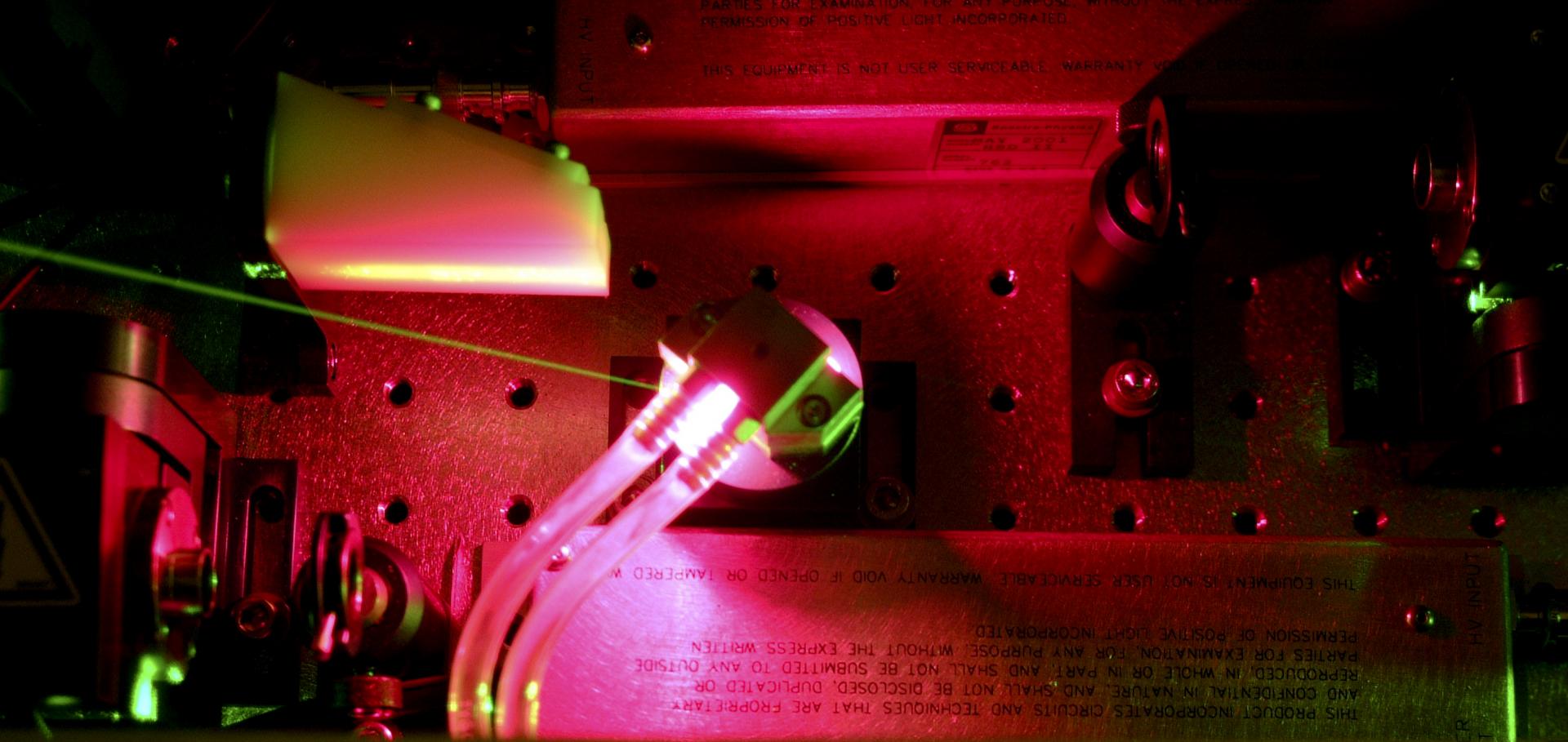
Laserwire: A high resolution non-invasive beam profiling diagnostic
Nuclear Instruments and Methods in Physics Research, Section A: Accelerators, Spectrometers, Detectors and Associated Equipment (2013)