

The Ejection of Transient Jets in Swift J1727.8−1613 Revealed by Time-dependent Visibility Modeling
The Astrophysical Journal Letters American Astronomical Society 984:2 (2025) L53
Authors:
Callan M Wood, James CA Miller-Jones, Arash Bahramian, Steven J Tingay, He-Xin Liu, Diego Altamirano, Rob Fender, Elmar Körding, Dipankar Maitra, Sera Markoff, David M Russell, Thomas D Russell, Craig L Sarazin, Gregory R Sivakoff, Roberto Soria, Alexandra J Tetarenko, Valeriu TudoseAbstract:
High angular resolution radio observations of relativistic jets are necessary to understand the causal connection between accretion and jet ejection in low-mass X-ray binaries. Images from these observations can be difficult to reconstruct due to the rapid intra-observational motion and variability of transient jets. We have developed a time-dependent visibility model fitting and self-calibration procedure and applied it to a single 4 hr VLBA observation of the low-mass X-ray binary Swift J1727.8−1613 during the bright flaring period of its 2023 outburst. This allowed us to detect and model a slightly resolved self-absorbed compact core, as well as three downstream transient jet knots. We were able to precisely measure the proper motion and flux density variability of these three jet knots, as well as (for the first time) their intra-observational expansion. Using simultaneous multifrequency data, we were also able to measure the spectral index of the furthest downstream jet knot, and the core, as well as the frequency-dependent core shift between 2.3 and 8.3 GHz. Using these measurements, we inferred the ejection dates of the three jet knots, including one to within ±40 minutes, which is one of the most precise ever measured. The ejection of the transient jet knots coincided with a bright X-ray flare and a drastic change in the X-ray spectral and timing properties as seen by HXMT, which is the clearest association ever seen between the launching of transient relativistic jets in an X-ray binary and a sudden change in the X-ray properties of the accretion inflow.Pseudo- C ℓ s for spin- s fields with component-wise weighting
The Open Journal of Astrophysics Maynooth University 8 (2025)
Abstract:
<jats:p>We present a generalisation of the standard pseudo- <mml:math xmlns:mml="http://www.w3.org/1998/Math/MathML" display="inline"><mml:msub><mml:mi>C</mml:mi><mml:mo>ℓ</mml:mo></mml:msub></mml:math> approach for power spectrum estimation to the case of spin- <mml:math xmlns:mml="http://www.w3.org/1998/Math/MathML" display="inline"><mml:mi>s</mml:mi></mml:math> fields weighted by a general positive-definite weight matrix that couples the different spin components of the field (e.g. <mml:math xmlns:mml="http://www.w3.org/1998/Math/MathML" display="inline"><mml:mi>Q</mml:mi></mml:math> and <mml:math xmlns:mml="http://www.w3.org/1998/Math/MathML" display="inline"><mml:mi>U</mml:mi></mml:math> maps in CMB polarisation analyses, or <mml:math xmlns:mml="http://www.w3.org/1998/Math/MathML" display="inline"><mml:msub><mml:mi>γ</mml:mi><mml:mn>1</mml:mn></mml:msub></mml:math> and <mml:math xmlns:mml="http://www.w3.org/1998/Math/MathML" display="inline"><mml:msub><mml:mi>γ</mml:mi><mml:mn>2</mml:mn></mml:msub></mml:math> shear components in weak lensing). Relevant use cases are, for example, data with significantly anisotropic noise properties, or situations in which different masks must be applied to the different field components. The weight matrix map is separated into a spin-0 part, which corresponds to the “mask” in the standard pseudo- <mml:math xmlns:mml="http://www.w3.org/1998/Math/MathML" display="inline"><mml:msub><mml:mi>C</mml:mi><mml:mo>ℓ</mml:mo></mml:msub></mml:math> approach, and a spin- <mml:math xmlns:mml="http://www.w3.org/1998/Math/MathML" display="inline"><mml:mrow><mml:mn>2</mml:mn><mml:mi>s</mml:mi></mml:mrow></mml:math> part sourced solely by the anisotropic elements of the matrix, leading to additional coupling between angular scales and <mml:math xmlns:mml="http://www.w3.org/1998/Math/MathML" display="inline"><mml:mrow><mml:mi>E</mml:mi><mml:mi>/</mml:mi><mml:mi>B</mml:mi></mml:mrow></mml:math> modes. The general expressions for the mode-coupling coefficients involving the power spectra of these anisotropic weight components are derived and validated. The generalised algorithm is as computationally efficient as the standard approach. We implement the method in the public code NaMaster.</jats:p>Observation of VVZ production at s = 13 TeV with the ATLAS detector
Physics Letters B (2025) 139527
Authors:
G Aad, E Aakvaag, B Abbott, S Abdelhameed, K Abeling, NJ Abicht, SH Abidi, M Aboelela, A Aboulhorma, H Abramowicz, Y Abulaiti, BS Acharya, A Ackermann, C Adam Bourdarios, L Adamczyk, SV Addepalli, MJ Addison, J Adelman, A Adiguzel, T Adye, AA Affolder, Y Afik, MN Agaras, A Aggarwal, C Agheorghiesei, F Ahmadov, S Ahuja, X Ai, G Aielli, A Aikot, M Ait Tamlihat, B Aitbenchikh, M Akbiyik, TPA Åkesson, AV Akimov, D Akiyama, NN Akolkar, S Aktas, GL Alberghi, J Albert, P Albicocco, GL Albouy, S Alderweireldt, ZL Alegria, M Aleksa, IN Aleksandrov, C Alexa, T Alexopoulos, F Alfonsi, M Algren, M Alhroob, B Ali, HMJ Ali, S Ali, SW Alibocus, M Aliev, G Alimonti, W Alkakhi, C Allaire, BMM Allbrooke, JS Allen, JF Allen, PP Allport, A Aloisio, F Alonso, C Alpigiani, ZMK Alsolami, A Alvarez Fernandez, M Alves Cardoso, MG Alviggi, M Aly, Y Amaral Coutinho, A Ambler, C Amelung, M Amerl, CG Ames, D Amidei, B Amini, K Amirie, A Amirkhanov, SP Amor Dos Santos, KR Amos, D Amperiadou, S An, V Ananiev, C Anastopoulos, T Andeen, JK Anders, AC Anderson, A Andreazza, S Angelidakis, A Angerami, AV Anisenkov, A Annovi, C Antel, E Antipov, M Antonelli, F Anulli, M Aoki, T Aoki, MA Aparo, L Aperio Bella, C Appelt, A Apyan, SJ Arbiol Val, C Arcangeletti, ATH Arce, J-F Arguin, S Argyropoulos, J-H Arling, O Arnaez, H Arnold, G Artoni, H Asada, K Asai, S Asai, NA Asbah, RA Ashby Pickering, AM Aslam, K Assamagan, R Astalos, KSV Astrand, S Atashi, RJ Atkin, H Atmani, PA Atmasiddha, K Augsten, AD Auriol, VA Austrup, G Avolio, K Axiotis, G Azuelos, D Babal, H Bachacou, K Bachas, A Bachiu, E Bachmann, MJ Backes, A Badea, TM Baer, P Bagnaia, M Bahmani, D Bahner, K Bai, JT Baines, L Baines, OK Baker, E Bakos, D Bakshi Gupta, LE Balabram Filho, V Balakrishnan, R Balasubramanian, EM Baldin, P Balek, E Ballabene, F Balli, LM Baltes, WK Balunas, J Balz, I Bamwidhi, E Banas, M Bandieramonte, A Bandyopadhyay, S Bansal, L Barak, M Barakat, EL Barberio, D Barberis, M Barbero, MZ Barel, T Barillari, M-S Barisits, T Barklow, P Baron, DA Baron Moreno, A Baroncelli, AJ Barr, JD Barr, F Barreiro, J Barreiro Guimarães da Costa, MG Barros Teixeira, S Barsov, F Bartels, R Bartoldus, AE Barton, P Bartos, A Basan, M Baselga, S Bashiri, A Bassalat, MJ Basso, S Bataju, R Bate, RL Bates, S Batlamous, M Battaglia, D Battulga, M Bauce, M Bauer, P Bauer, LT Bayer, LT Bazzano Hurrell, JB Beacham, T Beau, JY Beaucamp, PH Beauchemin, P Bechtle, HP Beck, K Becker, AJ Beddall, VA Bednyakov, CP Bee, LJ Beemster, M Begalli, M Begel, JK Behr, JF Beirer, F Beisiegel, M Belfkir, G Bella, L Bellagamba, A Bellerive, P Bellos, K Beloborodov, D Benchekroun, F Bendebba, Y Benhammou, KC Benkendorfer, L Beresford, M Beretta, E Bergeaas Kuutmann, N Berger, B Bergmann, J Beringer, G Bernardi, C Bernius, FU Bernlochner, F Bernon, A Berrocal Guardia, T Berry, P Berta, A Berthold, R Bertrand, S Bethke, A Betti, AJ Bevan, L Bezio, NK Bhalla, S Bharthuar, S Bhatta, DS Bhattacharya, P Bhattarai, ZM Bhatti, KD Bhide, VS Bhopatkar, RM Bianchi, G Bianco, O Biebel, M Biglietti, CS Billingsley, Y Bimgdi, M Bindi, A Bingham, A Bingul, C Bini, GA Bird, M Birman, M Biros, S Biryukov, T Bisanz, E Bisceglie, JP Biswal, D Biswas, I Bloch, A Blue, U Blumenschein, J Blumenthal, VS Bobrovnikov, M Boehler, B Boehm, D Bogavac, AG Bogdanchikov, LS Boggia, V Boisvert, P Bokan, T Bold, M Bomben, M Bona, M Boonekamp, AG Borbély, IS Bordulev, G Borissov, D Bortoletto, D Boscherini, M Bosman, K Bouaouda, N Bouchhar, L Boudet, J Boudreau, EV Bouhova-Thacker, D Boumediene, R Bouquet, A Boveia, J Boyd, D Boye, IR Boyko, L Bozianu, J Bracinik, N Brahimi, G Brandt, O Brandt, B Brau, JE Brau, R Brener, L Brenner, R Brenner, S Bressler, G Brianti, D Britton, D Britzger, I Brock, R Brock, G Brooijmans, AJ Brooks, EM Brooks, E Brost, LM Brown, LE Bruce, TL Bruckler, PA Bruckman de Renstrom, B Brüers, A Bruni, G Bruni, D Brunner, M Bruschi, N Bruscino, T Buanes, Q Buat, D Buchin, AG Buckley, O Bulekov, BA Bullard, S Burdin, CD Burgard, AM Burger, B Burghgrave, O Burlayenko, J Burleson, JTP Burr, JC Burzynski, EL Busch, V Büscher, PJ Bussey, JM Butler, CM Buttar, JM Butterworth, W Buttinger, CJ Buxo Vazquez, AR Buzykaev, S Cabrera Urbán, L Cadamuro, D Caforio, H Cai, Y Cai, Y Cai, VMM Cairo, O Cakir, N Calace, P Calafiura, G Calderini, P Calfayan, G Callea, LP Caloba, D Calvet, S Calvet, R Camacho Toro, S Camarda, D Camarero Munoz, P Camarri, MT Camerlingo, D Cameron, C Camincher, M Campanelli, A Camplani, V Canale, AC Canbay, E Canonero, J Cantero, Y Cao, F Capocasa, M Capua, A Carbone, R Cardarelli, JCJ Cardenas, MP Cardiff, G Carducci, T Carli, G Carlino, JI Carlotto, BT Carlson, EM Carlson, J Carmignani, L Carminati, A Carnelli, M Carnesale, S Caron, E Carquin, IB Carr, S Carrá, G Carratta, AM Carroll, MP Casado, M Caspar, FL Castillo, L Castillo Garcia, V Castillo Gimenez, NF Castro, A Catinaccio, JR Catmore, T Cavaliere, V Cavaliere, LJ Caviedes Betancourt, YC Cekmecelioglu, E Celebi, S Cella, V Cepaitis, K Cerny, AS Cerqueira, A Cerri, L Cerrito, F Cerutti, B Cervato, A Cervelli, G Cesarini, SA Cetin, PM Chabrillat, J Chan, WY Chan, JD Chapman, E Chapon, B Chargeishvili, DG Charlton, C Chauhan, Y Che, S Chekanov, SV Chekulaev, GA Chelkov, B Chen, B Chen, H Chen, H Chen, J Chen, J Chen, M Chen, S Chen, SJ Chen, X Chen, X Chen, CL Cheng, HC Cheng, S Cheong, A Cheplakov, E Cheremushkina, E Cherepanova, R Cherkaoui El Moursli, E Cheu, K Cheung, L Chevalier, V Chiarella, G Chiarelli, N Chiedde, G Chiodini, AS Chisholm, A Chitan, M Chitishvili, MV Chizhov, K Choi, Y Chou, EYS Chow, KL Chu, MC Chu, X Chu, Z Chubinidze, J Chudoba, JJ Chwastowski, D Cieri, KM Ciesla, V Cindro, A Ciocio, F Cirotto, ZH Citron, M Citterio, DA Ciubotaru, A Clark, PJ Clark, N Clarke Hall, C Clarry, SE Clawson, C Clement, Y Coadou, M Cobal, A Coccaro, RF Coelho Barrue, R Coelho Lopes De, S Coelli, LS Colangeli, B Cole, P Collado Soto, J Collot, P Conde Muiño, MP Connell, SH Connell, EI Conroy, F Conventi, HG Cooke, AM Cooper-Sarkar, FA Corchia, A Cordeiro Oudot Choi, LD Corpe, M Corradi, F Corriveau, A Cortes-Gonzalez, MJ Costa, F Costanza, D Costanzo, BM Cote, J Couthures, G Cowan, K Cranmer, L Cremer, D Cremonini, S Crépé-Renaudin, F Crescioli, M Cristinziani, M Cristoforetti, V Croft, JE Crosby, G Crosetti, A Cueto, H Cui, Z Cui, WR Cunningham, F Curcio, JR Curran, P Czodrowski, MJ Da Cunha Sargedas De Sousa, JV Da Fonseca Pinto, C Da Via, W Dabrowski, T Dado, S Dahbi, T Dai, D Dal Santo, C Dallapiccola, M Dam, G D'amen, V D'Amico, J Damp, JR Dandoy, D Dannheim, M Danninger, V Dao, G Darbo, SJ Das, F Dattola, S D'Auria, A D'Avanzo, T Davidek, I Dawson, HA Day-hall, K De, C De Almeida Rossi, R De Asmundis, N De Biase, S De Castro, N De Groot, P de Jong, H De la Torre, A De Maria, A De Salvo, U De Sanctis, F De Santis, A De Santo, JB De Vivie De Regie, J Debevc, DV Dedovich, J Degens, AM Deiana, J Del Peso, L Delagrange, F Deliot, CM Delitzsch, M Della Pietra, D Della Volpe, A Dell'Acqua, L Dell'Asta, M Delmastro, CC Delogu, PA Delsart, S Demers, M Demichev, SP Denisov, H Denizli, L D'Eramo, D Derendarz, F Derue, P Dervan, K Desch, C Deutsch, FA Di Bello, A Di Ciaccio, L Di Ciaccio, A Di Domenico, C Di Donato, A Di Girolamo, G Di Gregorio, A Di Luca, B Di Micco, R Di Nardo, KF Di Petrillo, M Diamantopoulou, FA Dias, T Dias Do Vale, MA Diaz, AR Didenko, M Didenko, EB Diehl, S Díez Cornell, C Diez Pardos, C Dimitriadi, A Dimitrievska, A Dimri, J Dingfelder, T Dingley, I-M Dinu, SJ Dittmeier, F Dittus, M Divisek, B Dixit, F Djama, T Djobava, C Doglioni, A Dohnalova, Z Dolezal, K Domijan, KM Dona, M Donadelli, B Dong, J Donini, A D'Onofrio, M D'Onofrio, J Dopke, A Doria, N Dos Santos Fernandes, P Dougan, MT Dova, AT Doyle, MA Draguet, MP Drescher, E Dreyer, I Drivas-koulouris, M Drnevich, M Drozdova, D Du, TA du Pree, F Dubinin, M Dubovsky, E Duchovni, G Duckeck, PK Duckett, OA Ducu, D Duda, A Dudarev, ER Duden, M D'uffizi, L Duflot, M Dührssen, I Duminica, AE Dumitriu, M Dunford, S Dungs, K Dunne, A Duperrin, H Duran Yildiz, M Düren, A Durglishvili, D Duvnjak, BL Dwyer, GI Dyckes, M Dyndal, BS Dziedzic, ZO Earnshaw, GH Eberwein, B Eckerova, S Eggebrecht, E Egidio Purcino De Souza, G Eigen, K Einsweiler, T Ekelof, PA Ekman, S El Farkh, Y El Ghazali, H El Jarrari, A El Moussaouy, V Ellajosyula, M Ellert, F Ellinghaus, N Ellis, J Elmsheuser, M Elsawy, M Elsing, D Emeliyanov, Y Enari, I Ene, S Epari, D Ernani Martins Neto, M Errenst, M Escalier, C Escobar, E Etzion, G Evans, H Evans, LS Evans, A Ezhilov, S Ezzarqtouni, F Fabbri, L Fabbri, G Facini, V Fadeyev, RM Fakhrutdinov, D Fakoudis, S Falciano, LF Falda Ulhoa Coelho, F Fallavollita, G Falsetti, J Faltova, C Fan, KY Fan, Y Fan, Y Fang, M Fanti, M Faraj, Z Farazpay, A Farbin, A Farilla, T Farooque, JN Farr, SM Farrington, F Fassi, D Fassouliotis, L Fayard, P Federic, P Federicova, OL Fedin, M Feickert, L Feligioni, DE Fellers, C Feng, Z Feng, MJ Fenton, L Ferencz, P Fernandez Martinez, MJV Fernoux, J Ferrando, A Ferrari, P Ferrari, R Ferrari, D Ferrere, C Ferretti, MP Fewell, D Fiacco, F Fiedler, P Fiedler, S Filimonov, A Filipčič, EK Filmer, F Filthaut, MCN Fiolhais, L Fiorini, WC Fisher, T Fitschen, PM Fitzhugh, I Fleck, P Fleischmann, T Flick, M Flores, LR Flores Castillo, L Flores Sanz De Acedo, FM Follega, N Fomin, JH Foo, A Formica, AC Forti, E Fortin, AW Fortman, L Fountas, D Fournier, H Fox, P Francavilla, S Francescato, S Franchellucci, M Franchini, S Franchino, D Francis, L Franco, V Franco Lima, L Franconi, M Franklin, G Frattari, YY Frid, J Friend, N Fritzsche, A Froch, D Froidevaux, JA Frost, Y Fu, S Fuenzalida Garrido, M Fujimoto, KY Fung, E Furtado De Simas Filho, M Furukawa, J Fuster, A Gaa, A Gabrielli, A Gabrielli, P Gadow, G Gagliardi, LG Gagnon, S Gaid, S Galantzan, J Gallagher, EJ Gallas, AL Gallen, BJ Gallop, KK Gan, S Ganguly, Y Gao, A Garabaglu, FM Garay Walls, B Garcia, C García, A Garcia Alonso, AG Garcia Caffaro, JE García Navarro, M Garcia-Sciveres, GL Gardner, RW Gardner, N Garelli, RB Garg, JM Gargan, CA Garner, CM Garvey, VK Gassmann, G Gaudio, V Gautam, P Gauzzi, J Gavranovic, IL Gavrilenko, A Gavrilyuk, C Gay, G Gaycken, EN Gazis, A Gekow, C Gemme, MH Genest, AD Gentry, S George, WF George, T Geralis, AA Gerwin, P Gessinger-Befurt, ME Geyik, M Ghani, K Ghorbanian, A Ghosal, A Ghosh, A Ghosh, B Giacobbe, S Giagu, T Giani, A Giannini, SM Gibson, M Gignac, DT Gil, AK Gilbert, BJ Gilbert, D Gillberg, G Gilles, L Ginabat, DM Gingrich, MP Giordani, PF Giraud, G Giugliarelli, D Giugni, F Giuli, I Gkialas, LK Gladilin, C Glasman, G Glemža, M Glisic, I Gnesi, Y Go, M Goblirsch-Kolb, B Gocke, D Godin, B Gokturk, S Goldfarb, T Golling, MGD Gololo, D Golubkov, JP Gombas, A Gomes, G Gomes Da Silva, AJ Gomez Delegido, R Gonçalo, L Gonella, A Gongadze, F Gonnella, JL Gonski, RY González Andana, S González de la Hoz, R Gonzalez Lopez, C Gonzalez Renteria, MV Gonzalez Rodrigues, R Gonzalez Suarez, S Gonzalez-Sevilla, L Goossens, B Gorini, E Gorini, A Gorišek, TC Gosart, AT Goshaw, MI Gostkin, S Goswami, CA Gottardo, SA Gotz, M Gouighri, AG Goussiou, N Govender, RP Grabarczyk, I Grabowska-Bold, K Graham, E Gramstad, S Grancagnolo, CM Grant, PM Gravila, FG Gravili, HM Gray, M Greco, MJ Green, C Grefe, AS Grefsrud, IM Gregor, KT Greif, P Grenier, SG Grewe, AA Grillo, K Grimm, S Grinstein, J-F Grivaz, E Gross, J Grosse-Knetter, L Guan, G Guerrieri, R Gugel, JAM Guhit, A Guida, E Guilloton, S Guindon, F Guo, J Guo, L Guo, L Guo, Y Guo, A Gupta, R Gupta, S Gurbuz, SS Gurdasani, G Gustavino, P Gutierrez, LF Gutierrez Zagazeta, M Gutsche, C Gutschow, C Gwenlan, CB Gwilliam, ES Haaland, A Haas, M Habedank, C Haber, HK Hadavand, A Haddad, A Hadef, AI Hagan, JJ Hahn, EH Haines, M Haleem, J Haley, GD Hallewell, L Halser, K Hamano, M Hamer, SED Hammoud, EJ Hampshire, J Han, L Han, L Han, S Han, K Hanagaki, M Hance, DA Hangal, H Hanif, MD Hank, JB Hansen, PH Hansen, D Harada, T Harenberg, S Harkusha, ML Harris, YT Harris, J Harrison, NM Harrison, PF Harrison, NM Hartman, NM Hartmann, RZ Hasan, Y Hasegawa, F Haslbeck, S Hassan, R Hauser, CM Hawkes, RJ Hawkings, Y Hayashi, D Hayden, C Hayes, RL Hayes, CP Hays, JM Hays, HS Hayward, F He, M He, Y He, Y He, NB Heatley, V Hedberg, AL Heggelund, C Heidegger, KK Heidegger, J Heilman, S Heim, T Heim, JG Heinlein, JJ Heinrich, L Heinrich, J Hejbal, A Held, S Hellesund, CM Helling, S Hellman, L Henkelmann, AM Henriques Correia, H Herde, Y Hernández Jiménez, LM Herrmann, T Herrmann, G Herten, R Hertenberger, L Hervas, ME Hesping, NP Hessey, J Hessler, M Hidaoui, N Hidic, E Hill, SJ Hillier, JR Hinds, F Hinterkeuser, M Hirose, S Hirose, D Hirschbuehl, TG Hitchings, B Hiti, J Hobbs, R Hobincu, N Hod, MC Hodgkinson, BH Hodkinson, A Hoecker, DD Hofer, J Hofer, M Holzbock, LBAH Hommels, BP Honan, JJ Hong, J Hong, TM Hong, BH Hooberman, WH Hopkins, MC Hoppesch, Y Horii, ME Horstmann, S Hou, MR Housenga, AS Howard, J Howarth, J Hoya, M Hrabovsky, T Hryn'ova, PJ Hsu, S-C Hsu, T Hsu, M Hu, Q Hu, S Huang, X Huang, Y Huang, Y Huang, Y Huang, Y Huang, Z Huang, Z Hubacek, M Huebner, F Huegging, TB Huffman, M Hufnagel Maranha De Faria, CA Hugli, M Huhtinen, SK Huiberts, R Hulsken, CE Hultquist, N Huseynov, J Huston, J Huth, R Hyneman, G Iacobucci, G Iakovidis, L Iconomidou-Fayard, JP Iddon, P Iengo, R Iguchi, Y Iiyama, T Iizawa, Y Ikegami, D Iliadis, N Ilic, H Imam, G Inacio Goncalves, SA Infante Cabanas, T Ingebretsen Carlson, JM Inglis, G Introzzi, M Iodice, V Ippolito, RK Irwin, M Ishino, W Islam, C Issever, S Istin, H Ito, R Iuppa, A Ivina, V Izzo, P Jacka, P Jackson, P Jain, K Jakobs, T Jakoubek, J Jamieson, W Jang, S Jankovych, M Javurkova, P Jawahar, L Jeanty, J Jejelava, P Jenni, CE Jessiman, C Jia, H Jia, J Jia, X Jia, Z Jia, C Jiang, Q Jiang, S Jiggins, J Jimenez Pena, S Jin, A Jinaru, O Jinnouchi, P Johansson, KA Johns, JW Johnson, FA Jolly, DM Jones, E Jones, KS Jones, P Jones, RWL Jones, TJ Jones, HL Joos, R Joshi, J Jovicevic, X Ju, JJ Junggeburth, T Junkermann, A Juste Rozas, MK Juzek, S Kabana, A Kaczmarska, M Kado, H Kagan, M Kagan, A Kahn, C Kahra, T Kaji, E Kajomovitz, N Kakati, I Kalaitzidou, NJ Kang, D Kar, K Karava, E Karentzos, O Karkout, SN Karpov, ZM Karpova, V Kartvelishvili, AN Karyukhin, E Kasimi, J Katzy, S Kaur, K Kawade, MP Kawale, C Kawamoto, T Kawamoto, EF Kay, FI Kaya, S Kazakos, VF Kazanin, Y Ke, JM Keaveney, R Keeler, GV Kehris, JS Keller, JJ Kempster, O Kepka, J Kerr, BP Kerridge, BP Kerševan, L Keszeghova, RA Khan, A Khanov, AG Kharlamov, T Kharlamova, EE Khoda, M Kholodenko, TJ Khoo, G Khoriauli, J Khubua, YAR Khwaira, B Kibirige, D Kim, DW Kim, YK Kim, N Kimura, MK Kingston, A Kirchhoff, C Kirfel, F Kirfel, J Kirk, AE Kiryunin, S Kita, C Kitsaki, O Kivernyk, M Klassen, C Klein, L Klein, MH Klein, SB Klein, U Klein, A Klimentov, T Klioutchnikova, P Kluit, S Kluth, E Kneringer, TM Knight, A Knue, M Kobel, D Kobylianskii, SF Koch, M Kocian, P Kodyš, DM Koeck, PT Koenig, T Koffas, O Kolay, I Koletsou, T Komarek, K Köneke, AXY Kong, T Kono, N Konstantinidis, P Kontaxakis, B Konya, R Kopeliansky, S Koperny, K Korcyl, K Kordas, A Korn, S Korn, I Korolkov, N Korotkova, B Kortman, O Kortner, S Kortner, WH Kostecka, VV Kostyukhin, A Kotsokechagia, A Kotwal, A Koulouris, A Kourkoumeli-Charalampidi, C Kourkoumelis, E Kourlitis, O Kovanda, R Kowalewski, W Kozanecki, AS Kozhin, VA Kramarenko, G Kramberger, P Kramer, MW Krasny, A Krasznahorkay, AC Kraus, JW Kraus, JA Kremer, NB Krengel, T Kresse, L Kretschmann, J Kretzschmar, K Kreul, P Krieger, K Krizka, K Kroeninger, H Kroha, J Kroll, J Kroll, KS Krowpman, U Kruchonak, H Krüger, N Krumnack, MC Kruse, O Kuchinskaia, S Kuday, S Kuehn, R Kuesters, T Kuhl, V Kukhtin, Y Kulchitsky, S Kuleshov, M Kumar, N Kumari, P Kumari, A Kupco, T Kupfer, A Kupich, O Kuprash, H Kurashige, LL Kurchaninov, O Kurdysh, YA Kurochkin, A Kurova, M Kuze, AK Kvam, J Kvita, NG Kyriacou, LAO Laatu, C Lacasta, F Lacava, H Lacker, D Lacour, NN Lad, E Ladygin, A Lafarge, B Laforge, T Lagouri, FZ Lahbabi, S Lai, JE Lambert, S Lammers, W Lampl, C Lampoudis, G Lamprinoudis, AN Lancaster, E Lançon, U Landgraf, MPJ Landon, VS Lang, OKB Langrekken, AJ Lankford, F Lanni, K Lantzsch, A Lanza, M Lanzac Berrocal, JF Laporte, T Lari, D Larsen, F Lasagni Manghi, M Lassnig, V Latonova, SD Lawlor, Z Lawrence, R Lazaridou, M Lazzaroni, HDM Le, EM Le Boulicaut, LT Le Pottier, B Leban, M LeBlanc, F Ledroit-Guillon, SC Lee, TF Lee, LL Leeuw, M Lefebvre, C Leggett, G Lehmann Miotto, M Leigh, WA Leight, W Leinonen, A Leisos, MAL Leite, CE Leitgeb, R Leitner, KJC Leney, T Lenz, S Leone, C Leonidopoulos, A Leopold, JH Lepage Bourbonnais, R Les, CG Lester, M Levchenko, J Levêque, LJ Levinson, G Levrini, MP Lewicki, C Lewis, DJ Lewis, L Lewitt, A Li, B Li, C Li, C-Q Li, H Li, H Li, H Li, H Li, J Li, K Li, L Li, R Li, S Li, S Li, T Li, X Li, Z Li, Z Li, Z Li, Z Li, Z Li, S Liang, Z Liang, M Liberatore, B Liberti, K Lie, J Lieber Marin, H Lien, H Lin, L Linden, RE Lindley, JH Lindon, J Ling, E Lipeles, A Lipniacka, A Lister, JD Little, B Liu, BX Liu, D Liu, EHL Liu, JKK Liu, K Liu, K Liu, M Liu, MY Liu, P Liu, Q Liu, X Liu, X Liu, Y Liu, YL Liu, YW Liu, SL Lloyd, EM Lobodzinska, P Loch, E Lodhi, T Lohse, K Lohwasser, E Loiacono, JD Lomas, JD Long, I Longarini, R Longo, A Lopez Solis, NA Lopez-canelas, N Lorenzo Martinez, AM Lory, M Losada, G Löschcke Centeno, O Loseva, X Lou, X Lou, A Lounis, PA Love, G Lu, M Lu, S Lu, YJ Lu, HJ Lubatti, C Luci, FL Lucio Alves, F Luehring, BS Lunday, O Lundberg, B Lund-Jensen, NA Luongo, MS Lutz, AB Lux, D Lynn, R Lysak, V Lysenko, E Lytken, V Lyubushkin, T Lyubushkina, MM Lyukova, M Firdaus M Soberi, H Ma, K Ma, LL Ma, W Ma, Y Ma, JC MacDonald, PC Machado De Abreu Farias, R Madar, T Madula, J Maeda, T Maeno, PT Mafa, H Maguire, V Maiboroda, A Maio, K Maj, O Majersky, S Majewski, R Makhmanazarov, N Makovec, V Maksimovic, B Malaescu, Pa Malecki, VP Maleev, F Malek, M Mali, D Malito, U Mallik, S Maltezos, S Malyukov, J Mamuzic, G Mancini, MN Mancini, G Manco, JP Mandalia, SS Mandarry, I Mandić, L Manhaes de Andrade Filho, IM Maniatis, J Manjarres Ramos, DC Mankad, A Mann, S Manzoni, L Mao, X Mapekula, A Marantis, G Marchiori, M Marcisovsky, C Marcon, M Marinescu, S Marium, M Marjanovic, A Markhoos, M Markovitch, MK Maroun, EJ Marshall, Z Marshall, S Marti-Garcia, J Martin, TA Martin, VJ Martin, B Martin dit Latour, L Martinelli, M Martinez, P Martinez Agullo, VI Martinez Outschoorn, P Martinez Suarez, S Martin-Haugh, G Martinovicova, VS Martoiu, AC Martyniuk, A Marzin, D Mascione, L Masetti, J Masik, AL Maslennikov, SL Mason, P Massarotti, P Mastrandrea, A Mastroberardino, T Masubuchi, TT Mathew, J Matousek, DM Mattern, J Maurer, T Maurin, AJ Maury, B Maček, DA Maximov, AE May, E Mayer, R Mazini, I Maznas, M Mazza, SM Mazza, E Mazzeo, JP Mc Gowan, SP Mc Kee, CA Mc Lean, CC McCracken, EF McDonald, AE McDougall, LF Mcelhinney, JA Mcfayden, RP McGovern, RP Mckenzie, TC Mclachlan, DJ Mclaughlin, SJ McMahon, CM Mcpartland, RA McPherson, S Mehlhase, A Mehta, D Melini, BR Mellado Garcia, AH Melo, F Meloni, AM Mendes Jacques Da Costa, HY Meng, L Meng, S Menke, M Mentink, E Meoni, G Mercado, S Merianos, C Merlassino, C Meroni, J Metcalfe, AS Mete, E Meuser, C Meyer, J-P Meyer, RP Middleton, L Mijović, G Mikenberg, M Mikestikova, M Mikuž, H Mildner, A Milic, DW Miller, EH Miller, LS Miller, A Milov, DA Milstead, T Min, AA Minaenko, IA Minashvili, AI Mincer, B Mindur, M Mineev, Y Mino, LM Mir, M Miralles Lopez, M Mironova, MC Missio, A Mitra, VA Mitsou, Y Mitsumori, O Miu, PS Miyagawa, T Mkrtchyan, M Mlinarevic, T Mlinarevic, M Mlynarikova, S Mobius, P Mogg, MH Mohamed Farook, AF Mohammed, S Mohapatra, S Mohiuddin, G Mokgatitswane, L Moleri, B Mondal, S Mondal, K Mönig, E Monnier, L Monsonis Romero, J Montejo Berlingen, A Montella, M Montella, F Montereali, F Monticelli, S Monzani, A Morancho Tarda, N Morange, AL Moreira De Carvalho, M Moreno Llácer, C Moreno Martinez, JM Moreno Perez, P Morettini, S Morgenstern, M Morii, M Morinaga, M Moritsu, F Morodei, P Moschovakos, B Moser, M Mosidze, T Moskalets, P Moskvitina, J Moss, P Moszkowicz, A Moussa, Y Moyal, EJW Moyse, O Mtintsilana, S Muanza, J Mueller, R Müller, GA Mullier, AJ Mullin, JJ Mullin, AE Mulski, DP Mungo, D Munoz Perez, FJ Munoz Sanchez, M Murin, WJ Murray, M Muškinja, C Mwewa, AG Myagkov, AJ Myers, G Myers, M Myska, BP Nachman, K Nagai, K Nagano, R Nagasaka, JL Nagle, E Nagy, AM Nairz, Y Nakahama, K Nakamura, K Nakkalil, H Nanjo, EA Narayanan, Y Narukawa, I Naryshkin, L Nasella, S Nasri, C Nass, G Navarro, J Navarro-Gonzalez, A Nayaz, PY Nechaeva, S Nechaeva, F Nechansky, L Nedic, TJ Neep, A Negri, M Negrini, C Nellist, C Nelson, K Nelson, S Nemecek, M Nessi, MS Neubauer, F Neuhaus, J Newell, PR Newman, YWY Ng, B Ngair, HDN Nguyen, RB Nickerson, R Nicolaidou, J Nielsen, M Niemeyer, J Niermann, N Nikiforou, V Nikolaenko, I Nikolic-Audit, P Nilsson, I Ninca, G Ninio, A Nisati, N Nishu, R Nisius, N Nitika, J-E Nitschke, EK Nkadimeng, T Nobe, T Nommensen, MB Norfolk, BJ Norman, M Noury, J Novak, T Novak, R Novotny, L Nozka, K Ntekas, NMJ Nunes De Moura, J Ocariz, A Ochi, I Ochoa, S Oerdek, JT Offermann, A Ogrodnik, A Oh, CC Ohm, H Oide, R Oishi, ML Ojeda, Y Okumura, LF Oleiro Seabra, I Oleksiyuk, SA Olivares Pino, G Oliveira Correa, D Oliveira Damazio, JL Oliver, ÖO Öncel, AP O'Neill, A Onofre, PUE Onyisi, MJ Oreglia, D Orestano, RS Orr, LM Osojnak, Y Osumi, G Otero Y Garzon, H Otono, GJ Ottino, M Ouchrif, F Ould-Saada, T Ovsiannikova, M Owen, RE Owen, VE Ozcan, F Ozturk, N Ozturk, S Ozturk, HA Pacey, K Pachal, A Pacheco Pages, C Padilla Aranda, G Padovano, S Pagan Griso, G Palacino, A Palazzo, J Pampel, J Pan, T Pan, DK Panchal, CE Pandini, JG Panduro Vazquez, HD Pandya, H Pang, P Pani, G Panizzo, L Panwar, L Paolozzi, S Parajuli, A Paramonov, C Paraskevopoulos, D Paredes Hernandez, A Pareti, KR Park, TH Park, F Parodi, JA Parsons, U Parzefall, B Pascual Dias, L Pascual Dominguez, E Pasqualucci, S Passaggio, F Pastore, P Patel, UM Patel, JR Pater, T Pauly, F Pauwels, CI Pazos, M Pedersen, R Pedro, SV Peleganchuk, O Penc, EA Pender, S Peng, GD Penn, KE Penski, M Penzin, BS Peralva, AP Pereira Peixoto, L Pereira Sanchez, DV Perepelitsa, G Perera, E Perez Codina, M Perganti, H Pernegger, S Perrella, O Perrin, K Peters, RFY Peters, BA Petersen, TC Petersen, E Petit, V Petousis, AR Petri, C Petridou, T Petru, A Petrukhin, M Pettee, A Petukhov, K Petukhova, R Pezoa, L Pezzotti, G Pezzullo, L Pfaffenbichler, AJ Pfleger, TM Pham, T Pham, PW Phillips, G Piacquadio, E Pianori, F Piazza, R Piegaia, D Pietreanu, AD Pilkington, M Pinamonti, JL Pinfold, BC Pinheiro Pereira, J Pinol Bel, AE Pinto Pinoargote, L Pintucci, KM Piper, A Pirttikoski, DA Pizzi, L Pizzimento, M-A Pleier, V Pleskot, E Plotnikova, G Poddar, R Poettgen, L Poggioli, S Polacek, G Polesello, A Poley, A Polini, CS Pollard, ZB Pollock, E Pompa Pacchi, NI Pond, D Ponomarenko, L Pontecorvo, S Popa, GA Popeneciu, A Poreba, DM Portillo Quintero, S Pospisil, MA Postill, P Postolache, K Potamianos, PA Potepa, IN Potrap, CJ Potter, H Potti, J Poveda, ME Pozo Astigarraga, A Prades Ibanez, J Pretel, D Price, M Primavera, L Primomo, MA Principe Martin, R Privara, T Procter, ML Proffitt, N Proklova, K Prokofiev, G Proto, J Proudfoot, M Przybycien, WW Przygoda, A Psallidas, JE Puddefoot, D Pudzha, D Pyatiizbyantseva, J Qian, R Qian, D Qichen, Y Qin, T Qiu, A Quadt, M Queitsch-Maitland, G Quetant, RP Quinn, G Rabanal Bolanos, D Rafanoharana, F Raffaeli, F Ragusa, JL Rainbolt, JA Raine, S Rajagopalan, E Ramakoti, L Rambelli, IA Ramirez-Berend, K Ran, DS Rankin, NP Rapheeha, H Rasheed, V Raskina, DF Rassloff, A Rastogi, S Rave, S Ravera, B Ravina, I Ravinovich, M Raymond, AL Read, NP Readioff, DM Rebuzzi, AS Reed, K Reeves, JA Reidelsturz, D Reikher, A Rej, C Rembser, H Ren, M Renda, F Renner, AG Rennie, AL Rescia, S Resconi, M Ressegotti, S Rettie, WF Rettie, JG Reyes Rivera, E Reynolds, OL Rezanova, P Reznicek, H Riani, N Ribaric, E Ricci, R Richter, S Richter, E Richter-Was, M Ridel, S Ridouani, P Rieck, P Riedler, EM Riefel, JO Rieger, M Rijssenbeek, M Rimoldi, L Rinaldi, P Rincke, G Ripellino, I Riu, JC Rivera Vergara, F Rizatdinova, E Rizvi, BR Roberts, SS Roberts, D Robinson, M Robles Manzano, A Robson, A Rocchi, C Roda, S Rodriguez Bosca, Y Rodriguez Garcia, AM Rodríguez Vera, S Roe, JT Roemer, O Røhne, RA Rojas, CPA Roland, J Roloff, A Romaniouk, E Romano, M Romano, AC Romero Hernandez, N Rompotis, L Roos, S Rosati, BJ Rosser, E Rossi, E Rossi, LP Rossi, L Rossini, R Rosten, M Rotaru, B Rottler, D Rousseau, D Rousso, S Roy-Garand, A Rozanov, ZMA Rozario, Y Rozen, A Rubio Jimenez, VH Ruelas Rivera, TA Ruggeri, A Ruggiero, A Ruiz-Martinez, A Rummler, Z Rurikova, NA Rusakovich, HL Russell, G Russo, JP Rutherfoord, S Rutherford Colmenares, M Rybar, P Rybczynski, EB Rye, A Ryzhov, JA Sabater Iglesias, HF-W Sadrozinski, F Safai Tehrani, S Saha, M Sahinsoy, A Saibel, BT Saifuddin, M Saimpert, M Saito, T Saito, A Sala, D Salamani, A Salnikov, J Salt, A Salvador Salas, D Salvatore, F Salvatore, A Salzburger, D Sammel, E Sampson, D Sampsonidis, D Sampsonidou, J Sánchez, V Sanchez Sebastian, H Sandaker, CO Sander, JA Sandesara, M Sandhoff, C Sandoval, L Sanfilippo, DPC Sankey, T Sano, A Sansoni, L Santi, C Santoni, H Santos, A Santra, E Sanzani, KA Saoucha, JG Saraiva, J Sardain, O Sasaki, K Sato, C Sauer, E Sauvan, P Savard, R Sawada, C Sawyer, L Sawyer, C Sbarra, A Sbrizzi, T Scanlon, J Schaarschmidt, U Schäfer, AC Schaffer, D Schaile, RD Schamberger, C Scharf, MM Schefer, VA Schegelsky, D Scheirich, M Schernau, C Scheulen, C Schiavi, M Schioppa, B Schlag, S Schlenker, J Schmeing, MA Schmidt, K Schmieden, C Schmitt, N Schmitt, S Schmitt, L Schoeffel, A Schoening, PG Scholer, E Schopf, M Schott, S Schramm, T Schroer, H-C Schultz-Coulon, M Schumacher, BA Schumm, Ph Schune, HR Schwartz, A Schwartzman, TA Schwarz, Ph Schwemling, R Schwienhorst, FG Sciacca, A Sciandra, G Sciolla, F Scuri, CD Sebastiani, K Sedlaczek, SC Seidel, A Seiden, BD Seidlitz, C Seitz, JM Seixas, G Sekhniaidze, L Selem, N Semprini-Cesari, A Semushin, D Sengupta, V Senthilkumar, L Serin, M Sessa, H Severini, F Sforza, A Sfyrla, Q Sha, E Shabalina, H Shaddix, AH Shah, R Shaheen, JD Shahinian, D Shaked Renous, M Shamim, LY Shan, M Shapiro, A Sharma, AS Sharma, P Sharma, PB Shatalov, K Shaw, SM Shaw, Q Shen, DJ Sheppard, P Sherwood, L Shi, X Shi, S Shimizu, CO Shimmin, IPJ Shipsey, S Shirabe, M Shiyakova, MJ Shochet, DR Shope, B Shrestha, S Shrestha, I Shreyber, MJ Shroff, P Sicho, AM Sickles, E Sideras Haddad, AC Sidley, A Sidoti, F Siegert, Dj Sijacki, F Sili, JM Silva, I Silva Ferreira, MV Silva Oliveira, SB Silverstein, S Simion, R Simoniello, EL Simpson, H Simpson, LR Simpson, S Simsek, S Sindhu, P Sinervo, SN Singh, S Singh, S Sinha, S Sinha, M Sioli, K Sioulas, I Siral, E Sitnikova, J Sjölin, A Skaf, E Skorda, P Skubic, M Slawinska, I Slazyk, V Smakhtin, BH Smart, S Yu Smirnov, Y Smirnov, LN Smirnova, O Smirnova, AC Smith, DR Smith, EA Smith, JL Smith, MB Smith, R Smith, H Smitmanns, M Smizanska, K Smolek, AA Snesarev, HL Snoek, S Snyder, R Sobie, A Soffer, CA Solans Sanchez, E Yu Soldatov, U Soldevila, AA Solodkov, S Solomon, A Soloshenko, K Solovieva, OV Solovyanov, P Sommer, A Sonay, WY Song, A Sopczak, AL Sopio, F Sopkova, JD Sorenson, IR Sotarriva Alvarez, V Sothilingam, OJ Soto Sandoval, S Sottocornola, R Soualah, Z Soumaimi, D South, N Soybelman, S Spagnolo, M Spalla, D Sperlich, B Spisso, DP Spiteri, M Spousta, EJ Staats, R Stamen, E Stanecka, W Stanek-Maslouska, MV Stange, B Stanislaus, MM Stanitzki, B Stapf, EA Starchenko, GH Stark, J Stark, P Staroba, P Starovoitov, R Staszewski, G Stavropoulos, A Stefl, P Steinberg, B Stelzer, HJ Stelzer, O Stelzer-Chilton, H Stenzel, TJ Stevenson, GA Stewart, JR Stewart, MC Stockton, G Stoicea, M Stolarski, S Stonjek, A Straessner, J Strandberg, S Strandberg, M Stratmann, M Strauss, T Strebler, P Strizenec, R Ströhmer, DM Strom, R Stroynowski, A Strubig, SA Stucci, B Stugu, J Stupak, NA Styles, D Su, S Su, W Su, X Su, D Suchy, K Sugizaki, VV Sulin, MJ Sullivan, DMS Sultan, L Sultanaliyeva, S Sultansoy, S Sun, W Sun, O Sunneborn Gudnadottir, N Sur, MR Sutton, H Suzuki, M Svatos, PN Swallow, M Swiatlowski, T Swirski, I Sykora, M Sykora, T Sykora, D Ta, K Tackmann, A Taffard, R Tafirout, JS Tafoya Vargas, Y Takubo, M Talby, AA Talyshev, KC Tam, NM Tamir, A Tanaka, J Tanaka, R Tanaka, M Tanasini, Z Tao, S Tapia Araya, S Tapprogge, A Tarek Abouelfadl Mohamed, S Tarem, K Tariq, G Tarna, GF Tartarelli, MJ Tartarin, P Tas, M Tasevsky, E Tassi, AC Tate, G Tateno, Y Tayalati, GN Taylor, W Taylor, AS Tegetmeier, P Teixeira-Dias, JJ Teoh, K Terashi, J Terron, S Terzo, M Testa, RJ Teuscher, A Thaler, O Theiner, T Theveneaux-Pelzer, O Thielmann, DW Thomas, JP Thomas, EA Thompson, PD Thompson, E Thomson, RE Thornberry, C Tian, Y Tian, V Tikhomirov, Yu A Tikhonov, S Timoshenko, D Timoshyn, EXL Ting, P Tipton, A Tishelman-Charny, SH Tlou, K Todome, S Todorova-Nova, S Todt, L Toffolin, M Togawa, J Tojo, S Tokár, O Toldaiev, G Tolkachev, M Tomoto, L Tompkins, E Torrence, H Torres, E Torró Pastor, M Toscani, C Tosciri, M Tost, DR Tovey, T Trefzger, PM Tricarico, A Tricoli, IM Trigger, S Trincaz-Duvoid, DA Trischuk, A Tropina, L Truong, M Trzebinski, A Trzupek, F Tsai, M Tsai, A Tsiamis, PV Tsiareshka, S Tsigaridas, A Tsirigotis, V Tsiskaridze, EG Tskhadadze, M Tsopoulou, Y Tsujikawa, II Tsukerman, V Tsulaia, S Tsuno, K Tsuri, D Tsybychev, Y Tu, A Tudorache, V Tudorache, S Turchikhin, I Turk Cakir, R Turra, T Turtuvshin, PM Tuts, S Tzamarias, E Tzovara, F Ukegawa, PA Ulloa Poblete, EN Umaka, G Unal, A Undrus, G Unel, J Urban, P Urrejola, G Usai, R Ushioda, M Usman, F Ustuner, Z Uysal, V Vacek, B Vachon, T Vafeiadis, A Vaitkus, C Valderanis, E Valdes Santurio, M Valente, S Valentinetti, A Valero, E Valiente Moreno, A Vallier, JA Valls Ferrer, DR Van Arneman, TR Van Daalen, A Van Der Graaf, HZ Van Der Schyf, P Van Gemmeren, M Van Rijnbach, S Van Stroud, I Van Vulpen, P Vana, M Vanadia, UM Vande Voorde, W Vandelli, ER Vandewall, D Vannicola, L Vannoli, R Vari, EW Varnes, C Varni, D Varouchas, L Varriale, KE Varvell, ME Vasile, L Vaslin, A Vasyukov, LM Vaughan, R Vavricka, T Vazquez Schroeder, J Veatch, V Vecchio, MJ Veen, I Veliscek, LM Veloce, F Veloso, S Veneziano, A Ventura, S Ventura Gonzalez, A Verbytskyi, M Verducci, C Vergis, M Verissimo De Araujo, W Verkerke, JC Vermeulen, C Vernieri, M Vessella, MC Vetterli, A Vgenopoulos, N Viaux Maira, T Vickey, OE Vickey Boeriu, GHA Viehhauser, L Vigani, M Vigl, M Villa, M Villaplana Perez, EM Villhauer, E Vilucchi, MG Vincter, A Visibile, C Vittori, I Vivarelli, E Voevodina, F Vogel, JC Voigt, P Vokac, Yu Volkotrub, E Von Toerne, B Vormwald, K Vorobev, M Vos, K Voss, M Vozak, L Vozdecky, N Vranjes, M Vranjes Milosavljevic, M Vreeswijk, NK Vu, R Vuillermet, O Vujinovic, I Vukotic, IK Vyas, S Wada, C Wagner, JM Wagner, W Wagner, S Wahdan, H Wahlberg, CH Waits, J Walder, R Walker, W Walkowiak, A Wall, EJ Wallin, T Wamorkar, AZ Wang, C Wang, C Wang, H Wang, J Wang, P Wang, P Wang, R Wang, R Wang, SM Wang, S Wang, T Wang, WT Wang, W Wang, X Wang, X Wang, X Wang, Y Wang, Y Wang, Z Wang, Z Wang, Z Wang, Z Wang, C Wanotayaroj, A Warburton, RJ Ward, AL Warnerbring, N Warrack, S Waterhouse, AT Watson, H Watson, MF Watson, E Watton, G Watts, BM Waugh, JM Webb, C Weber, HA Weber, MS Weber, SM Weber, C Wei, Y Wei, AR Weidberg, EJ Weik, J Weingarten, C Weiser, CJ Wells, T Wenaus, B Wendland, T Wengler, NS Wenke, N Wermes, M Wessels, AM Wharton, AS White, A White, MJ White, D Whiteson, L Wickremasinghe, W Wiedenmann, M Wielers, C Wiglesworth, DJ Wilbern, HG Wilkens, JJH Wilkinson, DM Williams, HH Williams, S Williams, S Willocq, BJ Wilson, DJ Wilson, PJ Windischhofer, FI Winkel, F Winklmeier, BT Winter, M Wittgen, M Wobisch, T Wojtkowski, Z Wolffs, J Wollrath, MW Wolter, H Wolters, MC Wong, EL Woodward, SD Worm, BK Wosiek, KW Woźniak, S Wozniewski, K Wraight, C Wu, M Wu, M Wu, SL Wu, S Wu, X Wu, X Wu, Y Wu, Z Wu, J Wuerzinger, TR Wyatt, BM Wynne, S Xella, L Xia, M Xia, M Xie, A Xiong, J Xiong, D Xu, H Xu, L Xu, R Xu, T Xu, Y Xu, Z Xu, Z Xu, B Yabsley, S Yacoob, Y Yamaguchi, E Yamashita, H Yamauchi, T Yamazaki, Y Yamazaki, S Yan, Z Yan, HJ Yang, HT Yang, S Yang, T Yang, X Yang, X Yang, Y Yang, Y Yang, W-M Yao, CL Yardley, H Ye, J Ye, S Ye, X Ye, Y Yeh, I Yeletskikh, B Yeo, MR Yexley, TP Yildirim, P Yin, K Yorita, S Younas, CJS Young, C Young, ND Young, Y Yu, J Yuan, M Yuan, R Yuan, L Yue, M Zaazoua, B Zabinski, I Zahir, ZK Zak, T Zakareishvili, S Zambito, JA Zamora Saa, J Zang, D Zanzi, R Zanzottera, O Zaplatilek, C Zeitnitz, H Zeng, JC Zeng, DT Zenger, O Zenin, T Ženiš, S Zenz, S Zerradi, D Zerwas, M Zhai, DF Zhang, J Zhang, J Zhang, K Zhang, L Zhang, L Zhang, P Zhang, R Zhang, S Zhang, T Zhang, X Zhang, Y Zhang, Y Zhang, Y Zhang, Y Zhang, Z Zhang, Z Zhang, Z Zhang, H Zhao, T Zhao, Y Zhao, Z Zhao, Z Zhao, A Zhemchugov, J Zheng, K Zheng, X Zheng, Z Zheng, D Zhong, B Zhou, H Zhou, N Zhou, Y Zhou, Y Zhou, Y Zhou, CG Zhu, J Zhu, X Zhu, Y Zhu, Y Zhu, X Zhuang, K Zhukov, NI Zimine, J Zinsser, M Ziolkowski, L Živković, A Zoccoli, K Zoch, TG Zorbas, O Zormpa, W Zou, L ZwalinskiStrong gravitational lenses from the Vera C. Rubin Observatory
Philosophical Transactions of the Royal Society A: Mathematical, Physical and Engineering Sciences The Royal Society 383:2295 (2025) 20240117
Authors:
Anowar J Shajib, Graham P Smith, Simon Birrer, Aprajita Verma, Nikki Arendse, Thomas Collett, Tansu Daylan, Stephen SerjeantAbstract:
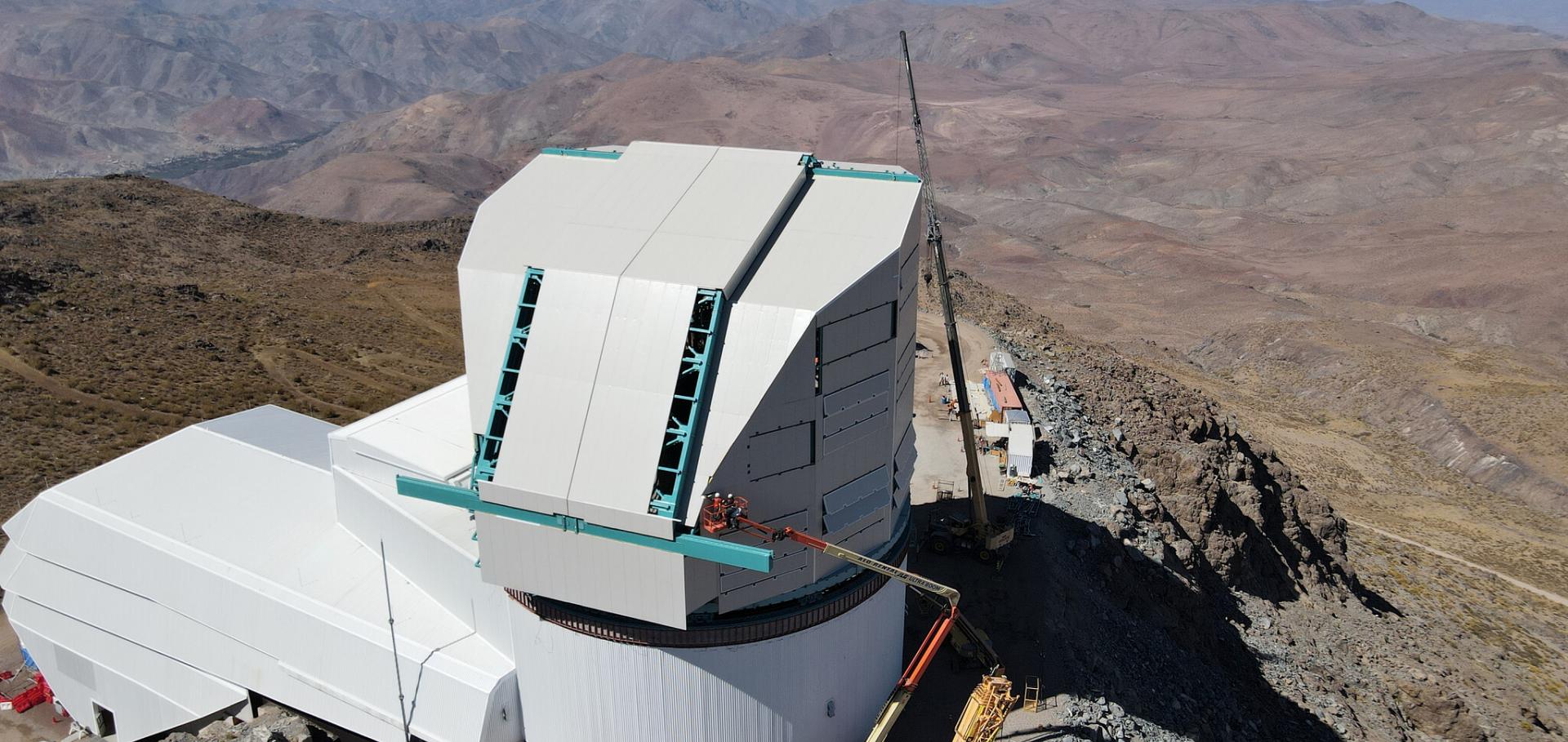
Like many areas of astrophysics and cosmology, the Vera C. Rubin Observatory will be transformational for almost all the applications of strong lensing, thanks to the dramatic increase in the number of known strong lenses by two orders of magnitude or more and the readily available time-domain data for the lenses with transient sources. In this article, we provide an overview of the forecasted number of discovered lenses of different types and describe the primary science cases these large lens samples will enable. We provide an updated forecast on the joint constraint for the dark energy equation-of-state parameters, w0 and wa, from combining all strong-lensing probes of dark energy. We update the previous forecast from the Rubin Observatory Dark Energy Science Collaboration’s Science Review Document by adding two new crucial strong-lensing samples: lensed type Ia supernovae and single-deflector lenses with measured stellar kinematics. Finally, we describe the current and near-future activities and collaborative efforts within the strong-lensing community in preparation for the arrival of the first real dataset from Rubin in 2026. This article is part of the Theo Murphy meeting issue ‘Multi-messenger gravitational lensing (Part 2)’.Supernova pointing capabilities of DUNE
Physical Review D 111:9 (2025) 092006