Improving Photometric Redshift Estimation using GPz: size information, post processing and improved photometry

Monthly Notices of the Royal Astronomical Society Blackwell Publishing Inc.

Authors:

Z Gomes, MJ Jarvis, IA Almosallam, SJ Roberts

Abstract:

The next generation of large scale imaging surveys (such as those conducted with the Large Synoptic Survey Telescope and Euclid) will require accurate photometric redshifts in order to optimally extract cosmological information. Gaussian Processes for photometric redshift estimation (GPz) is a promising new method that has been proven to provide efficient, accurate photometric redshift estimations with reliable variance predictions. In this paper, we investigate a number of methods for improving the photometric redshift estimations obtained using GPz (but which are also applicable to others). We use spectroscopy from the Galaxy and Mass Assembly Data Release 2 with a limiting magnitude of r<19.4 along with corresponding Sloan Digital Sky Survey visible (ugriz) photometry and the UKIRT Infrared Deep Sky Survey Large Area Survey near-IR (YJHK) photometry. We evaluate the effects of adding near-IR magnitudes and angular size as features for the training, validation and testing of GPz and find that these improve the accuracy of the results by ~15-20 per cent. In addition, we explore a post-processing method of shifting the probability distributions of the estimated redshifts based on their Quantile-Quantile plots and find that it improves the bias by ~40 per cent. Finally, we investigate the effects of using more precise photometry obtained from the Hyper Suprime-Cam Subaru Strategic Program Data Release 1 and find that it produces significant improvements in accuracy, similar to the effect of including additional features.

JWST detection of heavy neutron capture elements in a compact object merger

Authors:

Andrew Levan, Benjamin Gompertz, Om Sharan Salafia, Mattia Bulla, Eric Burns, Kenta Hotokezaka, Luca Izzo, Gavin Lamb, Daniele Malesani, Samantha Oates, Maria Ravasio, Alicia Rouco Escorial, Benjamin Schneider, Nikhil Sarin, Steve Schulze, Nial Tanvir, Kendall Ackley, Gemma Anderson, Gabriel Brammer, Lise Christensen, Vikram Dhillon, Phil Evans, Michael Fausnaugh, Wen-fai Fong, Andrew Fruchter, Chris Fryer, Johan Fynbo, Nicola Gaspari, Kasper Heintz, Jens Hjorth, Jamie Kennea, Mark Kennedy, Tanmoy Laskar, Giorgos Leloudas, Ilya Mandel, Antonio Martín-Carrillo, Brian Metzger, Matt Nicholl, Anya Nugent, Jesse Palmerio, Giovanna Pugilese, Jillian Rastinejad, Lauren Rhodes, Andrea Rossi, Stephen Smartt, Heloise Stevance, Aaron Tohuvavohu, Alexander van der Horst, Susanna Vergani, Darach Watson, Thomas Barclay, Kornpob Bhirombhakdi, Elme Breedt, Alice Breeveld, Alex Brown, Sergio Campana, Paolo D'Avanzo, Valerio D'Elia, Massimiliano De Pasquale, Martin Dyer, Duncan Galloway, James Garbutt, Matthew Green, Dieter Hartmann, Pall Jakobsson, Paul Kerry, Danial Langeroodi, James Leung, Stuart Littlefair, James Munday, Paul O'Brien, Steven Parsons, Ingrid Pelisoli, Dave Sahman, Ruben Salvaterra, Gianpiero Tagliaferri, Christina Thöne, Antonio de Ugarte Postigo, Boris Sbarufatti, Ashley Chrimes, Danny Steeghs, David Kann

Large Synoptic Survey Telescope White Paper; The Case for Matching U-band on Deep Drilling Fields

Authors:

BW Holwerda, A Baker, S Blyth, S Kannappan, D Obreschkow, S Ravindranath, E Elson, M Vaccari, S Crawford, M Bershady, N Hathi, N Maddox, R Taylor, MATTHEW Jarvis, J Bridge

Abstract:

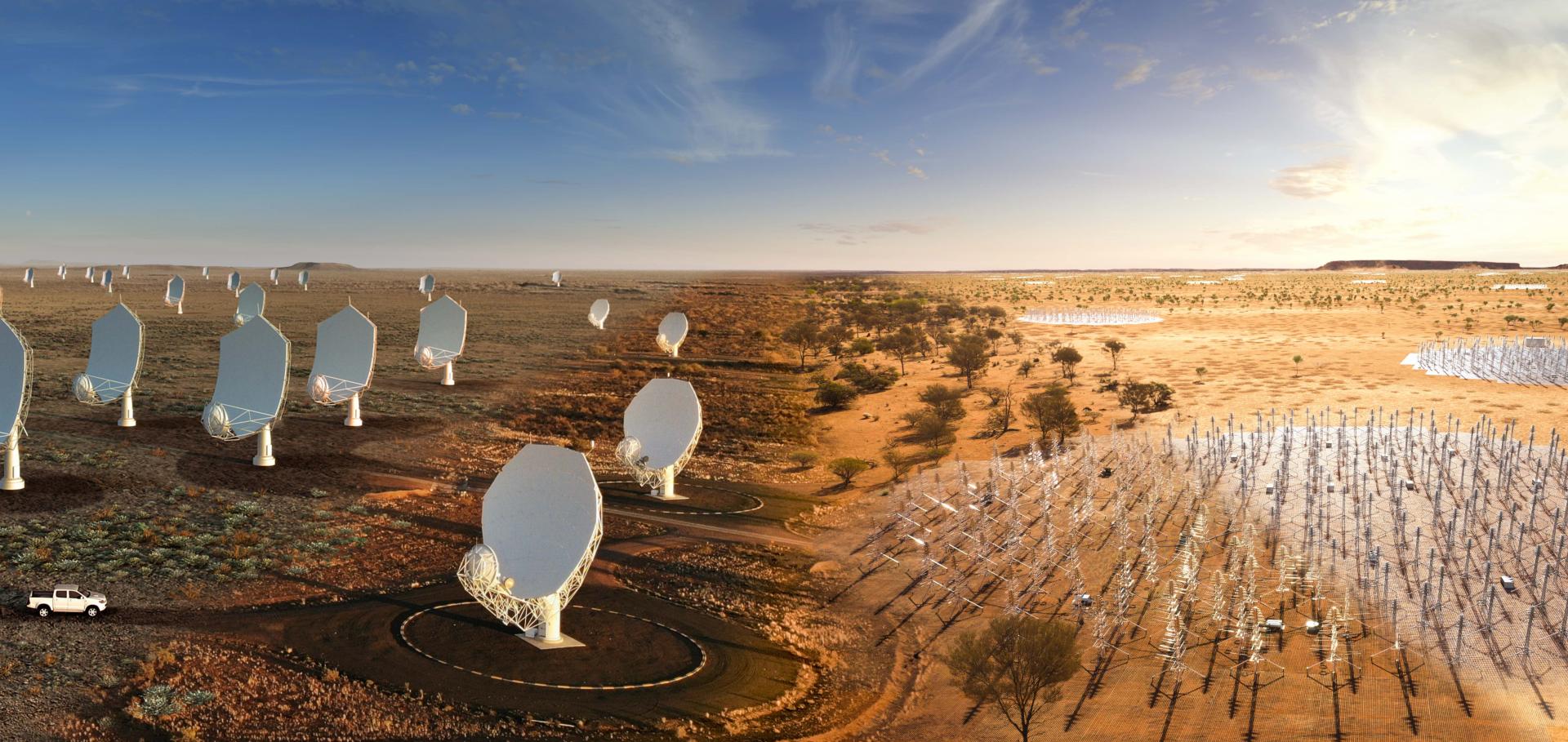
U-band observations with the LSST have yet to be fully optimized in cadence. The straw man survey design is a simple coverage of the medium-deep-fast survey. Here we argue that deep coverage of the four deep drilling fields (XMM-LSS, ECDFS, ELAIS-S1 and COSMOS) has a much higher scientific return, given that these are also the target of the Southern Hemisphere's Square Kilometer Array Pathfinder, the MeerKAT specifically, deep radio observations.

The 2018 outburst of BHXB H1743-322 as seen with MeerKAT

Monthly Notices of the Royal Astronomical Society Oxford University Press (OUP)

Authors:

DRA Williams, SE Motta, R Fender, J Bright, I Heywood, E Tremou, P Woudt, DAH Buckley, S Corbel, M Coriat, T Joseph, L Rhodes, GR Sivakoff, AJ van der Horst

Abstract:

In recent years, the black hole candidate X-ray binary system H1743-322 has undergone outbursts and it has been observed with X-ray and radio telescopes. We present 1.3 GHz MeerKAT radio data from the ThunderKAT Large Survey Project on radio transients for the 2018 outburst of H1743-322. We obtain seven detections from a weekly monitoring programme and use publicly available Swift X-ray Telescope and MAXI data to investigate the radio/X-ray correlation of H1743-322 for this outburst. We compare the 2018 outburst with those reported in the literature for this system and find that the X-ray outburst reported is similar to previously reported `hard-only' outbursts. As in previous outbursts, H1743-322 follows the `radio-quiet' correlation in the radio/X-ray plane for black hole X-ray binaries, and the radio spectral index throughout the outburst is consistent with the `radio-quiet' population.

The Birth of a Relativistic Jet Following the Disruption of a Star by a Cosmological Black Hole

Authors:

Dheeraj Pasham, Matteo Lucchini, Tanmoy Laskar, Benjamin Gompertz, Shubham Srivas, Matt Nicholl, Stephen Smartt, James Miller-Jones, Kate Alexander, Rob Fender, Graham Smith, Michael Fulton, Gulab Dewangan, Keith Gendreau, Lauren Rhodes, Assaf Horesh, Sjoert van Velzen, Itai Sfaradi, Muryel Guolo, N Castro Segura, Aysha Aamer, Joseph Anderson, Iair Arcavi, Seán Brennan, Kenneth Chambers, Panos Charalampopoulos, Ting-Wan Chen, Alejandro Clocchiatti, Thomas de Boer, Michel Dennefeld, Elizabeth Ferrara, Lluís Galbany, Hua Gao, James Gillanders, Adelle Goodwin, Mariusz Gromadzki, M Huber, Peter Jonker, Manasvita Joshi, Erin Kara, Thomas Killestein, Peter Kosec, Daniel Kocevski, Giorgos Leloudas, Chien-Cheng Lin, Raffaella Margutti, Seppo Mattila, Thomas Moore, Tom ’as M\”uller-Bravo, Chow-Choong Ngeow, Samantha Oates, Francesca Onori, Yen-Chen Pan, Miguel Perez Torres, Priyanka Rani, Ronald Remillard, E Ridley, Steve Schulze, Xinyue Sheng, Luke Shingles, Ken Smith, James Steiner, Richard Wainscoat, Thomas Wevers, Sheng Yang